About 100 million years ago, a group of trendsetting moths started flying during the day rather than at night, taking advantage of nectar-rich flowers that had co-evolved with bees. This single event led to the evolution of all butterflies.
Scientists have known the precise timing of this event since 2019, when a
large-scale analysis of DNA discounted the reigning hypothesis that pressure from bats prompted the evolution of butterflies after the extinction of dinosaurs.
Now, scientists have discovered where the first butterflies originated and which plants they relied on for food.
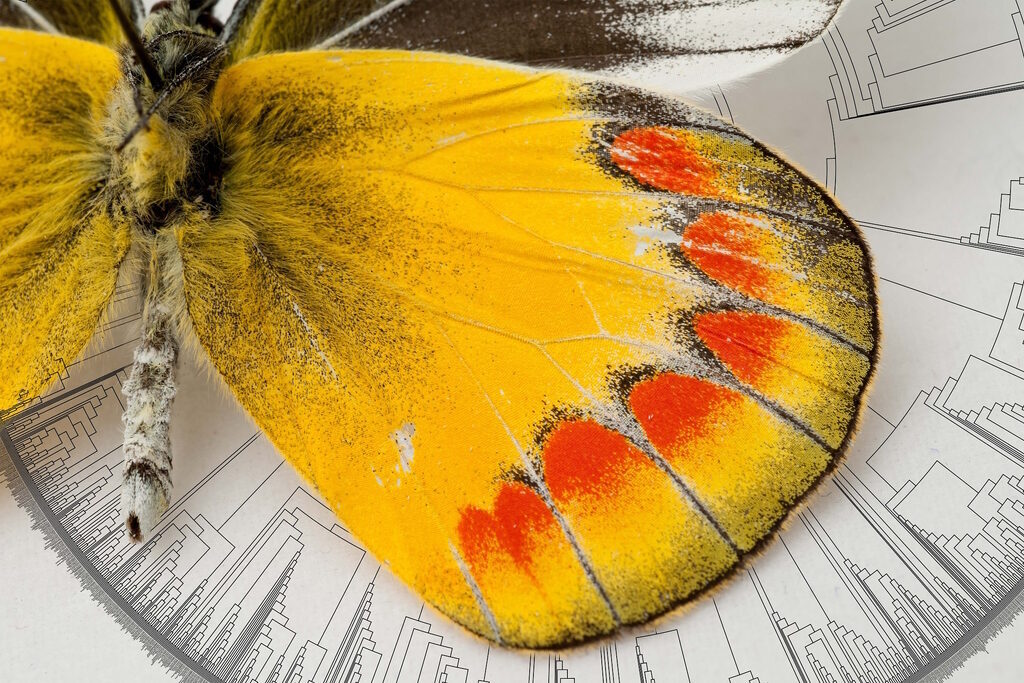
Before reaching these conclusions, researchers from dozens of countries had to create the world's largest butterfly tree of life, assembled with DNA from more than 2,000 species representing all butterfly families and 92% of genera. Using this framework as a guide, they traced the movements and feeding habits of butterflies through time in a four-dimensional puzzle that led back to North and Central America. According to their results,
published today in the journal Nature Ecology and Evolution, this is where the first butterflies took flight.
For lead author
Akito Kawahara, curator of lepidoptera at the Florida Museum of Natural History, the project was a long time coming.


















Comment: See also: