Animals
S


Attention

Old man in critical condition after bear attack in Odisha, India

bear print
An elderly man was seriously injured this morning after a bear attacked him when he had gone to attend nature's call at a farmland near his home in Balasore district of Odisha.

The injured was identified as 70-year-old Bhagaban Nayak of Mahishapata village under Nilagiri police limits in the district.

According to reports, a bear attacked the old man's waist in the morning when he was in a farmland to answer the call of nature.

Bhagaban screamed following the attack and villagers rushed to rescue him from the claws of the wild animal.

He was rushed to Balasore District Headquarters Hospital in a critical condition where on duty doctors suggested to shift him to SCB Medical College and Hospital (SCBMCH) in Cuttack.

Later, he was shifted to SCBMCH for treatment.

Binoculars

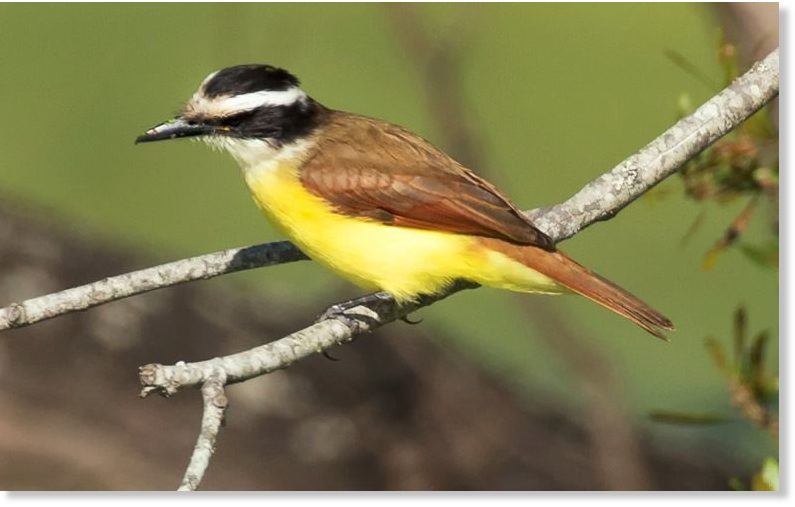
Rare great kiskadee spotted in Colleton County, South Carolina

 great kiskadee
© Kelley LuickyGreat kiskadee on Bear Island
Avid birders have been flocking to the Bear Island Wildlife Management Area in Colleton County for the past 10 days to see a bird that likely has never before visited the Palmetto State.

A great kiskadee - a large, "boisterous" flycatcher typically found in South and Central America, Mexico and the southern edge of Texas - was first spotted by nature photographer Kelley Luikey of Port Royal on the morning of Feb. 9.

"When I arrived at Bear Island that morning, the light and the birds were not cooperating in the areas I had planned on shooting, so I went looking for what else I could find," said Luikey, who was alone.

When she first saw the bird, her view was obscured by branches of a pecan tree, but she was able to keep tracking it because of its call, which is known to be loud and sounds like "kis-ka-dee."

"It was unmistakably something that we do not have here in South Carolina," said Luikey, recalling its bright colors.

Arrow Down

The Vanishing: Europe's farmland birds down 55% in the last 3 decades

Grey Partridge
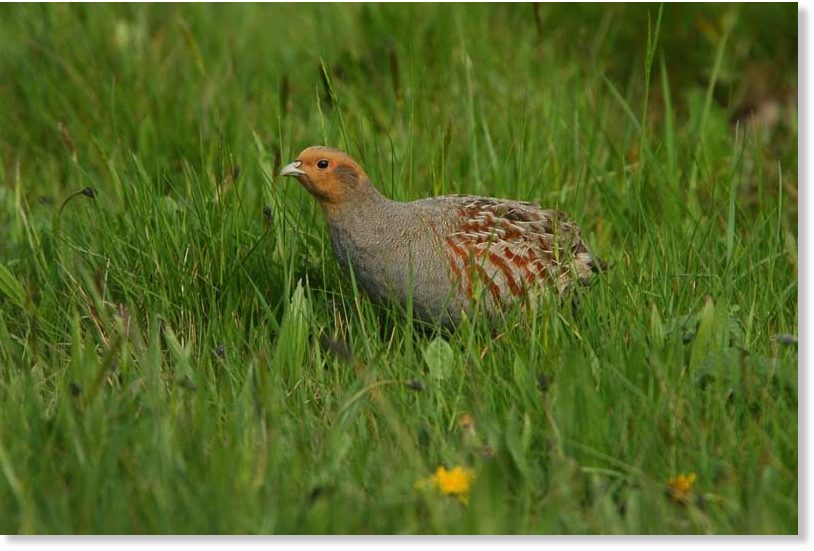
© Glyn SellorsGrey Partridge
The Head of Conservation for BirdLife Europe & Central Asia explains how intensive agriculture has made farmland birds one of the most threatened bird groups in Europe.

Once upon a time, they were all around us - sights and sounds as familiar as the dusky skies their flocks danced in or the wind whistling through the fields. They were the tiny flashes of colour caught by the corner of your eye as you strolled in the countryside. They were the chirps, chatter, coos and caws making music in the hedgerows and the long meadow grasses. But that was before we destroyed their homes. Now, our common farmland birds are not so common.

It's an increasingly rare sight to see a Corn bunting perched on a farm fence before taking off in fluttering flight with its legs dangling, or graceful Yellow wagtail running through wet pastures on its slender black legs. The distinctive orange face and chestnut tail of the once abundant Grey partridge is now glimpsed all too infrequently. When was the last time you admired the splendid crest of a Northern Lapwing or heard the tew it of its display call? How many today would even recognise this once iconic cry? And what of the Barn Owls, Godwits, Corncrakes and Curlews? Or the Redshanks, Whinchats, Twites and Yellowhammers? For the bird lover, the farm has become the tragic symbol of paradise lost.

Attention

Man killed by shark off Reunion Island

Shark attacks
Former professional shark-spotter Alexandre Naussance, 26, is killed in an area where water sports are banned.

A man who ignored warnings not to surf off the coast of Reunion Island has died after being bitten on the leg by a shark.

Alexandre Naussance, 26, who was once employed as a shark spotter by a surfing association, was attacked while bodyboarding off the northeast coast of the French territory in the Indian Ocean.

He was pulled out of the water by fishermen but pronounced dead after the animal bit through a major artery in his leg.

"This accident happened even though swimming and other water sports are forbidden in this area," the local government office said in a statement.

Better Earth

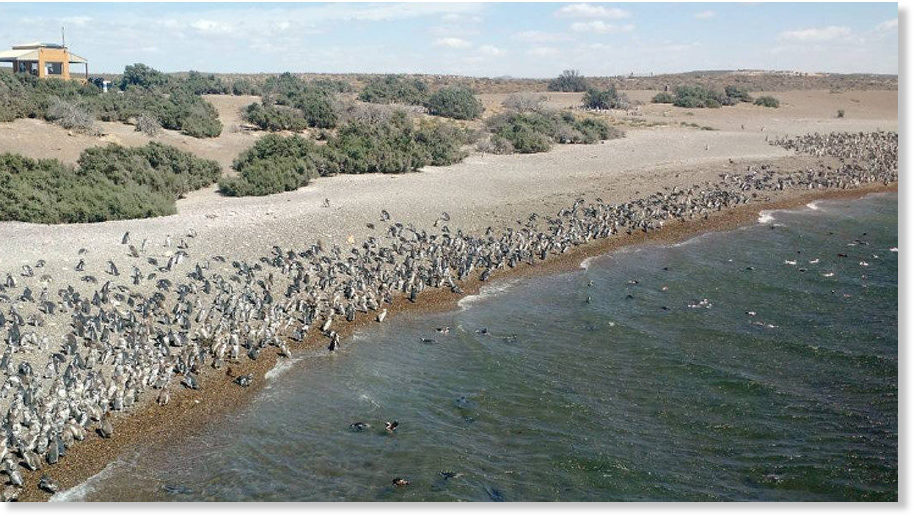
Over '1 million Magellanic penguins' descend on Punta Tombo, Argentina in spectacular scene

magellanic penguins
© brendug / Instagram Over 1 million of the flightless birds are reported to have landed onshore in Argentina
Over one million penguins arrived on Punta Tombo, Argentina in what is thought to be a record number, resulting in stunning displays of wildlife along the shoreline. Often seen in parts of southern Argentina and Chile, the numerous small inlets of Punta Tombo in Argentina's southeast region make a perfect breeding ground for the Magellanic penguins due to the large quantities of sardines and anchovies found close to shore.

Measuring about 45cm (17in) tall and weighing around 4kg (9lbs), the Magellanic penguin sports a large white crescent of feathers on their breast, and have distinctive pink coloring on their faces. Tens of thousands of tourists flock to the peninsula each year to catch a glimpse of the flightless birds but this year is extra special as locals say more than one million of the birds have arrived - a record number - according to AP. While not yet an endangered species, a number of Magellanic penguins die annually when they become tangled in the nets of commercial fisheries.

Archaeology

Could a giant polar bear skull found at an eroding Alaska archaeological site be the legendary 'weasel bear'?

polar bear skull
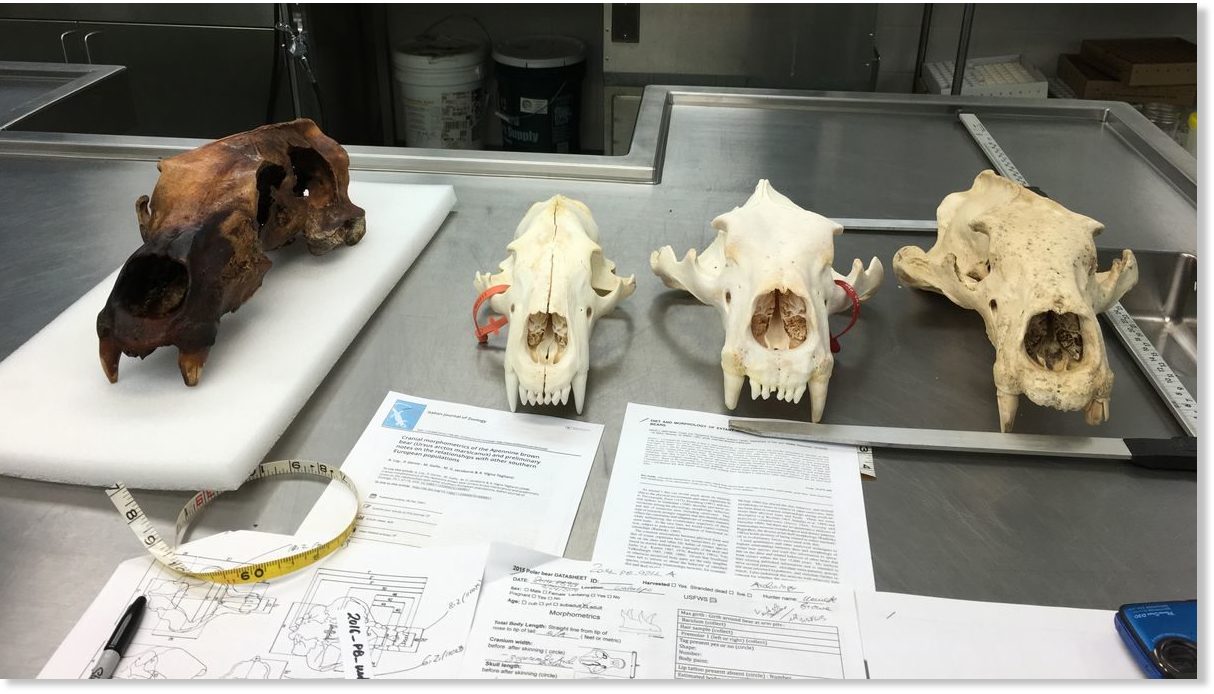
© UIC ScienceA huge, unusually shaped polar bear skull, left, emerged in 2014 from an eroding archaeological site southwest of Utqiagvik. It is quite different from most modern polar bear skulls, right.
Aboriginal hunters from Arctic Canada have a couple of names for what they say is an extremely rare polar bear that is huge, narrow-bodied, fast-moving and lithe: "tiriarnaq" or "tigiaqpak," meaning "weasel bear." Now the thawing and rapidly eroding Chukchi Sea coastal permafrost has produced evidence that one of these legendary weasel bears — or some other strange kind of bear — roamed Arctic Alaska centuries ago.

A huge, fully intact and unusually shaped polar bear skull emerged in 2014 from an eroding archaeological site about 13 miles southwest of Utqiaġvik (Barrow). It is one of the biggest polar bear skulls ever found — and quite different from most modern polar bear skulls. It is slender, elongated in the back and has unusual structural features around the nasal area and other areas.

"It looks different from your average polar bear," said Anne Jensen, an Utqiaġvik-based archaeologist who has been leading excavation and research programs in the region. Through radiocarbon dating and subsequent analysis, Jensen and her colleagues estimate that the big bear skull — which appears to be the fourth largest ever found — is from a period between the years 670 and 800. It is possibly the oldest complete polar bear skull found in Alaska, inspiring a name for the departed creature that owned it: The Old One.

Cloud Lightning

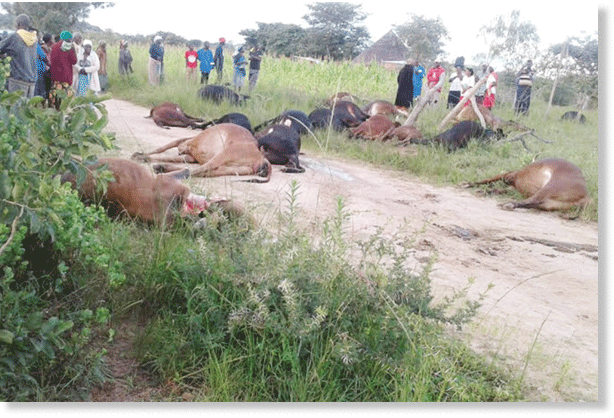
Lightning bolt kills 19 cattle in Zimbabwe

Chikomba villagers mill around 18 head of cattle that died after they were struck by lighting on Saturday
Three families from Chikomba district in Mashonaland East province, were left shell-shocked on Saturday after their 19 beasts worth about $10 000, succumbed to a bolt of lightning.

Mable Njowa of Masendu Village lost 10 beasts, while brothers Masiyiwa and Martin Juru of Munhundorima village lost four beasts each in a mid-afternoon incident that has left villagers in panic.

Chikomba district acting livestock production and development officer, Cosmas Ratsakatika, said the incident occurred close to the families' homesteads in headman Neshangwe's area, 60km north-east of Chivhu.

The incident came shortly after a bolt of lightning killed two students and injured 83 others at Chinatsa Secondary School in Marondera district, last month.

Ratsakatika said, two years ago a Feasterstone farmer lost nine head of cattle under similar circumstances.

Wolf

Stray dog attacks child, drags him out of house in Kerala, India

Stray dog attack
Nandu was bitten on his hands, legs and thighs.

In a shocking incident, a one-and-a-half-year-old boy was attacked by a stray dog here on Friday.

Nandu, son of Ranjith of Krishna Vilasam near the Palliyadi temple in Chavara, was sleeping inside the house when the dog dragged him out of the house.

The incident happened around 8.30 pm on Friday.

As his parents went to a neighbour's house to fetch water, the dog bit the kid and dragged him out of the house.

Upon hearing his cries, a woman in the neighbourhood rushed to the spot and rescued the kid.

Attention

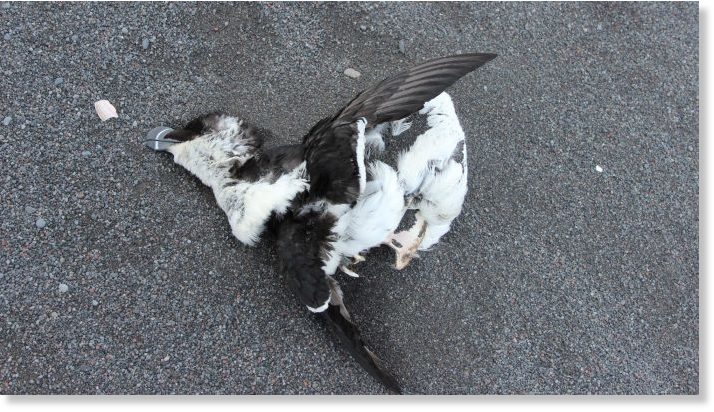
Seabirds dying of starvation around Iceland

Dead seabird
© Sigurdur Olafsson
According to a RUV report an unusual number of dead black seabird is washing up on the northern shores of Iceland this winter. The birds are washing up emaciated so biologists conclude the most likely cause of death to be malnutrition. It's not unusual that seabirds wash ashore over the winter months but reports about the unusually high number in some areas are startling.

Yann Kolbeinsson biologist with the Icelandic Institute of Natural History said the bird is found dead mostly on the shores in areas in the north of the country. "Its all kinds of black seabirds, mostly it's the Common Murre and the Razorbill, but we have received reports and seen photos of dead Puffin, Thick Billed Murre and Little Auke. But the largest numbers of deaths seem to be of the Common Murre." Kolbeinsson informs, he goes on to tell that malnourishment seems to be the most likely explanation, all thought this has not been verified with extensive research.

Fish

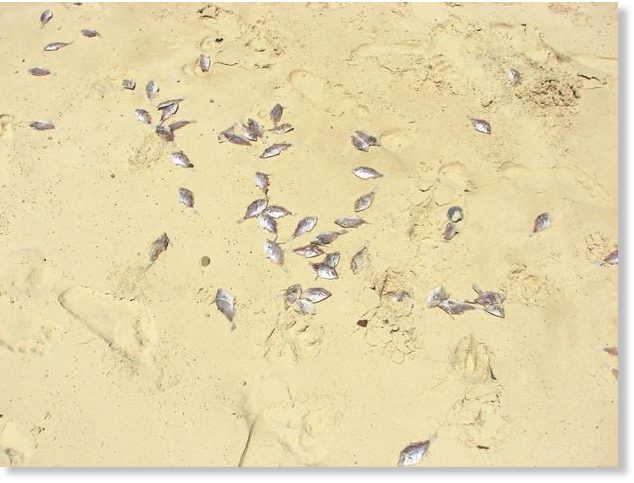
Kilometres of Cooloola coastline covered by dead fish in Australia

: Many thousands of fish, thought to be a small species of leatherjacket, have washed up dead along the Cooloola Coast.
Many thousands of fish, thought to be a small species of leatherjacket, have washed up dead along the Cooloola Coast.
No-one seems to know the cause of a mass fish kill along kilometres of the Cooloola Coast.

Thousands of dead fish were reported to Department of Environment and Heritage Protection between Teewah and Double Island Point.

And thousands more have been reported to The Gympie Times as lining the tide line along more than 1km at Rainbow Beach.


Queensland Parks and Wildlife Service rangers from Rainbow Beach had also noted dead fish during their beach patrols, an EHP representative said on Friday.

The representative said the department had received two reports so far through its pollution hotline, involving large numbers of fish between Teewah and DIP.