Animals
S


Arrow Down

Video promoting lamb 'enrages' Hindu community in Australia

Lord Ganesha
© Courtesy of Meat and Livestock Australia
At its core, every major religion offers a theology that purports to humanity's better nature: Love for one's brethren, prayers of gratitude to a Higher Power and a set of commandments that "encourage" a life governed by moral principles and guided by behavioral norms handed down from on high.

Unfortunately, the love and devotion true believers are required to offer to their Creator/Deity/Supreme Being are rarely translated into respect for others here on Earth.

Especially when those others embrace the "wrong" religion.

Worst of all, the most devout adherents seem to be missing the humor gene. To true believers, there's nothing funny about poking fun at anything related to their theology, which is supposed to provide the blueprint for spiritual enlightenment that makes one immune to petty grievances.

Case in point: A new video promoting Australian lamb, a two-minute clip that features (among other gods) the Hindu deity Ganesha, has "enraged members of the Hindu community in Australia and elsewhere," according to reporting on the independent news website SBS.com. Calls have already begun to have the campaign immediately terminated.

Cloud Lightning

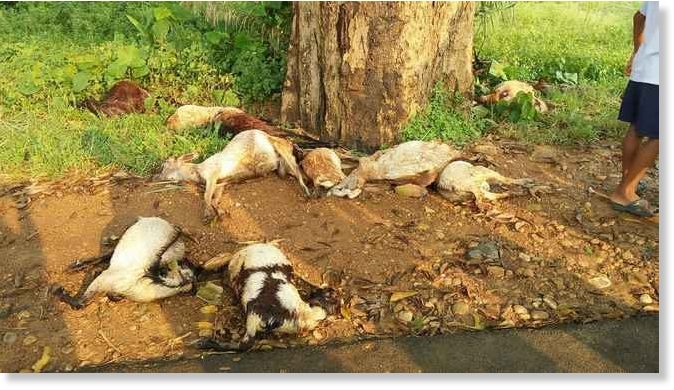
Lightning bolt kills 16 goats in Odisha, India

dead goats
As many as 16 goats were killed in lightning at Koshala village under Chhendipada block here today.

According to reports, Anjulata Sahoo, wife of Bijay Kumar Sahoo of Bankataragadia village had taken the goats for grazing them near the house. At around 3 pm when rain started with lightning and thunder, she stood under a tree after keeping the goats under another tree.

The goats were killed in the lightning.

Despite MeT prediction about possibility of lightning and thunder in some of the districts every day, the casualties are still taking place in the state.

Info

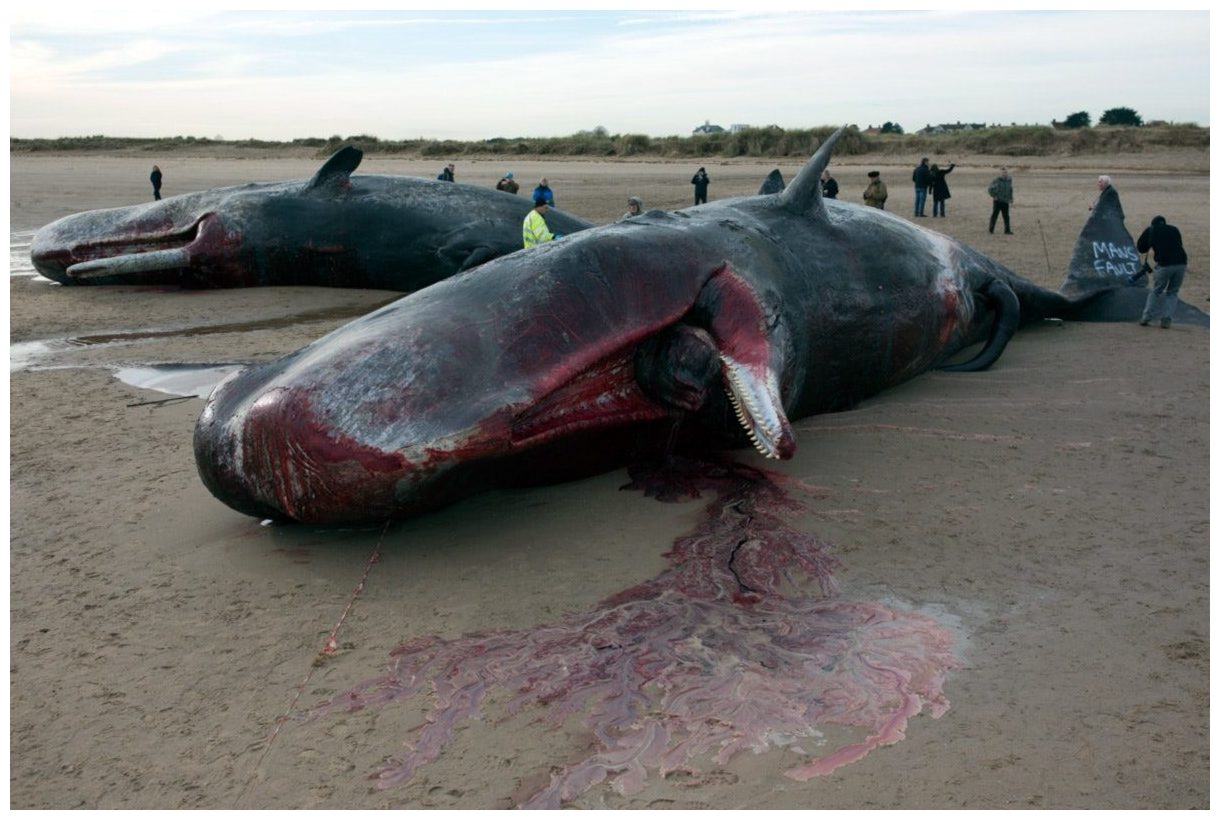
Do solar storms lead to beached whales?

Beached Whales
© Dan Kitwood/GettySperm whales stranded at Skegness on England's North Sea coast in January 2016.
In early 2016 a spate of sperm whale strandings in the North Sea perplexed scientists. Many theories were proposed for why 29 of the huge marine mammals - all males, most relatively young - died on European beaches in the course of January and the first few days of February, ranging from poisoning by pollutants to climate-change-induced dislocation.

According to a paper published in the International Journal of Astrobiology, however, the real cause was not human activity of any sort - it wasn't even on Earth.

Instead, the authors propose that solar storms threw off the navigation systems of the whales and led them to become lost and stranded. Solar storms, caused by ejections of charged particles from the Sun, disrupt the Earth's magnetic field, especially near the poles, where they are also responsible for producing auroras.

Lead author Klaus Heinrich Vanselow of Christian-Albrechts-Universität in Kiel, Germany, had earlier found correlations between solar activity and recorded numbers of North Sea sperm whale strandings over several centuries of historical records. The new study is the first to connect specific strandings to specific solar activity, however.

Attention

Beached Gray's whale loses its beak from illegal chainsaw removal at Greymouth, New Zealand

A Gray's beaked whale that washed up dead on a Greymouth beach had its beak illegally removed.
© DEPARTMENT OF CONSERVATIONA Gray's beaked whale that washed up dead on a Greymouth beach had its beak illegally removed.
The Department of Conservation (DOC) is appealing for information after a 5-metre-long Gray's beaked whale had its beak sawed off.

The dead whale washed up on a Greymouth, West Coast beach, a DOC statement said.

It was believed the beak was illegally removed with a chainsaw on Saturday afternoon.

It was an offence under the Marine Mammals Protection Act 1978 to take whalebone or any other part of a marine mammal without a permit.

DOC ranger Glen Newton said dead, rotting whales could carry diseases that contaminated skin and clothing.

Camera

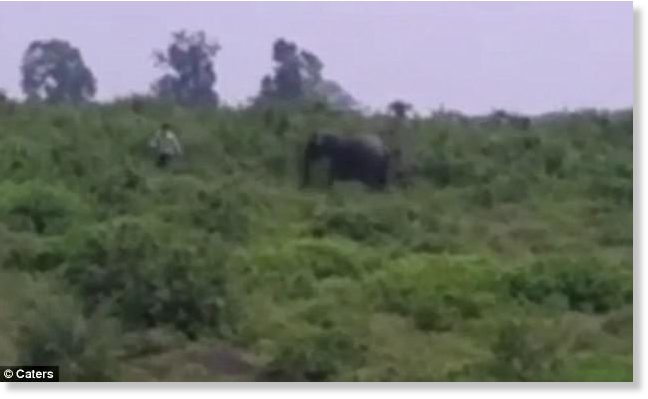
Man trampled to death by elephant after trying to take a SELFIE with it in Odisha, India

Dangerous: Ashok Bharti, 50, had reportedly spottet the wild elephant and approached it to take a selfie, but the animal became angry and charged at him
This is the moment when an Indian man is trampled to death by a wild elephant after he tried to pose for a photo with the animal.

Ashok Bharti, 50, had reportedly been drinking alcohol before approaching the lone elephant near Kuanrmunda, Odisha state, eastern India.

However, as he tried to take a selfie with the elephant, the animal charged at him, leaving Mr Bharti running for his life.

The incident was caught on video, filmed by onlookers from a safe distance, and sees Mr Bharti tripping as he tries to flee the elephant.

The elephant then runs over Mr Bharti, from Rourkela, Odisha, and injured him severely.


Attention

Dead porbeagle shark washes up in Revere, Massachusetts

This porbeagle shark washed up on Revere Beach dead Friday morning
© John HurleyThis porbeagle shark washed up on Revere Beach dead Friday morning
There's been a decent amount of shark activity off the Cape this summer, but in Revere? Not so much.

Friday was an exception when a deceased porbeagle shark washed ashore near Rumney Marshes, just north of Revere Beach, and attracted onlookers who posted photos to social media:

Greg Skomal, the Massachusetts Division of Marine Fisheries's senior fisheries biologist, told CBS Boston it's unusual to find porbeagle sharks washed up on the beach. It's possible the shark became caught and injured by fishing gear, Skomal said.


Attention

Surfer bitten by shark at New Smyrna Beach, Florida

SHARK BITE
© Kem McNairShark bite
A 17-year-old boy was bitten by a shark Saturday while surfing at New Smyrna Beach, Volusia Beach Safety officials said.

Capt. Mike Berard said the boy was surfing near the inlet just before noon when a shark bit his right hand.

John Brown, of Winter Garden, was there when it all happened and made the call to 911.

"As I'm scanning with the binoculars, there's this kid that comes straight to me, with his hand flowing blood from where he got bit," he said. "The kid said, 'I was on the surfboard coming into the whitewater and jumped off the board and landed right on the shark.' He said the shark bit his hand, and he was trying to rip his hand out. He punched him two or three times, and he let go and came straight out."


Info

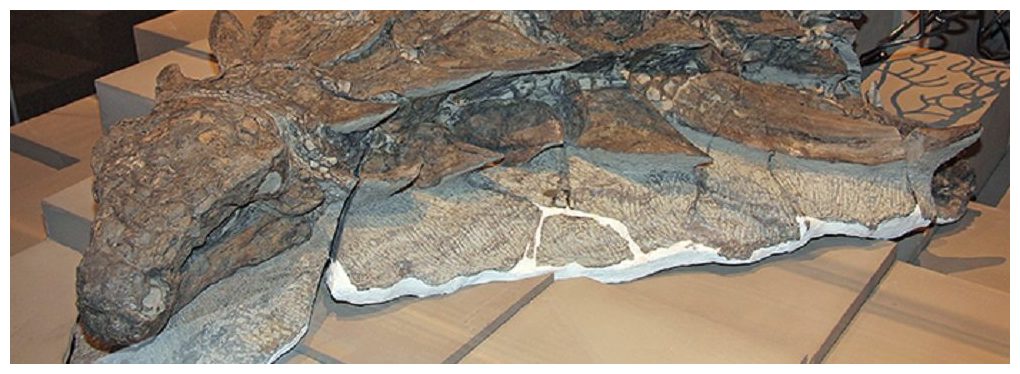
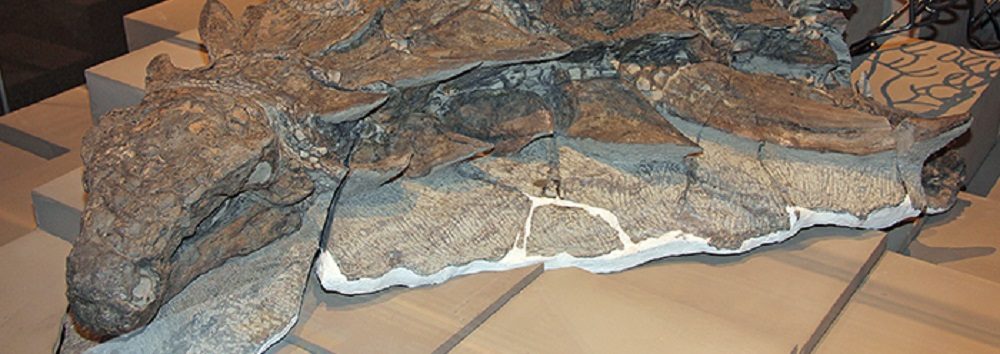
Best preserved nodosaur has skin, horn and pigments

Best-preserved nodosaur
© ICR Org
The world's best-preserved nodosaur stirred wide interest when it went on display at the Royal Tyrell Museum in Canada in May 2017. Its skin scales, fearsome shoulder spikes, and possibly even skin colors prompted fossil pigment expert Jakob Vinther to tell National Geographic that it "might have been walking around a couple of weeks ago. I've never seen anything like this."1 New details published in Current Biology back up that statement.2

Apparently, this specimen is different enough from other nodosaurs to warrant its own genus and species name: Borealopelta markmitchelli. It had secondary organic molecular structures called kerogen that form when primary proteins break down and mix underground.

In a May 12 interview, Issues, Etc. radio host Todd Wilken asked me about this fossil, "So it's very possible here that we're not looking at a fossil, strictly speaking-not a stone cast of what was once there as living matter-but a mummified specimen of a dinosaur?" I replied, "It's possible, but there haven't been any technical reports out yet."3

Well, now a technical report is out, and it shows not quite as pristine a preservation as an Egyptian mummy, but it reveals nodosaur skin scales with kerogen's energy-packed chemical bonds still intact.4 Though lab studies have not yet measured the expected shelf life for kerogen, this specimen still contains organic chemistry fragile enough to challenge the fossil's vast age assignments. Microbes feed on kerogens, but even with no microbes in sight, kerogens still have plenty of potential chemical energy that inevitably reacts with other chemicals in an incessant chemical breakdown. Though they may be tough, kerogens cannot last forever-and should not last anywhere close to the 112 to 125 million years assigned to this fossil.


Info

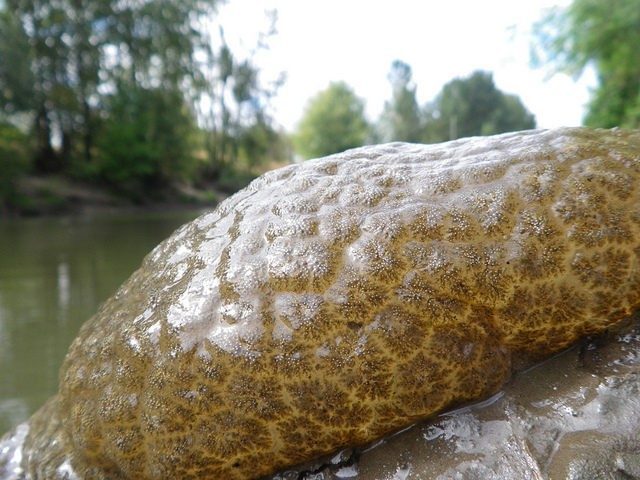
Strange brain-looking creatures spotted in Vancouver, Canada

Pectinatella magnifica
© Briita Orwick/USFWS 2012
Low water levels revealed the strange jelly creatures at Stanley Park in Vancouver, British Columbia.

Within Stanley Park's "Lost Lagoon," a strange amorphous blob of life has appeared. The gelatinous "brain" is known as the Pectinatella magnifica, or, more commonly, the "magnificent" bryozoan. What appears to be a single alien organism is instead the gelatinous gathering of hundreds of individual bryozoan "zooids." At a fraction of a millimeter each, it takes a lot of them to form into these oddly cerebral communities.

The gelatinous creatures are hermaphrodites, possessing all requisite reproductive organs within each individual. They spread from their gelatinous communal clumps via "statoblast," where clumps of cells are detached from a zooid that can reproduce themselves asexually to form another brain-like colony. Fossil records have placed ancestors of the modern bryozoan as far back as 470 million years, but they have never been spotted outside of areas east of the Mississippi River.

Wolf

Illinois police warn residents to stay away from 'zombie dogs'

mangy coyote
© Lucy Nicholson / Reuters
Residents of a Chicago suburb are being warned to keep their pets indoors for fear that they could be bitten by wandering 'zombie dogs.'

Police in Hanover Park issued the warning in a Facebook post Thursday after receiving several reports that malnourished or neglected stray dogs are roaming around the Illinois village.

The authorities go on to make clear that the 'dogs' are not domestic animals, rather urban coyotes infected with sarcoptic mange, a highly contagious skin disease which gives them the look of the undead.

"There is unfortunately an increase in sarcoptic mange in the urban coyote populations which has caused these normally nocturnal animals to become more active during the day. Infected animals will often appear 'mangy' - which looks just like it sounds," Hanover Police said.

"They suffer hair loss and develop secondary infections, eventually looking like some sort of 'zombie' dog. The infections affect their vision, causing them to look for food during the daylight hours."