Animals
S


Bizarro Earth

Pet chihuahua in Australia chews off owner's toes

Sabel
A man has had to have his toe amputated after his hungry pet Chihuahua started eating it while he slept.

Former AFL star Campbell Brown told the gruesome tale of his father-in-law Tom Johnson's ordeal with his dog Sable on SEN.

The dog was hungry enough that two years ago it ate Mr Johnson's right big toe.

"It's too good of a story not to give to the public domain," The former Hawthorn and Gold Coast star said.

"My father-in-law Tom Johnson has got diabetes so he hasn't been able to feel his feet too well for many, many years. They just got cute pet Chihuahua called 'Sable' that sleeps on the end of the bed.

Attention

Dead whale found on beach in Keta, Ghana

dead whale
© Jubilee Radio
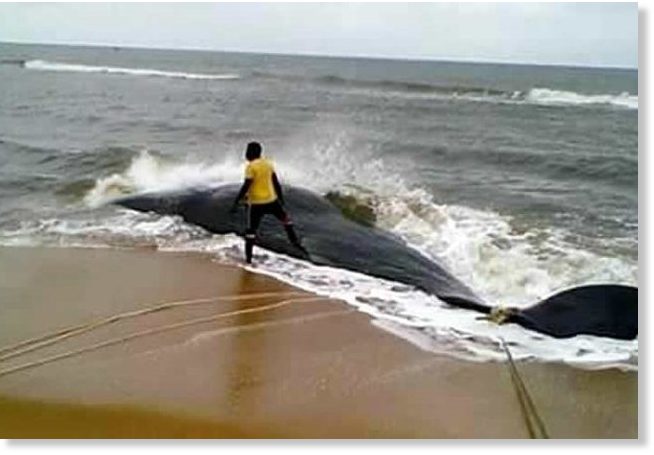
The Tettekope beach in Keta in the Volta Region is the site of a rare scene as a dead whale washed ashore on Tuesday, September 19, 2017.

It is unclear what might have led to the death of the whale, but a Chief fisherman in the locality, Seth Kedey, told Cififmonlin.com that the mammal could have been hit by a large vessel.

Reports indicate that a Wildlife Officer in the Keta Municipality, Abdul Karim Fuseini, said the whale was about 39 feet long and 16 feet in height.

"The residents who were amazed at the sight of the dead whale, employed various means to draw much closer to catch a glimpse of it," reports news portal Citifmonline.com

Fish

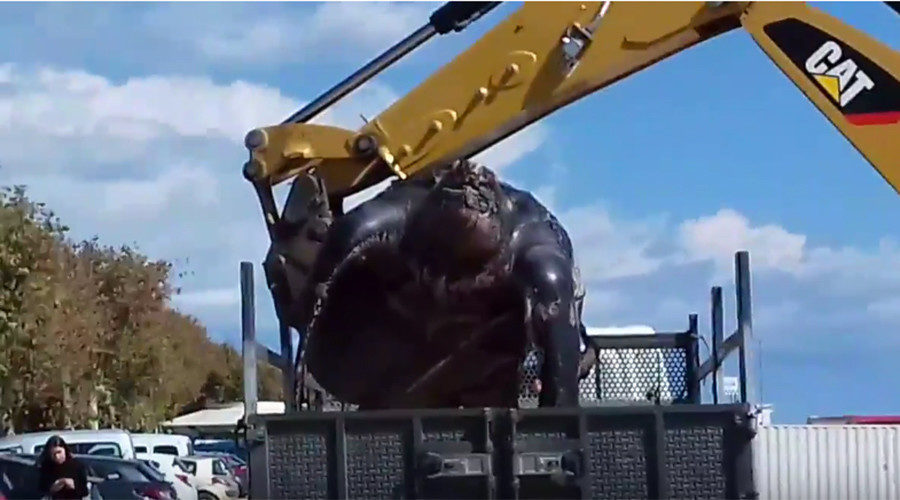
Enormous dead turtle found washed up on Spanish beach

giant dead sea turtle spain
© ArnauJAner / YouTube
A giant sea turtle measuring up to two meters (6ft 7in) in length washed up dead on a Spanish beach, Tuesday. The leatherback - the largest of all living turtles - was found in Calella on the Costa del Maresme in the province of Barcelona.

Video footage shows an excavator being used to remove the huge creature.

This is the second such find within a month on the Catalan coast, according to La Vanguardia.

In August fishermen came across a leatherback, also known as a lute turtle, tangled in their nets. Authorities say the species, which can weigh up to 700kg (1,500lb), is rare in Catalonia.

Department of Agriculture officials said this particular creature was in an advanced state of decomposition, reports Radio Calella.

Attention

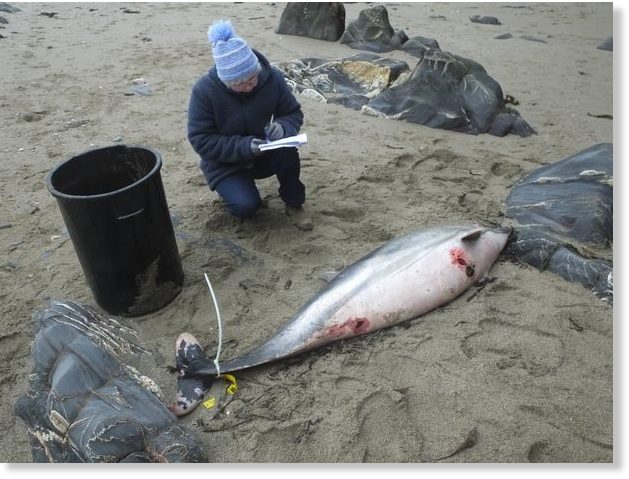
'Astounding' increase in dolphin strandings in 2016 observed for Cornwall, UK; 20 times more than in 2015

Common dolphin found on Polkirt beach
© Rob WellsCommon dolphin found on Polkirt beach
A worrying increase in dolphin deaths has been observed in Cornwall in the last year, a report has revealed.

The Cornwall Wildlife Trust's 2016 Marine Strandings Network (MSN) report, which has been released today, shows an 'astounding' 50% increase in cetacean deaths in 2016 compared with 2015.

Cetaceans include dolphins, porpoises and whales.

The report shows that a total of 205 animals stranded in Cornwall in 2016, compared with only 10 in 2015, which is more than 20 times more from one year to the other.

Amongst the 205 recorded, 113 were short-beaked common dolphins and 61 were harbour porpoises.

Attention

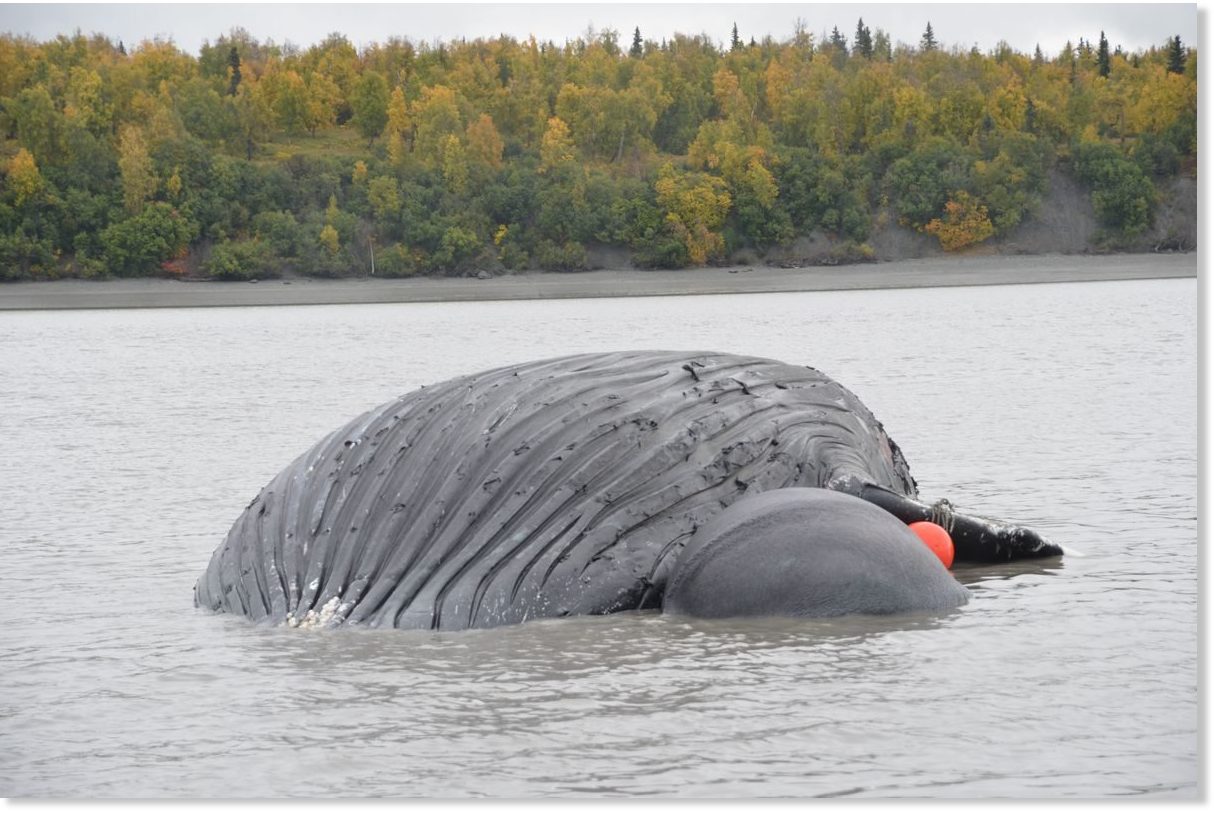
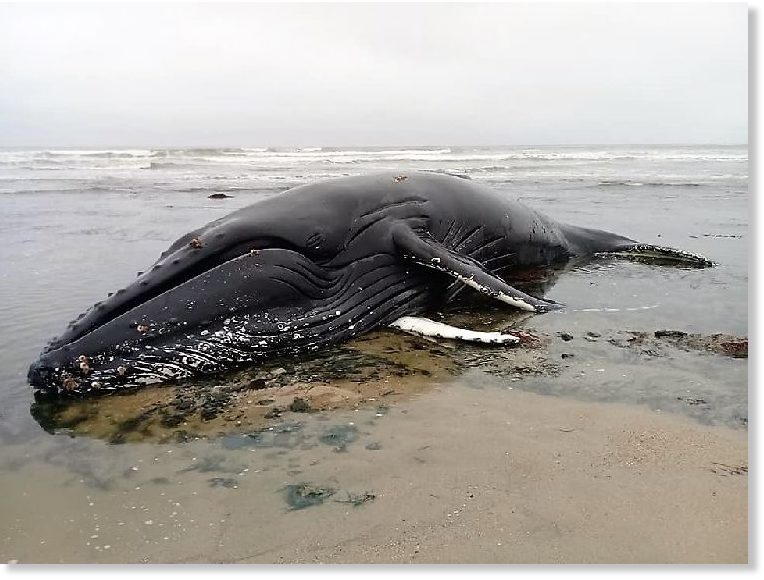
Dead humpback whale found floating off Anchorage, Alaska

A dead humpback whale was spotted near the Port of Anchorage in Cook Inlet on Saturday, Sept. 16, 2017.
© NOAA FisheriesA dead humpback whale was spotted near the Port of Anchorage in Cook Inlet on Saturday, Sept. 16, 2017.
With a dead humpback whale floating near the Port of Anchorage, a spokesperson for the National Oceanic and Atmospheric Administration said Tuesday the agency will "let nature take its course."

NOAA has received reports about the whale's body every day since Saturday evening, said Julie Speegle, of NOAA's Alaska regional office.

"So we are well aware of this dead humpback whale," she said.

Speegle said biologists don't know the age of the whale or its cause of death or its exact size, but they do know it was a male.

Eye 2

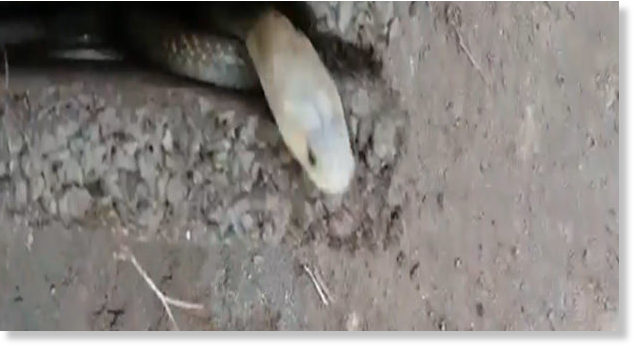
Cobra found with smaller snake stuck in its nostril in Belagavi, India

snake
A snake rescuer called to remove a cobra from a businessman's property in India made an unusual discovery -- a smaller snake stuck in the serpent's nostril.

Anand Chitti, a snake rescuer in the city of Belagavi, said a local businessman summoned him Sept. 11 to some industrial land, where a cobra had been sighted.

Chitti filmed the rescue as he dug through a pile of bricks to reach the snake.

The cobra, once extracted from its hiding place, was found to have a blind worm snake -- the smallest species of snake in India -- stuck inside its nose.

"I have caught 14,000 snakes till now and had never seen anything strange like that," Chitti said.


Attention

Shark attacks fisherman at lagoon in Samoa

Shark attacks
A young man from the village of Nofoali'i has survived a shark attack which has left villagers deeply disturbed.

The young man was fishing in the lagoon on Friday afternoon when he was attacked, villagers told the Sunday Samoan yesterday.

It was not possible to get a comment from the family of the man attacked.

But one of the villagers who spoke on the condition of anonymity said the incident has left villagers concerned, especially since many of them depend on fishing for their daily upkeep.

Attention

Humpback whale dies after stranding near Henties, Namibia

The female humpback whale stranded north of Henties Bay yesterday.
A female humpback whale was stranded about a kilometre north of Henties Bay on Sunday night.

Estimates of locals who approached the animal during low-tide are that it was about ten metres long and still alive when spotted early yesterday morning.

According to representatives of the Namibian Dolphin Project, the pressure of the whale's heavy soft body on its organs as it lay on the sand where it had beached, may have caused organ failure and by midday yesterday it was dead.

According to the project, which studies whales, dolphins and turtles along Namibia's coast, humpback whales migrate along the Namibian coastline between their feeding grounds in the Antarctic and breeding grounds off west Africa.

Info

Humans lost ancient viral defense mechanism

Sea anemone
© KU Leuven
Insects and plants have an important ancient defence mechanism that helps them to fight viruses. This is encoded in their DNA. Scientists have long assumed that vertebrates - including humans - also had this same mechanism. But researchers at KU Leuven have found that vertebrates lost this particular asset in the course of their evolution.

The possibilities encoded in our DNA are expressed via RNA. Conversely, RNA interference (RNAi) can also suppress the expression of a specific gene. Insects and plants use this RNAi mechanism to defend themselves against viruses, among other things. With a little help, insects and plants can even be made resistant to certain diseases through this RNAi mechanism. Examples include so-called genetically modified crops.

It seems only logical to assume, then, that humans can be protected against specific diseases in a similar way. However, past experiments to this effect have proven to be a challenge. Researchers from the Animal Physiology and Neurobiology unit at KU Leuven have now shown why this is the case.

Info

Electric eels leap to deliver painful, taser-like shock

Electric eels
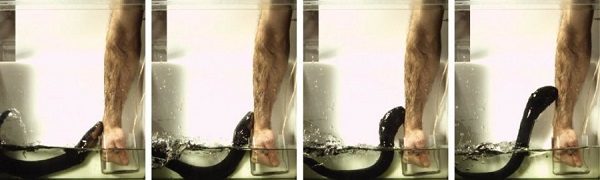
The electric eel has always been noted for its impressive ability to shock and subdue its prey. It's recently become clear that electric eels also use a clever trick to deliver an intense, Taser-like jolt to potential predators: they leap from the water to target threatening animals, humans included, above water. Now, a researcher reporting in Current Biology on September 14 has measured (and experienced) just how strong that jolt can be.

Those stunning leaps make for a more painful experience because they prevent the eels' electrical discharges from weakening as they dissipate through the water.

"We've known these animals give off a huge amount of electricity, and everybody thought that was really amazing," says Kenneth Catania of Vanderbilt University. "But they aren't just simple animals that go around shocking stuff. They've evolved to produce stronger and stronger electrical discharges, and in concert they've evolved these behaviors to more efficiently use them."