Animals
S


Attention

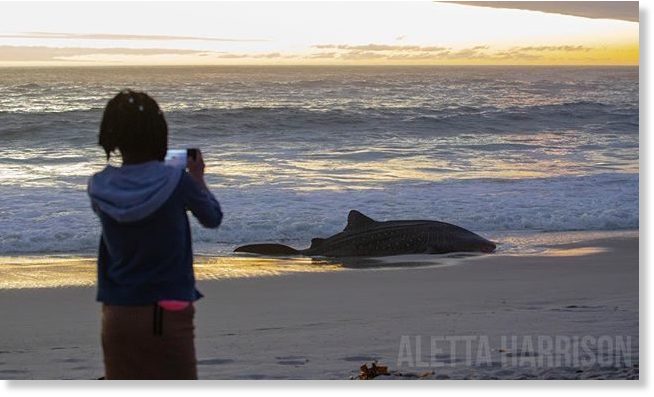
Beachgoers try to save beached whale shark near Cape Town, South Africa - 2nd to wash up in 11 days

whale shark
A whale shark had been found washed up on Camps Bay beach in Cape Town on Saturday.

The National Sea Rescue Institute (NSRI) has confirmed via its Facebook page that marine scientists and veterinarians were called on the scene to evaluate the shark's condition.

Earlier in April, another whale shark measuring 5m was found washed ashore in Kommetjie in the Western Cape.


Whale sharks are the largest known fish but do not pose a danger to humans as they feed on plankton and small fish.

Attention

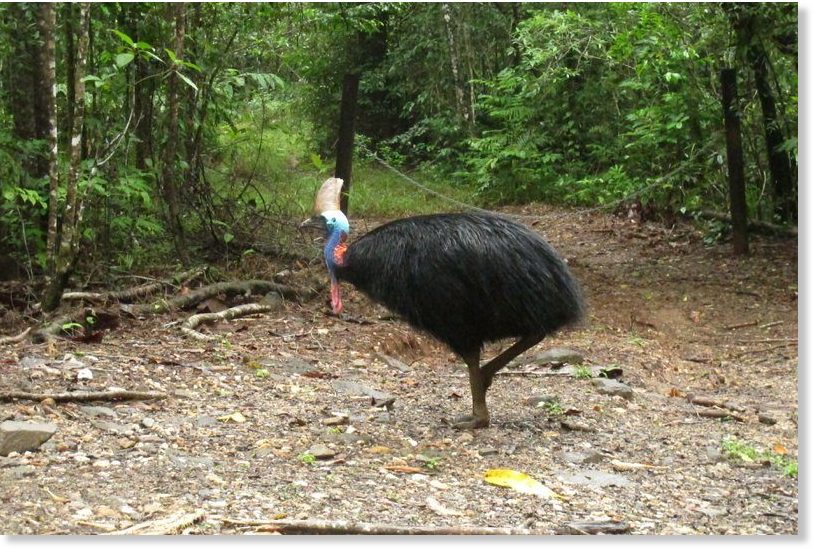
Large, flightless bird attacks and kills its fallen owner near Gainesville, Florida

A cassowary
A cassowary
A large, flightless bird native to Australia and New Guinea attacked and killed its owner when the man fell on his farm in Florida, authorities said Saturday.

The Alachua County Fire Rescue Department told the Gainesville Sun that a cassowary killed the man Friday on the property near Gainesville, likely using its long claws. The victim was apparently breeding the birds, state wildlife officials said.

"My understanding is that the gentleman was in the vicinity of the bird and at some point fell. When he fell, he was attacked," Deputy Chief Jeff Taylor told the newspaper. He said first responders got a call at 10 a.m. Friday and rushed the man to a hospital for trauma care but he died.

Doberman

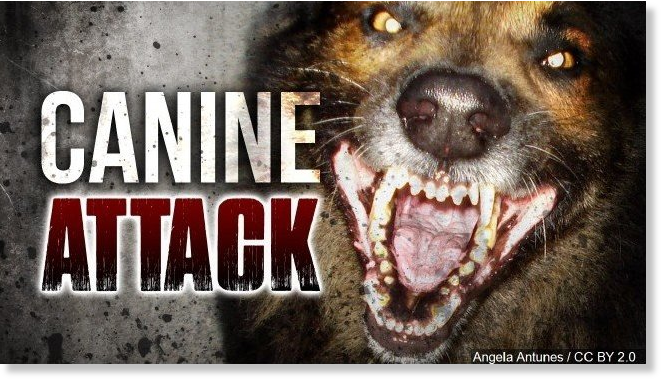
Boy killed in dog attack at holiday park in Cornwall, UK

canine attack
© Angela Antunes / CC by 2.0
A 10-year-old boy was mauled to death by a dog at a holiday park in Cornwall early Saturday morning.

The boy was attacked by a "bulldog-type" dog at Tencreek Holiday Park in Looe, shortly before 5am.

Police were called to the caravan park where they found the boy "unresponsive" following the savage attack.

The child died at the scene and a search was launched to find the dog and its owner, who had fled the scene.

A teenage girl told how she inadvertently helped a blood soaked woman and a dog by paying for her train fare, believing she had been subjected to domestic violence.

Comment: Baby boy fighting for his life after being mauled by dog in Hawick, Scotland

Elsewhere recently a pack of dogs mauled 4 children in India while 7 dogs in Cobb County, Georgia attacked 5 people resulting in 2 of them ending up hospital. Video report of the latter incident -


Doberman

Baby boy fighting for his life after being mauled by dog in Hawick, Scotland

canine attack
© Angela Antunes / CC by 2.0
A newborn is in a critical condition after being attacked by a dog.

The baby boy, who is six weeks old, was attacked at an address in Hawick, in the Scottish Borders, at 4.35pm yesterday.

He was rushed to Borders General Hospital and then transferred to Glasgow's Royal Hospital for Sick Children via an air ambulance.

Hawick councillor Davie Paterson confirmed the boy's condition 'could be a matter of life and death'.

He said: 'It's an absolute tragedy and it's going to hit the town hard. 'I don't know the full circumstances of what happened but from what I'm hearing the child could be scarred for life. 'I was told about it with the council yesterday and I was absolutely horrified.'

Info

'Morphospace' governs recovery after mass extinction

Mass Extinction Event
© MARK GARLICK/SCIENCE PHOTO LIBRARY/Getty ImagesThe re-establishment of species diversity following an extinction event is consistently slower than evolutionary theory predicts.
Theory tells us that after a mass extinction, an event where the diversity of species is drastically reduced, nature should rebound with a flurry of creativity. Species should quickly proliferate to refill desolate ecosystems, something called adaptive radiation.

Yet, the paleontological record suggests that this doesn't happen at anywhere near the expected pace. Now, research published in the journal Nature Ecology and Evolution argues that understanding something called "morphospace" might help us find the cause.

Extinction events happen with alarming regularity: there's the "big five", but a host of slightly smaller, yet still devastating extinctions have peppered the planet's history.

Scientists now worry that we might be in the middle of one of our own making, so this makes it all the more important to understand how the natural world bounces back from such catastrophes.

Perhaps the most well-known of the earth's mass extinctions is the Cretaceous-Paleogene (K-Pg) extinction event. This took place 66 million years ago when an asteroid smacked into the earth next to what is now the Yucatán Peninsula, creating the nearly 200-kilometre-wide depression known as the Chicxulub crater. This impact drove the extinction of all the non-avian dinosaurs, and much else besides.

Doberman

Elderly woman dead after dog attack in South Korea

canine attack
© Angela Antunes / CC by 2.0
A resident of a senior care center in Anseong, Gyeonggi Province, died, Wednesday, after being mauled by a dog owned by the center director, according to local police.

The owner is now facing criminal charges for negligent homicide and violation of the Animal Protection Law.

Anseong Police Station said the 62-year-old woman, who was taking a stroll around the center, was attacked by a Tosa dog on Wednesday morning, causing injuries to her chest and buttocks. She was taken to the hospital but died five hours later.

The victim had lived at the nursing center for years.

Binoculars

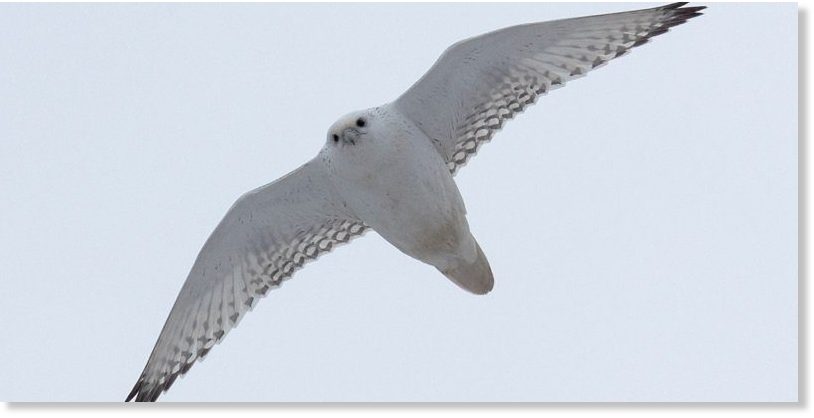
Wrong place, wrong time: Rare Arctic falcons spotted in southern Newfoundland, Canada

Gyrfalcon
© Bruce MactavishGyrfalcon
A St. John's man is the envy of the local birdwatching community for being at the right place at the right time.

Bruce Mactavish, an avid birdwatcher, captured some spectacular shots of a white gyrfalcon at Cape Spear on the weekend.

The white bird-of-prey is the largest of the falcons, and native to the high Arctic. It is rarely seen as far south as the Avalon Peninsula.

Mactavish's photos are being widely shared within the birdwatching community.

Snowflake

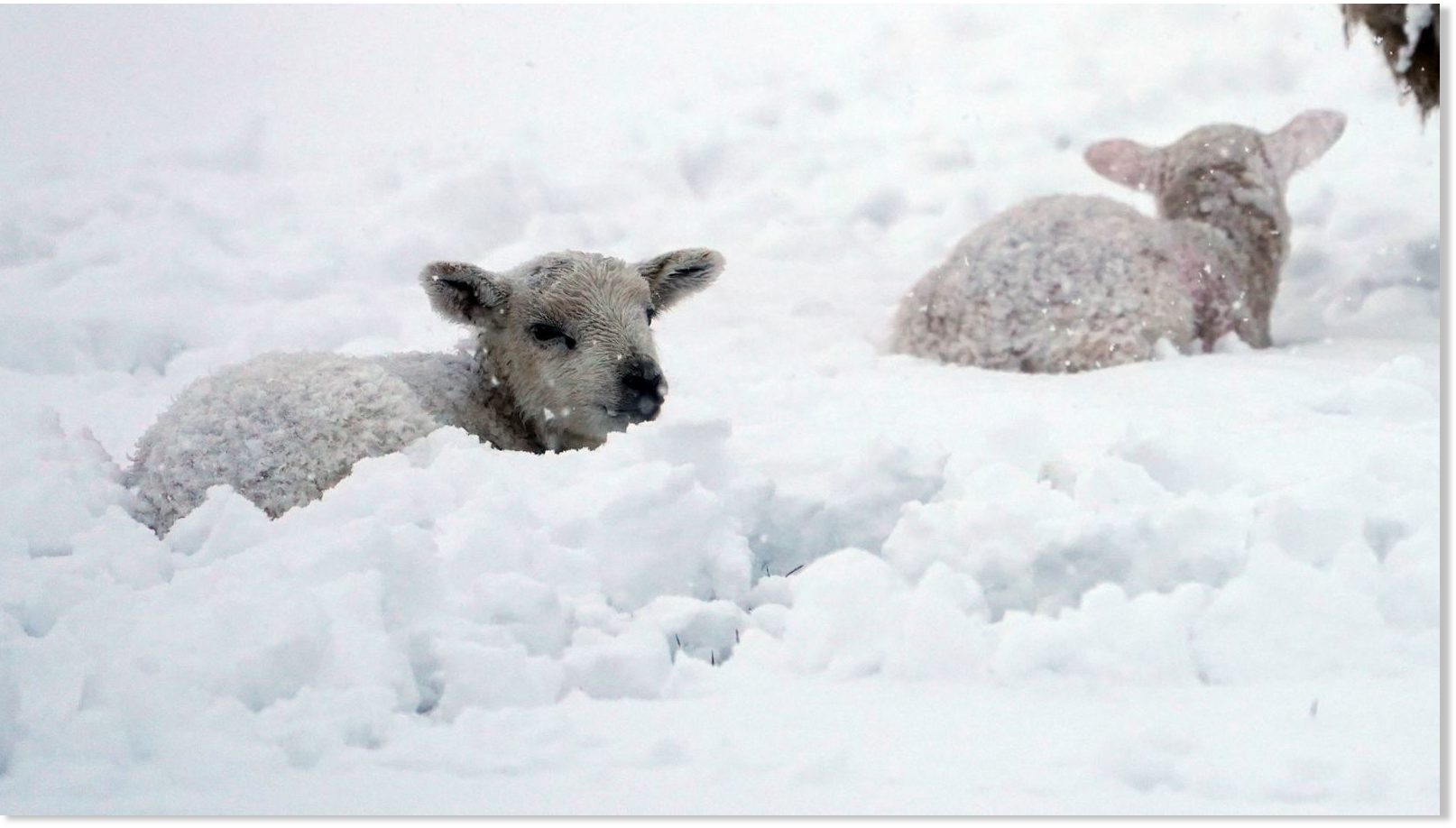
Spring snowfall endangers newborn lambs across the UK

Farmers are concerned for the well-being of their newborn lambs during the cold snap
Farmers are worried about the effects a spring snowfall and cold weather snap will have on livestock during lambing season.

A cold weather snap bringing snow and ice to parts of the UK this week has raised concerns for farmers trying to protect their newborn lambs from the elements.

Lambing season, which is recognised by many as the start to spring, is a significant event in British farming calendars.

But the wintry weather during this season's peak has roused worries over the newborns' ability to survive.

Info

Consciousness: A battle between your beliefs and perceptions?

Harry Houdini
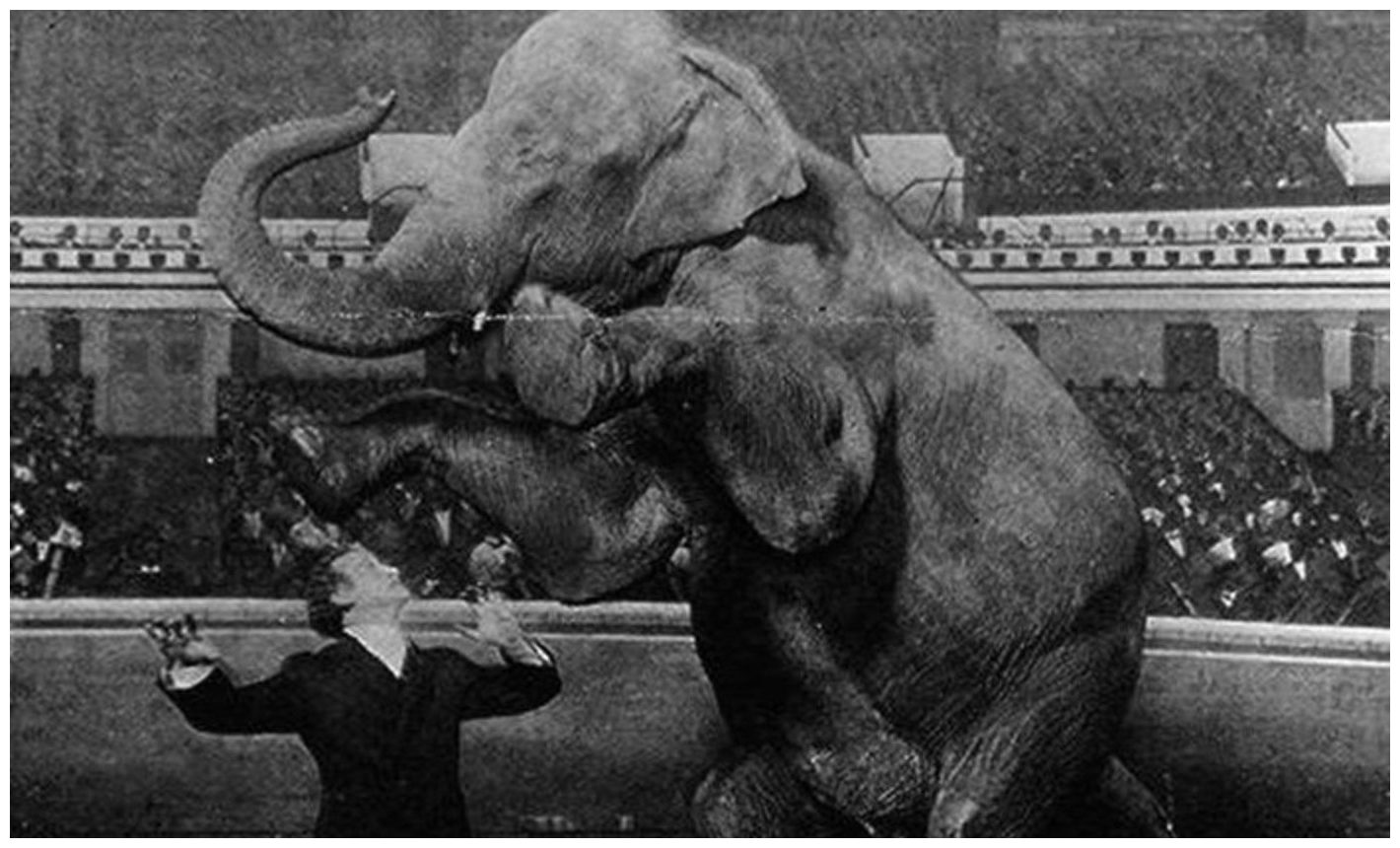
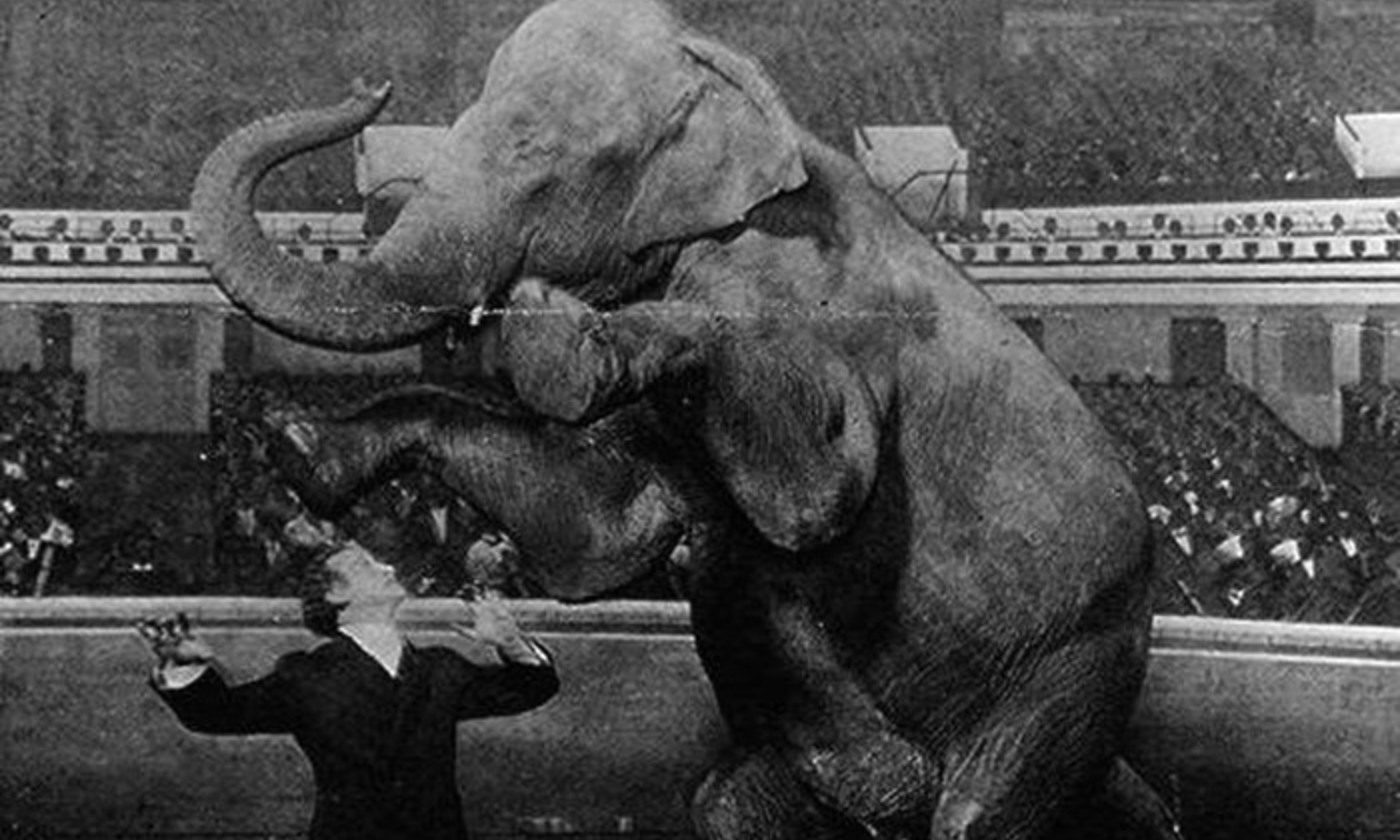
© Photo courtesy Library of CongressNow you see it... Magician Harry Houdini moments before ‘disappearing’ Jennie the 10,000lb elephant at the Hippodrome, New York, in 1918.
Imagine you're at a magic show, in which the performer suddenly vanishes. Of course, you ultimately know that the person is probably just hiding somewhere. Yet it continues to look as if the person has disappeared. We can't reason away that appearance, no matter what logic dictates. Why are our conscious experiences so stubborn?

The fact that our perception of the world appears to be so intransigent, however much we might reflect on it, tells us something unique about how our brains are wired. Compare the magician scenario with how we usually process information. Say you have five friends who tell you it's raining outside, and one weather website indicating that it isn't. You'd probably just consider the website to be wrong and write it off. But when it comes to conscious perception, there seems to be something strangely persistent about what we see, hear and feel. Even when a perceptual experience is clearly 'wrong', we can't just mute it.

Why is that so? Recent advances in artificial intelligence (AI) shed new light on this puzzle. In computer science, we know that neural networks for pattern-recognition - so-called deep learning models - can benefit from a process known as predictive coding. Instead of just taking in information passively, from the bottom up, networks can make top-down hypotheses about the world, to be tested against observations. They generally work better this way. When a neural network identifies a cat, for example, it first develops a model that allows it to predict or imagine what a cat looks like. It can then examine any incoming data that arrives to see whether or not it fits that expectation.

Question

Over 200 migratory birds found dead at lake in Maharashtra, India - bird flu ruled out

redshanks
Redshanks
Over 200 migratory 'shank' birds of red and green variety, were found dead in a lake at Gandheli near here in Central Maharashtra even as the animal husbandry department ruled out any symptoms of bird flu in them.

A post-mortem report, conducted by the Animal Husbandry department (AHD), has revealed that the birds died of pneumonia, AHD Deputy Commissioner J M Doiphode said adding ''no symptoms of bird flu were found in the migratory birds.'' However, samples of their viscera have been sent to the disease investigation section of the state government laboratory, he said.

A sample of live bird is also being sent to the Bhopal laboratory, Mr Doiphode added. The AHD team has also collected water samples to verify the doubts whether the birds died of contaminated water, he said.