
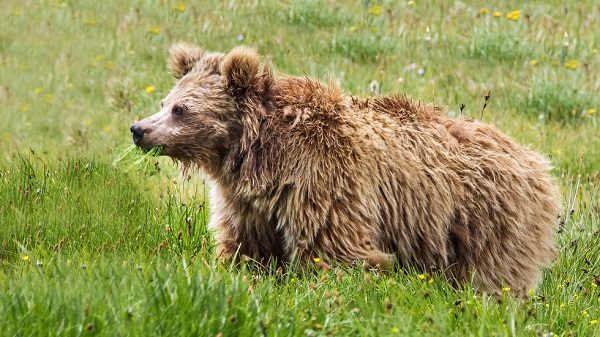
© AFP / Abdullah Khan / Snow Leopard Foundation 1107
The heart-wrenching footage captured a brown bear trying to hold its balance on a rocky cliff while being hit by stones. Eventually, the animal falls down into a mountain stream as cheering voices are heard in the background.
The incident occurred in the Kargil district of the northern Jammu and Kashmir state. The bear climbed up the cliff striving to escape from the local residents who chased him all the way from the nearby village, local media report. As the bear was running away he got trapped in barbed wire but managed to free himself, a separate video suggests.
The gruesome footage quickly went viral and sparked outrage among social media users. "This is truly barbaric," one person wrote while another one dubbed the scene as "cruelty at its best."








Comment: Here is another video after the bear reached the bottom of the cliff: