Animals
S


Question

Some 8,000 migratory birds mysteriously perish at wildlife sanctuary in northern Iran

An increasing number of migratory birds have been found dead in the Miankaleh peninsula in Mazandaran province, northern Iran.
According to Hossein-Ali Ebrahimi, head of Mazandaran province's department of environment, the corpses of some 8,000 birds of different species, including flamingos, have been collected in the peninsula since the unusual death of the birds was witnessed last week.

The official noted that a group of experts from Iran's Department of Environment has been sent to Mazandaran province to investigate the cause of migratory birds' death.

He said the DoE has banned hunting of migratory birds in the eastern parts of the province, where Miankaleh is located until the investigations are carried out, adding that in order to maintain human health, the sale of any migratory birds in the nearby cities would also be suspended until the exact cause of the deaths is revealed.


Attention

Signs and Portents: Pet axolotl spawns a two-headed baby in Waterlooville, UK

The two-headed axolotl, Orthrus, spawned by Louise Merrick's pet axolotls Falkor and Toothless.
© Louise MerrickThe two-headed axolotl, Orthrus, spawned by Louise Merrick's pet axolotls Falkor and Toothless.
Nine months ago Louise Merrick stopped collecting tropical fish and begun a search for a domestic pet altogether more fascinating.

The 39-year-old's three sons were delighted when she settled for a pair of axolotls - smiley amphibians often known as Mexican walking fish.

But what they didn't expect to see was the salamanders, named Falkor and Toothless, spawn a baby with two heads.

Dubbed a thousands-to-one occurrence by an amphibian expert, Falkor gave birth to a deformed larva on Friday, January 17.

Doberman

One-month-old baby dies after family dog attack in Lafayette, Indiana

PIT BULL ATTACK
A 26-day-old baby has died after a dog attack in a home in Lafayette Saturday.

Indianapolis station WTHR reports that calls came in to Lafayette Police just after 11:30 a.m. to a home on Greenbush Street.

The victim's brother told police that the family's pit bull mix and beagle mix dogs were fighting in the infant's bedroom and went to separate the dogs. The brother took the beagle mix out of the room, but when he returned, he saw that the pit bull had attacked the infant.

When officers arrived, they found the pit bull standing over the infant, who had been severely injured by the dog. In order to render aid to the infant, the officer fired one shot at the pit bull, killing the dog.


Black Cat

Leopard mauls boy to death in Tanahun, Nepal - 9th such incident for district

Stock image of leopard
© Getty
A boy was killed a leopard attack at Lohipakha in Bandipur Rural Municipality-4 of Tanahun district, on Monday evening, police said.

According to Police Inspector Jitendra Shrestha at the Area Police Office, Dumre, 10-year-old boy Ishak Sunar was mauled by a wild animal while returning home with his mother after celebrating Chewar festival in a nearby jungle area.

"Police recovered the body some 90 metres away from where the boy was dragged to the river bank in the area," police inspector Shrestha added.

Attention

Record number of sea turtles arrive at North Carolina rehab center due to cold temperatures

Cold snap sends over 100 sea turtles to rehab center
Cold sends over 100 sea turtles to rehab center
A cold snap has flooded a turtle rehab center with more animals in need than ever before.

Volunteers at the Karen Beasley Sea Turtle Rescue and Rehabilitation Center said they are treating more than 100 turtles. Forty-seven sea turtles were admitted Friday alone.

The turtles are cold-stunned. They are reptiles, which are cold-blooded. Cold-blooded animals cannot regulate their body temperature. So often when temperatures drop quickly, the animals seize up.


Wolf

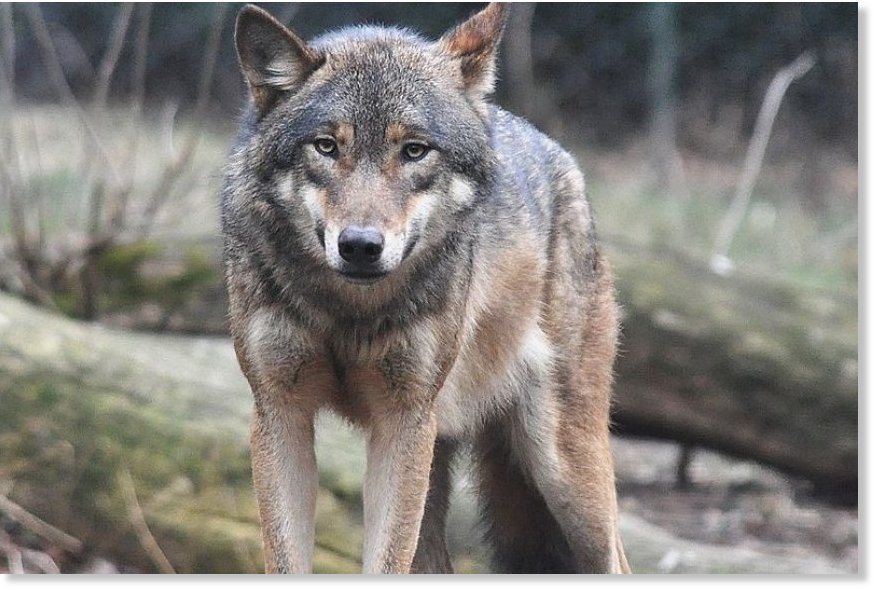
Herder woman saves husband from wolf attack in Mongolia

Wolf
© wikipedia
A herder woman saved her husband from a wolf attack in western Mongolia with an axe, the country's state-owned news agency Montsame reported Friday.

The incident occurred in Nogoonnuur soum in western Mongolia's Bayan-Ulgii province on Wednesday.

"My husband rushed outside when he heard a dog barking and saw a wolf in front of the fence near our livestock animals," the woman, in her 40s, was quoted as saying. "The wolf then attacked him."

Bug

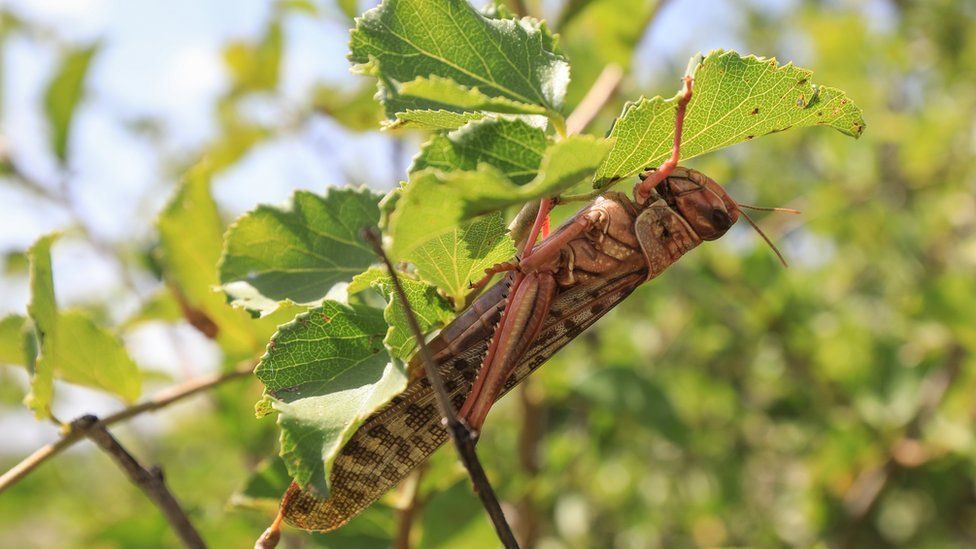
Unprecedented swarms of voracious locusts to hit East Africa, Mideast, leaving behind barren earth

locust
© European Press AgencyIn just one day, a swarm of locusts the size of Paris could eat the same amount of food as half the population of France
A real plague of pests has been forecast for the region that saw unprecedented rainfall over the last three months of 2019, with the scale of it reaching well beyond the Horn of Africa, where it all started.

A United Nations report, cited in a press conference Friday, warns that petrifyingly large swarms of locusts are expected to hit East Africa, and the timeline is no less frightening - in the next few months, making it the worst infestation in Ethiopia for the past 25 years, and in Kenya in 70 years.

The invasion poses "an unprecedented threat to food security and livelihoods" in the area, says a report by the Food and Agriculture Organisation (FAO), adding that the issue is "extremely" acute in Kenya, Ethiopia, and Somalia, where locusts have already descended in eye-watering numbers - up to 150 million jumping critters per square kilometre (0.39 square miles.)

Comment: Another sign of Earth's environmental imbalance? A symbol of the elites' rapaciousness? Out-breaks seem to be increasing in the last five years


Info

437 million years old scorpion fossil found

Scorpion Fossil
© Andrew WendruffThe fossil (left) was unearthed in Wisconsin in 1985. Scientists analyzed it and discovered the ancient animal's respiratory and circulatory organs (center) were near-identical to those of a modern-day scorpion (right).
Columbus, Ohio — Scientists studying fossils collected 35 years ago have identified them as the oldest-known scorpion species, a prehistoric animal from about 437 million years ago. The researchers found that the animal likely had the capacity to breathe in both ancient oceans and on land.

The discovery provides new information about how animals transitioned from living in the sea to living entirely on land: The scorpion's respiratory and circulatory systems are almost identical to those of our modern-day scorpions — which spend their lives exclusively on land — and operate similarly to those of a horseshoe crab, which lives mostly in the water, but which is capable of forays onto land for short periods of time.

The researchers named the new scorpion Parioscorpio venator. The genus name means "progenitor scorpion," and the species name means "hunter." They outlined their findings in a study published today in the journal Scientific Reports.

"We're looking at the oldest known scorpion — the oldest known member of the arachnid lineage, which has been one of the most successful land-going creatures in all of Earth history," said Loren Babcock, an author of the study and a professor of earth sciences at The Ohio State University.

"And beyond that, what is of even greater significance is that we've identified a mechanism by which animals made that critical transition from a marine habitat to a terrestrial habitat. It provides a model for other kinds of animals that have made that transition including, potentially, vertebrate animals. It's a groundbreaking discovery."

The "hunter scorpion" fossils were unearthed in 1985 from a site in Wisconsin that was once a small pool at the base of an island cliff face. They had remained unstudied in a museum at the University of Wisconsin for more than 30 years when one of Babcock's doctoral students, Andrew Wendruff — now an adjunct professor at Otterbein University in Westerville — decided to examine the fossils in detail.


Attention

Elephant kills 2 persons in Odisha, India - record 102 such deaths for the year in state

Charging elephant
© GettyCharging elephant
The man- elephant conflict in Odisha seems to be worsening by the day with a district in Odisha on Friday declaring shutting down of about 600 schools in a mineral-rich district after a stray tusker killed 2 persons on Thursday evening.

Jajpur district education officer Krushna Chandra Nayak said the district administration ordered closure of more than 600 schools in Korei, Danagadi and Sukinda blocks as a precautionary measure after the tusker killed 2 persons on Thursday evening. "The elephant is hiding in a forested area somewhere close to Jajpur town. We do not want to take any chances with the safety of the school children and thus ordered one day shutdown. This could be the first time that so many schools were shut down in the district due to elephant attack," said Nayak.

Odisha forest and wildlife officials said the 10-year-old tusker that strayed from a herd from Keonjhar district few days ago had gone on a rampage through Korei block of chromote-rich Jajpur district on Thursday evening. As the agitated villagers tried to drive it away lighting torches and bursting firecrackers, the tusker ran into Sankachila village where it tossed 62-year-old Chintamani Ram and trampled upon the head of 55-year-old Iswar Das, both of them snacks sellers from a nearby village. Both of them immediately died. At least 10 other villagers were also injured in the stampede as the elephant rampaged through.


Comment: Seen in addition: Elephant kills 2 persons in Odisha, India - record 102 such deaths for the year in state


Binoculars

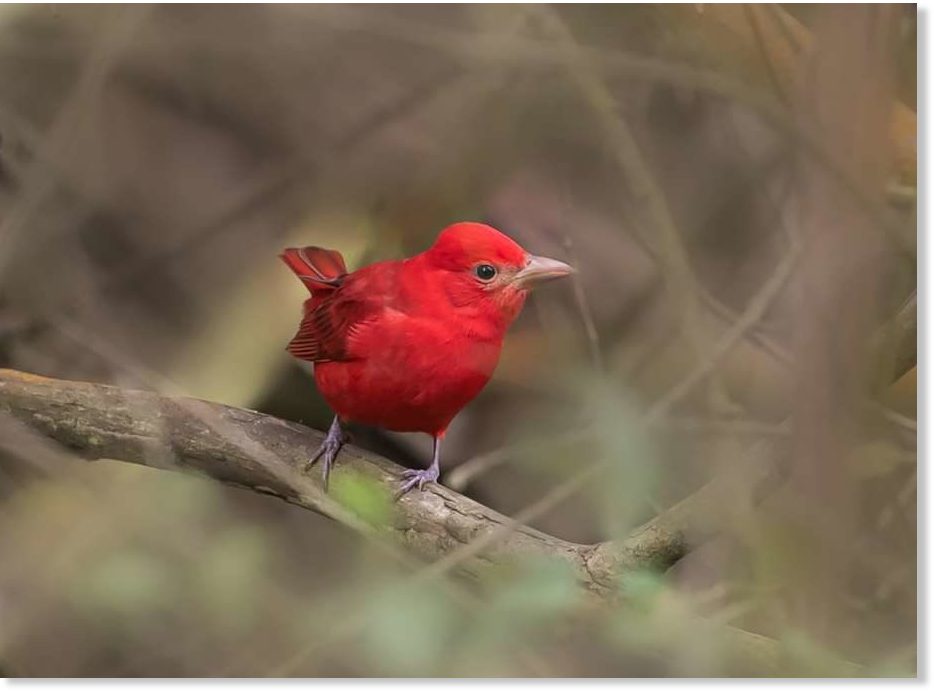
Wrong place, wrong time: 3 summer tanagers that normally winter in Central, South America turn up around San Francisco

A bright red summer tanager made San Francisco's Glen Park Canyon home in January 2019.
© SF Rec And ParkA bright red summer tanager made San Francisco's Glen Park Canyon home in January 2019.
A brilliant red bird — the sort you'd expect to find in a tropical forest — has made an unusual appearance in San Francisco's Glen Canyon Park.

The summer tanager is what birders call a "vagrant," a bird that ends up far from its usual migratory destination.

The medium-size song bird typically breeds in southern portions of the United States and migrates to Central America and northern South America for the winter. Dylan Hayes, who has worked in the canyon as a San Francisco Recreation and Parks naturalist for more than 15 years, said he has never seen this species in the city.