Jon Rogers The Sun (UK) Sun, 29 Aug 2021 11:00 UTC
A student was mauled to death by a pack of stray dogs while she was on a romantic picnic with her boyfriend.
Simona Cavallaro, a 20-year-old Italian, died after she was attacked by the dogs in the southern Italian town of Satriano earlier this week.
Cavallaro and her boyfriend, who has not been identified, had finished their picnic in the woods with a group of friends and had decided to go for a stroll, local news site Agi reports.
The couple were attacked by a pack of stray dogs whilst they were passing through a densely wooded area.
Cavallaro's boyfriend eventually got away but she was mauled by the dogs that are reported to have attacked every part of her body.
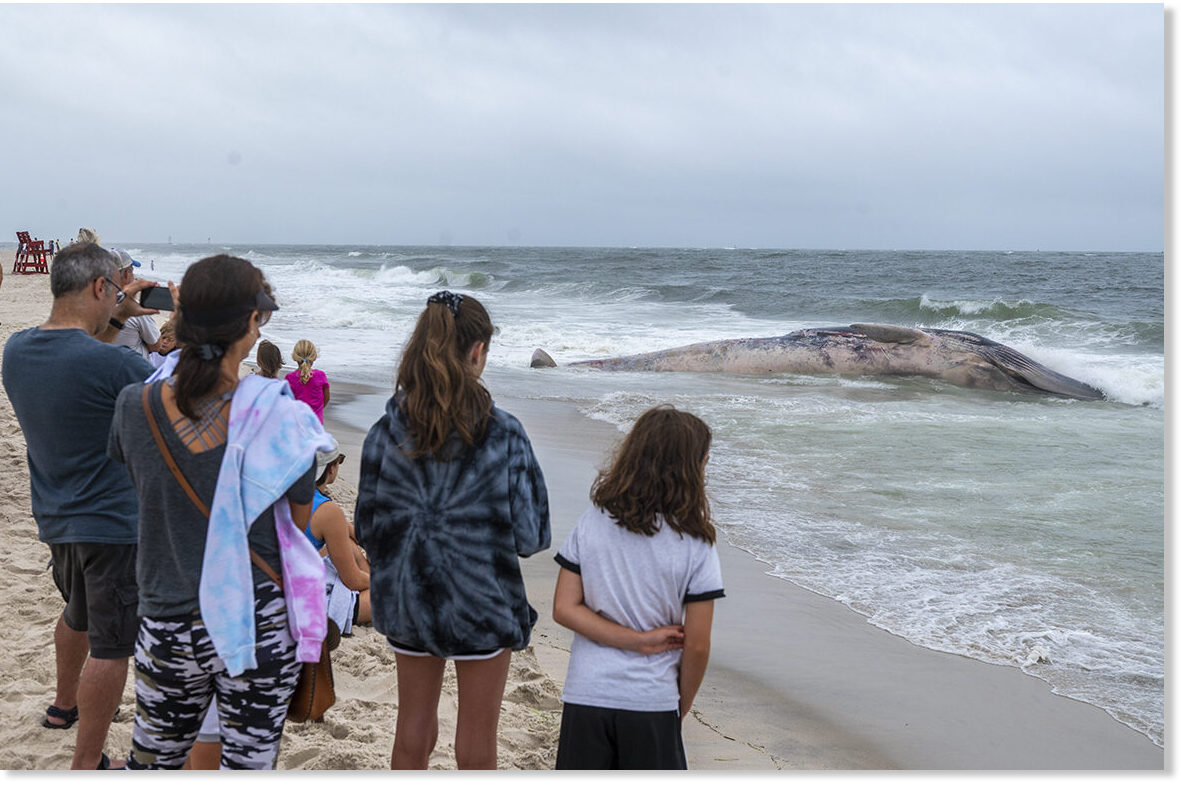
A 54-foot decomposing fin whale that washed up on Barnegat Light's 19th Street beach Sunday morning would be too large to be disposed of any other way than burying it, according to the director of the Marine Mammal Stranding Center who was consulted after the whale washed up.
Bob Schoelkopf, director of the Brigantine-based stranding center, said a necropsy would not be performed. "The animal had been dead too long."
The definitive cause of the male whale's death was "hard to tell," Schoelkopf said, because "it had been dead for several days." The carcass showed "large shark bites."
"We think the animal may have been struck by a freighter, a large ship."
A corpse that washed up near Benidorm, eastern Spain last week is yet another example of an increasingly common phenomenon that is baffling scientists
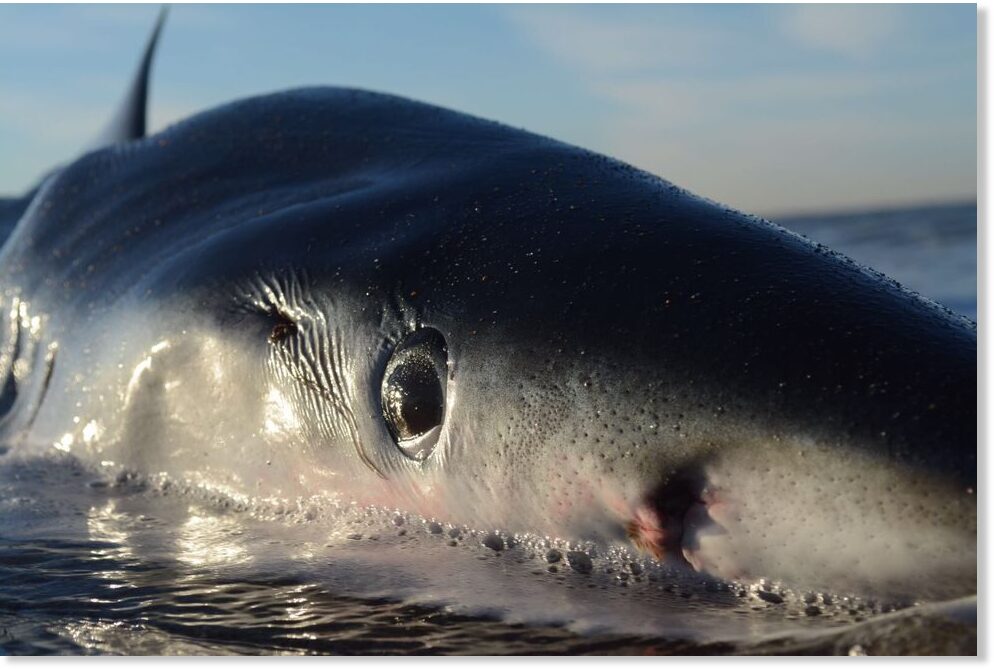
Last week, the sighting of a blue shark forced the evacuation of a beach in Benidorm, eastern Spain. Around two meters long and weighing in at about 60 kilos, the shark had become disoriented and ended up in an area full of bathers. A rescue team from the Oceanogràfic of Valencia oceanarium managed to capture it and, after running tests, found it to be in good health and returned it to the sea.
On Saturday, August 21, the same specimen was located in the municipality of El Campello, 30 kilometers south, where the following day, it washed up dead. According to the necropsy carried out by Jaime Penadés, a researcher at the Marine Zoology Unit at Valencia University, the cause of death appears to have been a small wound near its eyelid, which was already visible in videos recorded several days before by the local police's Maritime Service; a wound that is compatible with a swordfish attack. Until recently, this type of aggression was a complete mystery to scientists, but a spate of cases has prompted research into the relationship between the two marine animals.
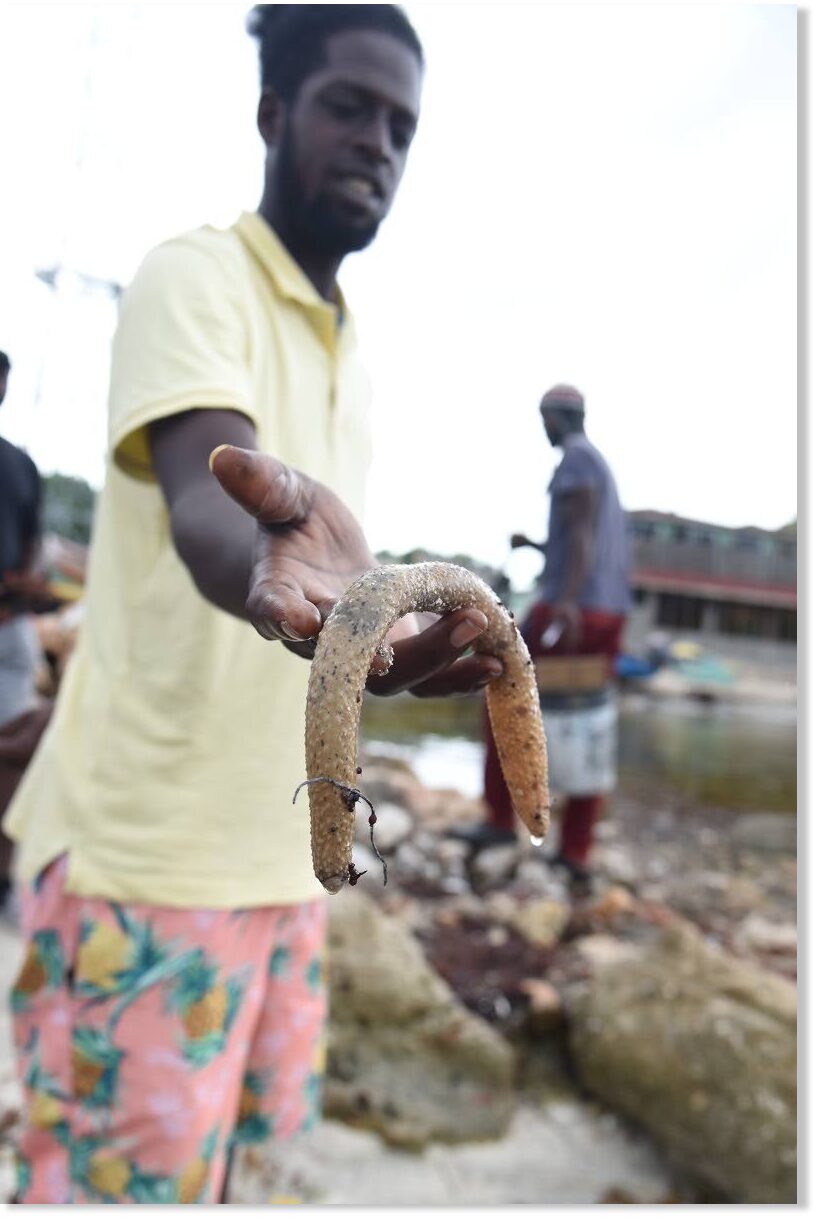
The heavy showers Jamaica encountered on August 17 prevented the National Environment and Planning Agency (NEPA) from conducting an investigation into a report of juvenile fish, lobsters, crabs, sea cucumbers and other marine species washing up on the Hellshire Fishing Beach in St Catherine.
When The Gleaner team arrived at the location, anxious fisherfolk pointed to sections of the beach where the juvenile fish were dead or dying, and crabs and lobsters crawling out of the sea to die on the shore. Concerned about the threat to their livelihood but confused as to what was causing the fish kill, some of the fishers sought help in getting answers.
"Something in the water killing off everything, and the water stink! We need NEPA to come here and investigate," declared one fisherman. However, that did not happen as the island was already experiencing heavy rains associated with Tropical Storm Grace and the agency did not think it prudent to send out its staff.
Instead, it contacted a sister agency which was closer to the beach and whose staff is equally competent in the marine sciences. However, this option did not pan out as by then, weather conditions had deteriorated and the island was under a hurricane watch.
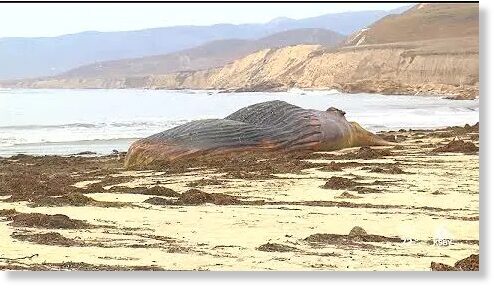
A humpback whale carcass has washed ashore near Jalama Beach.
Justin Viezbicke with the Marine Mammal Health and Stranding Response Program says access to the whale has been difficult for his team as the carcass has been floating in and out of the water with the tide.
They're hoping to determine a cause of death along with other information on the whale, but don't know when that will be done.
Coyotes are stalking and biting visitors in a popular Vancouver park in record numbers, in a mysterious surge of attacks that is baffling experts and dividing the city.
In the roughly nine months since December 2020, 40 coyote attacks in Stanley Park have been reported, including one last week where a 69-year-old man was bitten on the leg while walking on a trail. None have so far been fatal.
The figure is four times the number of attacks recorded over the last 30 years combined.
"In a normal year, there is no contact between a coyote and a person," said Nadia Xenakis, urban wildlife programmes coordinator with the Stanley Park Ecology Society. Even in years in which some aggression is seen, the behaviour is typically attributed to the animals' breeding season.
It's a hatching season unlike any other for the Turtle Team at the Upper Thames River Conservation Authority (UTRCA), whose main goal is to repopulate endangered turtle species like the spiny softshell turtle and others.
Scott Gillingwater, a species at risk biologist for UTRCA, says it's been a successful hatching season with the roughly 4,500 spiny softshell turtles they'll be raising -- and some unique newborns including a two-headed map turtle and six albino snapping turtles.
"That could be genetic, it could be pollutants, but I think the reason we're seeing more than typical is because we are being successful in our efforts. We're bringing in more eggs. There's always a higher chance the more eggs you have," said Gillingwater.
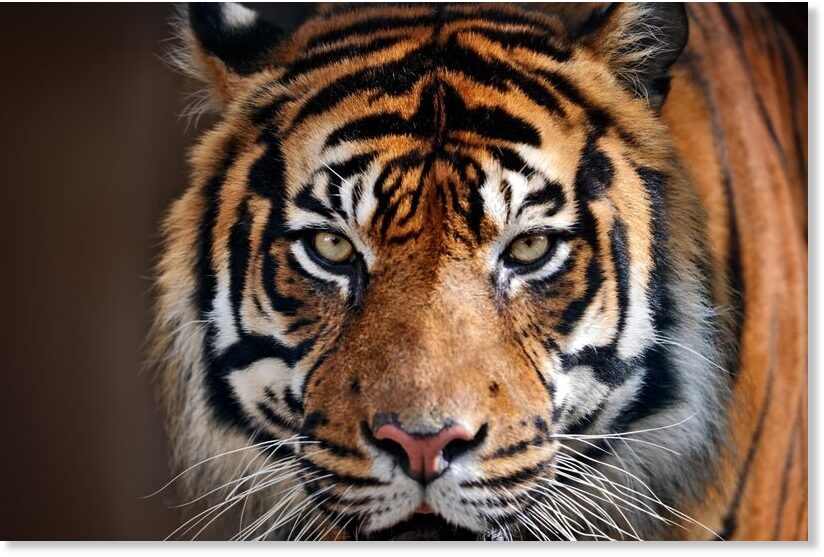
A tiger is believed to have attacked and wounded a logger before dragging him away into the forest, locals fear.
Logger Mikhail Shabaldin, 41, was sitting on the toilet while at work in a remote Russian village before vanishing.
Tiger footprints were found at the scene in Khabarovsk, the eastern region which borders China.
A terrifying video of Mikhail's shocked colleague reacting to pieces of toilet paper and even the missing man's bloodied clothes and innards has led locals to fear for the logger's fate.
Majestic amur tigers - the world's largest felines - prey wildlife and humans alike in Russia, China and North Korea.
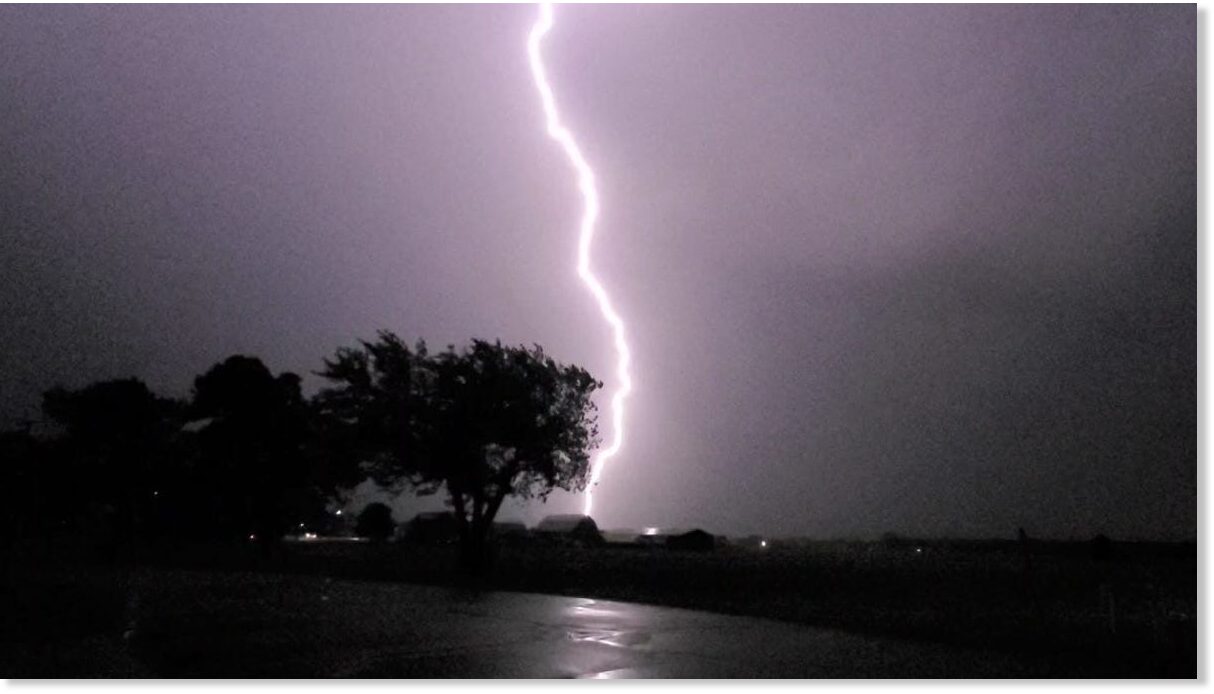
Fourteen cattle were killed and six persons were injured after being hit by lightning at Talsur village in Lanjigarh block of Kalahandi district on Friday.
According to sources, a herder Budu Majhi was grazing some cattle in a nearby forest yesterday. He was accompanied by three minor boys and two minor girls who were also grazing their cattle.
As it started to rain in the afternoon, all of them took shelter under a tree. Suddenly, lightning struck them killing 14 cattle on the spot.
The herder Budu Majhi and five others identified as Parmeshwar Majhi (14), Damodar Majhi (10), Sanju Majhi (9), Gautam Majhi (7), and Niranti Majhi (12), were also injured in the lightning strike.
All of them were rushed by locals in an ambulance to Biswanathpur Community Health Centre (CHC). While five among them were discharged after preliminary treatment, Parmeshwar is still undergoing treatment.
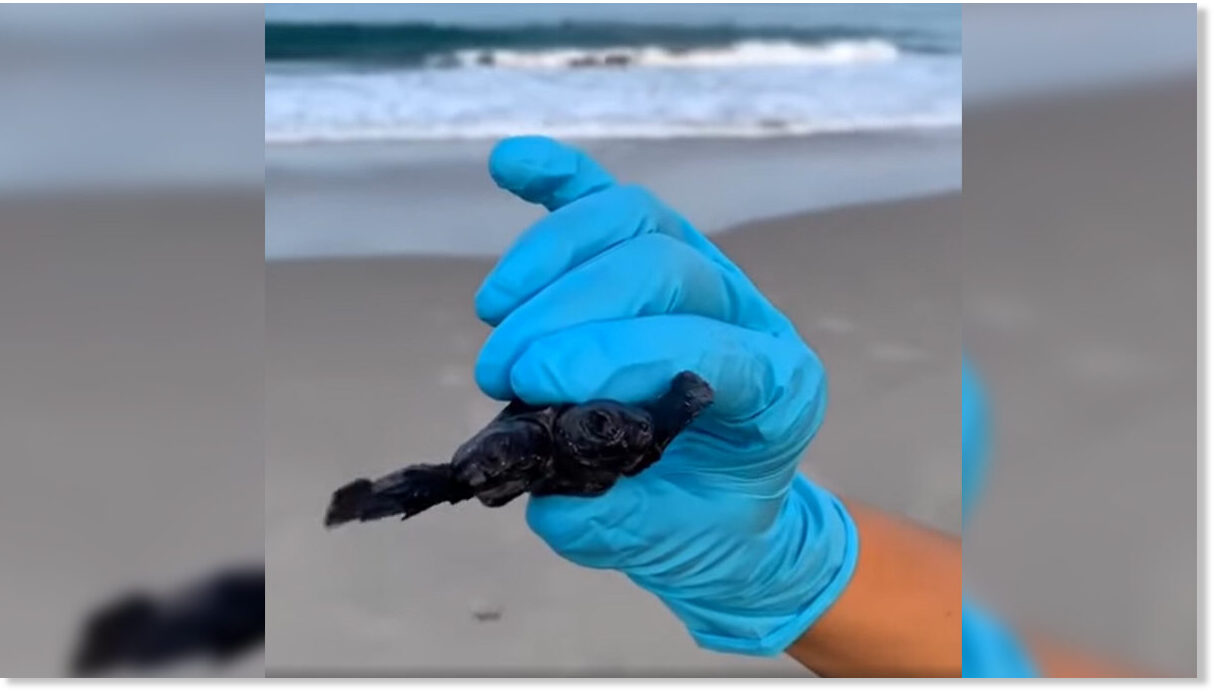
Biologists made a rare discovery while out patrolling the Cape Hatteras National Seashore in North Carolina.
Video taken by a National Park Service ranger shows a two-headed sea turtle squirming in someone's gloved hand on a beach.
"Are two heads really better than one?!" the Cape Hatteras National Seashore wrote on Facebook. "It's not everyday that park biologists find a two-headed sea turtle!"
Mystery creates wonder, and wonder is the basis for man's desire to understand. Who knows what mysteries will be solved in our lifetime, and what new riddles will become the challenge of the new generations.
- John Keel
”
Recent Comments
So charge him, perp walk him, give him a 24 / 7 OJ trail so we can finally watch him squirm, like he made the majority squirm. Deplete his savings...