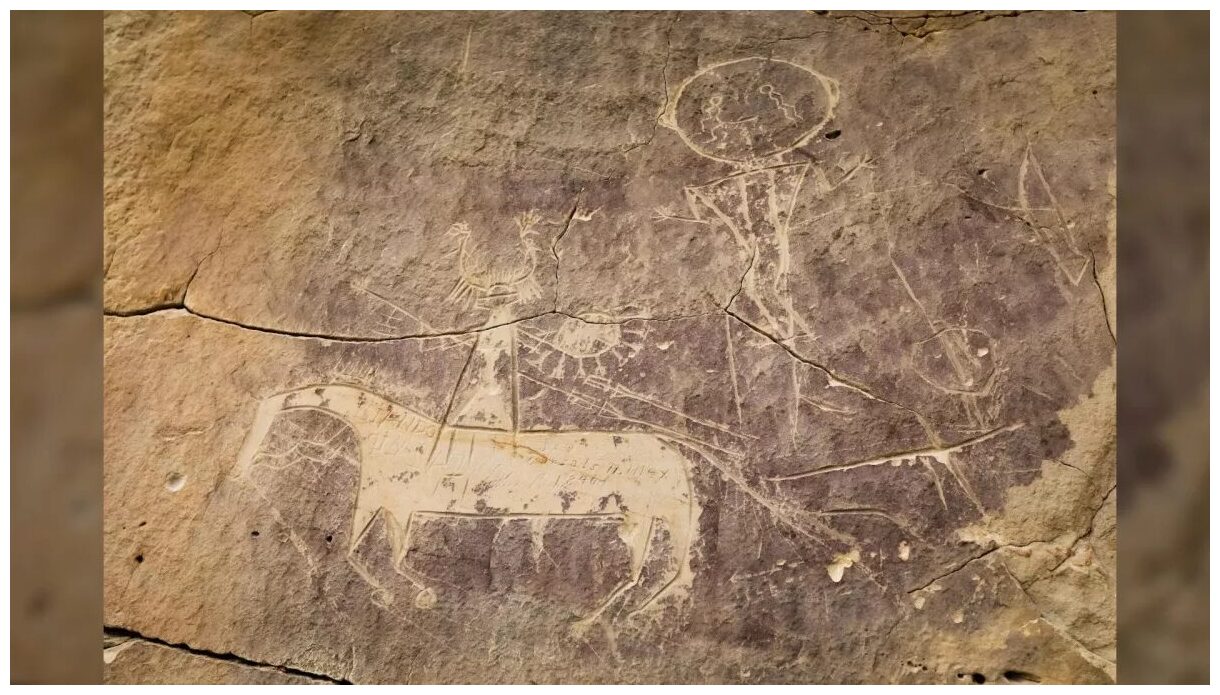
Indigenous oral histories and archaeological evidence are rewriting the story of how horses came to the American West.
Centuries-old horse skeletons from the American Southwest are helping rewrite a colonial myth: When the Spanish colonized the region in the 17th century, they didn't introduce horses to Indigenous people, as long thought. Instead,
horses were present in the Southwest long before Europeans, and were traded by Indigenous people who formed close, sacred relationships with them, a new study finds.Horses lived in North America for millions of years but
went extinct at the end of the last ice age, about 11,000 years ago. When Europeans reintroduced horses to what is now the eastern U.S. in 1519, these hoofed mammals radically altered Indigenous ways of life, rapidly causing changes to food production methods, transportation and warfare. In the Southwest, historical Spanish records suggest horses spread throughout the area after the Pueblo Revolt in 1680, when Indigenous people forced Spanish settlers out of what is now New Mexico.
But these records, made a century after the revolt, do not align with the oral histories of the Comanche and Shoshone people, who document horse use far earlier.Using tools such as radiocarbon dating, ancient and modern DNA analysis and isotope analysis (isotopes are elements with varying numbers of neutrons in their nuclei), a large and diverse team of researchers from 15 countries and multiple Native American groups, including members of the Lakota, Comanche and Pawnee nations, have now determined that horses did indeed spread across the continent earlier and faster than previously assumed.