Wildfires
S


Fire

Wildfires raging in Western U.S. States mark early start to destructive fire season

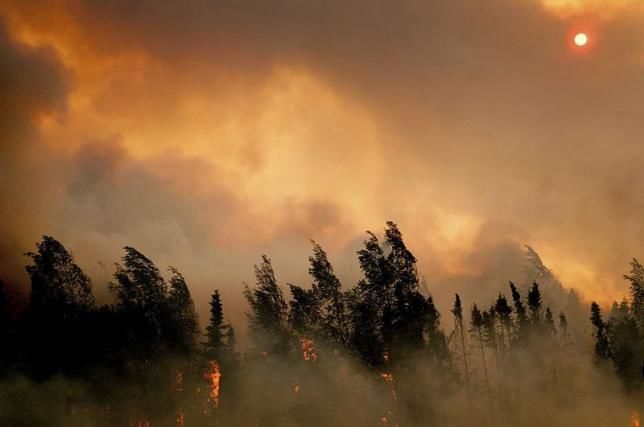
Willow alaska wildfire
© Mat-Su BoroughThe setting sun is partially obscured by smoke from an out of control wildfire on the Parks Highway near Willow, Alaska, June 14, 2015.
Wildfires raging in four West Coast states have forced more than 1,000 people to be evacuated from their homes this week in rapidly growing blazes that mark an early start to what experts say may be a particularly destructive fire season.

The fires, spread by wind and exacerbated by very dry conditions, have already consumed more than 100 structures in Alaska, and were threatening others in drought-hit California and Arizona.

In a national forest outside Los Angeles, some 500 firefighters backed by air tankers and bulldozers were battling the Lake Fire, which was raging across some 7,500 acres (3,000 hectares) and was just 5 percent contained, the San Bernardino County Fire Department said.

More than 150 people were forced to evacuate various camps, as officials closed hiking trails and roads, and structures were threatened, the county said.
Fire

Uncontained brush fire forces evacuations in Arizona

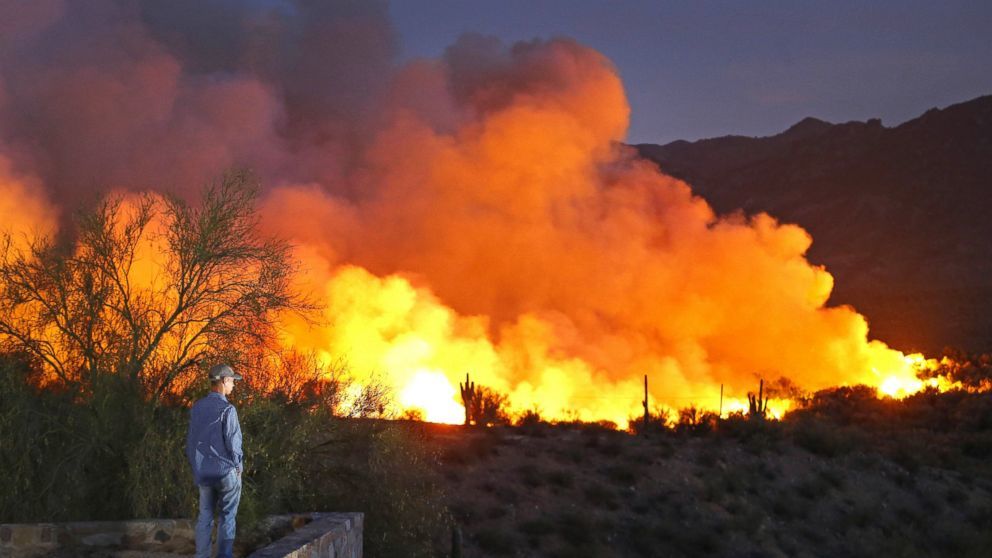
Arizona brush fire
© David Kadlubowski/The Arizona Republic via AP
Justin Winsor watches a wildfire from the Breezeway Trailer Park Wednesday, June 17, 2015 in Kearny, Ariz. The blaze is not contained at all, but it's mostly relegated to a riverbed and about 200 firefighters have kept it burning away from the town of 2,000 residents, officials said.
A wind-aided brush fire burned without containment near a small town in central Arizona late on Wednesday, forcing authorities to evacuate an estimated 300 residents from the area.


Authorities ordered the evacuations of the roughly 100-unit Stevens Trailer Park and another 100 residences as the fire raged in a dry riverbed near the community of Kearny, about 90 miles (145 km) southeast of Phoenix.

Initial reports indicated that at least two residences and two other structures, plus a vehicle, had been scorched, said Mike Reichling, Arizona State Forestry Division. There were no reported injuries.

Fire

Update: Alaska wildfire destroys 45 homes, menaces highway

Image
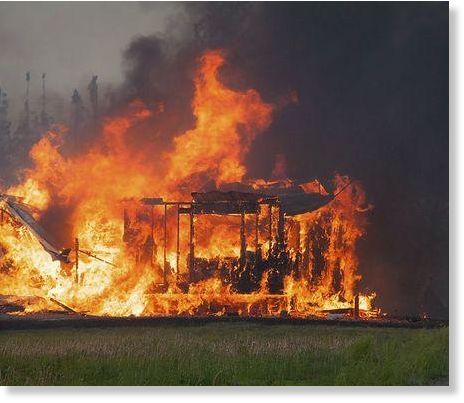
© REUTERS/Mat-Su Borough/Stefan HinmanA structure is consumed by flames as an out of control wildfire burns near Willow, Alaska, in this picture courtesy of Mat-Su Borough taken June 14, 2015.
A fast-spreading Alaska wildfire has destroyed up to 45 homes and forced authorities to restrict traffic on a major highway connecting two of the state's largest cities, state officials said on Monday.

As many as 200 firefighters have been battling the 6,500-acre fire with more specially trained teams en route from the Lower 48 states, Alaska Forestry Division spokesman Sam Harrel said.

Crews have been attacking the fire on the ground and by air, getting help from the three Alaska National Guard Blackhawk helicopters, according to state reports.


Fire

Rampaging wildfire burns 6,500 acres near Anchorage, Alaska

Image
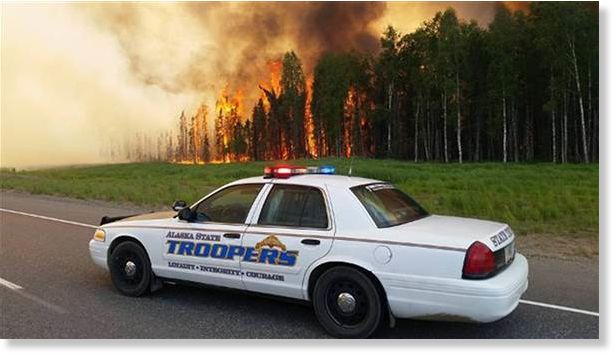
© Alaska State Troopers The Sockeye Fire grew quickly late Sunday and early Monday.
Homes were being evacuated and fire crews from the lower 48 states were racing to a wildfire north of Anchorage, Alaska, that grew to 6,500 acres in just hours, authorities said early Monday.

The so-called Sockeye Fire, in the town of Willow, about 80 miles north of Anchorage, forced firefighters on the defensive as aircraft continually drop water and fire retardant Sunday night, the state Forestry Department said.

Residents began fleeing from a voluntary evacuation area covering both sides of a 15-mile stretch of the George Parks Highway. As of Sunday evening, more than 200 people had signed into one evacuation center near Talkeetna. But the total number of evacuations wasn't immediately available.

The fire was first reported at 1:15 p.m. (5:15 p.m. ET) as covering 2 acres and quickly grew. By 3 p.m. it had reached 80 acres, and by 6 p.m. it covered 1,077 acres along the western shore of Kashwitna Lake, the Forestry Division said. By 10:30 p.m., the fire had grown to 4,183 acres. Two hours later, it was estimated at 6,500 acres.


Fire

Wildfire in drought-parched California threatens small remote town

Image
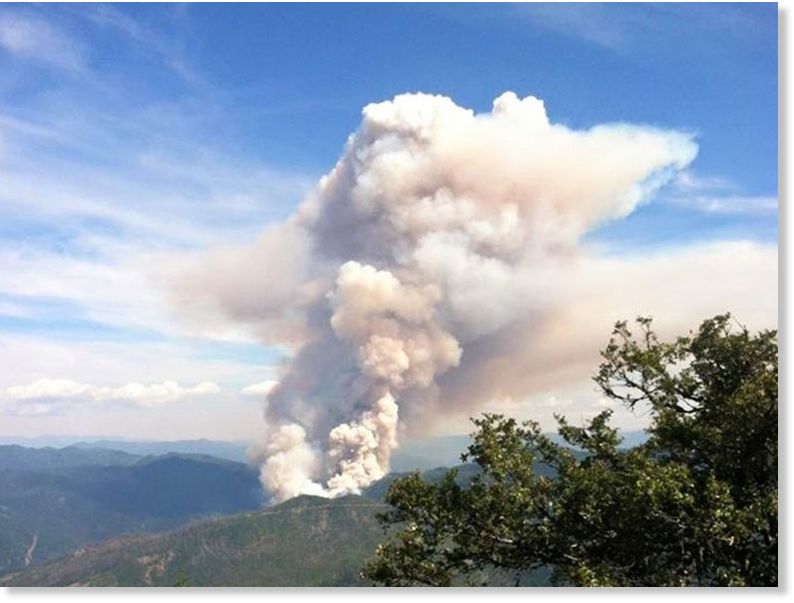
© U.S. Forest Service A lightning-sparked wildfire has grown to nearly 1,000 acres
An out-of-control wildfire raging through a Northern California forest as the state battles a devastating drought has forced authorities to warn about 250 people to evacuate or prepare to leave their homes in a remote town, officials said on Friday.

The fire in the Shasta-Trinity National Forest follows an outbreak of lightning-sparked blazes in neighboring Oregon that prompted authorities to warn residents that drought and low mountain snowpack could lead to a destructive fire season.

California's so-called Saddle Fire has charred at least 880 acres (360 hectares) since a lightning strike sparked it on Tuesday, officials said.

Bizarro Earth

Lightning strike sparks wildfire near San Francisco, California

Saddle fire, northern california wildfire
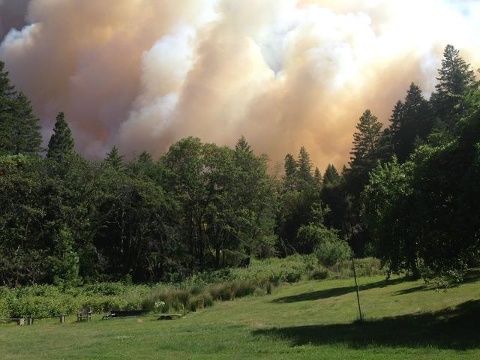
© Jennifer LanceSaddle Fire Trinity County
An out-of-control wildfire raging through a Northern California forest as the state battles a devastating drought has forced authorities to warn about 250 people to evacuate or prepare to leave their homes in a remote town, officials said on Friday.

The fire in the Shasta-Trinity National Forest follows an outbreak of lightning-sparked blazes in neighboring Oregon that prompted authorities to warn residents that drought and low mountain snowpack could lead to a destructive fire season.

California's so-called Saddle Fire has charred at least 880 acres (360 hectares) since a lightning strike sparked it on Tuesday, officials said.

The flames are tearing through forest land, much of it in areas scorched by a 2004 blaze that has left dead and downed trees on the ground which could provide ample fuel for the latest wildfire, said Shasta-Trinity National Forest spokeswoman Andrea Capps.

Fire

Canadian wildfire smoke covers 17 states and causes red sun

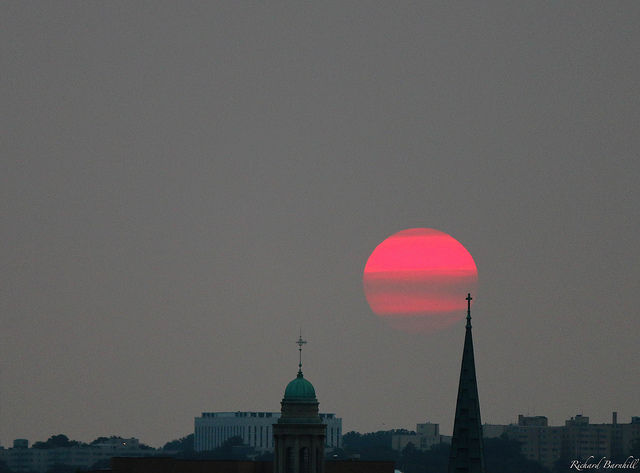
A smoky sunset over the District, June 9, 2015 (Richard Barnhill via Flickr)
© Richard BarnhillA smoky sunset over the District, June 9, 2015 (Richard Barnhill via Flickr)
A thick haze of smoke drifted over the D.C. region late Tuesday afternoon, driven south from Canada's burgeoning wildfires by the high-level winds of the jet stream.

There are six large wildfires burning in Alberta and British Columbia, according to the Remote Sensing Applications Center in Salt Lake City. These fires are pumping copious amounts of smoke high into the atmosphere, which is then hitching a ride on the global jet stream to paint our skies pink and orange.

Comment: See also: Hundreds evacuated from northeastern Alberta as wildfires rage through crude-producing region


Fire

Hundreds evacuated from northeastern Alberta as wildfires rage through crude-producing region

slave lake, alberta wildfire
© REUTERS/Alberta Environment and Sustainable Resource Development Smoke rises from a wildfire east of Slave Lake, Alberta May 25, 2015
Statoil ASA, MEG Energy Corp and Cenovus Energy Inc evacuated hundreds of workers from three oil sands projects in northeastern Alberta on Tuesday as wildfires raged through the key crude-producing region.

The latest evacuations are in addition to project shutdowns by Cenovus and Canadian Natural Resources Ltd over the weekend, as companies rushed to remove staff from potential danger.

At least 233,000 barrels per day of oil sands production, 9 percent of Alberta's total oil sands output, have been suspended because of the fire risk, though none of the projects have been damaged.

The Alberta government said there are 70 forest fires now burning in the province, with 20 considered out of control. Lightning storms are forecast for Tuesday evening, increasing the risk of more fires, a government spokesman said.

Cenovus evacuated all 90 staff from its Narrows Lake oil sands project on Tuesday, which is not yet producing crude after construction was deferred last year.

The company also shut down its Birch Mountain natural gas plant northwest of Fort McMurray.

Fire

Lightning sparks new wildfires in British Columbia as massive blaze continues

wildfire in Canada
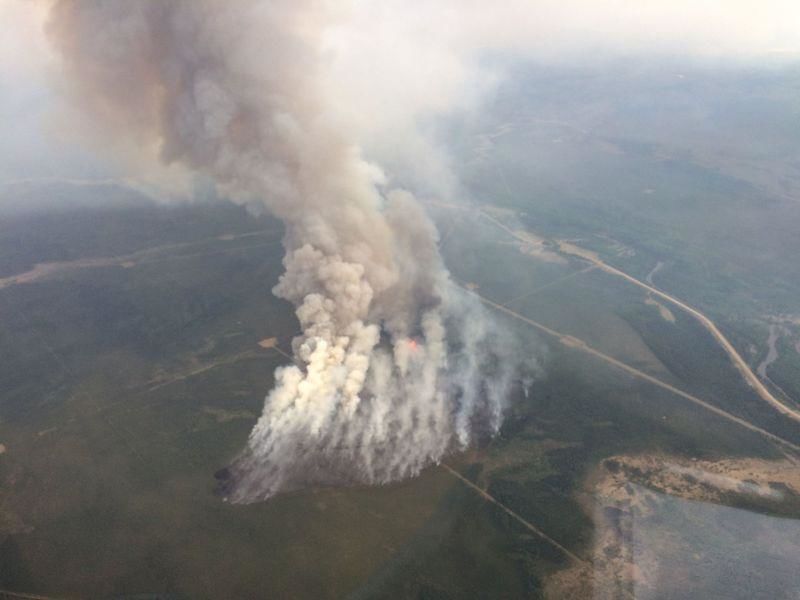
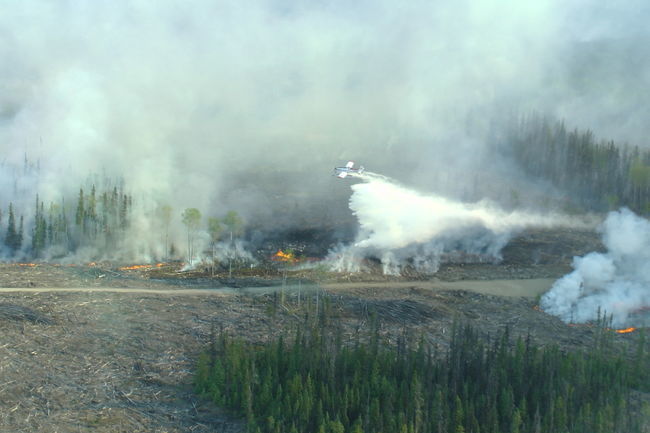
© BCFS photoEfforts are underway to battle the wildfires in B.C., which has claimed roughly 17,000 hectares, west of Prince George.

Crews are responding to five new wildfires in British Columbia's Central Interior, as a massive blaze continues to burn about 70 kilometres southwest of Prince George.

B.C.'s Wildfire Management Branch says all of the new fires were sparked by Friday's lightning activity in the Cariboo region.

The largest fire is raging four hectares west of Anahim Lake, where a three-person attack crew, airtankers and a helicopter are on site with 16 additional firefighters on the way.

The branch says crews are also working on three small fires in the Big Bar area and one small fire southwest of Quesnel.

Meanwhile, the aggressive Little Bobtail Lake blaze has destroyed about 17,000 hectares since it was first discovered last Saturday.

Some 240 firefighters, 11 helicopters, eight air tankers and 23 pieces of heavy machinery have been brought in and 20 per cent of the fire has been contained.

Jill Kelsh with the Prince George Fire Centre says crews have been working around the clock since last Sunday.

Fire

Little Bobtail Lake wildfire in British Columbia has burned over 32,000 acres, shows no sign of extinguishing

little bobtail lake fire, British columbia
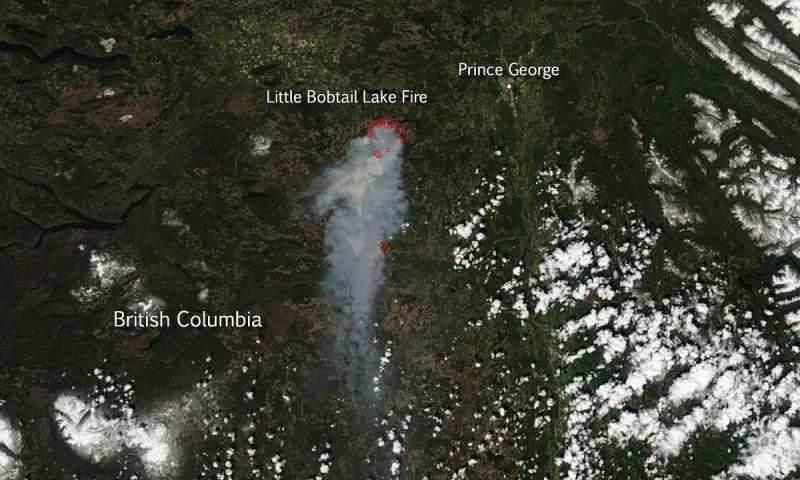
© MODIS Rapid Response TeamThe MODIS instrument on the Aqua satellite captured this image of the Little Bobtail Lake fire in British Columbia, Canada.
The MODIS instrument on the Aqua satellite captured this image of the Little Bobtail Lake fire in British Columbia, Canada. It is unclear how the fire started and was first spotted on Saturday, May 9. Since then the fire has grown significantly and has burned over 13,000 hectares (32,123 acres) and is zero percent con[tained]. The wildfire is located about 70 km southwest of Prince George. Eighty people have already been evacuated and close to 700 homes are in danger of being consumed should the fire spread.