Wildfires
S


Fire

'Unprecedented' wildfires force out 13,000 evacuees from Saskatchewan, Canada

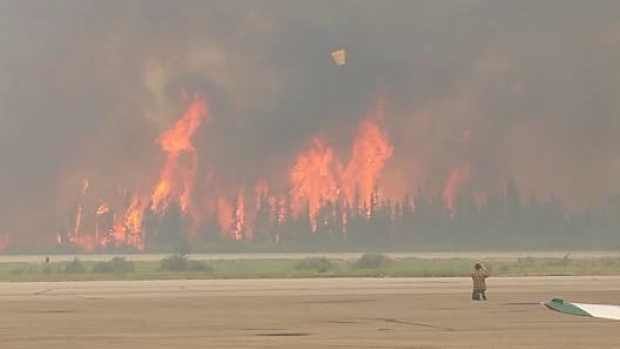
wildfire at La Ronge airport
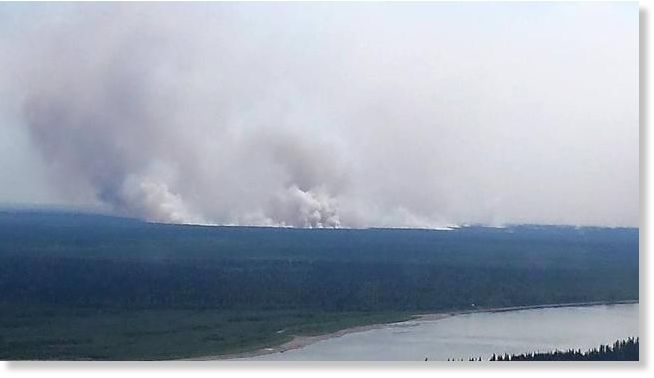
© Prince Albert Fire Department/TwitterThis was the situation at the La Ronge airport on the weekend.

Biggest ever exodus of its kind in Saskatchewan, Red Cross says


In what's being dubbed the biggest evacuation effort in Saskatchewan's history, Premier Brad Wall said the number of evacuees affected by raging wildfires in the province's northern regions is "unprecedented."

"This particular fire event is different for our province just because of the amount of hectares that are currently burning, which is, by the way, about 10 times the average year," Wall told reporters mid-afternoon on Monday.

Wall noted that the number of affected communities also "make this [situation] particularly unique and dangerous."

More than 13,000 people have been forced from their homes due to northern Saskatchewan blazes, according to Red Cross.

There were 112 fires burning in the province Monday, the Saskatchewan Environment Ministry said.

The escalating situation forced the Saskatchewan government to bring in a Sikorsky S-64 skycrane helicopter from Montana.
Comment: A couple of months ago two cold temperature records were broken in Saskatchewan, Canada.


Fire

Idaho governor declares disaster emergency due to fast-moving Cape Horn wildfire

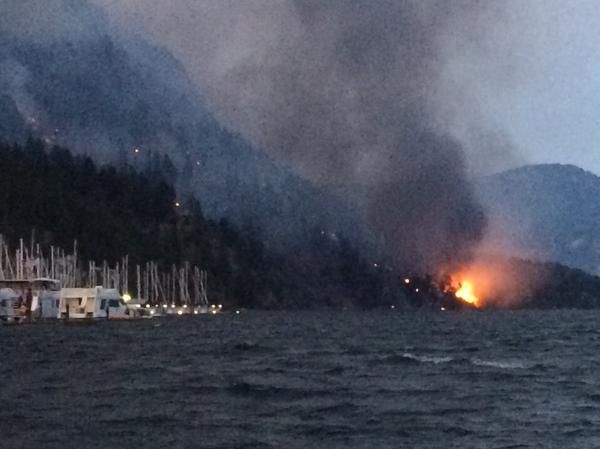
wildfire cape horn idaho
Cape Horn Fire in Bayview, Idaho
A fast-moving wildfire in Idaho that destroyed several upscale homes and forced 200 residents to flee prompted the governor on Monday to declare a disaster emergency that would free up federal funds to help fight the blaze.

The Cape Horn fire has charred more than 2,000 acres (810 hectares) since breaking out on Sunday in a resort area in northern Idaho where there are clusters of multimillion-dollar homes on the banks of Lake Pend Oreille.

"We will continue to support the impacted jurisdictions in protecting lives, property and businesses," Governor C.L. "Butch" Otter said in issuing the declaration.

The Idaho fire was among nearly 40 large wildfires raging across the parched Western United States on Monday, including a blaze in Oregon that officials have deemed the biggest wildfire of the season for the U.S. Pacific Northwest.

Fire

So many fires are burning in Alaska the midwest is covered in smoke

Image
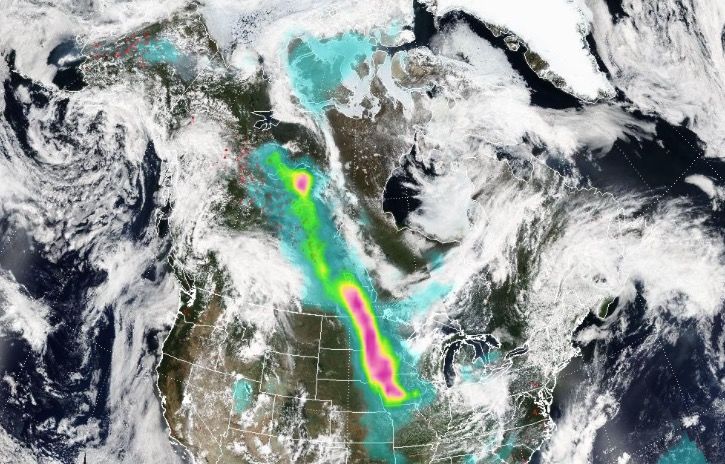
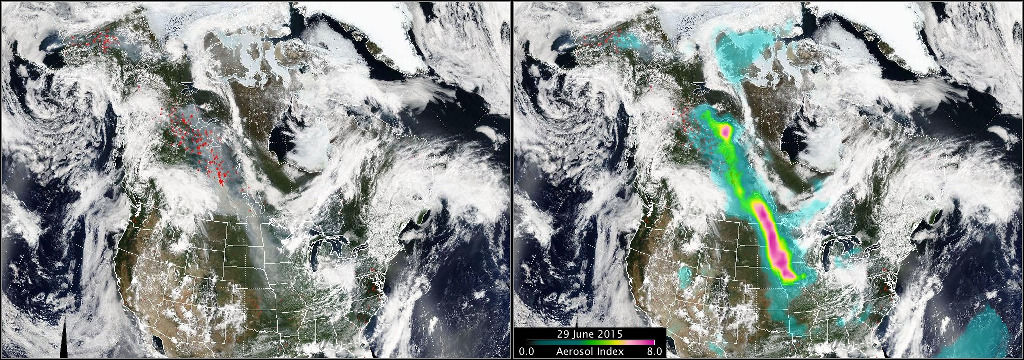
Smoke from the fires captured by NASA’s Aqua satellite on June 28
The drought hitting the West is not just striking the continental US. That same weather pattern that's sucking the life out of California is also making life hot, dry, and dangerous for the top third of North America: Alaska and Canada have seen little rainfall, soaring spring temperatures, and now, a record-breaking wildfire season.

The smoke drifting from hundreds of fires can be seen in new NASA imagery. It forms a plume that extends all the way down through the Midwest, reaching as far south as Texas today.

Image
Imagery captured June 29 from NASA’s Aqua satellite, which measures the ozone found in smoke
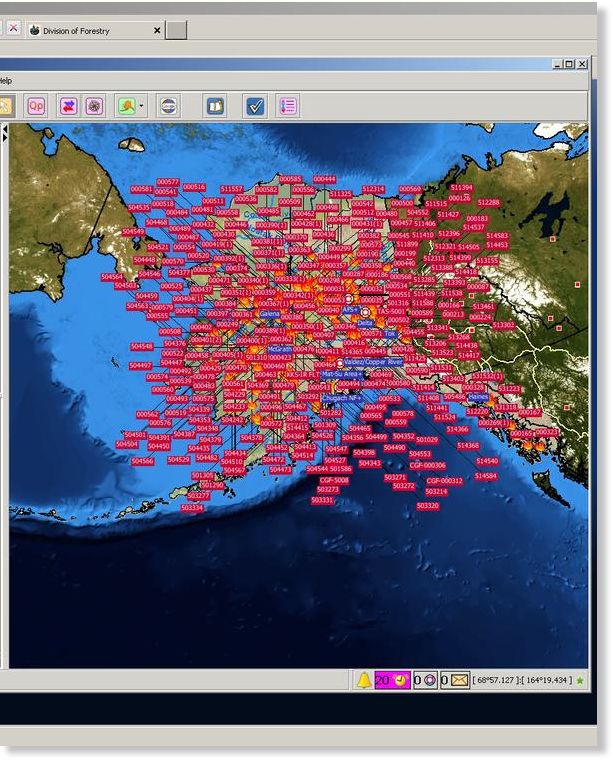
How many fires are we talking about? As many as 600. There are 297 fires actively burning just in Alaska today. That's so many fires, in fact, that it's hard to even tell where they all are on the state forestry department's map.

Comment: It's not global warming that we're seeing, but the effects of cosmic climate change and Earth changes on the way towards an ice age. See:


Fire

126 wildfires burn in Alberta: one of the worst wildfire seasons in the past 5 years

Image
© ReutersSmoke rises from a wildfire north of Cold Lake, Alberta in May 2015.
Alberta is the middle of one of the worst wildfire seasons in the past five years, say Alberta wildfire officials.

As of Sunday, 126 wildfires were burning in Alberta, with 27 of them considered out of control. In the past 24 hours, 23 new fires have emerged but Geoffrey Driscoll, a wildfire spokesperson with Alberta's ministry of agriculture and forestry, says that's just the tip of the iceberg,

"Before that, it was 45 (new fires) the day before, 55 the day before, and 73 the day before that - yesterday was a slow day," said Driscoll, citing extremely dry conditions in northern Alberta combined with high winds and flash thunderstorms as the prime contributors in this latest onslaught of wildfires.


"It's summer in Alberta, so what we're getting, as well, is these thunderstorms coming through with not very much rain. We would get somewhere between 10,000 to 20,000 lightning strikes a night, and we were getting a lot of wildfires coming from those."

Of the 23 new fires in the past 24 hours, 12 of them were ignited due to lightning strikes. So far this season, there have been 1,145 wildfires recorded in Alberta, spanning over 101,500 hectares of land, compared to the five-year average of 724 fires to date.

Fire

1,000 people flee their homes, 12 homes destroyed in Wenatchee wildfire, Washington

Image
© KING 5 NewsSleepy Hollow fire
At least a thousand people have fled their homes as a fast-growing wildfire burns out of control in central Washington.

All of north Wenatchee from Maple Street north to the river was evacuated Sunday night. The Chelan County Sheriff's Office says 12 homes have been destroyed.

Hundreds of firefighters from across Washington are on the scene and more are headed there.

Sunday's temperatures of at least 108 degrees, tinder dry brush and strong winds helped fuel the fire. Monday morning brought a brief rainshower which helped firefighters.

The fire was at least 2.6 square miles at last report. An update on the size is expected at 9 a.m.
Image
© king5.com

Fire

Worst wildfire season on record in California with 1,100 fires in the first six months

Image
As many places in California near some of the highest temperatures seen so far this year, CAL FIRE is warning of the dangers this fire season holds.

Officials are calling this year the worst season for fires on record. CAL FIRE has responded to around 1,100 fires in the first six months. The average number of fires for an entire year is around 600 fires.

Firefighters say the high temperatures combined with the four-year drought are creating the perfect conditions for devastating wildfires. But CAL FIRE says the majority of fires in their jurisdiction are preventable. That's because 95 percent are caused by people in some way.

Some areas in the Northstate will likely see more fire activity beginning Friday as thunderstorm systems move into the higher elevations. The National Weather Service issued a fire weather watch for parts of the Sierra Nevada Mountains, the Burney basin, the Cascade Mountains, and Modoc and Siskiyou Counties. That goes into effect Friday afternoon. The watch could be increased to a red flag warning, depending on the thunderstorm activity.

Fire

Over 270 wildfires are burning in Alaska right now

Image
© AK Forestry ‏This map from the Alaska Interagency Coordination Center helps put Alaska's wildland fire situation in perspective.
Following on a record hot May in which much snow cover melted off early, Alaska saw no less than 152 fires erupt over the weekend. A further increase since then had the number of active fires at 243 as of Tuesday — a number that appears to have risen still further to 278 Wednesday, according to the Alaska Interagency Coordination Center.

"Given the high number of fires and the personnel assigned to those fires, the state's firefighting resources are becoming very limited, forcing fire managers to prioritize resources," noted the state's Department of Natural Resources Tuesday. The preparedness level at the moment for the state is 5, meaning that "resistance to control is high to extreme and resistance to extinguishment is high."

Granted, according to reporting by the Alaska News Dispatch, while this year's fire numbers are high total acreage burned so far hasn't been that huge. Nonetheless, it's quite a busy start to the summer — and there's a lot of fire season left to go.

Fire

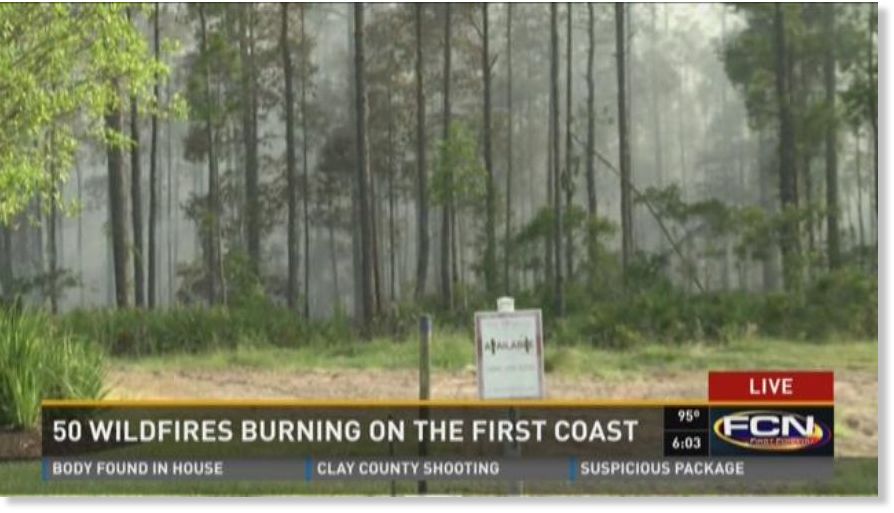
50 wildfires burn across Northeast Florida

Image
Wildfires are consuming more than a square mile of forest as 50 fires burn throughout Northeast Florida, including a fire in Nocatee that came within 20 feet of homes, according to the Florida Forest Service.

Greg Dunn, senior forester, said three bulldozers plowed about two miles of fire lines in the Nocatee area to contain the 8-acre fire.

Storms soaked parts of Northeast Florida Sunday night, although it was a mixed bag for fire officials. While the rain was helpful, lightning bolts compounded the problem by igniting more fires.

Of the 50 fires burning 720 acres in Baker, Clay, Duval, Nassau, Putnam and St. Johns counties, 37 of them have been started by lightning, according to the Forest Service.


Fire

Over 140 wildfires burn across Alaska: Fire in interior the largest recorded

Image
© Constantine GregoryWildfires continue to burn near Alaska Highway, Southwest Alaska
The Sockeye Fire and the Card Street Fire have been less aggressive over the weekend -- but fires are still threatening the Alaska Highway near Tok and burning wildlands across Southwest Alaska.

According to Department of Natural Resources spokesman Jim Schwarber, the Long Lake Fire -- roughly two miles south of Northway Village - is up to 9,000 acres in size, as of 11 a.m. Monday.

Smoke from these fires will be affecting visibility along the Alaska Highway between Tok and the Canadian border. Motorists are urged to drive with lights on and slow down when visibility is poor or firefighting equipment is present. Flaggers and pilot cars may be used when conditions call for their use in order to keep traffic moving safely through the area affected by the fire.

"This extremely fast-moving fire is currently heading southeast away from Northway and is six miles west of the Alaska Highway," fire officials wrote. "The Long Lake Fire and nearby Moose Creek Fire that started Friday afternoon quickly burned together. The Moose Lake Fire was 80 percent contained with dozer lines when the Long Lake Fire started nearby."


Fire

California's biggest wildfire this year increases to 11,000 acres

Image
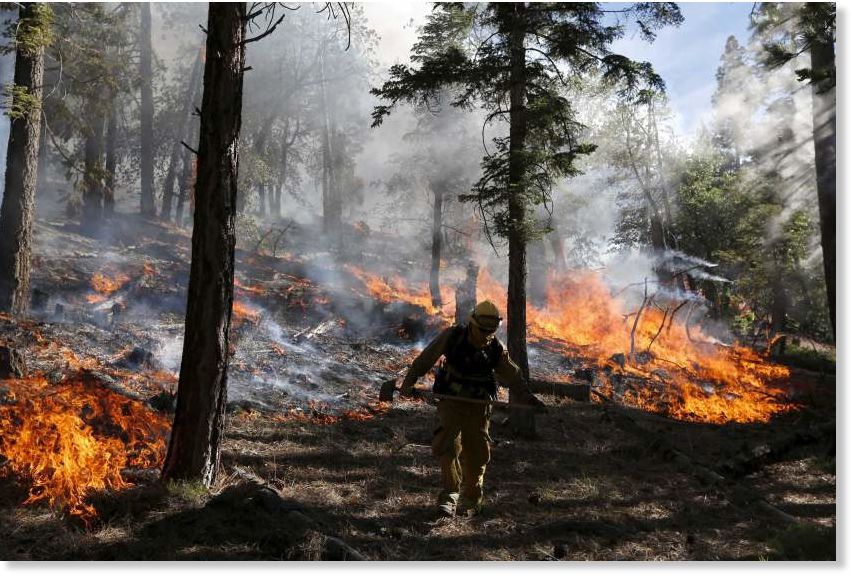
© Lucy Nicholson—ReutersA firefighter monitors a wildfire as it spreads to the road near Jenks Lake in the San Bernardino National Forest in Calif. on June 18, 2015
In less than two days, a wildfire near Big Bear Lake, California, has spread to an estimated 11,000 acres as of Friday morning. The "Lake Fire" sparked on Wednesday afternoon, and has since been roaring through the San Bernardino National Forest. According to Time, this is the worst wildfire yet this year on California forestland. Dry and windy conditions on Thursday afternoon sparked the quick spread of the wildfire, which has so far ravaged an estimated 12 square miles of national forest.

At this point in time, the fire is 10 percent contained, and The Los Angeles Times reports that over 500 fire personnel, 32 engines, five air tankers, and seven helicopters continue to work to further contain it. The cause of the fire remains under investigation.