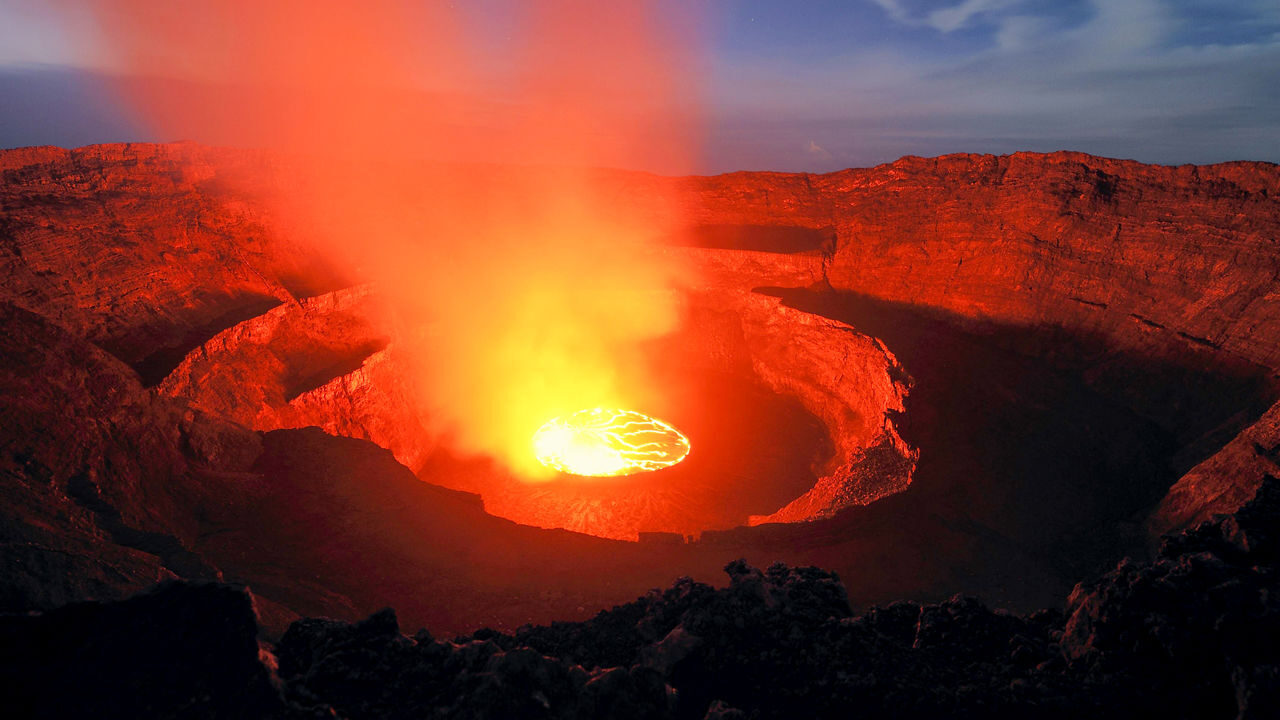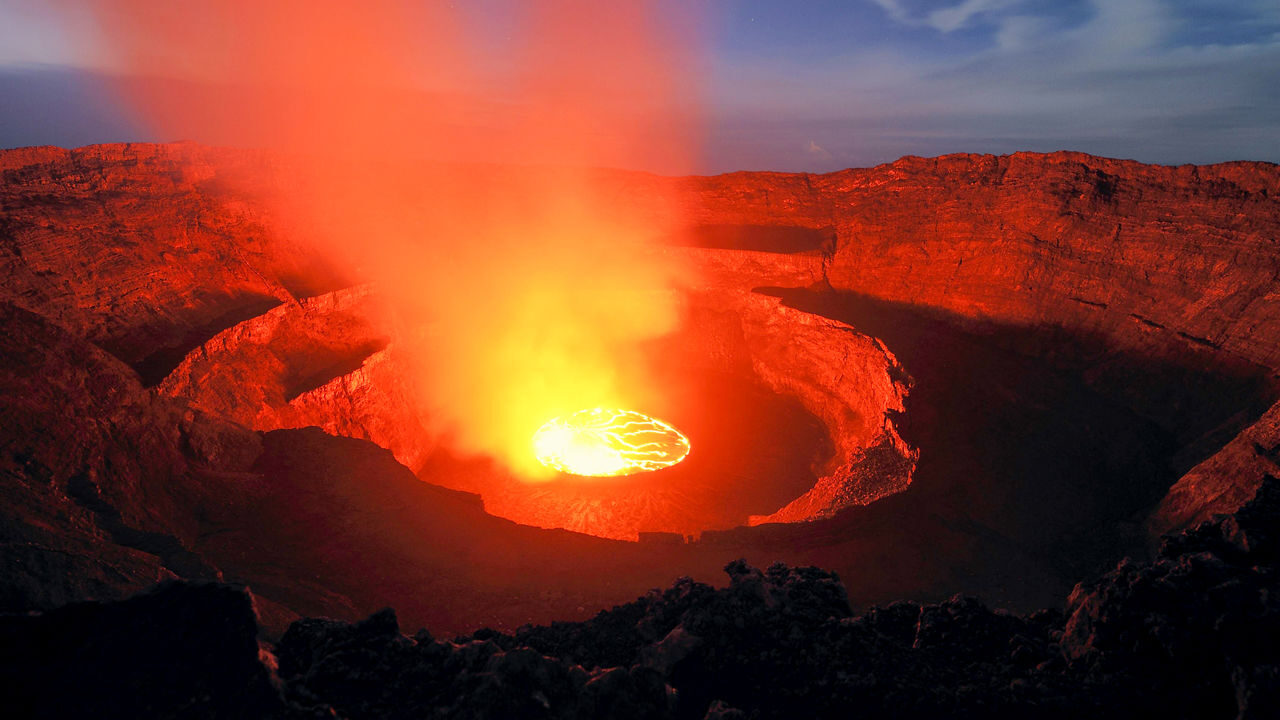
© CARSTEN PETER/NAT GEO IMAGE COLLECTIONIn a 2002 eruption, a lava lake within the crater of Nyiragongo volcano drained in hours.
In 2002, the last time Nyiragongo volcano erupted, lava raced down its flanks into the crowded city of Goma, on the border between the Democratic Republic of the Congo and Rwanda. About 250 people died, 20% of the city was destroyed, and hundreds of thousands fled. Since then, the at-risk population living in the shadow of the 3470-meter-tall volcano has more than doubled to 1.5 million.
Now, conditions are ripe for another disaster, says Dario Tedesco, a volcanologist at the Luigi Vanvitelli University of Campania, who earlier this year led a campaign into the volcano's roiling crater. He and his colleagues found the lava lake there filling at an alarming rate, raising the risk that the molten rock could burst through the crater walls once again.
Their analysis suggests peak hazard will arrive in 4 years, although they believe an earthquake could trigger a crisis earlier. Adding to the concerns, the Goma Volcano Observatory (GVO), the only monitoring station in the region, is losing its financial support from the World Bank. Tedesco's assessment is blunt.
"This is the most dangerous volcano in the world!"Tedesco began to watch the volcano in the mid-1990s, when refugees, fleeing the genocide in nearby Rwanda, swelled Goma's population. The United Nations sought his advice on the dangers of the volcano, so he monitored Nyiragongo's moods in the years before the 2002 eruption. He is alarmed by parallels to today.