Volcanoes
S


Attention

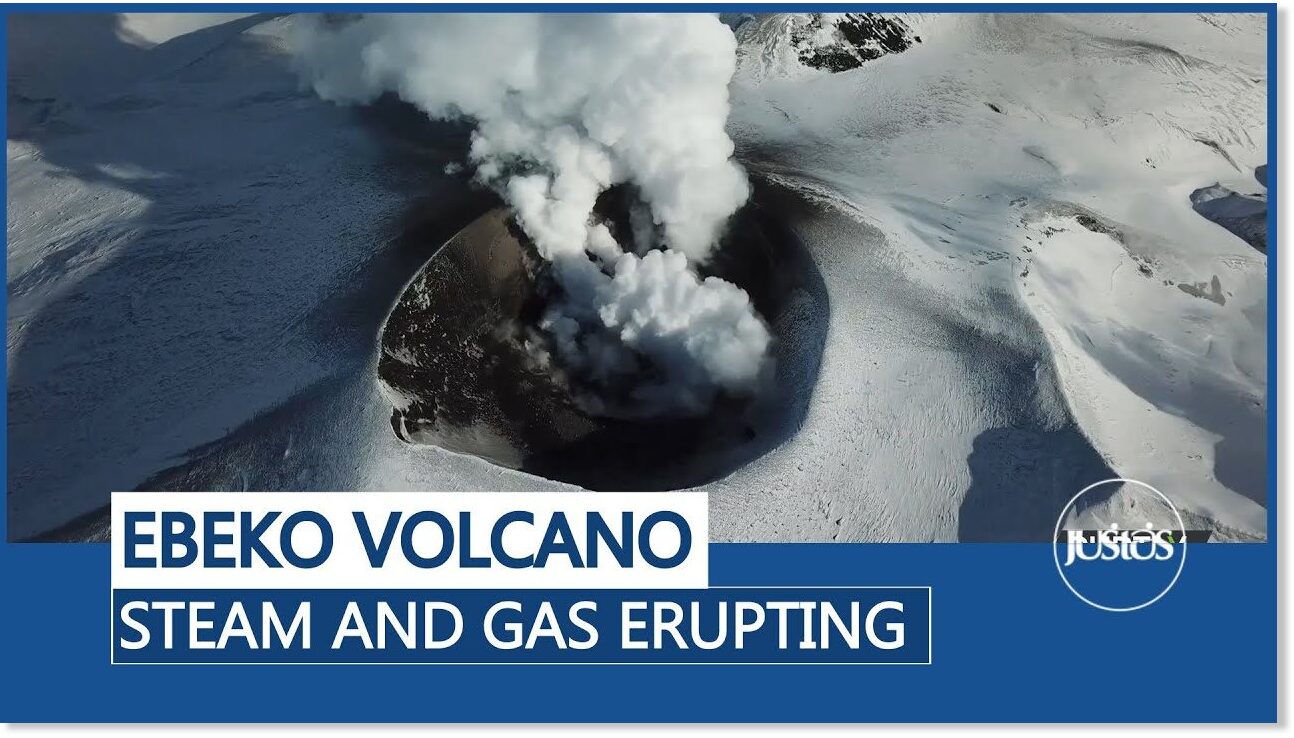
Cloud of smoke and gas erupting from volcano of Ebeko on Paramushir Island, Russia

mmmmmmmmmm
Footage filmed on Russian Sakhalin Region's Paramushir Island on Wednesday shows cloud of smoke and gas erupting from Ebeko volcano's Korbut crater.

The report on the official website of Russian Federal Service for Hydrometeorology and Environmental Monitoring warned about remaining danger for flights in the Ebeko volcano area from January 31 to February 1.

Volcano of Ebeko is a complex stratovolcano with several vertex craters located seven kilometres from Severo-Kurilsk on the Vernadsky Ridge.

The volcano has been regularly erupting ash since October 2016. The last one was recorded on 1st of September 2022. At that time, the height of ash column reached four kilometres.

Video source: Ruptly


Fire

Two eruptions recorded at Mexico's Popocatepetl Volcano

mmmmmmm
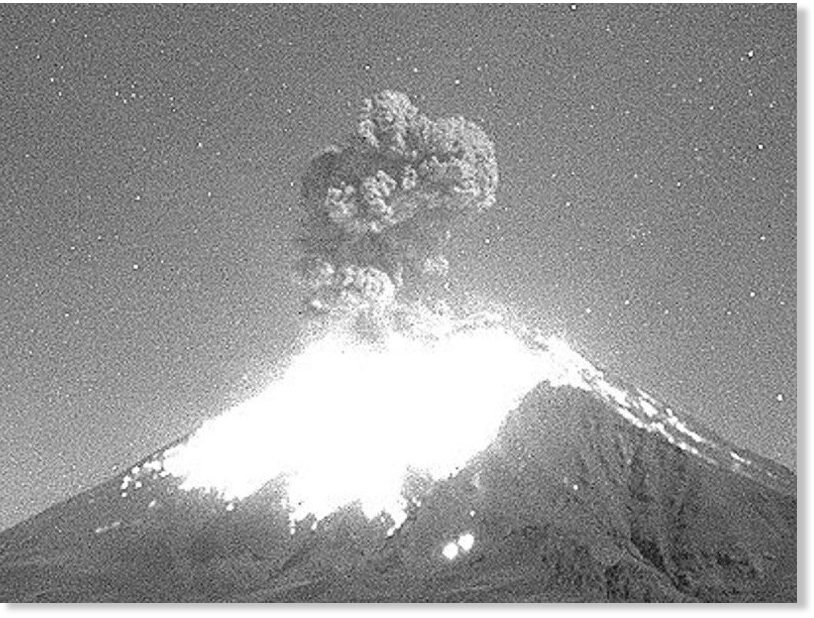
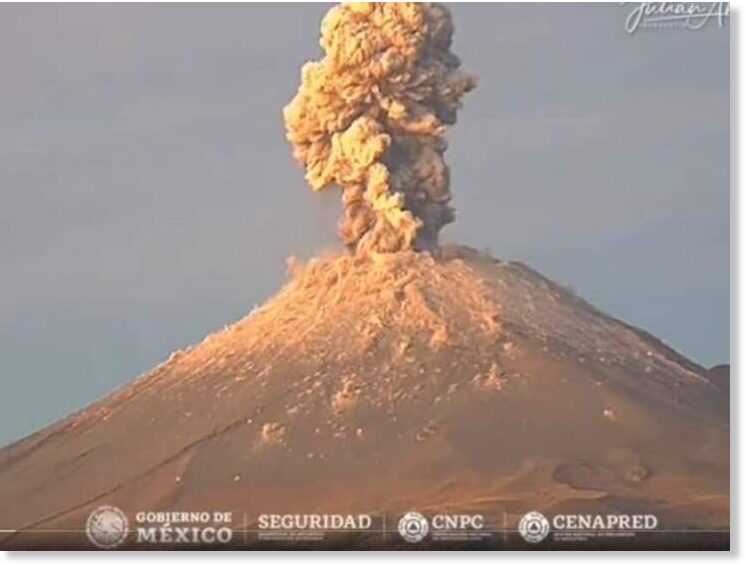
Mexico's Popocatepetl volcano erupted twice on Tuesday, January 31, with authorities cautioning residents to stay alert for expected ash fall in surrounding municipalities.

Footage captured by a fixed camera in San Nicolas de los Ranchos, Mexico, shows the moment the eruption occurred at 12:29 am Tuesday morning, followed by a second eruption at 6:59 am.

The National Civil and Protection Service said the "moderate explosion" shot "incandescent fragments" almost 2 kilometers (1.25 miles) from the crater rim.

Credit: Nicola Rustichelli via Storyful


Seismograph

Earthquakes increase from 60 to 600 per week in just 5 years in Pahala, Hawaii

pahala hawaii
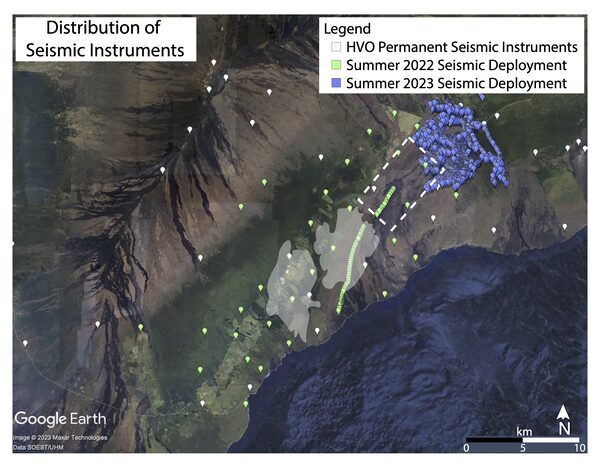
© Public Domain.The location of permanent and temporary seismic instruments deployed across the southeast part of the Island of Hawai‘i. Shaded white areas show dense regions of earthquakes interpreted as the Pāhala sill complex. Dashed white box outlines a region of sparsely spaced volcano-tectonic earthquakes that lie between the Kīlauea summit and Pāhala.
Pāhala, a town located in the southeast part of the Island of Hawai'i, lies above the state's most seismically active area. In the last 5 years, the average weekly number of earthquakes has increased from about 60 to 600 earthquakes per week.

These frequent earthquakes occur deep beneath the Pāhala region at approximately 20 to 40 km (12 to 25 miles) depth. Larger events are regularly felt by residents living both within Pāhala and across the island.

In a 2015 study, scientists at USGS located and classified earthquakes in this region into two main groups.

A more continuous seismic tremor, a type of signal often used to trace the movement of magma within a volcanic system, was identified at approximately 40 km (25 miles) depth, both on- and off-shore of the Pāhala region. This activity was interpreted as the migration of magma from the deep Hawaiian hot spot to more shallow depths.

Comment: Meanwhile in Europe: Surprise magma chamber growing under Mediterranean submarine volcano Kolumbo


Attention

Surprise magma chamber growing under Mediterranean submarine volcano Kolumbo

Kolumbo volcano
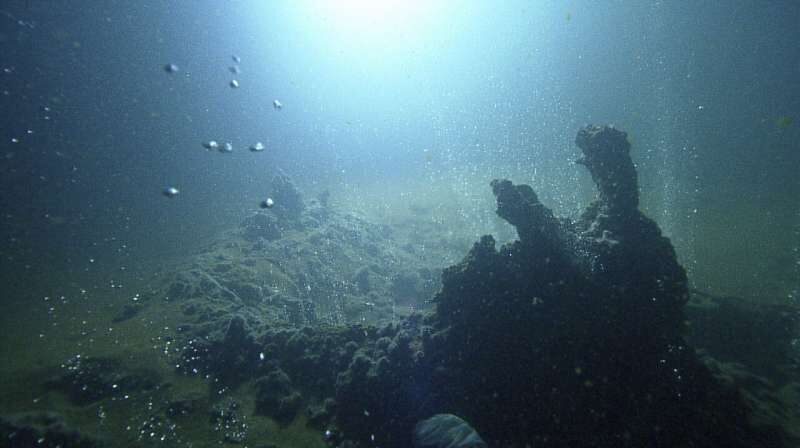
© SANTORYSubmarine volcanic activity along a section of the Kolumbo crater on the seafloor, observed with SANTORY monitoring equipment.
Using a novel imaging technique for volcanoes that produces high-resolution pictures of seismic wave properties, a new study reveals a large, previously undetected body of mobile magma underneath Kolumbo, an active submarine volcano near Santorini, Greece. The presence of the magma chamber increases the chances of a future eruption, prompting the researchers to recommend real-time hazard monitoring stations near other active submarine volcanoes to improve estimations of when an eruption might be likely to occur.

Nearly four hundred years ago, in 1650 C.E., Kolumbo breached the sea surface and erupted, killing 70 people in Santorini. This eruption, not to be confused with the catastrophic Thera (Santorini) volcanic eruption that occurred around 1600 B.C.E., was triggered by growing magma reservoirs beneath the surface of Kolumbo. Now researchers say the molten rock in the chamber is reaching a similar volume.

Comment: Taken together with activity at other volcanoes, as well as with other related effects, such as undersea warming, there's strong evidence suggesting that volcanic activity across the planet is on the increase, however much of it goes unnoticed due to being submarine: And check out SOTT radio's:


Fire

Hawaii's Kilauea volcano in fresh eruption after being declared 'inactive'

Kilauea volcano eruption january 2023
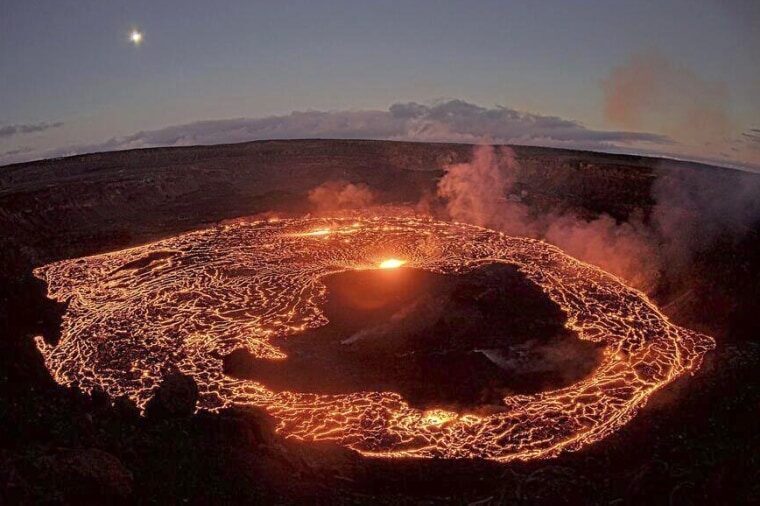
© U.S. Geological Survey via APHawaii's Kilauea volcano, looking east from the west rim of the summit caldera, on Thursday, January 5, 2023 in a webcam image provided by the U.S. Geological Survey.
Kilauea, one of the world's most active volcanoes, began erupting again in Hawaii on Thursday, nearly a month after federal officials said activity there had ceased.

The U.S. Geological Survey said webcam images showed lava flow within the Halemaʻumaʻu crater in the volcano's summit caldera.

The agency upgraded the volcano's alert level from watch to warning and said it was evaluating possible hazards. So far the eruption has been contained to the crater, it said.

Fire

Impressive explosion of Popocatépetl volcano in Mexico

mmmmmm
This Monday, December 19, activity was recorded at the Popocatépetl volcano after an explosion with smoke and volcanic lava around 6:39 this morning, the National Civil Protection Coordination announced.

Through the San Nicolás de los Ranchos monitoring station, in Puebla, images were captured of the exact moment in which Popocatépetl erupted with lava bombs that rolled to the middle of the volcanic cone.

As reported by the National Civil Protection Coordination, the column of ash that caused the explosion reached a height of 2.4 kilometers moving to the Northeast.


(Translated by Google)

Fire

Chile's Lascar volcano erupts for first time in 30 years

The Lascar volcano in Chile spews a stream of
© AFPThe Lascar volcano in Chile spews a stream of ash and hot gases during an eruption on December 10, 2022.
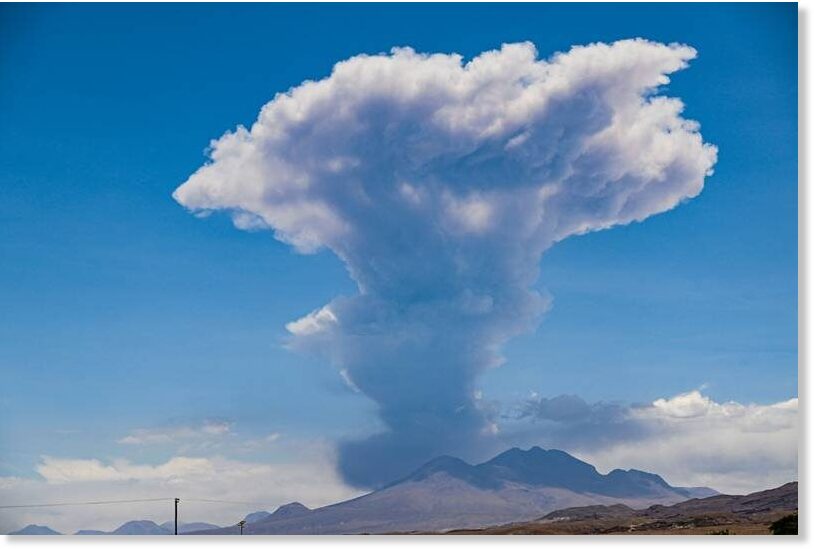
A volcano in the Andes in Chile's north rumbled to life on Saturday, triggering minor earth tremors and sending a plume of smoke and ash thousands of metres into the sky.

Chile's National Geology and Mining Service reported that the Lascar volcano stirred at 12.36pm.

The volcano sent "an eruptive column" of volcanic ash and hot gases 6,000 metres above its crater, the service said.


Fire

Fuego volcano erupts in Guatemala

NNNNNNNNN
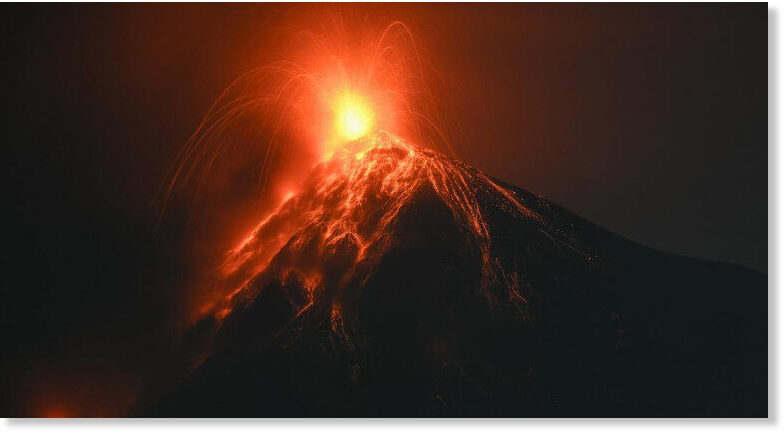
The Fuego volcano, one of the three active volcanoes in Guatemala, has erupted again after an increase in its activity during the last few days, as confirmed by the National Institute of Seismology, Volcanology, Meteorology and Hydrology of Guatemala (INSIVUMEH).

"The Fuego volcano presented an increase in its activity and in recent minutes has entered an eruption phase," it has said through its account on the social network Twitter, before detailing that "in the crater constant weak, moderate and strong explosions are observed."

Thus, it has pointed to the existence of "an incandescent source of 400 meters high" and added that "the ash column reaches 5,000 meters above sea level, dispersing 30 kilometers to the west and northwest".


Fire

Stromboli volcano eruption triggers 1.5m tsunami

stromboli volcano italy
© Valery Hache/AFP/GettySmoke rises from the Stromboli volcano on September 13, 2022. Stromboli, one of Europe's most active volcanoes, is part of the seven-island Eolian Archipelago of Sicily in southern italy.
The Italian authorities have reported 4.6-magnitude earthquakes near the Aeolian Islands

Earthquakes and tsunami waves have been registered in the Tyrrhenian Sea off the coast of Sicily after a volcano violently erupted on the Italian island of Stromboli on Sunday.

According to Italy's National Institute of Geophysics and Volcanology (INGV), the tsunami was caused by the detachment of a large piece of the Sciara del Fuoco section of the Stromboli volcano, which slammed into the sea, creating tsunami waves one and a half meters high.

Sirens were triggered on the island to alert the population, but the civil protection department has said that no people were injured in the incident and reported that the property damage was "insignificant," as the waves barely managed to reach the coast.

Comment: More video:


Fire

Hundreds evacuated after Indonesia's Semeru volcano erupts

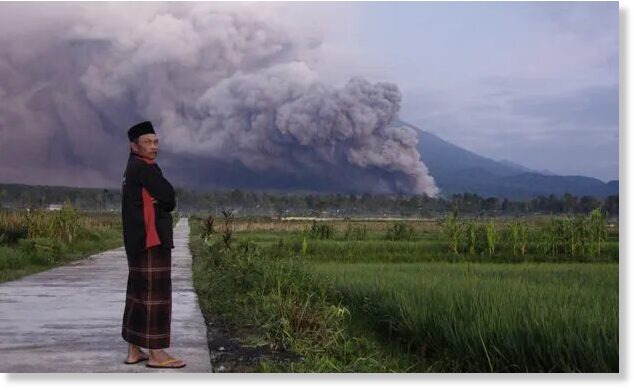
A man looks on as Mount Semeru releases volcanic materials during an eruption on Sunday.
© APA man looks on as Mount Semeru releases volcanic materials during an eruption on Sunday.
Indonesia's highest volcano on its most densely populated island erupted early on Sunday, spewing a column of ash 1.5km into the air and prompting evacuations of residents from the eruption area.

Lava flowed down Semeru's slopes, traveling toward a nearby river, while several villages were blanketed with falling ash, blocking out the sun, but no casualties have been reported.

Several hundred people were moved to temporary shelters or other safe areas, according to Joko Sambang who heads the disaster management agency in Lumajang, East Java province.

People were advised to stay 5km from the crater's mouth, and avoid the southeastern sector area along the Besuk Kobokan river located about 13km (8 miles) from the crater.