Volcanoes
S


Bizarro Earth

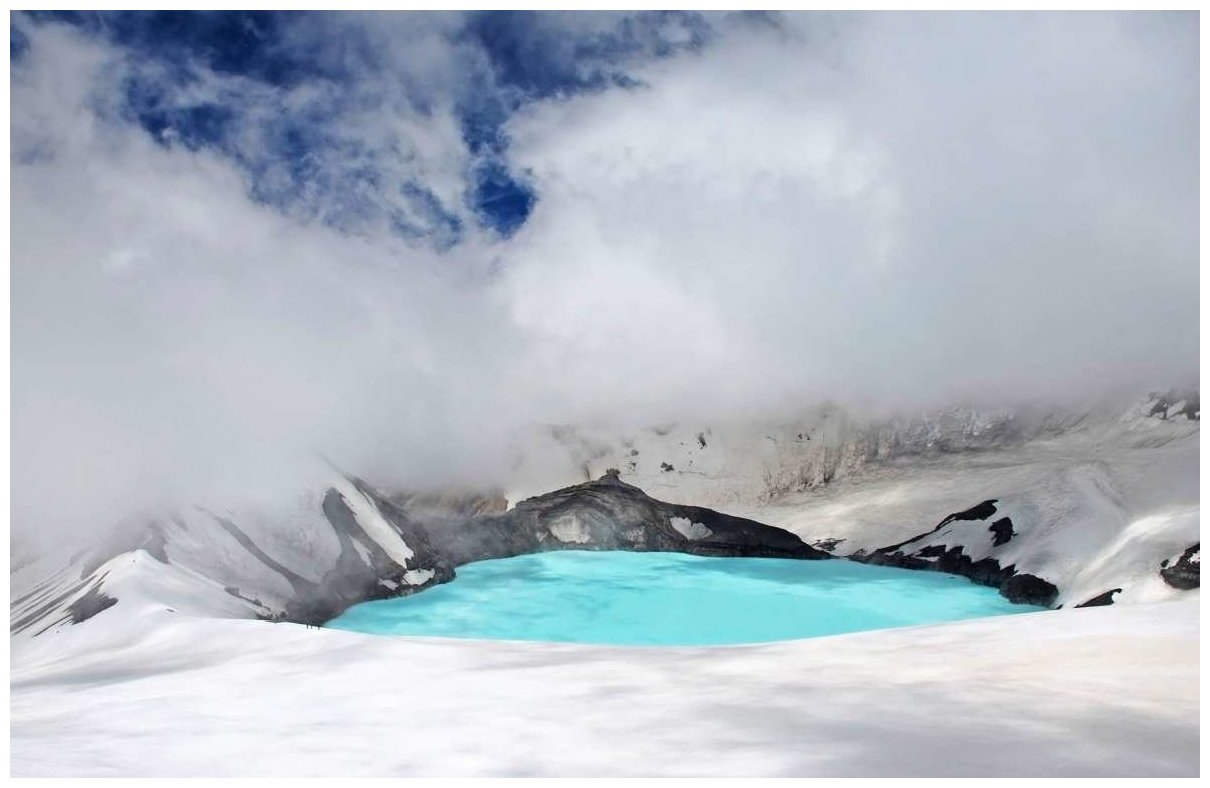
Mt. Ruapehu crater lake recording increased temperatures

Mt Ruapehu
© Getty The crater lake at the top of Mt Ruapehu.
Temperatures have risen to a 16-year high and surface activity has been reported at Mt Ruapehu's crater lake in the central North Island. A tourist flight over the lake on Saturday afternoon reported vigorous steaming of the surface, which was also disturbed by upwelling bubbles.

GNS duty volcanologist Brad Scott said although these signs hadn't been seen in recent years, the same sort of activity had been observed when temperatures rose over 40-42C. Crater lake temperatures have been rising since late 2015 and have now reached 44C, the hottest recorded since the new lake was established post 2000.

A swarm of volcanic earthquakes reported beneath the surface late last month has stopped, although volcanic tremor has increased slightly this week. Volcanic tremor is always present at Ruapehu, although the level varies and doesn't necessarily indicate an upcoming eruption.

GNS Science volcanologists regularly monitor Mt Ruapehu, an active volcano at the southern end of the Taupo Volcanic Zone.

Attention

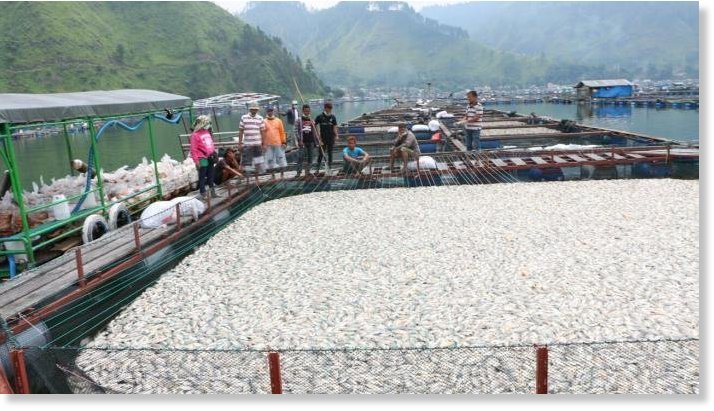
Mysterious fish die-off at volcanic Lake Toba, Sumatra

Dead fish
© Tribun Medan/ Royandi Hutasoit
Lake Toba is the largest volcanic lake in the world occupying the caldera of a supervolcano on the Island of Sumatra in Indonesia.

Millions of fish were found dead by fishermen between May 3 and May 5, 2016. Officials are unable to find the source of the mass killing but think it is linked to the lack of dissolved oxygen in the water. Could the drop in oxygen content in the north-east of lake Toba be the result of volcanic activity of some kind?

It all started one month ago, when fishermen at Lake Toba started to find dead fish in their nets.

But the mysterious die-offs have suddenly increased beginning of this month, when professional fishermen caught more than 320 tones (May 3, 2016) and then 800 tons (May 5, 2016) of dead fish... In overall about 1500 tones in 3 days! So millions of fish!


Red Flag

Cleveland Volcano in Aleutian Islands under heightened alert after explosion

cleveland volcano
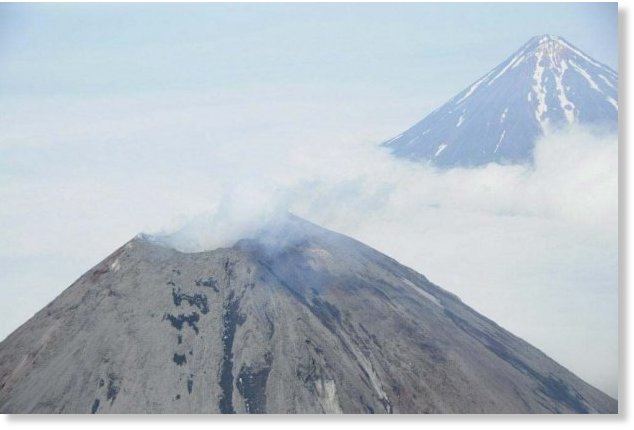
© NOAASmoke rises from Cleveland Volcano in the Aleutians on Aug. 8, 2011, in this aerial photo provided by the National Oceanic and Atmospheric Administration. Alaska Volcano Observatory staff raised the volcano's alert level after detecting an explosion Thursday evening.
The Cleveland Volcano in the Aleutian Islands is again under a heightened alert level from the Alaska Volcano Observatory, after researchers there recorded an explosion Thursday evening.

The observatory issued a statement raising the eastern Aleutians volcano's alert level to watch, and its aviation color code to orange, late Thursday.

Researchers said in the statement they detected an explosion at 6:44 p.m. Thursday using both air pressure and seismic data.

"There are no recent satellite views since the detected explosion. However, previous Cleveland explosions have typically produced ash emissions," observatory staff wrote.

Nearly a year ago, scientists recorded a restless period at the volcano on Chuginadak Island, including an explosion -- but no detected ash cloud -- in July.

In March, an eruption at Pavlof Volcano on the Alaska Peninsula sent an ash plume to an altitude of 20,000 feet, coating the nearby village of Nelson Lagoon and disrupting flights across Alaska as the material drifted northeast across Interior Alaska into Canada.

Bizarro Earth

The sabotage and destruction of Egypt's Ptolemaic Kingdom may have been influenced by volcanic eruptions

ptolemaic kingdom nile
© Fine Art Images/Heritage Images/Getty
You won't find it in history textbooks, but the Roman Empire's rise to dominance in Egypt and the Middle East may have been influenced by a series of volcanic eruptions that reduced rainfall.

These eruptions could have contributed to the sabotage and destruction of the Ptolemaic Kingdom on the Nile, paving the way for the rise of Cleopatra and the Roman Empire - and, ultimately, the modern Western world.

The Ptolemaic Kingdom ruled Egypt and North Africa in the final three centuries BC, known as the Hellenistic period. Now, teamwork between volcanologists and historians has revealed a close match in timing between volcanic eruptions and domestic unrest, revolts and uprisings that led to the kingdom's downfall.

"So far, Hellenistic history has never had any climate component," says Joseph Manning, a historian at Yale University. Bringing in the impact of climate shocks on the unfolding of history is important, he says.

"There were revolts and social unrest from 245 BC onwards, down to the mid-first century BC," Manning told the meeting of the European Geosciences Union in Vienna, Austria, last week. "One involved the entire river valley along the Nile for 20 years."

At the heart of the unrest were starvation and famine in the Ptolemaic Kingdom, where grain harvests were critically dependent on annual flooding of fertile plains by the East African monsoon.

Comment: For more in-depth information on how the rise and fall of civilizations are linked to catastrophic earth events and how the human mind and states of collective human experience can influence such cosmic and earthly phenomena, see:


Attention

Bristol Island volcano off Antarctica active for the first time in 60 years

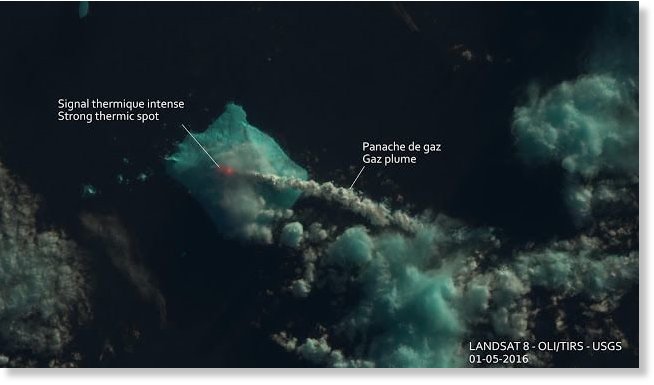
Gas and steam plume from Bristol volcano (Landsat 8 image, annotated by Culture Volcan)
A new volcanic eruption is occurring at the remote island, recent satellite imagery reveals.

Since late April, a thermal hot spot could be detected originating the volcano's summit, and clear-weather views showed a significant plume of gas and steam, possibly containing volcanic ash, drifting from the volcano. The volcano's last known activity was in 1956. However, without closer observation is difficult to know what type of activity is going on.

Two earthquakes of magnitudes around 5.6 and 4.7 were detected to have occurred near the island on 24 and 25 April; they are likely in relation with the new activity.

Source: Possible activité éruptive sur le volcan Bristol Island (Sandiwch du sud)

Arrow Up

Turrialba volcano in Costa Rica explodes 31 times in 10 hours

Turrialba volcano eruption
© OVSICORI-UNA
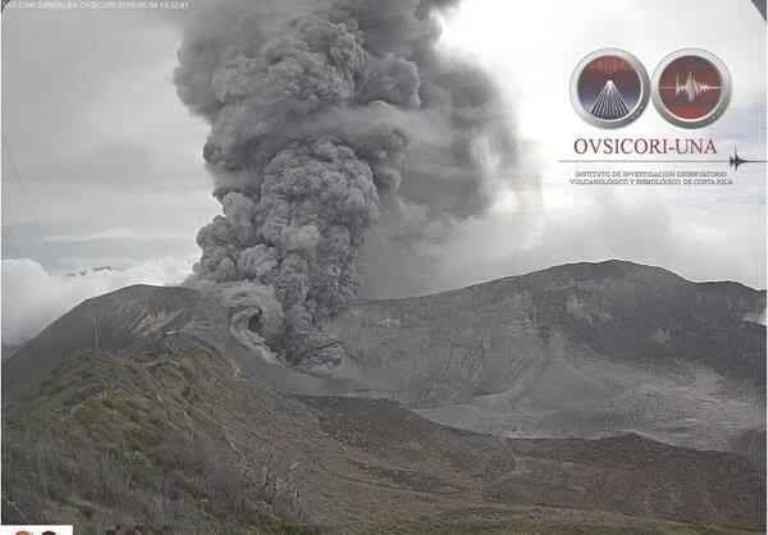
The Turrialba volcano situated in Costa Rica exploded 31 times in 10 hours on May 1, 2016. Now that's insane! Communities within 5 kilometers of the volcanic peak have been evacuated. Ash is covering everything!

According to reports from OVSICORI, this strong volcanic event occurred from 6:43 am to 4 pm on Sunday, May 1, 2016.

This eruption swarm sent a column of ash 2 kilometers above the crater.

This eruptive phase is the most important in recent months.

Early 2015 the area around Mount Turrialba was closed for more than three months due to another powerful eruptive period (expulsions of ash from the main crater and break of one of the walls).

The wind has spilled ash to the south of the area where the volcano is located.

Comment: Seismic activity in the country has also increased recently:

73 earthquakes in 12 hours hit between two volcanoes in Costa Rica


Bizarro Earth

Sakurajima volcano awakens with a blast

Sakurajima volcano
© dutchsinse/YouTube
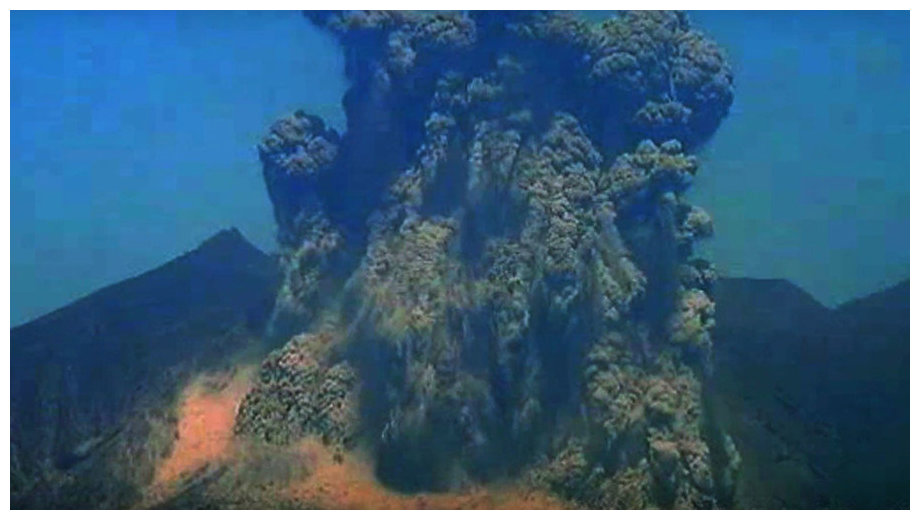
A spectacular eruption happened in southern Japan following an unusual 'silent' period for a volcano in the wake of the island's recent earthquakes.

Sakurajima volcano in Kyushu, situated 50 kilometres from the Sendai nuclear plant, resumed activity from April 29, erupting multiple times and spewing ash sky high.

Footage captured by University of Tokyo webcams situated around the volcano show explosions of ash rising more than 3,500 meters above the crater.

The blast also caused fast-moving currents of hot gas and rock to slide down the side of the volcano.

Attention

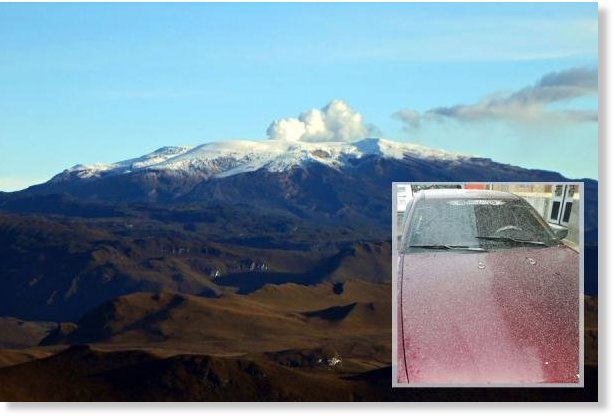
Increased seismic activity reported at Nevado del Ruiz volcano in Colombia

Nevado del Ruiz volcano
© El Nuevo DiaNevado del Ruiz volcano
The Volcanological and Seismological Observatory of Manizales reported two moderate earthquakes after a swarm of minor quakes in the Nevado del Ruiz volcano.

The quakes are related to rock fracturing and demonstrate a significant increase in the volcanic activity of the volcano.

The earthquake swarm started at around 5pm on April 29, 2016, before two moderate tremors (both M3.4 on Richter's scale) occurred at the 8:26 and 8:46 pm on April 29, 2016.

The two stronger quakes were located in the northeastern sector of the volcanic structure at a depth of 3.78 kilometers.

Ash falls has also been reported in Murillo, a small city near the Nevado del Ruiz volcano, which shows increased seismic activity.

Officials say, the Nevado del Ruiz volcano is emitting ash since already 17 months, but due to the particular weather conditions it has started falling around.

Attention

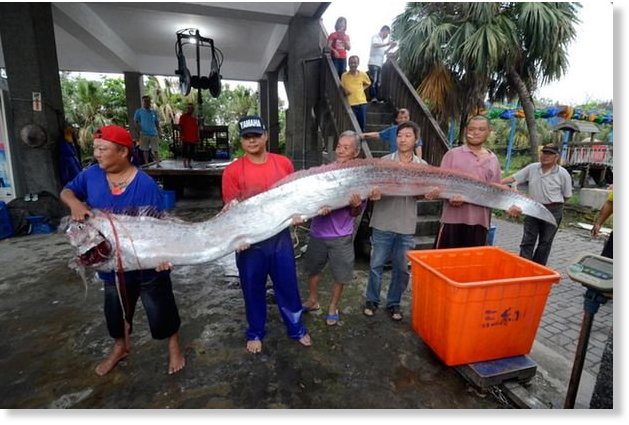
2 more oarfish appear off Taiwan during seismic activity

Fishermen were stunned after discovering the fish
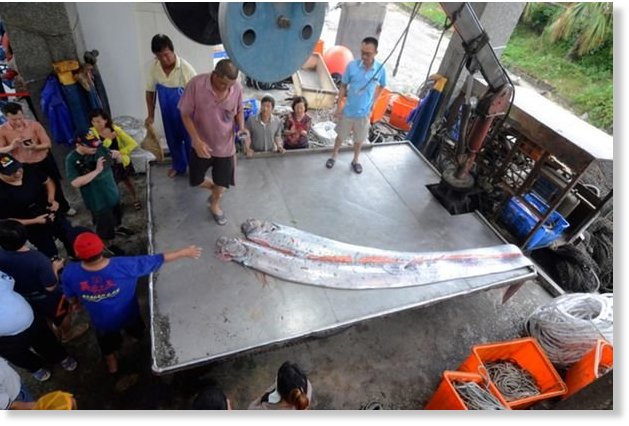
Two rare earthquake fish were thrown out of the water after a ' mud volcano ' erupted off the coast of Taiwan.

The volcano erupted early Thursday morning in the city of Pingtung following a 5.6-magnitude earthquake .


Fishermen were delighted to find the oarfish, also known as earthquake fish, both measuring 4.4 metres - twice as long as beanpole footballer Peter Crouch - and weighing a whopping seven stone.

Four eruption mouths were spotted in a paddy field in Wandan Town and the hot slurry almost destroyed the whole field.


The huge fish both measure more than 4 metres in length
© CENThe huge fish both measure more than 4 metres in length

Comment: See also this earlier report from about a week ago about the appearance of another 'earthquake fish' in the same part of the world: Giant oarfish emerges after being woken by earthquake off Taiwan

5.6 magnitude earthquake strikes in waters off Taiwan


Attention

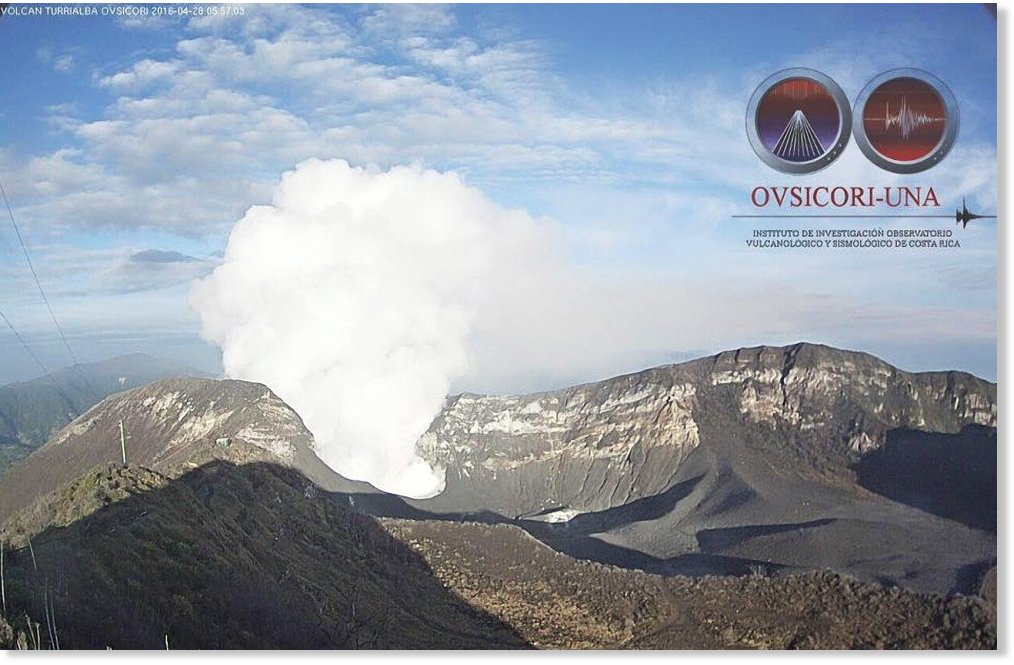
Seismic activity increases at Turrialba volcano, Costa Rica

The vapor plume started forming above Turrialba’s crater in the early hours of Thursday, April 28.
© OVSICORIThe vapor plume started forming above Turrialba’s crater in the early hours of Thursday, April 28.
The Volcanological and Seismological Observatory of Costa Rica (OVSICORI in Spanish) reported today that the seismic activity at the volcano Turrialba increased in the last hours.

The Observatory recalled that last Saturday, nearly 75 earthquakes took place in less than 12 hours between the Irazu and Turrialba volcanoes.

The National Seismological Network said that so far is been observed the normal steam and gases plume rising from the volcano.

After more than a century inactive, seismic activity was recorded at the Turrialba volcano on January 5, 2010.

Turrialba is the second highest volcano in the country after the Irazu is located in the district of Santa Cruz, in the canton of Turrialba, in the province of Cartago.