Volcanoes
S


Attention

Planetary upheaval: More volcanoes erupted last week than during entire (average) year in 20th century

sinabung
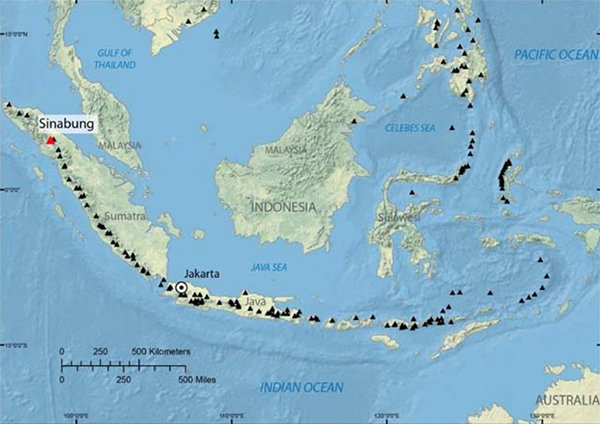
Mount Sinabung is just one of the 130 volcanoes that extend along the island of Sumatra in Indonesia.
Several volcanos around the world were very active last week spewing enormous amounts of ash and gas into the atmosphere and forcing thousands of people to leave their homes. But it's not all just about volcanic activity, there has also been quite a bit of earthquake activity along some the volcano impacted areas, especially in the Pacific Ring of Fire.

During the last 10 days close to 40 volcanos worldwide have been showing signs of activity and great deal of them, 34, are located along the very active Ring Fire.

Considering that in the 20th century the average number of volcanic eruptions was 35 per year, what we are seeing just this week is above last century's average for an entire year. This increasing volcanic activity around the the Ring of Fire is not new...


Comment: Wait, what?! How you they say that after what they said right before it?!
"This is a completely new phenomenon... and it's nothing new!"
Sounds like doublespeak to us.


...the region is home to 452 volcanoes, 75% of all earth's, and geologists have been warning that this 25,000 mile stretch of active and dormant volcanoes is becoming more unstable in recent years.

Comment: The following graph from our WorldView shows a clear increase in volcanic eruptions in the past year:


See also: Shake, rattle and roll: 3 volcanic eruptions and 2 strong earthquakes in 48 hours

We're now seeing what used to be a yearly average occurring every week!

Things are heating up...


Alarm Clock

Shake, rattle and roll: 3 volcanic eruptions and 2 strong earthquakes in 48 hours

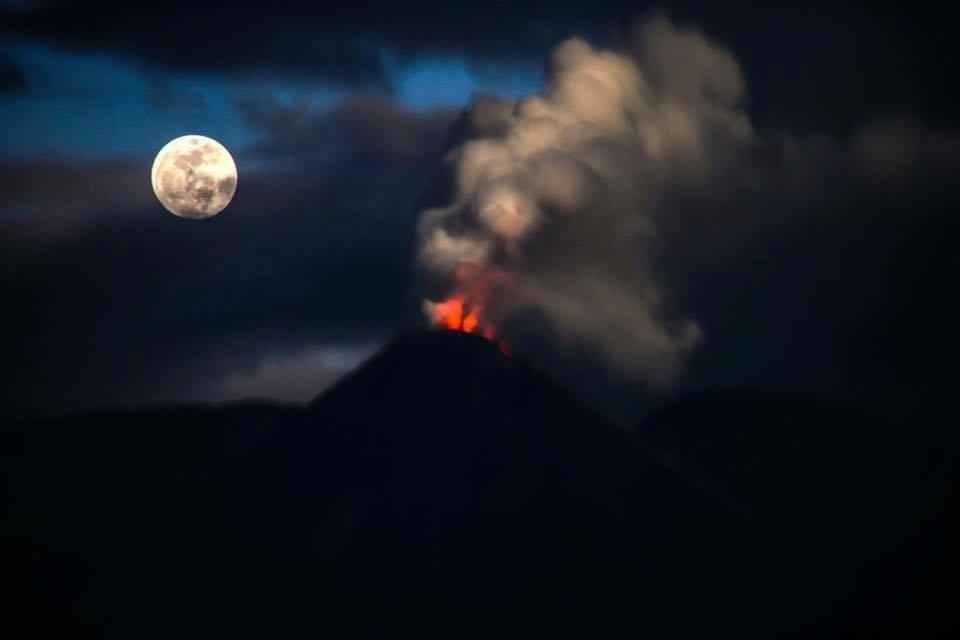
Reventador eruption in Eucuador
Reventador eruption in Eucuador on May 26, 2016
Have you noticed that our planet has begun to shake, rattle and roll? Yesterday, May 26, 2016 3 volcanic eruptions were captured on video around the world. Moreover, 2 strong earthquakes rattled the Earth on May 28, 2016. Although officials qualify these geological events as normal, there is something big coming toward us!

Over the past few days we have seen major volcanic eruptions and each day new volcanoes are showing increase eruptive activity or explosions. After the strong eruptions at Etna, Turrialba and Sinabung last week, the Kilauea volcano, the Reventador volcano and le Piton de la Fournaise started started spewing lava on May 26, 2016 as shown in the following videos:

Kilauea volcano:


Comment: Are you prepared? For more coverage on recent earthquakes, volcanoes and more planetary upheaval, check out our latest SOTT Earth Changes Summary for April 2016: Extreme Weather, Planetary Upheaval, Meteor Fireballs.


Arrow Up

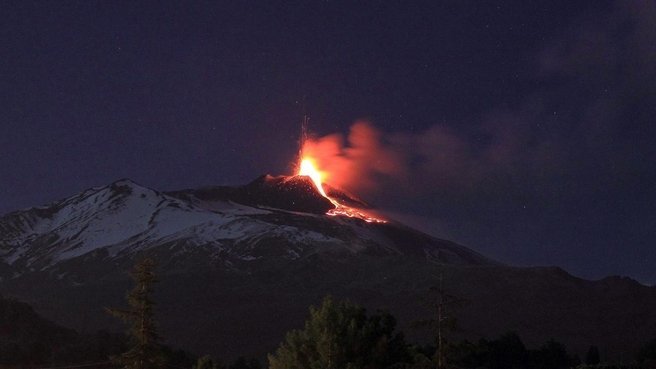
Mount Etna in Italy erupts once again

Mt Etna eruption
© AAP
Italy's Mount Etna, Europe's highest and most active volcano, has once again erupted, spewing red torrents of lava into the sky.

Wednesday's eruption was short but explosive, with bubbling lava filling one of the craters the whole day. There was still some sporadic activity on Thursday.

Mountain guides working on the 3330 metre volcano on the island of Sicily brought up groups of tourists to watch the spectacle.

"It is erupting from the central crater, it is magnificent," American tourist Mary Canaval said during a climb on Wednesday.

The volcano can burst into action several times a year. The last major eruption was in 1992.

Arrow Up

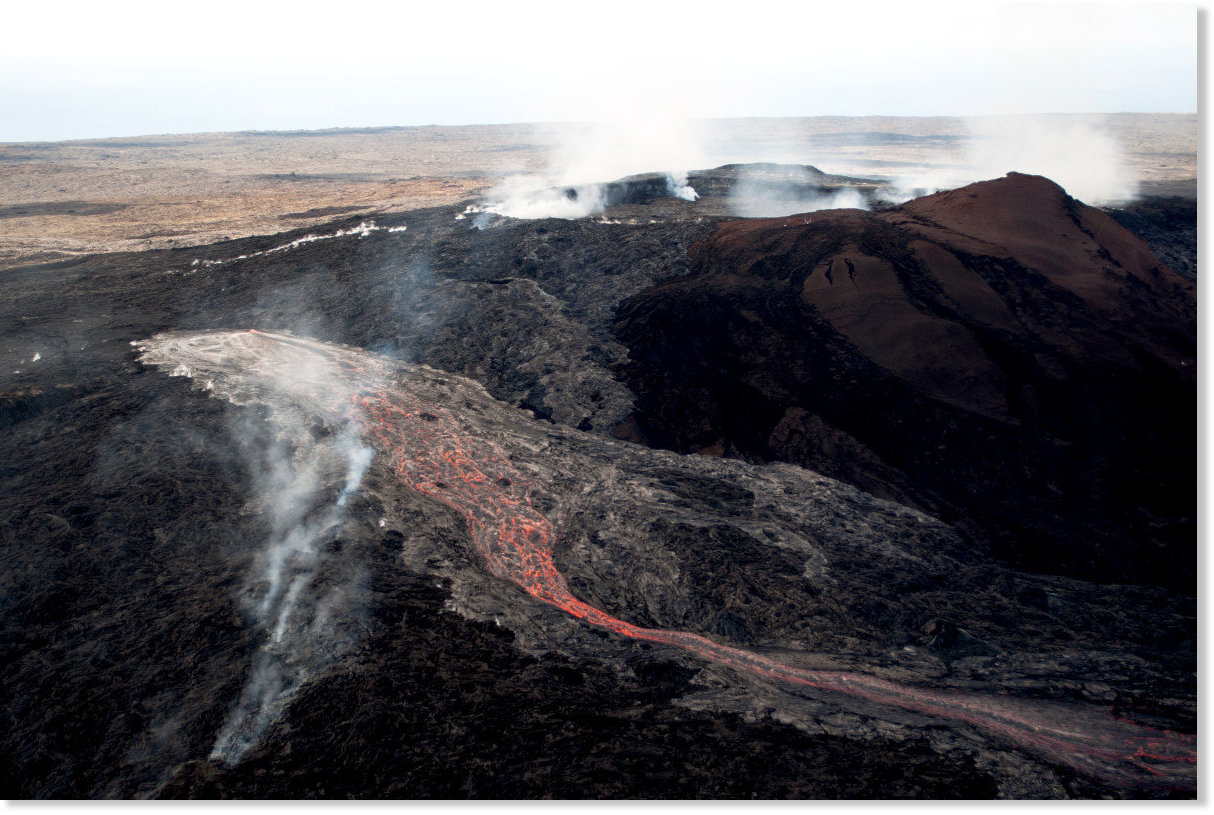
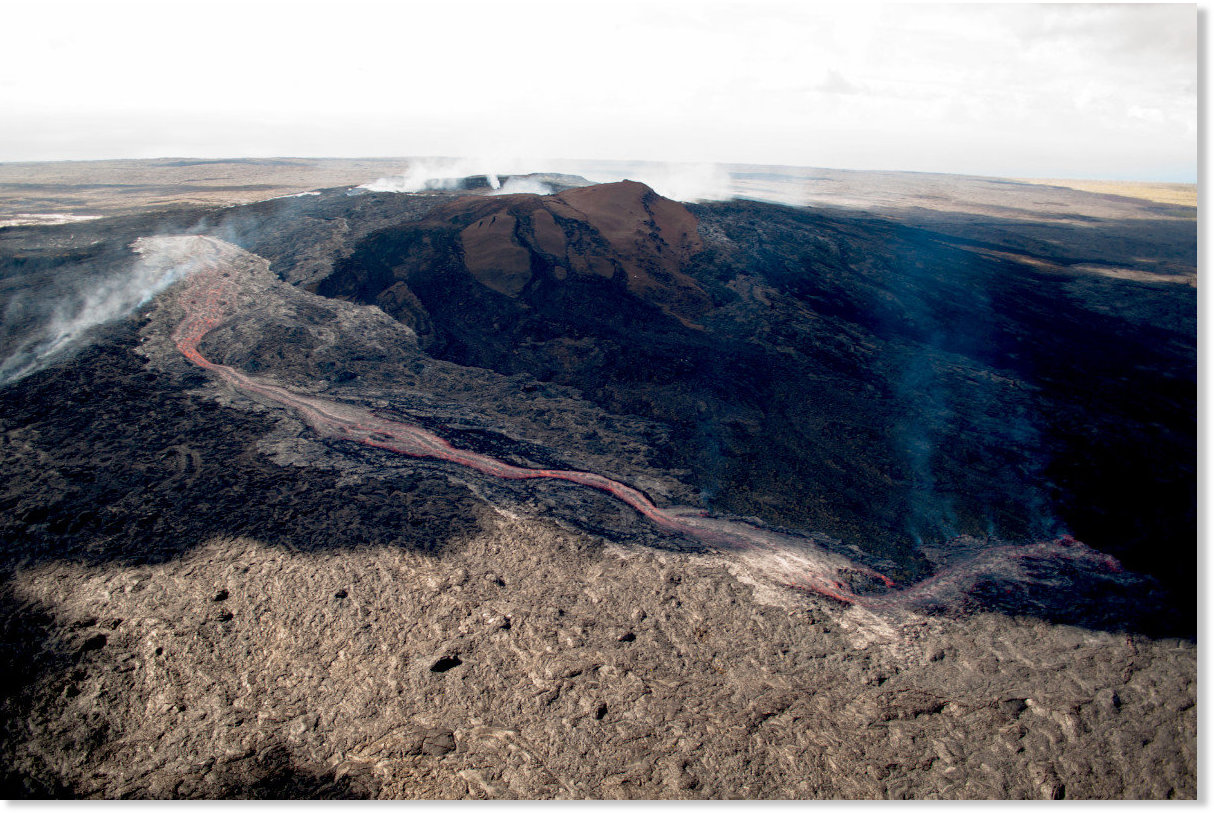
Pu'u O'o volcano, Hawaii unleashes its largest volume of lava for 500 years

Kilauea volcano lava flow
© hvo.wr.usgs.gov
Eruptions at one of the most volatile shield volcanoes on the island of Hawaii has lead to cascading new lava flows from a large opening in the earth's crust.

The molten rock is spewing from a vent known as the Puʻu ʻŌʻō cone - part of the Kilauea volcano which has been continuously active for more than 30 years.

According to the Hawaiian Volcano Observatory, the Puʻu ʻŌʻō fire fountain has now unleashed its largest volume of lava in the past 500 years.


Comment: Volcanic and seismic activity appears to be increasing all over the world. See also:

Shake, rattle and roll: Earthquakes continue worldwide; 40 volcanoes erupting right now


Attention

New lava flows on Pu'u O'o volcano, Hawaii

 Puʻu ʻŌʻō volcano
© USGS Puʻu ʻŌʻō volcano
Scientists have posted the first images of the new lava breakouts that began erupting this morning from the flanks of Puʻu ʻŌʻō.

The lava flows are situated close to the Puʻu ʻŌʻō cone. The two different flows broke out at around 6:50 a.m., in concert with sharp deflationary tilt on the East Rift on Kilauea volcano.

The larger of the two breakouts, shown in the USGS photo above, originated on the northeast flank of the cone, at the site of the vent for the ongoing June 27th lava flow. Scientists say this breakout point fed a vigorous channelized flow that extended about 0.6 miles. This lava flow had not extended beyond the existing Puʻu ʻŌʻō flow field as of 8:30 a.m., the time the photos were taken.

A wider view of the larger breakout traveling down the north flank of Puʻu ʻŌʻō, towards the northwest.
© USGSA wider view of the larger breakout traveling down the north flank of Puʻu ʻŌʻō, towards the northwest.

Attention

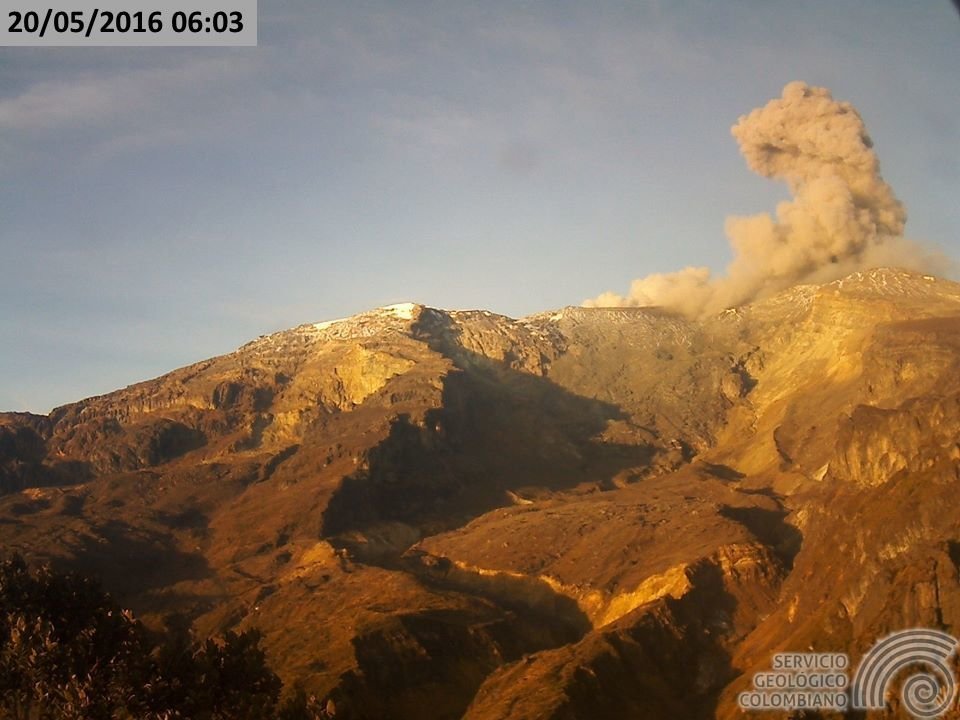
Activity continues at Colombia's Nevado del Ruiz volcano; recent eruption closes airport

Nevado Del Ruiz eruption
© Observatorio Vulcanológico y Sismológico de Manizales
Seismicity under Colombia's Nevado del Ruiz continues at elevated levels, and the volcano is experiencing frequent ash emissions since May 17, 2016.

An eruption at about 10:40 UTC on May 22 sent ash 2.3 km (7 545 feet) above the crater (7.5 km / 24 606 feet a.s.l.) and temporarily closed La Nubia airport in Manizales, the capital of Caldas state.

Similar explosions were also observed on May 17, 18, 19 and 20 when ash fall was reported up to 30 km (18.6 miles) NW of the volcano.

The Volcanological and Seismological Observatory of Manizales, which is part of the Colombian Geological Survey (SGC), said in a statement the seismicity under the volcano remains elevated at fluctuating levels but has been showing a slight decrease overall during the past weeks. It continues to be dominated by internal fluid movements which reflect the interaction of water and magmatic gasses at a shallow depth that occasional results in explosions and more often in a strong degassing plume reaching up to 2 km (6 561 feet).


Hardhat

Shake, rattle and roll: Earthquakes continue worldwide; 40 volcanoes erupting right now

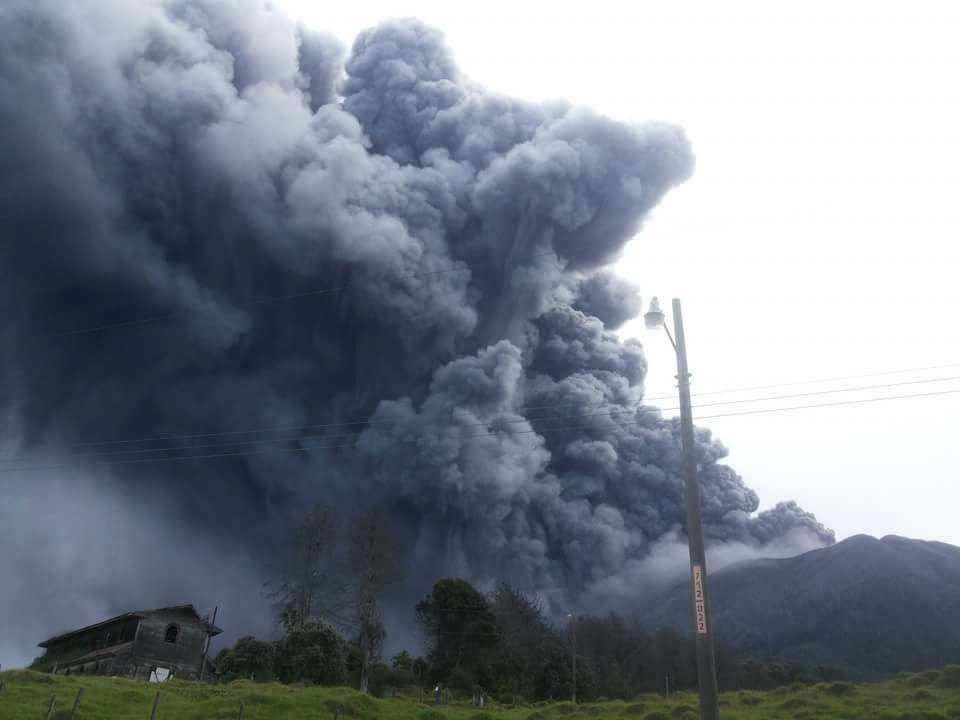
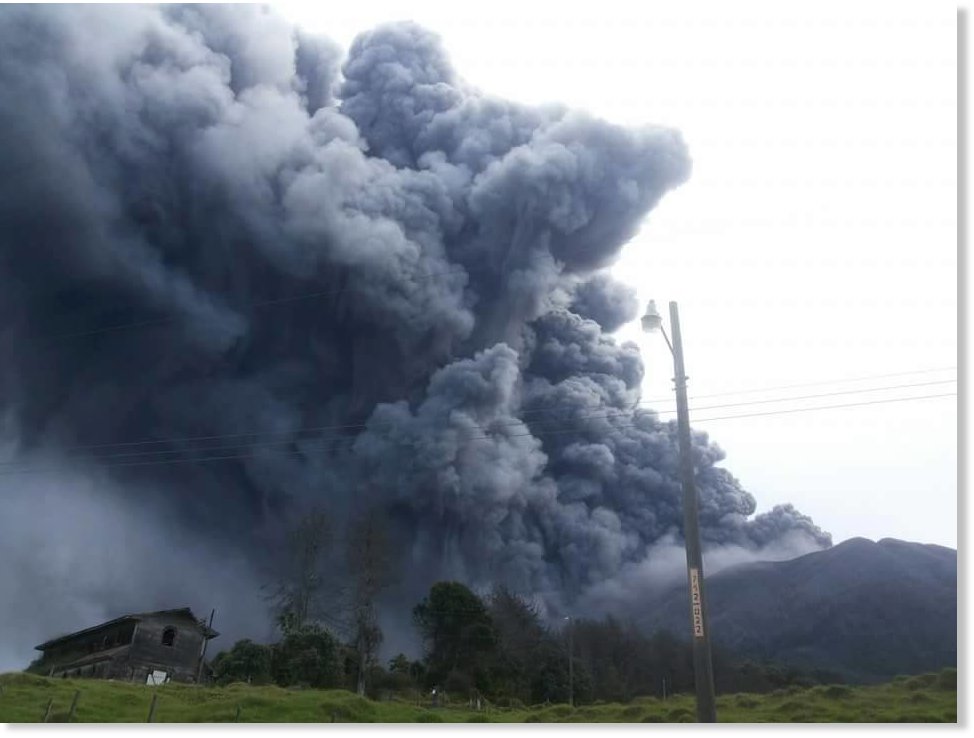
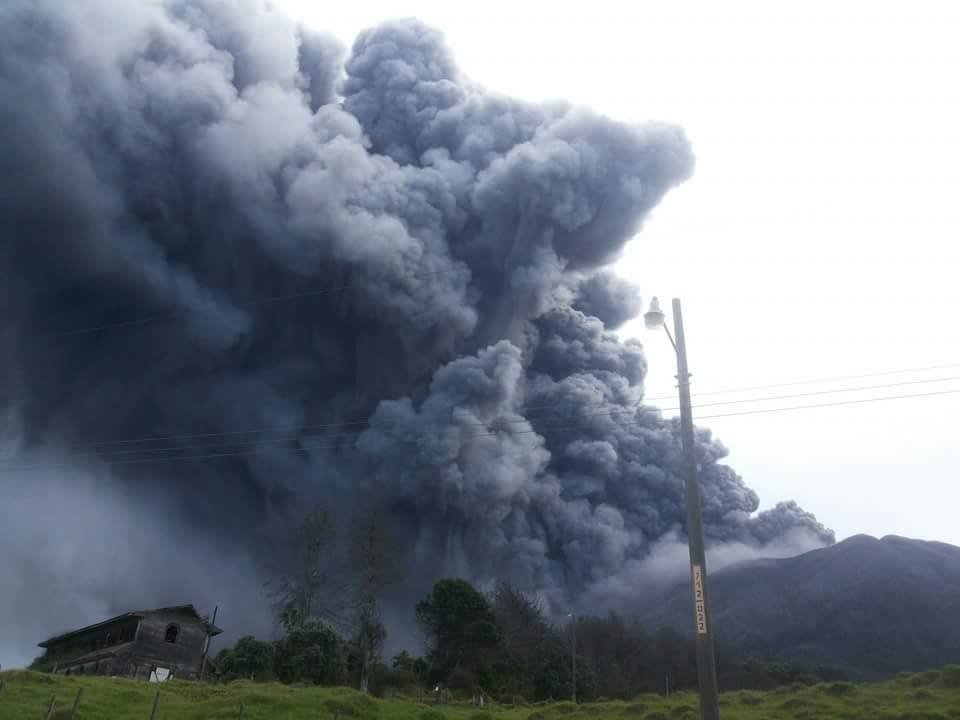
Turrialba eruption
© Via Comisión Nacional de Emergencias FacebookTurrialba Volcano erupts on Friday, May 20, 2016.
Have you noticed that our planet has begun to shake, rattle and roll? Over the past few days we have seen major volcanic eruptions in Costa Rica and Indonesia, and according to Volcano Discovery 40 volcanoes around the planet are erupting right now as you read this article. Meanwhile, earthquakes continue to shake the globe with alarming regularity. Just last week, Ecuador was hit by a magnitude 6.7 earthquake and a magnitude 6.8 earthquake in rapid succession. Overall, there have been more than 3,000 earthquakes of magnitude 1.5 or greater within the past month globally. So yes, I write constantly about the rapidly accelerating deterioration of our financial system, but the coming "collapse" is not just about money. I am convinced that we are entering a "perfect storm" in which a confluence of factors will absolutely cripple society and bring about changes that most of us would not even dare to imagine right now.

Let's talk about the volcanic eruptions that we have seen in recent days. The eruption down in Costa Rica took authorities completely by surprise, and a thick layer of dust and ash is coating vehicles and buildings 30 miles away in the capital city of San Jose...
A volcano has erupted in central Costa Rica, belching smoke and ash up to 3,000m (9,840ft) into the air.

Hundreds of people have gone to hospital, complaining of breathing difficulties and skin problems.

Some schools were shut and some flights into the country cancelled or diverted.

People in the capital San Jose, about 45km (30 miles) west of the Turrialba volcano, said layers of ash had coated buildings and cars and there was a fierce smell of sulphur.
Leading up to this eruption, there were "swarms of small earthquakes" in the vicinity of the volcano, but scientists assured the public that these earthquake swarms were "not signs of an imminent eruption."

Keep that in mind, because later in the article I am going to show you something.

Comment: For more coverage on recent earthquakes, volcanoes and more planetary upheaval, check out our latest SOTT Earth Changes Summary for April 2016: Extreme Weather, Planetary Upheaval, Meteor Fireballs.


Cloud Lightning

Hell opens? Costa Rica volcano erupts, spewing ash, column of smoke

Turrialba volcano
© Roko77 / InstagramTurrialba volcano
Featuring thick clouds of ash and smoke rising into the grey sky, spectacular images of the powerful Costa Rica volcano eruption have flooded social media.

The 3,340-meter Turrialba Volcano is located in Cartago Province of central Costa Rica, only 30 km from the country's capital, San José. The volcanic activity started Wednesday and the first eruptions were recorded Friday, according to local media.

Arrow Up

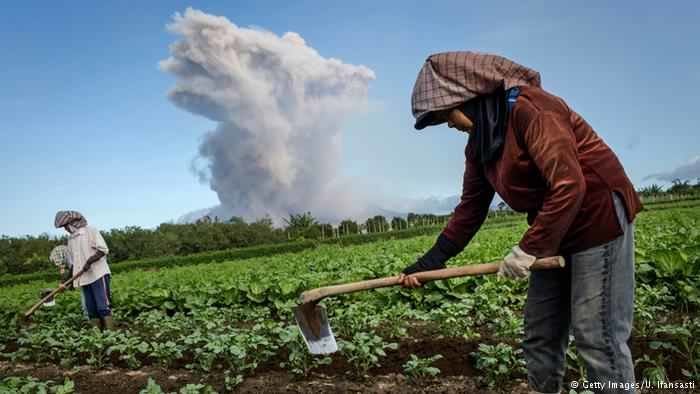
Mount Sinabung erupts in Indonesia, three farmers killed

Mount Sinabung eruption
© Getty Images/U. Ifansasti
Three people have been killed and four critically injured after a volcano erupted in Indonesia. More than a dozen people have been killed and thousands displaced since the volcano sprung back to life in 2010.

The highly active Mount Sinabung on the island of Sumatra spewed gas and ash high into the atmosphere and surrounding area on Saturday.

The three farmers were killed inside the prohibited "red zone" near the slopes of the volcano, Indonesia's disaster agency said.

"This area should have been empty, because nobody should be inside the red zone," disaster agency spokesman Sutopo Purwo Nugroho said.

The 2,600 meter (8,530 feet) high volcano sprung back to life in 2010 after lying dormant for nearly four centuries.


Attention

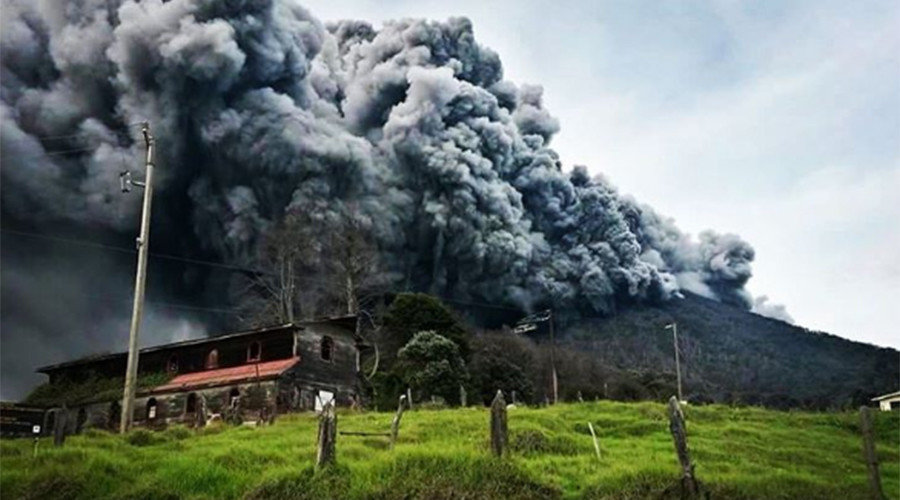
Flight delays and cancellations in Costa Rice after latest Turrialba Volcano eruptions; 3 km high ash column

Turrialba Volcano erupts on Friday, May 20, 2016.
© Comisión Nacional de Emergencias FacebookTurrialba Volcano erupts on Friday, May 20, 2016.
Costa Rica's main international airport remains open after Turrialba Volcano erupted again Friday morning in the latest of a series of powerful recent eruptions. While the airport is operating normally at this writing, some airlines have canceled or delayed flights into Costa Rica.

The eruption at 7:20 am Friday was one of the most dramatic in the last month, shooting a column of ash a staggering 3 km into the air, according to National University's Volcanological and Seismological Observatory of Costa Rica.

Concern over the eruption led Southwest, Air Canada, Spirit and Aeromexico to cancel flights Friday morning, according to Silva Chaves, spokeswoman for Aeris, the company that operates Juan Santamaría International Airport. United Airlines rerouted a flight to Daniel Oduber International Airport in Liberia, Guanacaste.