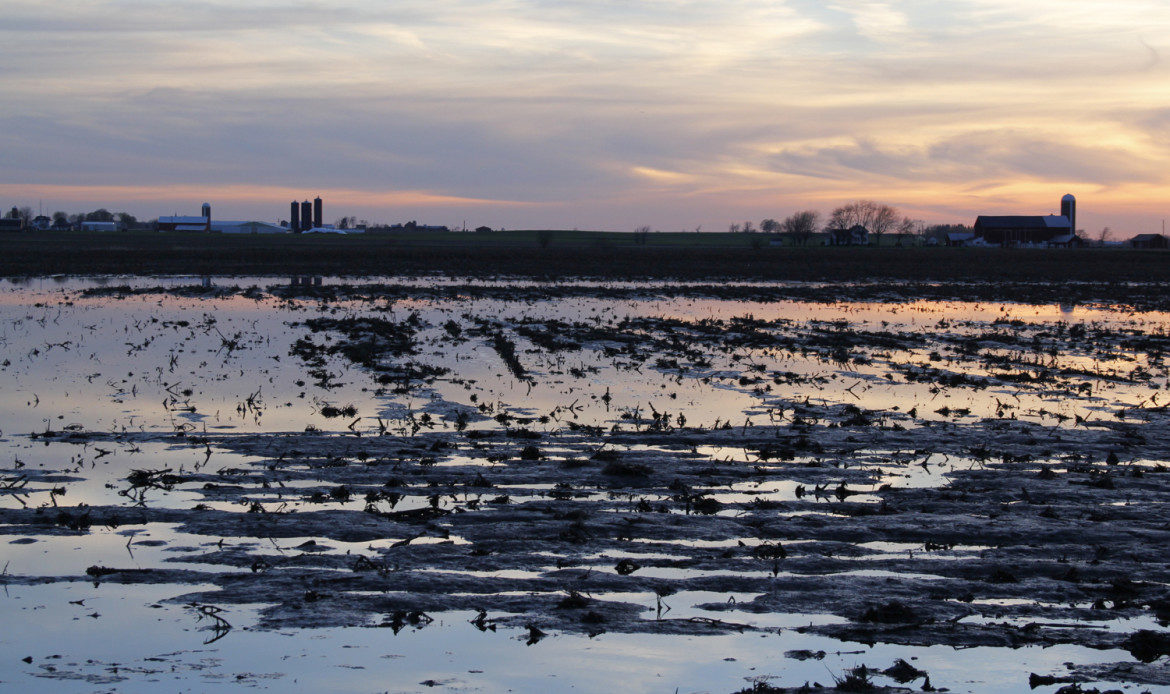
Flooded fields like this one from Calumet County, in May 2013, are innocuous when the ground below is clay, which protects the aquifers below. But if there are karst features like cracks or sinkholes, flooding means more risk that agricultural chemicals or manure will get into the groundwater below.
Water pollution is a growing problem, and nonorganic farming activities - both on land and in water - are significant contributors. In addition to farming chemicals such as nitrates, which pose a serious threat to water quality, there's the issue of drug-resistant bacteria. As reported by the Center for Public Integrity,
1 water testing in Kewaunee County, Wisconsin, has revealed
coliform bacteria "at levels too dangerous to drink."Drug-resistant bacteria are a
direct result of antibiotic overuse, especially in livestock, and recent investigations reveal antibiotic-resistant genes are being spread across the globe via animal feed - especially feed made from fish meal. Turns out aquaculture, which has been touted as a sustainable alternative to overfishing, is just as environmentally devastating as land-based farms.
The answer to these serious and interconnected dilemmas is to transition over to regenerative and
biodynamic farming, both of which go above and beyond organic methods.
We also need to come up with more sustainable solutions for fish, as
fish farms are turning out to be no less of an environmental nightmare than land-based
factory farms.
The recent escape of hundreds of thousands of non-native Atlantic salmon into the Pacific is just the latest testament to the environmental harm aquafarms do.




















Comment: The following article, carried back in 2013, has additional information: Autism linked to mothers taking antidepressant drugs