Health & WellnessS


Brain

The electric body: How your body's voltage can help you heal

bioelectricity
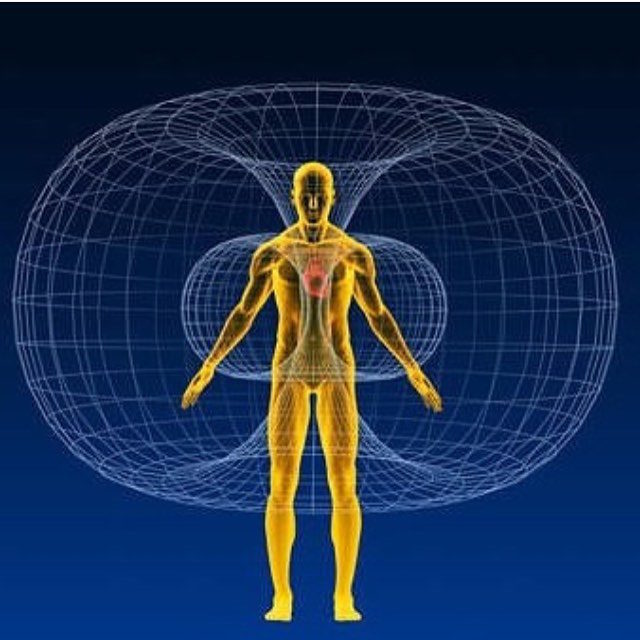
Your body runs on bioelectricity, and having a deeper understanding of how it works can be quite helpful when it comes to optimizing your health. Natural health pioneer Dr. Jerry Tennant has written an excellent book on this topic called "Healing Is Voltage: The Handbook."

The Electric Brain

Trained as an ophthalmologist, Tennant transitioned into natural health as a result of being forced to solve his own health challenges. After doing laser eye surgery on a patient with leukemia, Tennant ended up developing encephalitis. He believes the virus, which is not killed by laser, traveled from the patient's cornea, through the mask, up through his nose into his brain. He was forced to quit work in November 1995, and spent the next seven years bedridden, without hope for recovery.


Comment: Further reading: How electrons affect our lives: Dr Jack Kruse


Beaker

Assessing the data: Can low doses of chemicals affect your health?

Paracelsus
Paracelsus
Toxicology's founding father, Paracelsus, is famous for proclaiming that "the dose makes the poison." This phrase represents a pillar of traditional toxicology: Essentially, chemicals are harmful only at high enough doses.

But increasing evidence suggests that even low levels of "endocrine disrupting chemicals" can interfere with hormonal signals in the body in potentially harmful ways.

Standard toxicity tests don't always detect the effects that chemicals can have at lower levels. And, even when the data do suggest such effects, scientists and policymakers may not act upon this information in a timely manner.

Comment: Endocrine Disruptors: What are they & how you can avoid them


Cheeseburger

Global disease study reveals: Poor diet is a factor in one in five deaths

burgers
© Dominic Lipinski/PAEating foods high in salt raises the risk of an early death, the study says.
Study compiling data from every country finds people are living longer but millions are eating wrong foods for their health

Poor diet is a factor in one in five deaths around the world, according to the most comprehensive study ever carried out on the subject.

Millions of people are eating the wrong sorts of food for good health. Eating a diet that is low in whole grains, fruit, nuts and seeds and fish oils and high in salt raises the risk of an early death, according to the huge and ongoing study Global Burden of Disease.

The study, based at the Institute of Health Metrics and Evaluation at the University of Washington, compiles data from every country in the world and makes informed estimates where there are gaps. Five papers on life expectancy and the causes and risk factors of death and ill health have been published by the Lancet medical journal.

Comment: The ongoing study by Global Burden of Disease really misses the mark when they claim: "Eating a diet that is low in whole grains, fruit, nuts and seeds and fish oils and high in salt raises the risk of an early death". Read more about Going Against the Grain Towards Better Health:


Alarm Clock

Mysterious illness affecting wildlife forcing police to shoot, kill animals; neighbors worried for their pets

sickanimals
© KDKA
Some people who live in Ross Township say something strange is going on with wildlife in the area. They are concerned and wondering if it could also affect them.

Barbara Leininger, who lives in the area, says she's very worried.

"That there is a disease going around," she said. "Could it be transmitted to people or our pets?"

This has been going on for about a week in the area of Rodenbaugh Avenue. There have been raccoons and groundhogs coming out of the woods behind the houses that appear sick.

Karene Meyer says each time, police are called.

"They seem to be sick, doesn't seem to be rabies. The reason why they are saying they are sick is because they are not responding, moving or running away from them and they are listless. It's like they are dying," said Meyer.

Ross Township Police say they shoot and kill five to 10 animals a day, then toss them back into the woods.

But that creates another problem, a foul odor. Ross police say they aren't allowed to transport the dead carcasses in their vehicles. They contract with a company that will haul them away, but they have been killing so many, it is difficult to keep up.

"It was smelling like something dead. I had a whiff of it in my garage. It's not in my garage, because I tore it up looking, and it got smellier when we went outside, and it smelled up the whole neighborhood," Deborah Langhorne, a neighbor, said.

So what is making the animals sick?

Ross Township Police think it could be an oral rabies vaccine that state and county agencies have placed in wooded areas, either on foot, or dropped from low-flying planes or helicopters.

KDKA's Brenda Waters spoke with a representative from the U.S. Department of Agriculture's Wildlife Services program who said the rabies vaccine has been used since 1995, and is not known to cause any adverse effects.

The agency will be reaching out to Ross Township authorities.

Health

The trouble with tinnitus, the sound that comes from nowhere

tinnitus woman
© Shutterstock
Melanie West, 63, has had a ringing in her ears as long as she can remember. When she was a kid in the '50s and '60s, it was a high-pitched sound in both ears that her doctors did not believe existed. "I would go from doctor to doctor explaining, 'I hear this sound inside of my head, and it won't let me sleep.' I was having a hard time concentrating, and they would tell me that I don't have it," she says. When West was stressed, or hadn't had enough sleep, it would get worse and her grades would plummet. Once, the noise made her so tense that she broke a hairbrush she was holding.

The trouble with tinnitus-the medical term for ear-ringing-is there's really no good way to measure a sound that only the patient can hear. Interest in and recognition of the condition has improved in the past couple decades, partly thanks to advances in brain science. But when West, now the CEO and chair of the board of directors of the American Tinnitus Association (ATA), was young, it was less understood.

Over time, she adapted. She read a lot of psychology books and says those helped. She started to manage a pretty good quality of life, until she got in a car accident in 2008. Another vehicle rear-ended hers at about 55 miles per hour, and something about this event changed the sound considerably.

It got louder-about twice as loud, she says-and fuller, and made more of a "shh" sound. The noise is now louder in her right ear than her left, "so they're not the same, and even that becomes a little irritating," she says. After the accident, "I couldn't sleep, I didn't want to eat. It just affects every single part of your life."

Bell

Novel tinnitus therapy helps patients deal with phantom noise

Tinnitus therapy
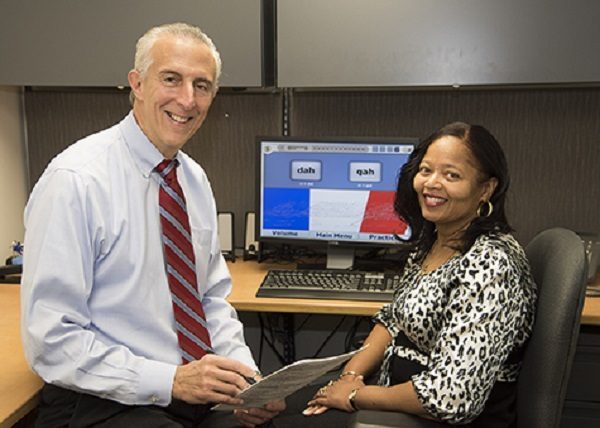
© Credit: Robert BostonJay Piccirillo, MD, (left) led a study showing that patients with tinnitus, such as Jacqueline Richardson (right), may benefit from a new therapy combining computer-based cognitive training with a drug that helps boost the effectiveness of that training so patients can ignore the ringing in their ears.
Patients with tinnitus hear phantom noise and are sometimes so bothered by the perceived ringing in their ears, they have difficulty concentrating. A new therapy does not lessen perception of the noise but appears to help patients cope better with it in their daily lives, according to new research.

A pilot study at Washington University School of Medicine in St. Louis showed that patients participating in computer-based cognitive training and taking a drug called d-cycloserine reported greater improvements in the ability to go about their daily lives than patients who did the same cognitive training but took a placebo. The researchers note that the study was small, involving 30 patients.

The study appears Oct. 30 in JAMA Otolaryngology-Head & Neck Surgery.

"We suspect that both the problems and the solutions concerning tinnitus are in the brain," said senior author Jay F. Piccirillo, MD, professor of otolaryngology. "We don't know what causes the ringing. Many people with tinnitus have had ear trauma or hearing loss but not all. And at the same time, a lot of people with ear injuries or hearing loss don't have tinnitus."

Comment: See also: Magnesium: Fresh hope for tinnitus sufferers


Syringe

What the hay? Cows used to develop HIV vaccine

cows
Researchers are unsure why cows are able to develop antibodies to a virus that is believed to exclusively attack humans; however, they suspect the answer may lie in a cow’s gastrointestinal tract.
Findings from a study published in Nature in July 2017 reveal that scientists are using cows to better understand the Human Immunodeficiency Virus (HIV) and develop an HIV vaccine.1 After decades of research, including clinical trials of different HIV vaccine candidates,2 there is still no effective vaccine because the virus mutates at a rapid rate and the human body does not produce a strong immune response to it.3

HIV vaccine researchers have yet to figure out why people diagnosed with HIV do not develop antibodies against the virus. It is estimated that only 10 to 20 percent of people produce broadly neutralizing antibodies that defend cells against the virus. Moreover, even among those people who do produce antibodies, the bNAbs only begin to develop after about two years of infection.

Comment: Listen The Health & Wellness Show: What's the deal with AIDS? to get a better understanding of WHY a HIV vaccine will be a complete failure.


Attention

Health catastrophe: Hurricanes and floods are the harbingers of mold growth

mold
© Lucas JacksonMold grows in concentric circles on a ceiling in a New Orleans apartment after Hurricane Katrina.
The flooding of Houston is a health catastrophe unfolding publicly in slow motion. Much of the country is watching as 50 inches of water rise around the chairs of residents in nursing homes and submerge semitrucks. Some 20 trillion gallons of water are pouring onto the urban plain, where developers have paved over the wetlands that would drain the water.

The toll on human life and health so far has been small relative to what the images suggest. Authorities have cited thirty known deaths as of Tuesday night, while 13,000 people have been rescued. President Donald Trump-who this month undid an Obama-era requirement that infrastructure projects be constructed to endure rising sea levels-offered swift reassurance on Twitter: "Major rescue operations underway!" and "Spirit of the people is incredible. Thanks!"

But the impact of hurricanes on health is not captured in the mortality and morbidity numbers in the days after the rain. This is typified by the inglorious problem of mold.

Comment: Mold: A silent predator making you sick
Mold is silent, shifting and threatens our well-being. It can grow behind walls, below floors and even makes a home in our food. What you might not realize is, mold can make you very sick and in some cases, even be deadly.

People often underestimate the crippling effects that mold has on our bodies. If the growth of mold is unmanaged, it can overload and break down your immune system. When someone is suffering from mold toxicity, they are often left confused and frustrated trying to figure out the root cause of their illness.

Some molds release poisonous, invisible chemicals known as mycotoxins that are difficult, but not impossible, to kill. These mycotoxins will make their home all around your environment, contaminating everything you own from furniture to your clothes. These biotoxins travel through the body distressing immunity, joints, the nervous system, and more. They change how you think, how you feel and even how long you live.


Hourglass

The company you keep determines how well you sleep

sleep
Studies have shown that the quality of our relationships may determine how healthy we are, how well we recover from illness and even how long we live.

However, little is known about how relationships affect sleep. This is especially true for young, unmarried individuals. Teens and emerging adults, in particular, generally do not get the recommended amount of sleep and report a number of sleep problems, such as difficulty falling asleep and daytime fatigue.

Researchers have now started to investigate how relationships with friends and family affect nighttime sleep - particularly among teens and emerging adults.

Results from our recent study with high school students suggest that, even when we go to bed alone, the company we keep by day may determine how well we sleep at night.

Comment: The importance of sleep and how you can hack it


Red Flag

Sitting too long is hazardous to your health

sitting
© Ljupco Smokovski / Shutterstock
Terrible news for the majority of us who spend long periods glued to our desks.

In 1960, approximately 50 percent of U.S. jobs required heavy to moderate physical activity. Today, that number stands at just 20 percent, meaning approximately 80 percent of jobs are almost wholly sedentary or demand minimal physical exertion. The vast majority of us spend the bulk of our workdays being mostly immobile, glued to our chairs and desks. That inactivity is part of why we've become one of the fattest nations in the world. Obesity is connected to a number of health risks, but there are far greater consequences to our stationary lives. A new study finds that regularly sitting for hours on end can ultimately lead to premature death, and those potentially lethal effects can't be countered with frequent exercise.

Comment: Stand up for your health!