Health & WellnessS


Microscope 2

Retroviruses: Poorly understood agents of change

Retro Virus
Chronic inflammatory diseases have been skyrocketing in incidence in the past quarter century. The details explaining how retroviruses in today's biological therapeutics including vaccines are contributing to autoimmune, neuroimmune disease and cancer are complex. Although I've spent my adult lifetime studying how retroviruses contribute to these diseases, paring down the complexities into basics is a daunting task.

In our book, Plague, Kent Heckenlively and I detailed the science and cover up surrounding my team's 2009 discovery of a new family of human retroviruses related to mouse leukemia viruses, associated not only with cancer but with Autism Spectrum Disorders and Chronic Fatigue Syndrome. In Plague, my coauthor and I detail the science behind the discovery. Scientific research is not simply a study set in a defined space or time, but a lifetime of detailed observation and learning-a lifetime of forming hypotheses and modifying those hypotheses as technology and learning inform new discovery. Science is never settled as we learn each day and discover things that were once considered impossible.

Attention

Questionable conduct: Oxford University scientists gave babies trial TB vaccine 'that did not work on monkeys'

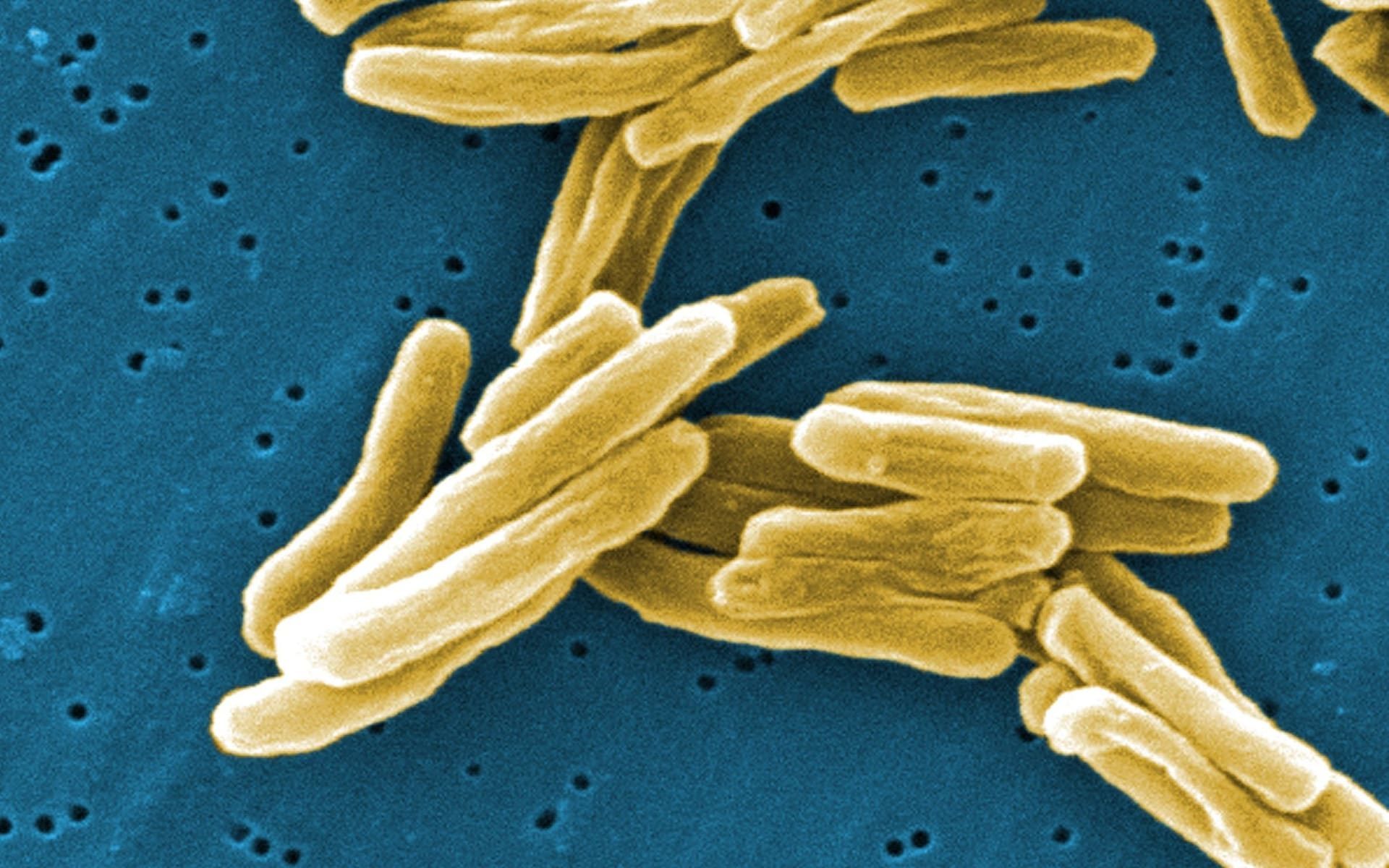
Tuberculosis bacteria
© PAThe Tuberculosis bacteria
Oxford University is embroiled in an ethics row after scientists were accused of questionable conduct over a controversial trial of a new vaccine on African babies.

Professor Peter Beverley, a former senior academic at the university, complained that scientists planned to test a new tuberculosis vaccine on more than a thousand infants without sharing data suggesting that monkeys given the immunisation had appeared to "die rapidly".

"Certainly here in this experiment there was no evidence whatsoever that this is an effective booster vaccine," Prof Beverley said.

Attention

Pharma company created fake cancer patients to push its fentanyl-containing opioid

subsys drug
If the opioid crisis is to be resolved, opioid manufacturers must somehow be held to account for criminally pushing addictive and deadly products onto the public. While some cities and states are already suing pharmaceutical companies over this, and some pharmaceutical executives have been arrested on conspiracy charges, a new corruption case highlights the methods companies are using to create addict customers.

In a federal indictment presented by Sen. Claire McCaskill, a Democrat from Missouri, pharmaceutical company Insys Therapeutics has been charged with using an array of tactics to fraudulently create fake cancer patients for its drugs. By offering kickbacks to doctors, falsifying medical records and deliberately misleading insurance companies, the case against Insys exemplifies the type of corruption which is causing the opioid epidemic.

The chief product of Insys, painkiller Subsys, is a sublingual spray containing fentanyl, one of the deadliest synthetic opioids today.

An employee of Insys has been caught on tape misleading a pharmacy benefits provider in order to get a Subsys prescription for a patient who does not have cancer. The smoking gun audio tape is heard in the following video:

Comment: See also:


Cell Phone

Danger! Yet another reason to reduce cellphone usage

Cellphone

Danger Will Robinson! Cellphones are bad for your health.
Cellphones are growing in popularity every year. Smartphones enable users to call, text and use the internet from almost anywhere there is a cellphone signal. From the convenience of a piece of equipment that fits in your pocket, you can communicate and receive news from anywhere in the world. According to the Pew Research Center, nearly 90 percent of Americans own a cellphone and two-thirds of those are smart phones.

The cellphone has become the most rapidly accepted device in the history of consumer technology. Pew attributes the rise in popularity to the development and accessibility of smartphones. Unfortunately, this connectivity to a world well outside your physical boundaries places you in danger of disconnecting from what is real and important in your immediate environment. The New York Times observes:
"The near-universal access to digital technology, starting at ever younger ages, is transforming modern society in ways that can have negative effects on physical and mental health, neurological development and personal relationships, not to mention safety on our roads and sidewalks."

Comment: The jury has been out on the negative effects of cellphone use for years now. Use them as sparingly as possible and never keep them on you at all times.


Galaxy

Law of Similarities: Foods that look like the organ they heal

universe
“Nature, which makes nothing durable, always repeats itself so that nothing which it makes may be lost.” – Oscar Wilde
Have you ever thought about the natural laws that underpin our world? Governed by sacred geometry, organic patterns are the building blocks that shape our experiences. They show up again and again, begging to be recognized, understood, and utilized for the benefit of mankind.

It is an unmistakable fact: the natural world tends to repeat itself. Like the swirling pattern seen in hurricanes, sea shells, and spiral galaxies, nature has a way of creating signatures that surface repeatedly across people, places, and things.

Health

Do fewer dreams mean you have a higher risk of dementia?

Dreamcatcher
Each night, your body progresses through five stages of sleep. In stage one, light sleep, you prepare to drift off to sleep. A pre-deep sleep phase is next, during which your brain wave activity becomes rapid and rhythmic while your body temperature drops and heart rate slows. In stage three, you begin to transition from light sleep to deep sleep, and in stage four, delta sleep, you enter deep sleep. In stage five, rapid eye movement (REM) sleep occurs, which is when most dreaming happens.

There is still much to be understood when it comes to REM sleep, but it's known to be involved in storing memories, learning and mood. It makes up, on average, about 25 percent of your total sleep cycle,1 but there are individual variations. It turns out that these variations may play a role in your health, as recent research suggests less REM sleep may increase your risk of dementia.

Comment: Dementia is a degenerative disorder that affects many, not just the person suffering from it, but there are preventative measures and steps you can take to reduce the chance of you or your loved ones ever getting this disease. It just takes some effort and consistency in implementing them. There are a number of early tell-tale signs to watch out for: But on top of the advice given here to improve sleep and cleaning up your diet, there is light at the end of the tunnel:


Bacon n Eggs

Another study touts the benefits of fat over carbs

fat vs carbs
© mercola.com
High carbohydrate intake is associated with a higher risk of mortality, and high fat intake with a lower risk, researchers report.

An international team of scientists studied diet and mortality in 135,335 people between 35 and 70 years old in 18 countries, following them for an average of more than seven years. Diet information depended on self-reports, and the scientists controlled for factors including age, sex, smoking, physical activity and body mass index. The study is in The Lancet.

Compared with people who ate the lowest 20 percent of carbohydrates, those who ate the highest 20 percent had a 28 percent increased risk of death. But high carbohydrate intake was not associated with cardiovascular death.

Comment:


SOTT Logo Radio

SOTT Focus: The Health & Wellness Show: The Write Stuff

handwriting
© www.behance.net
Are you compelled to express yourself through writing, only to find that you just don't know how to begin or what to say? As the digital world encompasses every aspect of our lives we communicate our thoughts and feelings through text, emails, chats and on line discussions. When are we encouraged to express ourselves with the lost art of longhand? Have we completely lost touch with the pen and paper? How does writing benefit us physically, mentally and emotionally? Can there be cathartic benefits of writing? It is fundamental to learning, working memory, academic performance and addressing our deepest thoughts. Words can act as a medium for expression and a catalyst for clarity especially when dealing with trauma.

Join us on this episode of the Health and Wellness Show as we talk about the write stuff. How can we rekindle one of the most fundamental skills we learned as young children? How do we come back to the lost art and what are some tips to inspire us to get us back to the pen and paper?

And stay tuned at the end of the show for Zoya's Pet Health Segment where the topic is squish-faced doggies and the health problems they face.

Running Time: 01:20:51

Download: MP3


Fish

Human antidepressants found in Great Lakes fish

Walleye
© U.S. Fish and Wildlife ServiceWalleye.
Human antidepressants are building up in the brains of bass, walleye and several other fish common to the Great Lakes region, scientists say.

In a new study, researchers detected high concentrations of these drugs and their metabolized remnants in the brain tissue of 10 fish species found in the Niagara River.

This vital conduit connects two of the Great Lakes, Lake Erie and Lake Ontario, via Niagara Falls. The discovery of antidepressants in aquatic life in the river raises serious environmental concerns, says lead scientist Diana Aga, PhD, the Henry M. Woodburn Professor of Chemistry in the University at Buffalo College of Arts and Sciences.

"These active ingredients from antidepressants, which are coming out from wastewater treatment plants, are accumulating in fish brains," Aga says. "It is a threat to biodiversity, and we should be very concerned.

"These drugs could affect fish behavior. We didn't look at behavior in our study, but other research teams have shown that antidepressants can affect the feeding behavior of fish or their survival instincts. Some fish won't acknowledge the presence of predators as much."

If changes like these occur in the wild, they have the potential to disrupt the delicate balance between species that helps to keep the ecosystem stable, says study co-author Randolph Singh, PhD, a recent UB graduate from Aga's lab.

"The levels of antidepressants found do not pose a danger to humans who eat the fish, especially in the U.S., where most people do not eat organs like the brain," Singh says. "However, the risk that the drugs pose to biodiversity is real, and scientists are just beginning to understand what the consequences might be."

The research team also included Alicia Pérez-Fuentetaja, PhD, a professor in the biology department and Great Lakes Center at SUNY Buffalo State; Prapha Arnnok, PhD, of Ramkhamhaeng University in Thailand; and Rodjana Burakham, PhD, of Khon Kaen University in Thailand. The study was published on Aug. 16 in the journal Environmental Science and Technology.

Microscope 1

Scientists invent pen that can detect cancerous tissue in 10 seconds

scientist
© CC0 / Pixabay
Scientists at the University of Texas have come up with a quick and unique way of helping cancer surgeons know much tissue to remove from a patient.

A handheld device which can identify cancerous tissue in 10 seconds has been created by scientists at the University of Texas.

Tests, published in Science Translational Medicine, suggest the technology is accurate 96 percent of the time.

The inventors of the MasSpec Pen say it could be used during surgery to make sure that all of a tumor has been removed and would avoid the "heartbreak" of leaving cancer in place, where it could potentially start growing again.