Health & WellnessS


Clipboard

Holistic health: Skin discovered to play role in controlling blood pressure

skin blood pressure
Skin plays a surprising role in helping regulate blood pressure and heart rate, according to scientists at the University of Cambridge and the Karolinska Institute, Sweden. While this discovery was made in mice, the researchers believe it is likely to be true also in humans.

In a study published in the open access journal eLife, the researchers show that skin - our largest organ, typically covering two square metres in humans - helps regulate blood pressure and heart rate in response to changes in the amount of oxygen available in the environment.

High blood pressure is associated with cardiovascular disease, such as heart attack and stroke. For the vast majority of cases of high blood pressure, there is no known cause. The condition is often associated with reduced flow of blood through small blood vessels in the skin and other parts of the body, a symptom which can get progressively worse if the hypertension is not treated.

Heart - Black

Multinational pharma giants threaten to sue NHS for prescribing cheaper medicine which could save the public millions

Macular Degeneration
© Thinkstock
Two multinational drug companies are threatening the NHS with legal action over its prescribing of cheaper medicines that could save the public millions. The NHS is handing out the drugs to patients as a treatment to prevent blindness.

Up to twelve NHS clinical commissioning groups (CCGs) in the north-east of England have said they would rather use the equally safe and effective drug Avastin - which is ten times cheaper than that being offered by the companies - for the treatment of age-related macular degeneration (AMD), the leading cause of sight loss.

The groups are advising doctors to prescribe the drug as an alternative to much more costly ones being offered by drug giants Novartis and Bayer. It has spurred doctors to accuse the drug companies of "dictating" how they should work.

Avastin, as an injection, costs £12 ($16), compared to the single doses of Novartis' Lucentis at £742, and Bayer's Eylea at £816. The CCGs claim adopting Avastin would save them £13.5 million a year, and pay for an extra 270 nurses in the region.

Comment: More details from the British Medical Journal:
In its anti-cancer drug, bevacizumab, drug developer Genentech has created what may be the world's first "not me" (as opposed to "me too") drug, say Robert Campbell and colleagues (doi:10.1136/bmj.e2941). Despite evidence that it works in macular degeneration, the manufacturers and marketers (Roche in the US, Novartis in the UK and elsewhere) are actively discouraging its use for this condition, even going so far as taking legal action to prevent such off-label use. Why? Because they want people to use their other drug, ranibuzimab, which is licensed for treating macular degeneration.

The bottom line is that ranibuzimab is about 12 times more expensive: Cheung and colleagues report that the UK could save close to £300m (€368m; $485m) a year if it were standard treatment. So are Roche and Novartis simply fighting to protect their profits? They say no, that they are also protecting patients from the cheaper drug's higher risk profile. Although data from the publicly funded CATT trial in the US found similar effectiveness and safety for the two drugs in treating macular degeneration, the safety of bevacizumab remains a worry. Concerns relate to its greater systemic absorption and the fact that it has to be decanted into smaller quantities for intraocular injection, which introduces the risk of infection.

In the UK, as Ingrid Torjesen reports (doi:10.1136/bmj.e3012), efforts are under way to get bevacizumab approved for use in macular degeneration despite resistance from Novartis. The National Institute for Health and Clinical Excellence has said it could appraise the drug if asked to by the Department of Health. Campbell and colleagues report that the department is waiting for the results of the IVAN trial in the UK, due to be published this month. But it is unlikely to resolve the safety concerns. Neither this nor the CATT trial was big enough to detect small but clinically relevant differences in adverse outcomes such as stroke, they say. Long term postmarketing surveillance is needed for that.


Health

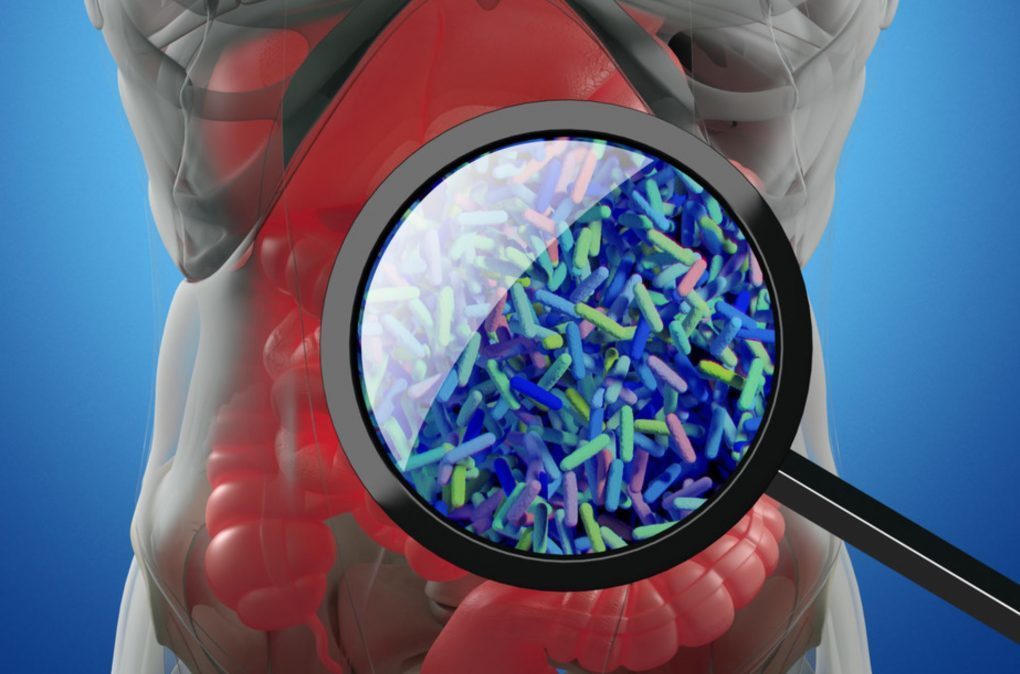
Study reveals connection between gut microbiome and inflammatory bowel disease

gut bacteria
Many people associate the word "bacteria" with something dirty and disgusting. Dr. Pere Santamaria disagrees. Called the microbiome, the bacteria in our bodies have all kinds of positive effects on our health, Santamaria says. "The bacteria we have in our gut actually have many beneficial functions. They help in our digestion, prevent infection by pathogens and educate our immune system on what to fight." Now, a new function of a protein in the gut microbiome reveals potential impacts for those who suffer from inflammatory bowel disease (IBD).

Published last week in Cell, a study by Santamaria and Kathy McCoy, PhD, from the University of Calgary's Cumming School of Medicine (CSM) reveals a new mechanism in the gut microbiome that regulates pro- and anti-inflammatory cells. "We found that a protein expressed by gut bacteria called Bacteroides works to prevent IBD by rapidly recruiting white blood cells to kill a cell of the immune system that is responsible for orchestrating IBD," says McCoy. "We think that this mechanism is likely involved in preventing most people from developing IBD."

Comment: See also:


Red Flag

Knee surgeon warns against wearing Ugg boots

Ugg boots
© Getty
We know, it sounds like something made up by a rival, less comfy, boot manufacturer.

But, alas, it is not.

A leading orthopaedic surgeon has warned against wearing Ugg boots in the winter months, saying they lack support for the lower leg if people buy the wrong size.

And constant wear and tear of the boots can cause the heel to get worn away, which can flatten out the arch of the foot which is needed for posture support.

Both of these can lead to a bad posture, knee pain and even back pain.

Ian McDermott, a knee surgeon in London, said: "This is a bit of a 'red flag' and a sign that it's potentially worth investigating the knee with X-rays and an MRI scan to check exactly what is going on inside the joint.

HAL9000

New therapy device heals the body by reprogramming cells

DNA Design
© God & Science Org
Researchers have developed a device that can switch cell function to rescue failing body functions with a single touch. The technology, known as Tissue Nanotransfection (TNT), injects genetic code into skin cells, turning those skin cells into other types of cells required for treating diseased conditions.

Although cellular therapies represent a promising strategy for a number of conditions, current approaches have faced major translational hurdles, including limited cell sources and the need for cumbersome pre-processing steps.

A new device developed at The Ohio State University can start healing organs in a "fraction of a second," researchers say.

The technology has the potential to save the lives of car crash victims and even deployed soldiers injured on site. It's a dime-sized silicone chip that "injects genetic code into skin cells, turning those skin cells into other types of cells required for treating diseased conditions," according to a release.

In the study published in Nature Nanotechnology, first author Daniel Gallego-Perez of Ohio State demonstrated that the technique worked with up to 98 percent efficiently.

Donut

Shhh! Mainstream news finally admits that diet is a factor in getting cancer

fast food
For years it has been a supposed mystery, but it is finally being acknowledged that a primary cause of cancer in the world today is diet. Studies are now showing that obesity plays an enormous role in one's chances of getting cancer, and the main cause of obesity is the type of foods people eat. It is in large part a lifestyle disease, and the most important relevant lifestyle choice is food.
Overall, we estimated that 40.8% of incident cancer cases were attributable to exposure to the 24 factors included in the analysis (Table 2). Tobacco smoking was responsible for the greatest cancer burden, accounting for an estimated 15.7% of all incident cancer cases (2485 cases), followed by physical inactivity and excess body weight, which were responsible for an estimated 7.2% and 4.3% of incident cancer cases, respectively. All other exposures of interest were estimated to be responsible for less than 4.0% of incident cancer cases each. [Source]
More specifically, researchers are pointing out the connection between the body's insulin response to food and cancer metabolism. In short, there is a paradigm shift taking place and we are admitting that food can either feed or starve cancer cells. Here, in a piece for The Los Angeles Times, writer Sam Apple explains this connection:

Comment: See also:


Health

Catechins found in green tea can help your heart and brain

green tea
If you could have a cup of green tea and fight Alzheimer's disease in the process, how many cups would you have? The ancient beverage has been recognized for millennia as having a dramatic and positive impact on human health, but its potential for improving several aspects of your brain, as well as your heart, is becoming more clear thanks to ongoing research.

After all, nearly 50 million people worldwide - one of every nine people over the age of 651 - are wrestling with this devastating disease, described as a neurodegenerative condition evidenced by a progressively advancing mental decline that affects memory and behavior. Experts say that by 2050, that number could surpass 131.5 million.2

While scientists weren't yet clear on what mechanisms made the green tea-for-Alzheimer's link possible, new research, covered in the Journal of the American Chemical Society,3 has determined that antioxidant compounds called catechins are the facilitators (and to a lesser degree, theaflavin polyphenols in black tea).4

Lead study author Giuseppe Melacini, from the chemistry and chemical biology departments at McMaster University in Canada, asserts that the best remedy for Alzheimer's is early intervention. He also notes that using either green tea extracts or their derivatives - as far in advance as 15 to 25 years prior to symptoms appearing - is one method of early intervention.

What he's really suggesting is that anyone wanting to avoid the disease or lessen its effects should begin drinking green tea now rather than waiting until symptoms emerge - although there are a multitude of steps to reduce your Alzheimer's risk beyond drinking green tea.

Life Preserver

Wait a minute—clamping the umbilical cord later could save thousands of preterm babies' lives

Baby
© CC0 Public Domain
Thousands of preterm babies could be saved by waiting 60 seconds before clamping the umbilical cord after birth instead of clamping it immediately - according to two international studies coordinated by the University of Sydney's National Health and Medical Research Council Clinical Trials Centre.

Approved for publishing in the American Journal of Obstetrics and Gynecology, the review led by University of Sydney researchers, assessed morbidity and mortality outcomes from 18 trials comparing delayed versus immediate cord clamping in nearly 3,000 babies born before 37 weeks' gestation. It found clear evidence that delayed clamping reduced hospital mortality by a third and is safe for mothers and pre-term infants.

The review also reported that delayed clamping reduced subsequent blood transfusions and increased neonatal hematocrit, confirming that placental transfusion occurred.

"The review shows for the first time that simply clamping the cord 60 seconds after birth improves survival," said the University of Sydney's Professor William Tarnow-Mordi, senior author.

Health

Silent epidemic of HPV-related cancers spreading among American men

sexualized society
Sexualize the culture, and sooner or later people get hurt.
Jason Mendelsohn had been married for close to 20 years and was happily raising three kids when he noticed the painless lump on his neck while shaving three years ago.

Within days, he had been diagnosed with a deadly form of cancer caused by a virus that he probably caught while in college, decades before.

Mendelsohn, now 48, is the classic victim of head and neck cancer caused by HPV, the human papillomavirus. A new study out this week shows there's a silent epidemic of HPV-related cancers among men.


Comment: As it says in the article itself, vaccines are a waste of time because the population is already infected:
The only way to prevent infection is the HPV vaccine but once someone's already infected - and that's most people over age 26 - the vaccine doesn't help.
At this point, even non-promiscuous people are contracting HPV.


Microscope 1

Westerners headed for extinction? Sperm count levels down in West, but Asian, African and Latin American men 'doing fine'

fall of Rome painting
Is the West headed for a 'Fall of Rome'?
Society sees having children as a major life event.

After all, kids - even the annoying ones - are necessary for the survival of our species.

Yet widespread fertility may become the norm, at least in men.

Sperm counts among men in the west have more than halved in the past 40 years, according to research.

No, this is not some horrific dystopia, but a worsening trend in North America, Europe, Australia and New Zealand.

Interestingly, a new systematic study analysing 42,935 men found no signs of sperm count decline in men from Asia, Africa and South America.

Comment: See also:

Sperm levels in Western men plummeted by more than half in just 4 decades - study

Birth rates hit record low in Italy, population shrinks

A dying country? Russia's birth rate is now higher than the United States'

Number of US states with declining populations of Whites increases to 17