Health & WellnessS


Health

How intermittent fasting and manipulating mitochondrial networks may increase lifespan

mitochondrial networks
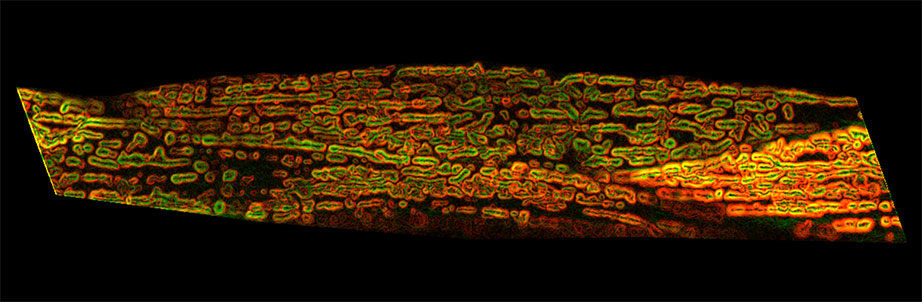
© Harvard Chan School“Although previous work has shown how intermittent fasting can slow aging, we are only beginning to understand the underlying biology,” said William Mair, associate professor at Harvard Chan School. Mitochondrial networks in the muscle cells of C. elegans (pictured) have been key elements in the study.
Manipulating mitochondrial networks inside cells - either by dietary restriction or by genetic manipulation that mimics it - may increase lifespan and promote health, according to new research from Harvard T.H. Chan School of Public Health.

The study, published Oct. 26 online in Cell Metabolism, sheds light on the basic biology involved in cells' declining ability to process energy over time, which leads to aging and age-related disease, and how interventions such as periods of fasting might promote healthy aging.

Mitochondria - the energy-producing structures in cells - exist in networks that dynamically change shape according to energy demand. Their capacity to do so declines with age, but the impact this has on metabolism and cellular function was previously unclear. In this study, the researchers showed a causal link between dynamic changes in the shapes of mitochondrial networks and longevity.
Comment: Learn more:


Health

Colon cancer breakthrough could lead to prevention, plus foods that may help

colon cancer
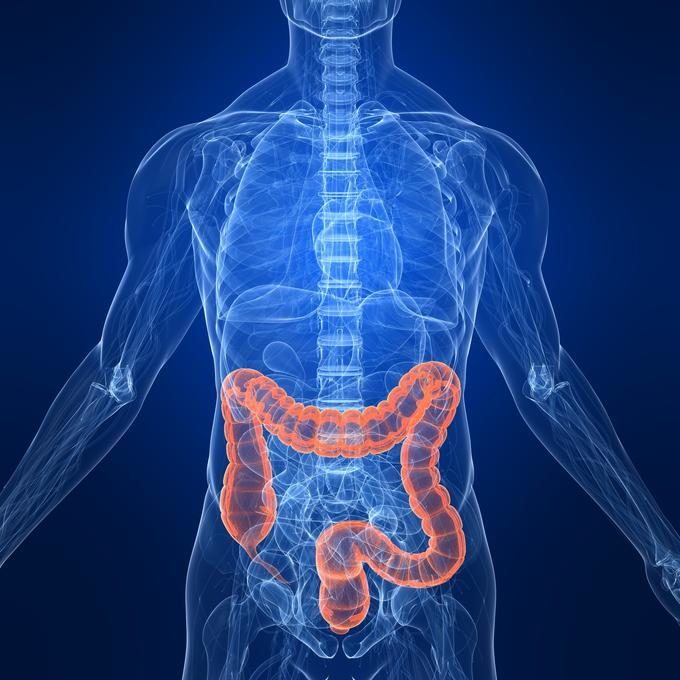
Colon cancer, Crohn's, and other diseases of the gut could be better treated - or even prevented - thanks to a new link between inflammation and a common cellular process, established by the University of Warwick.

Led by Dr Ioannis Nezis at Warwick's School of Life Sciences, new research demonstrates that autophagy - an essential process whereby cells break down and recycle harmful or damaged elements within themselves to keep our bodies healthy - causes tissue inflammation when dysfunctional, which in turn leaves us susceptible to harmful diseases, particularly in the gut.

Understanding this link could lead to more effective treatments for gut diseases - such as colon cancer, irritable bowel syndrome, Crohn's disease and ulcerative colitis - giving healthcare professionals the ability to target the root cause of these diseases, by regulating and controlling autophagy.

Comment: Also see:


Pills

A sleep scientist on the vicious cycle of insomnia and sleeping pills

insomnia
© H. Armstrong Roberts/ClassicStock/Getty Images
Maybe you're one of the estimated 50 to 70 million Americans who suffer from sleep disorders, including insomnia; maybe you're also among the 4 percent of American adults who rely on prescription medication in order to fall asleep. If so, Matt Walker, a professor of neuroscience and psychology at the University of California, Berkeley, has a bit of bad news for you.

In a section of his new book, Why We Sleep, Walker explores the latest scientific research to show the unfortunate truth about sleeping pills: They don't work as well as we wish they did. Sleep medications don't deliver the same restorative benefits as natural sleep, and even though people who take them often swear by them, the research suggests that the drugs don't tend to increase sleep quality beyond placebos. Currently, Walker says, the best available treatment method for combating chronic sleeplessness is not pharmacological at all; it's psychological.

Recently, we spoke with Walker about this aspect of his book, including his skepticism over sleeping pills and his enthusiasm for cognitive behavioral therapy for insomnia, or CBT-I. What follows is a lightly edited and condensed version of our conversation.

Comment: For more information on cognitive behavioral therapy for insomnia, check out:

6 easy steps to falling asleep fast


Brain

Can Alzheimer's be 'caught'? Study suggests the illness could be spread via blood transfusions and surgical equipment

Alzheimer's, dementia
© zephr/ SPL
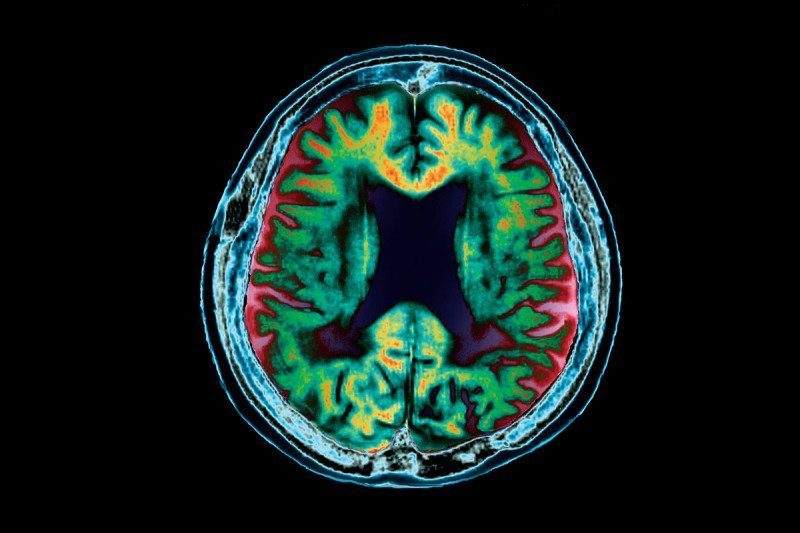
Can you catch Alzheimer's disease? Fear has been growing that the illness might be capable of spreading via blood transfusions and surgical equipment, but it has been hard to find any evidence of this happening. Now a study has found that an Alzheimer's protein can spread between mice that share a blood supply, causing brain degeneration.

We already know from prion diseases like Creutzfeldt-Jakob Disease (CJD) that misfolded proteins can spread brain diseases. Variant CJD can spread through meat products or blood transfusions infected with so-called prion proteins, for example.

Like CJD, Alzheimer's also involves a misfolded protein called beta-amyloid. Plaques of this protein accumulate in the brains of people with the illness, although we still don't know if the plaques cause the condition, or are merely a symptom.

There has been evidence that beta-amyloid may spread like prions. Around 50 years ago, many people with a growth disorder were treated with growth hormone taken from cadavers. Many of the recipients went on to develop CJD, as these cadavers turned out to be carrying prions. But decades later, it emerged in postmortems that some of these people had also developed Alzheimer's plaques, despite being 51 or younger at the time.

Comment: See also:


Magnify

Link found between condition of gut bacteria and several age-related diseases

gut bacteria
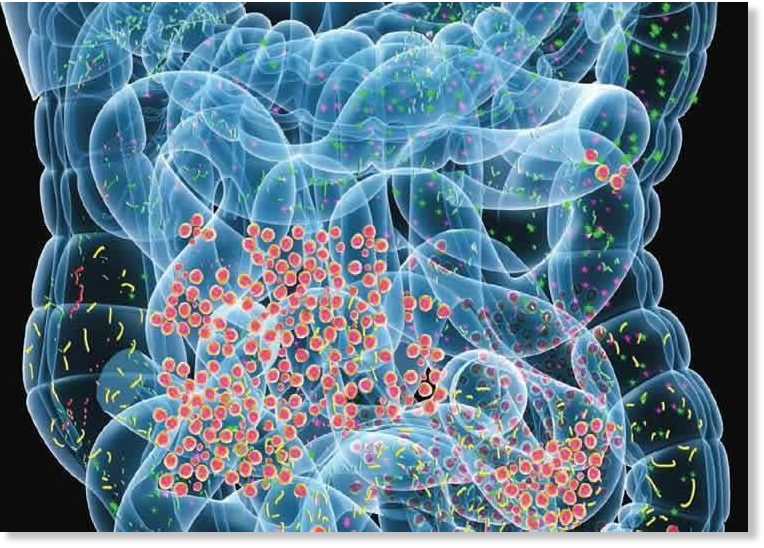
A new study shows for the first time that gut bacteria from old mice induce age-related chronic inflammation when transplanted into young mice. Called "inflammaging", this low-grade chronic inflammation is linked to life-limiting conditions such as stroke, dementia and cardiovasuclar disease. The research, published today in open-access journal Frontiers in Immunology, brings the hope of a potentially simple strategy to contribute to healthy ageing, as the composition of bacteria in the gut is, at least in part, controlled by diet.

"Since inflammaging is thought to contribute to many diseases associated with ageing, and we now find that the gut microbiota plays a role in this process, strategies that alter the gut microbiota composition in the elderly could reduce inflammaging and promote healthy ageing," explains Dr Floris Fransen, who performed the research at the University Medical Center Groningen, The Netherlands. "Strategies that are known to alter gut microbiota composition include changes in diet, probiotics, and prebiotics".

Comment: It seems like modern science is always playing a game of catch-up with the alternative health community. Here's a sampling of the numerous articles which state pretty much the same thing as the article above:


Gift

New study offers insights into a dog's life in families with children

sheltie doggie
'Let's go play ball!'
Millions of families know how rewarding and enjoyable dog ownership can be - but now a new study has for the first time examined the quality of life for a pet dog owned by a family with children.

There is now extensive scientific research showing the many benefits that pet dogs bring to families, including improved family functioning and wellbeing for those with children with neuro-developmental disorders such as Autism Spectrum Disorder (ASD) and ADHD. For all children, dogs can provide valuable companionship, encourage exercise and family activities, and teach them about responsibilities.

Until now, little attention has been paid to how living with children affects quality of life for pet dogs (those not trained as assistance dogs). Funded by Dogs Trust - the UK's largest dog welfare charity - a team of animal behaviour and welfare specialists from the University of Lincoln's School of Life Sciences are examining this question.

Health

Ashwagandha root extract can normalize thyroid hormone levels

Ashwagandha
Ashwagandha has been used as an herbal remedy for hundreds of years to help the body deal with stress. Extracts from Ashwagandha root helps normalize levels of serum thyroid hormones, suggests a new pilot study from India.

Ashwagandha also known commonly as Indian ginseng, poison gooseberry,or winter cherry is a plant that flourishes in India and North America. The roots of the ashwagandha plant have been employed for millennia by Ayurvedic healers. Ashwagandha has many beneficial elements, including flavonoids and members of the withanolide class. Numerous modern studies have found that ashwagandha shows great promise for being effective in reducing inflammation, decreasing stress, increasing mental activity, invigorating the body, and as an antioxidant. It is even known to relieve arthritis better than medication.

Eight weeks of supplementation with Ashwagandha root extract were associated with normalization of the thyroid stimulating hormones (TSH), serum thyroxine (T4) and serum triiodothyronine (T3) in people with elevated TSH levels.

Health

Massage can help regrow muscle even on a non-massaged limb

Massage, Rolfen, Rolfing, FAszien
Massage has been found to increase the regrowth of muscle tissue after an injury -- even when applied to the opposite, uninjured limb -- according to researchers from Colorado State University and the University of Kentucky.

It's well established that continuous deep massage treatment is an effective method of combating lower back pain.

In a paper published this week in The Journal of Physiology, the researchers showed that muscle grew faster after a massage because the making of protein in cells was improved. They also showed that when one leg was massaged, the muscle in the other, non-massaged leg also grew faster.

Muscle is lost very quickly during periods of disuse, such as during bed rest or a hospital stay, and it is extremely difficult to grow back, especially in older people. Massage is an easy-to-use treatment with very few side effects that can lessen pain, decrease anxiety and stress, increase flexibility, improve immunity, and increase blood flow. But its value for muscle regeneration had not been demonstrated before.

Wine n Glass

This is your brain on alcohol

beer brain
Alcohol is such a ubiquitous part of our culture that it's easier to brush off any news of its harm than it is to even consider abandoning it in favor of better health, mental clarity, and spiritual awareness. And while there is no doubt that drinking can be fun, and no doubt that it is here to stay, it is still fascinating to see how a substance as harmful as alcohol can be legal and so well-accepted while other mind-altering substances are punished so severely.

We've known for sometime that even casual drinkers are susceptible to the downside of alcohol, and some research has even linked it to the development of cancer. The latest research into the harm of alcohol looks at how it affects the brain.

In a study published in July of 2017 in the medical journal The BMJ, researchers presented evidence supporting the enduring hypothesis that alcohol is very bad for the certain areas of the brain.
"The study followed 550 men and women for 30 years, measuring their brain structure and function to determine how alcohol use affects the mind over time. What they found is that the more people drank, the more atrophy occurred in the brain's hippocampus, a seahorse-shaped structure in your brain that plays a role in storing memories. The highest risk was for people who drank 17 standard drinks or more of alcohol per week. But even people who drank moderately saw an elevated risk for cognitive changes." [Source]

Comment: See also:


Health

Cancer cells destroyed with metal from the asteroid that killed the dinosaurs

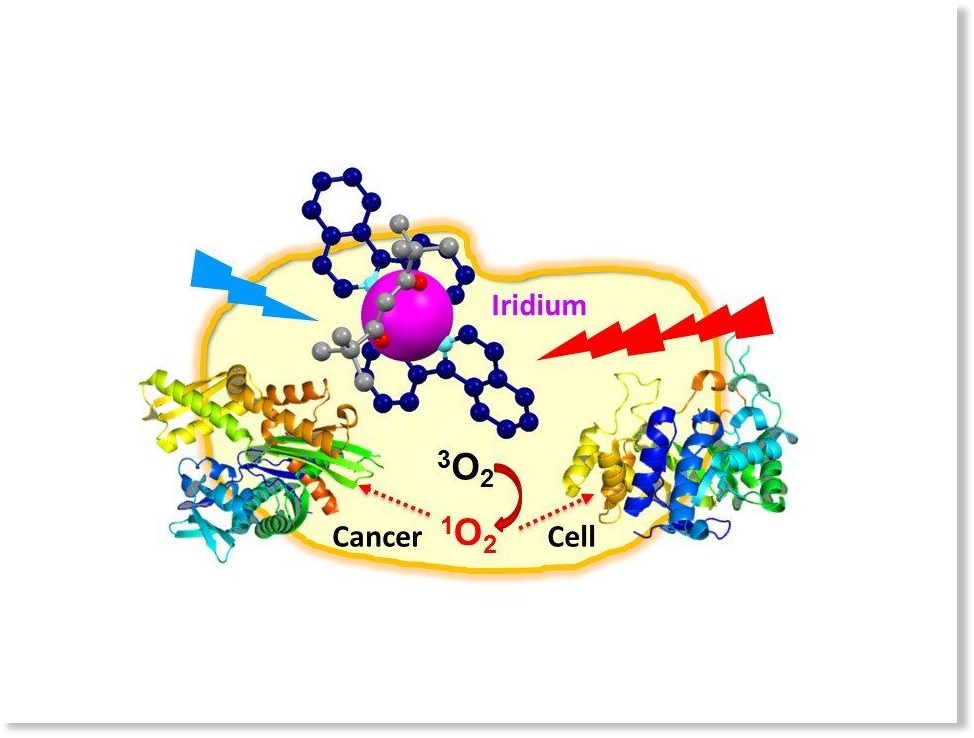
Diagram showing iridium attacking a cancer cell by making it produce singlet oxygen
© University of WarwickDiagram showing iridium attacking a cancer cell by making it produce singlet oxygen
Cancer cells can be targeted and destroyed with the metal from the asteroid that caused the extinction of the dinosaurs, according to new research by an international collaboration between the University of Warwick and Sun Yat-Sen University in China.