Health & WellnessS


Brain

Rusty brains: Lowering iron levels in the brain could slow or prevent Alzheimer's

Iron levels brain
A stylised image of a brain MRI using Quantitative Susceptibility Mapping (QSM) showing in red the increase in iron levels found in those with Alzheimer’s pathology compared to controls.
Cleaning out 'rust' from the brain could be a way to slow and even prevent the degenerative disease Alzheimer's, according to new research that pinpoints iron as its so-far elusive potential driver.

Previous research has long linked Alzheimer's to a build-up in amyloid protein fragments in the brain that are normally broken down in healthy brains. But efforts to treat Alzheimer's by using drugs that reduce amyloid levels have so far failed, leading to speculation that something else is driving the disease.

New research from the Florey Institute of Neuroscience and Mental Health and the University of Melbourne has found that iron might be the culprit. Iron has a special property that allows it to exchange electrons, which is crucial in allowing our bodies to generate energy from oxygen and fuels such as sugars. But it can also damage neurons in the same way that iron metal rusts in the presence of oxygen.

Comment: While modern medicine often minimizes the effects of diet and exercise as they search for a pharmaceutical magic bullet, lifestyle modifications have shown to bring significant improvements in symptoms of Alzheimer's:


Life Preserver

Exercise changes your gut microbiome

2 exercise bikers
© University of Turku
Two new studies led by researchers at the University of Illinois have delivered the first clear evidence that the composition of gut bacteria can be changed by exercise alone. Designed to isolate the effects of exercise from other factors that could influence gut bacteria, these dual studies build on an increasing body of evidence affirming the role of exercise in determining the makeup of a person's gut microbiome.

The first study, focusing on a mouse model, took fecal samples from sedentary mice and exercised mice then transplanted that material into germ-free sedentary mice to analyze the effects of the different gut flora.

The results were significant, with the mice that received the exercised gut bacteria displaying an enhanced microbial diversity and a higher volume of butyrate-producing microbes. Butyrate is a short-chain fatty acid (STFA) known to be vital to colon health, energy production and thought to protect against colon cancer.

Comment: See also: Dr. Justin Sonnenburg: Is a disrupted gut microbiome at the root of modern disease?


Life Preserver

Vitamin D's flawed recommended daily allowance

vitamin D
While it's great that the FDA requires supplement and food labels to contain percentages of daily recommended values, these numbers can often be misleading. Vitamin D is one of the most important substances in regard to supporting good health and also happens to have one of the most misleading Recommended Daily Allowances.

If you look at the label on the back of food or supplement packaging, you'll see a list of nutrients that specifies the amount of each nutrient contained in a single serving of the product and what percentage of the recommended Daily Value that this amount represents. The FDA requires food and supplement manufacturers to include this information on the labels of their products to help you determine how much of your daily recommended allowance you're consuming.

Comment: See also:


Health

San Diego opens giant tents for the homeless to curb Hepatitis A outbreak

Hep A tent
© AP Photo/Gregory BullCrews work in front of the the city's new Temporary Bridge Shelter for the homeless Friday, Dec. 1, 2017, in San Diego. The first of three shelters opened Friday, which will eventually provide beds for up to 700 people, as the city struggles to control a homeless crisis gripping the region
San Diego on Friday opened the first of three industrial-sized tents to house the homeless as part of the city's efforts to contain a hepatitis A outbreak stemming from the deplorable conditions people were living in on the streets.

About 20 people made their way to a bunk bed Friday in the tent that will house 350 single men and women. Two other giant tents will open later this month - one for families and one for veterans. The tents will house a total of 700 people.

The city turned to tents to get people off the streets and contain a hepatitis A outbreak that has killed 20 people in the past year, marking the worst epidemic of its kind in the US in 20 years. The virus lives in feces.


"There's going to be a marked difference in what we see on the streets today and what we see at this time next year," said Bob McElroy of the Alpha Project, the nonprofit group that will operate the tent that opened Friday.

Holly

Chinese herb Galla Chinensis shows promise against tooth decay

Chinese herb Galla chinensis
© BestherbGalla chinensis
  • Water extract of the Chinese herb Galla chinensis has potent anticaries effects, effectively inhibiting acid production caused by caries-associated bacteria and increasing teeth's resistance to acid
  • The health of your teeth is largely dependent on your diet, which affects not only your gut microbiome but also your oral microbiome. Like your bones, your teeth need certain nutrients to remain strong and healthy
  • Omega-3 fats may help ward off gum disease. People who consumed the highest levels of the animal-based omega-3 fats were 23 percent to 30 percent less likely to have gum disease
  • Research shows topical fluoride is unlikely to provide any significant protection against cavities. Other studies show fluoride is a neurotoxic endocrine disruptor that does more harm than good
  • Coconut oil is a natural antibacterial alternative that can significantly improve your oral health. Oil pulling with coconut oil has been shown to significantly reduce plaque formation and gum disease with consistent use

Comment: See also:


Cow

Drinking milk: Natural selection and environmental pressure

cow cute!
Consuming milk from a mother is one of the defining features of being a mammal, and to achieve this, mammalian infants have an enzyme known as lactase, which breaks down the primary sugar in milk (lactose) into glucose and galactose.

After weaning, mammals normally see a reduction in lactase production until levels are very low in adulthood, a trait known as lactase non-persistence (LNP). However, many human adults have the ability to produce lactase throughout life, known as lactase persistence (LP), which makes us unique among mammals. LP is associated with cultures that have high levels of milk consumption, which led to the "cultural-historical hypothesis": basically, that those with LP were fitter, had more offspring and eventually dominated milk-drinking regions. Although largely explaining observed patterns, there are a few exceptions which I'll touch on later.

Syringe

The aluminum-autism link found in yet another study

aluminum
Does human exposure to aluminium have a role to play in autism spectrum disorder (ASD)? Research at Keele University published in the Journal of Trace Elements in Medicine and Biology provides the strongest indication yet that aluminium is an aetiological agent in ASD. The aluminium content of brain tissues from 5 donors who died with a diagnosis of ASD was found to be extraordinarily high, some of the highest values yet measured in human brain tissue. Why for example, would the occipital lobe of a 15 year old boy with autism be 8.74 (11.59) micrograms/g dry wt., a value which is at least 10 times higher than might be considered as acceptable for an aged adult never mind a child?

However, while the aluminium content of each of the 5 brains was shockingly high it was the location of the aluminium in the brain tissue which served as the standout observation. The majority of aluminium was identified inside non-neuronal cells including microglia and astrocytes.

Aluminium was also found in lymphocytes in the meninges and in similar inflammatory cells in the vasculature. There was clear evidence of inflammatory cells heavily loaded with aluminium entering the brain via the meningeal membranes and the blood-brain-barrier.

Comment: Numerous studies have shown the link between aluminum containing vaccines and autism:


Syringe

Study shows type 2 diabetes starts in the liver

Insulin
Affecting as many as 650 million people worldwide, obesity has become one of the most serious global health issues. Among its detrimental effects, it increases the risk of developing metabolic conditions, and primarily type-2 diabetes. If the strong links between obesity and type-2 diabetes are well known, the cellular and molecular mechanisms by which obesity predisposes to the development of insulin resistance were so far poorly understood.

Today, scientists from the University of Geneva (UNIGE) unravel the factors linking obesity and insulin resistance, as well as the key role played by the liver in the onset of the disease. By deciphering how the protein PTPR-γ, which is increased in the context of obesity, inhibits insulin receptors located at the surface of liver cells, the scientists open the door to potential news therapeutic strategies. These results can be read in Nature Communications.

The expansion of fat cells, a characteristic of obesity, leads to an increase in inflammatory signals that have effects on the liver as well as on several other organs. Obesity-induced inflammation triggers the activation of a transcription factor called NF-kβ, which seems to be instrumental in the development of diabetes. But what are the exact cellular and molecular mechanisms at stake and how could they lead to new therapeutic strategies? "To answer these questions, we focused on a protein called PTPR-γ (for Protein Tyrosine Phosphatase Receptor Gamma), which is a target of NF-kβ", explains Professor Roberto Coppari, coordinator of the UNIGE Faculty of Medicine Diabetes Centre. "We first examined various human cohorts: these human studies indicated that PTPR-γ content in liver increases upon inflammation, an effect that could directly affect insulin receptors by inhibiting insulin action", he adds.

Syringe

After hundreds of thousands of Filipino kids are vaccinated, Sanofi admits dengue fever vaccine can cause...dengue fever

dengue vaccines
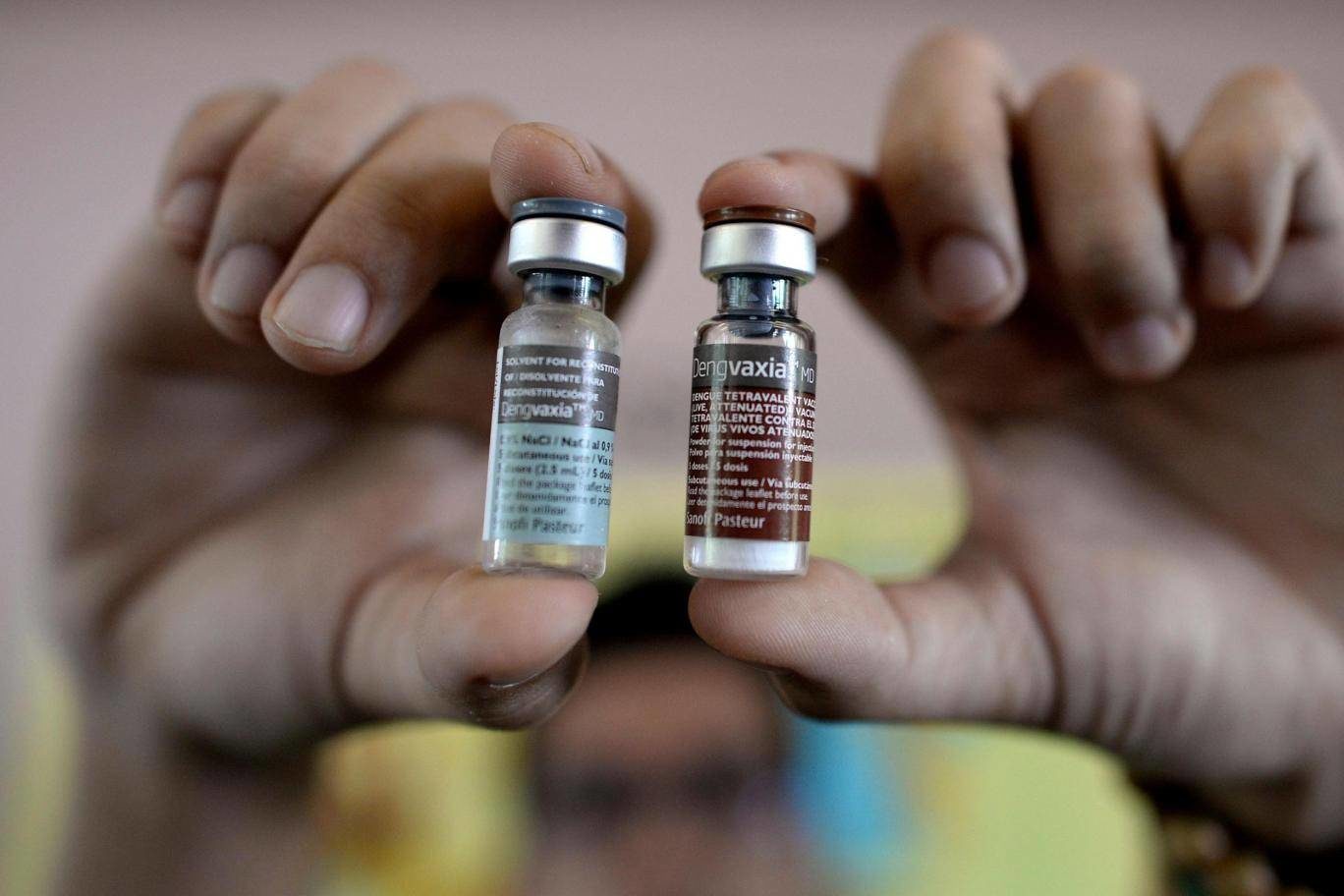
© AFP/Getty ImagesA nurse shows vials of the dengue vaccine Dengvaxia, developed by French medical giant Sanofi Pasteur, at an elementary school in Manila.
Concerned over the health of close to some 500,000 schoolchildren administered with the vaccine Dengvaxia, Senator Richard J. Gordon has expressed alarm over reports that the manufacturer Sanofi has acknowledged its dengue vaccine poses risks to certain recipients.

In what many described as a major Aha! Moment, Sanofi disclosed Thursday that, "for individuals who have not been previously infected by dengue virus, vaccination should not be recommended."

The situation poses a big and deep quandary, especially for those responsible in the formulation and execution of this mass dengue vaccination program intended to cover one million children nine years old and up.

Early warning

Critics have noted the apparent haste that accompanied the Dengvaxia program's rollout. Senator Gordon, chairman of the Senate Committee on Accountability of Officers and Investigations, or Blue Ribbon, said an official of the World Health Organization (WHO) had earlier warned that, at the time it was procured by the administration of then President Benigno Aquino III, the vaccine had not received pre-qualification approval.

Comment: How many "Aha! Moments" do people need to experience before they stop putting their trust in vaccines?

UPDATE: The Independent reports that the government of the Philippines is prepared for a "worst-case scenario" and that 733,000 children are at risk:
The Philippines is prepared for a "worst-case scenario" after warnings that a vaccine against dengue fever could cause symptoms of the disease to become more severe.

French pharmaceutical giant Sanofi Pasteur on Wednesday admitted clinical data showed Dengvaxia - the first licensed dengue vaccine - could make the disease worse in people who had not previously been infected with the virus.

The Government suspended a school-based immunisation programme following the revelations, which came after more than 733,000 children had been immunised.

Sanofi Pasteur said Dengvaxia did provide persistent protective benefit in those who had previously had dengue.

"The Department of Health is prepared for a worst-case scenario," Department of Health spokesman Eric Tayag told ABS-CBN television.


Pills

Antibiotic resistance has caused a drop in life expectancy, says new report

pharmacy shelves
© JULIEN BEHAL/PAThe NHS has previously warned that too many people are taking antibiotics for inappropriate conditions such as viruses.
Antibiotic resistance has caused a fall in life expectancy for the first time, the Office for National Statistics has said.

Life expectancy in future years has been revised down after the statistics authority said that "less optimistic views" about the future had to be taken into account.

Opinions on "improvements in medical science" had declined, it said, and fears of the "re-emergence of existing diseases and increases in anti-microbial resistance" meant people would not live as long as was previously expected.

The ONS uses predictions about how medicine and science will improve to model how life expectancy will change.

Under the projection made in 2010, a baby girl born in 2016 could expect to live 83.7 years. This has now been revised down to 82.9.

Comment: See also: