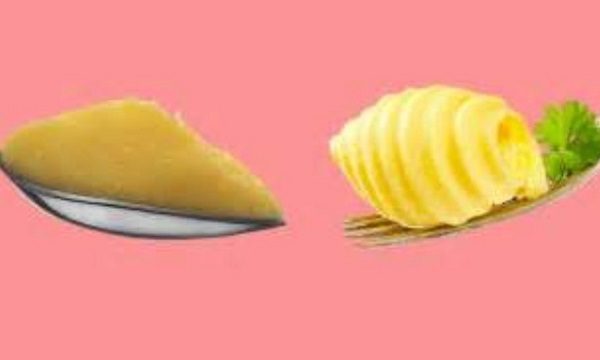
For anyone unfamiliar with the term ghee, another name for it is clarified butter. One difference between ghee and regular butter is that the former doesn't have as many dairy proteins, and there are a host of health advocates who maintain that ghee is the healthier option. Starting with pure butter made from cow's milk, the ghee-making process involves heating and separating liquid fats from the milk solids, which become caramelized, and removing the milk solids (which also removes most of the lactose).
Ghee has been used in traditional cooking in India, Pakistan and Southeast Asia for eons, as an oil and as an ingredient, but it's also an Ayurvedic go-to for herbal ointments, massage and as a medicinal to remedy rashes and burns. While butter isn't bad for you (especially in comparison with vegetable oil, margarine and the multitude of erroneous, mass-marketed options introduced in the 1960s), ghee, which started as butter, may be the better choice.
For one thing, ghee, heated longer than most clarified butter, is darker and has a nuttier flavor, as well as a higher smoke point, making it easier and healthier for sautéing. In fact, including ghee in your diet may bring benefits for several areas, including your heart.
Ghee is made up of about 50 percent saturated fat, which was considered a bad thing until the medical community and nutritionists began realizing that fat - including saturated fat - is good for you.Interestingly, breast milk contains 54 percent
saturated fat. Good fat like this is vital to proper development and your body can't function without it. Even the American Heart Association recommends that people get 5 or 6 percent of their daily food intake from saturated fat, which is still far too low (you actually need upward of 50 to 70 percent healthy fat in your diet for optimal health), but butter deliciously helps to fulfill that requirement.
1So the "clarified" part is at least part of what makes ghee better than butter, but still, there are caveats. It's also helpful to understand that "milk," produced as it typically is in the U.S. today, contains elements that weren't (or shouldn't be) meant for human consumption. To explore all the facets of what ghee is, you must first start with milk.




















Comment: Out of Sight and Beyond Scrutiny: Big Pharma's stranglehold on Europe's vaccination policy