Health & WellnessS


No Entry

Media remains silent on Vax-Unvax study of mice implicating Hepatitis B vaccine

media silence
Sun Yat-sen University's (a Top 10 university in China) Dr. Zhibin Yao is not a household name in the American autism community, but perhaps he should be. Not only is he American-educated (University of Pittsburgh) and the author of 33 peer-reviewed studies, but he's also the lead author of two of the most important biological studies ever done analyzing how, exactly, a vaccine can cause autism.

In 2015, Dr. Yao was the lead author of "Neonatal vaccination with bacillus Calmette-Guérin and hepatitis B vaccines modulates hippocampal synaptic plasticity in rats," the first study that ever looked at the impact ANY vaccine might have on the brains of rats. I discussed this study in detail in an extensive article I wrote in April titled, "International scientists have found autism's cause. What will Americans do?." Vaccine Papers, a website dedicated to a rigorous, science-based analysis of the risks and benefits of vaccines, explained the paper this way:
"This is the first study to test the effects of immune activation by vaccination on brain development. All other studies of immune activation have used essentially pathological conditions that mimic infection and induce a strong fever. A criticism I have heard often from vaccine advocates is that the immune activation experiments are not relevant to vaccines because vaccines cause a milder immune activation than injections of poly-IC or lipopolysaccharide (two types of immune system activators). This new study demonstrates that vaccines can affect brain development via immune activation. Hence, the immune activation experiments are relevant to vaccines...The hep B vaccine increased IL-6 in the hippocampus (the only brain region analyzed for cytokines)."


Question

G.M.O. foods will soon require labels - but what will the labels say?

GMO crops
© Jeremy M. Lange for The New York TimesSoybeans that have been genetically modified to be herbicide-tolerant. Federal law will soon require labels for foods that contain G.M.O.s.
The United States Department of Agriculture has proposed new guidelines for labeling foods that contain genetically modified ingredients. Food makers will be required by federal law to use the labels, starting in 2020.

The safety of genetically modified ingredients, widely known as G.M.O.s, remains a source of anxiety for some Americans despite the scientific studies that say they pose no health threat. Many food makers now voluntarily place "No G.M.O.'' labels on their products as a marketing tactic.

Clarifying how genes are altered in the plants and animals we eat, and whether grocery store shoppers should care, has proved to be a heavy lift. But here are a few answers to questions about the proposed labels.

Comment: Information to consider about GMO labeling and the safety of 'Big Food' coming to you local market:


Attention

Weed killer concerns: California takes down GMO giant in court - wins right to add cancer labels

RoundUp
As busy as Monsanto has been in the world of chemicalized agriculture, gene-spliced seeds and other endeavors, the company has also been just as busy in the legal arena.

It all started when Monsanto began suing farmers for patent infringement for cases in which farmers replanted their genetically engineered seeds (even in times where farmers claimed they didn't know and/or farmers whose crops were damaged by accidental pollen drift).

Now, the company is being forced to defend itself in multiple legal arenas over everything from cancer cases in humans to the carcinogenic nature of its flagship weedkiller.

And according to a recent court decision, the state of California has gained the upper hand in the latest round of legal tussles with the massive multi-national corporation.

Comment: Monsanto is being forced to defend itself in multiple legal arenas, and it's 'products' and 'methods' are receiving more legal attention as of late. Interesting to note that top executives are stepping down after the Bayer Monsanto merger: A match made in hell.

Monsanto laments it cannot patent life: India's top court upholds decision that seeds cannot be patented
In an another legal blow to Monsanto, India's Supreme Court on Monday refused to stay the Delhi High Court's ruling that the seed giant cannot claim patents for Bollgard and Bollgard II, its genetically modified cotton seeds, in the country.

Monsanto's chief technology officer Robert Fraley, who just announced that he and other top executives are stepping down from the company after Bayer AG's multi-billion dollar takeover closes, lamented the news.


People 2

Anxiety in mid-life raises the risk of dementia

brain tree
Having moderate or severe anxiety in midlife is linked to dementia later on, new research finds.

Anxiety is strongly linked to the personality trait of neuroticism, which includes sadness, irritability and self-consciousness.

The extra risk could be related to the stress caused by a mental health condition.

The stress response to anxiety could accelerate the aging process in the brain, increasing cognitive decline.

Depression has already been linked to a doubling of the risk in developing dementia.

Health

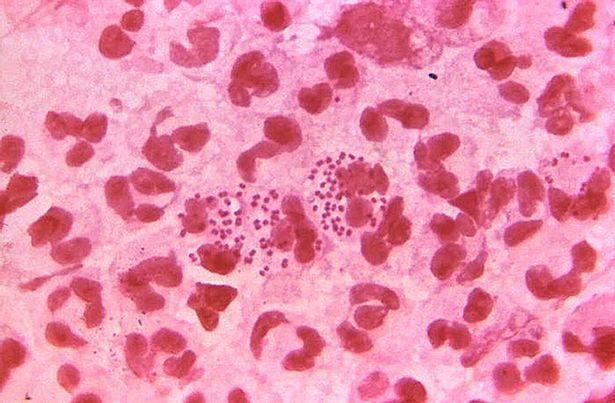
Three tourists confirmed as first global cases of 'super gonorrhoea' after unprotected sex in Asia

Gonorrhoea
© PA
Three tourists are the first global cases of a new strain of 'super-gonorrhoea' which is resistant to antibiotics, a new report has warned.

Two Australians and the British man picked up the sexually-transmitted disease (STD) while having unprotected sex in south-east Asia.

The Brit's case came to light earlier this year, when Public Health England confirmed he had been infected, before later revealing he had been successfully treated.

The European Centre for Disease Prevention and Control (ECDC) report, published this month, confirmed that two more tourists, both from Australia, picked up the infection.

Comment: See also: A 'very smart bug': Thanks to misuse of antibiotics, gonorrhea is becoming untreatable


Red Flag

Beyond the Flint tragedy - everywhere in America the drinking water is contaminated

dirty water
© (AP/Paul Sancya)
Agricultural runoff is poorly regulated and turning many waterways across the country into dangerous cesspools

The water crisis in Flint, Michigan, became a national news story, and for good reason. Republican leaders in the state were finally forced to take steps to stop the poisoning of Flint's drinking water with lead and other toxins, foisted on the community as part of a short-sighted cost-cutting measure. Despite improvements, the future of Flint's water supply is uncertain, but at least that story has brought increased attention to the problem of lead in water in many large cities, including Chicago.

The grim reality, however, is that the problems with American drinking water are diverse and widespread, even if most aren't quite as severe as what happened in Flint. Agricultural waste in particular is poisoning water, especially in rural areas, creating a myriad of health risks. Current government policy remains poorly equipped to deal with this issue.

Comment: Millions of Americans are drinking contaminated water - Perfluorinated chemicals that harm the immune system
And Grandjean said the contamination revealed by EPA's water tests is only the tip of the iceberg, because the tests don't include the small water systems and private wells that serve more than 30 percent of Americans.


Health

Regular exercise may not be so good for dementia after all

exercising woman
© Tao Ke/China DailyHitting the gym once dementia has begun may not help the condition, scientists suspect.
Exercise does not slow down mental decline and may even make dementia worse, a new study suggests.

Oxford University found that people with mild to moderate dementia who went to the gym twice a week for up to 90 minutes went downhill faster than those who abstained.

Although the difference between the two groups was small, the researchers say exercise should not be recommended for people with dementia and called for future trials to 'consider the possibility that some types of exercise intervention might worsen cognitive impairment.'

Previous research had suggested that exercise could prevent mental decline, and stave off diseases like Alzheimer's, so experts and charities said they were surprised by the findings.

Commenting on the study, which was published in the BMJ, Rob Howard, Professor of Old Age Psychiatry at University College London said: "Had this been instead an improvement in cognitive functioning with exercise we would all have been excited about finding something positive in the, so far, depressing fight against dementia.

Lemon

Intermittent fasting: New research shows different effects on men and women

fasting
This is an updated version of a Dear Mark column from 2012. You can find the original version archived here. The below has been completely updated for 2018.

The blank slate hypothesis has fallen. Everyone comes into this world imbued with attributes, characteristics, and predilections that are uniquely theirs. We're all humans, but we're a diverse bunch, and that makes it interesting. And though it also makes giving cookie cutter health advice impossible, I just take that as an opportunity to stand out from the crowd and provide actionable advice that genuinely helps real people.

A perfect example is biological sex. Anyone who's lived with the opposite sex, been married, or had kids of different sexes knows that males and females are different-on average.

There's a ton of overlap, don't get me wrong.

We all need fat, protein, and carbohydrates. We all have the same requirements for sustenance and wellness. We all breathe oxygen, get stronger and fitter when we work out, use the same neurotransmitters, and produce the same hormones. The biological basics are identical.

It's the details that differ. And matter.

Take fasting.

Comment:


Microscope 1

Protein found in tobacco plant has potential to fight infectious diseases

Tobacco peptide
© La Trobe University
A team of scientists from Melbourne's La Trobe University has shown a protein found in a tobacco plant has the potential to fight life-threatening infectious diseases.

The scientific discovery, published in the prestigious journal Nature Communications, could lead to the development of a new class of antibiotics and meet the challenge of rising antibiotic resistance.

Dr. Mark Hulett and Dr. Marc Kvansakul from the La Trobe Institute for Molecular Science said their team had demonstrated the peptide NaD1 found in the flowers of the ornamental tobacco plant Nicotiana alata has infection-busting qualities.

"Infectious diseases are a major global health problem, accounting for more than one in eight deaths and mortality rates are predicted to skyrocket over the next 30 years," Dr. Hulett said.

Syringe

Scare tacit to vaccinate? WHO may declare international emergency as Ebola outbreak reaches major city in Congo

WHO emergency team
© Kenny KatombeFirst batch of experimental Ebola vaccines arrive in Kinshasa.
The Ebola outbreak in Congo risks running out of control with the first suspected case reported in a city of over 1 million. The WHO has called an emergency meeting over a health crisis of potentially "international concern."

Previously the disease was suspected in patients only in rural parts of the country, but reaching the city of Mbandaka makes the outbreak, which was first reported on May 8, significantly bigger than previously thought. So far, Congolese medics have identified 44 suspected cases of Ebola, with three confirmed by lab tests. Of the 44 people believed to be infected, 23 have died.

But the case in Mbandaka may be a game changer, as an urban environment makes it easier for the deadly virus to spread. The city has direct transport connections to Congo's capital, Kinshasa, where some 10 million people live in crowded conditions.

Ebola, a hemorrhagic disease which is endemic to tropical regions of sub-Saharan Africa, was identified in the 1970s, but historically claimed a relatively small number of lives, despite its mortality rates reaching as high as 50 percent, as its spread between isolated villages and towns was limited. But the increasing connectivity of the region resulted in a greater impact of epidemics.

Comment: See also: