
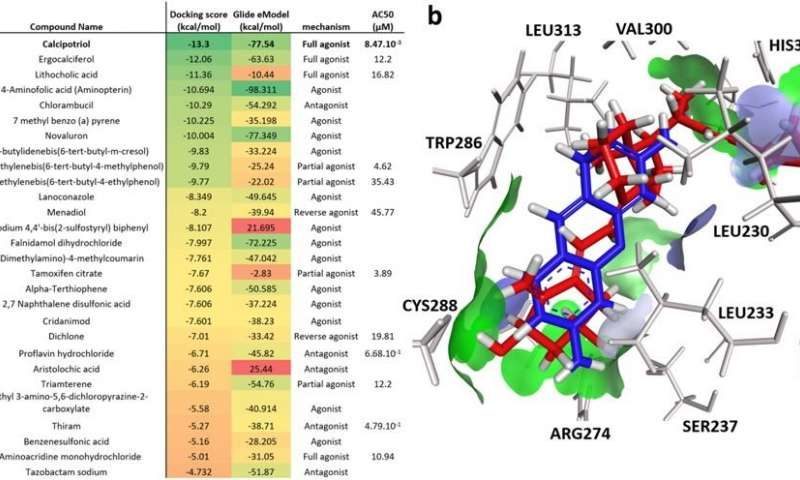
© Scientific Reports (2018). DOI: 10.1038/s41598-018-27055-3Structure-based molecular docking using Glide and the human VDR structure (PDB code 1S19): (a) Docking results for all compounds with their associated XP docking and eModel scores, mechanism and experimental AC50 values; (b) Binding modes of calcipotriol (red) and proflavine hydrochloride (blue) superimposed in the binding site.
"Most people think of vitamin D as only a vitamin, but in the body vitamin D is converted to a hormone, so VDR is part of the endocrine system which regulates hormonal function," says Seth Kullman, professor of biological sciences at NC State. "If something - an endocrine disrupting chemical, for example - interferes with the hormone's function at different times of development or aging, it could drastically alter physiology of a number of important systems."
Kullman is interested in exploring the effects of environmental chemicals on vitamin D receptors. He, along with a team of researchers from NC State and the U.S. Environmental Protection Agency (EPA) looked at compounds that the Tox21 database had flagged as potential VDR disruptors.















Comment: The importance of vitamin D cannot be overstated. If environmental toxicity can interfere with the normal metabolism of vitamin D, this is yet another threat to human health.
See also: