Health & WellnessS


Health

Why ginger works so well for halitosis

ginger
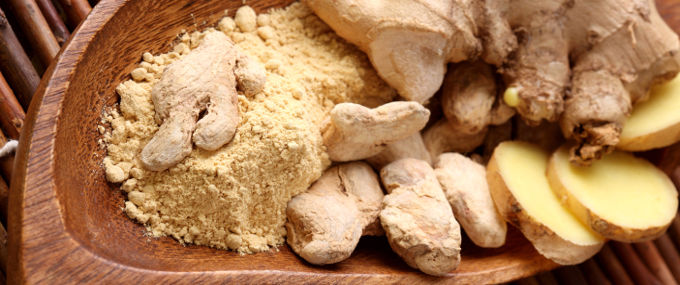
Ginger stimulates saliva flow and digestive activity, settles the stomach, relieves vomiting, eases pain from gas and diarrhea, and is effective as an anti-nausea remedy. Scientists have now found the constituent in ginger responsible for eliminating bad breath.

The pungent compound 6-gingerol, a constituent of ginger which enhances gastrointestinal transport and relieves asthma, also stimulates an enzyme contained in saliva -- an enzyme which breaks down foul-smelling substances. It thus ensures fresh breath and a better aftertaste. Citric acid, on the other hand, increases the sodium ion content of saliva, making salty foods taste less salty. To find out more about food components, a team from the Technical University of Munich (TUM) and the Leibniz- Institute for Food Systems Biology investigated the effects of food components on the molecules dissolved in saliva.

Many food components contribute directly to the characteristic taste of food and beverages by means of contributing their own particular taste, scent or spiciness. However, they also indirectly influence our sense of taste via other, still largely unknown biochemical mechanisms. A team led by Professor Thomas Hofmann from the Chair of Food Chemistry and Molecular Sensory Science has now investigated this phenomenon in greater detail.

Cookie

Who's in charge of the American diet?

food and wine
Ever wonder how the US government formulates the dietary recommendations that it then passes on to you and your families? One would hope that the committees dedicated to creating said dietary guidelines would diligently review relevant data while also mindfully considering that which data may never be able to "prove" when it comes to nutrition.

Sadly, this is far from the truth.

Comment:


Beer

Binge drinking could increase risk of Alzheimer's

binge drinking
Drinking alcohol has been found to have both a protective and damaging effect on the brain, depending on which study you read and how much alcohol is consumed. The jury is still out on whether light or moderate consumption may be good for your brain, but it's becoming increasingly clear that heavy drinking is not. Researchers from the University of Illinois at Chicago even revealed how alcohol may increase your risk of developing Alzheimer's disease, by disrupting the way amyloid beta is cleared.

Amyloid beta is a protein implicated in Alzheimer's disease that can clump together in the brain, building up into groups of clumps or a sticky plaque that may disrupt cell-to-cell signaling.1 The study, published in the Journal of Neuroinflammation,2 reveals that binge drinking or heavy alcohol consumption may make it more likely that the brain will accumulate these damaging proteins, contributing to the development of Alzheimer's disease.

Comment: While the effects of moderate alcohol consumption on the brain are still up for debate, the negative consequences of binge drinking are rather obvious. It's something that is bad for health in multiple ways.

See also:


Bacon n Eggs

Correct: 40% of Russians know that vegetarian diet is unhealthy - Just 1% are veggies

russian food market
© Ramil Sitdikov / SputnikProducts on the counters of Velozavodsky market in Moscow, which has recently reopened after renovation
Less than one percent of Russians admitted to following a vegetarian diet in a recent poll and well over a third of respondents stated that, in their opinion, a vegetarian diet is harmful to your health.

According to the poll conducted by the Russian state-run public opinion research center VTSIOM at the very end of July, 39 percent of Russians think that a vegetarian diet is harmful for their health. Some 20 percent of respondents described the vegetarian diet as good for health and 27 percent think it has no effect on the human body.

It should be noted that when researchers asked the public to describe vegetarianism, half of respondents said that it must be a way of life for those who never eat meat and fish. The other half said that true vegetarians only eat plant-based food.

Comment: Refreshing common sense displayed by the Russian people.


SOTT Logo Radio

SOTT Focus: The Health & Wellness Show: Is Talking About Racism Racist?

four babies
Race is a hotbed topic that many people continue to tiptoe around (mainly out of fear of being labeled a racist or an Uncle Tom). White privilege, police shootings, the Black Lives Matter movement, strident calls for 'diversity' and 'inclusion', race-baiting, seeing racism everywhere, affirmative action, racial sensitivity training, racial equity policies -- in today's political and social environment issues surrounding race have become more polarizing than ever.

We're not living in a post-racial world but does race have the impact that left-leaning racial scholars would have us believe? Is racism hard-wired into human beings or is seeing the world through a racial lens part of evolutionary adaptation? On this episode of The Health and Wellness Show we discuss these topics and risk being labeled racist by talking about racism.

And stay tuned for Zoya's Pet Health Segment, where she talks about raccoons - cute, but destructive!

Running Time: 01:22:54

Download: MP3


Attention

Mast cell disease & vaccination: Is there increased risk?

mast cell
Do you or does someone you know have severe symptoms of itching, rashes, flushing, stomach or other body pain, frequent diarrhea, nausea, fatigue, brain fog, headache and severe allergies to certain foods, medications or insect stings that may include fainting episodes or anaphylaxis? Although it has been classified as a rare immune system disorder, there are indications that Mast Cell Activation Syndrome (MCAS) may be more prevalent than previously thought and people can suffer for years without being correctly diagnosed.1 With severe allergies and chronic inflammatory diseases increasing in populations around the world, scientists are investigating the association between mast cell dysregulation and various brain and immune system disorders ranging from asthma, inflammatory bowel disease and chronic fatigue syndrome to ADHD, depression, autism and cancer.2, 3, 4, 5

Life Preserver

The new science of treating lower back pain

back pain
© VOX
A review of 80-plus studies upends the conventional wisdom.

Kathryn Jakobson Ramin's back pain started when she was 16, on the day she flew off her horse and landed on her right hip.

For the next four decades, Ramin says her back pain was like a small rodent nibbling at the base of her spine. The aching left her bedridden on some days and made it difficult to work, run a household, and raise her two boys.

By 2008, after Ramin had exhausted what seemed like all her options, she elected to have a "minimally invasive" nerve decompression procedure. But the $8,000 operation didn't fix her back, either. The same pain remained, along with new neck aches.

Comment: Guidelines on low back pain are clear: drugs and surgery should be the last resort


Brain

Studies show ketogenic diet's promising results for all stages of dementia

fatty steak ketogenic
Studies show a ketogenic diet can slow and even reverse symptoms of memory loss and cognitive impairment throughout all the dementia stages. You might be asking, "What is a ketogenic diet?"

A ketogenic diet is a high-fat, adequate-protein, and low-carbohydrate diet that produces ketones - compounds the body can use to produce energy. Ketones have been shown in studies to be neuroprotective, meaning they "defend" your brain from degenerating. In short, a ketogenic diet is a great way to reverse dementia naturally.

Comment: Aside from the studies (which are important), there are also thousands of personal accounts of how the ketogenic diet has helped with brain health. Even without pathology, the ketogenic diet can help to boost brain function.

See also:


Syringe

SARS: Remember the pandemic that was going to wipe out humanity? We're still here. Aug 1

Pandemic - Policemen in Seattle wearing masks
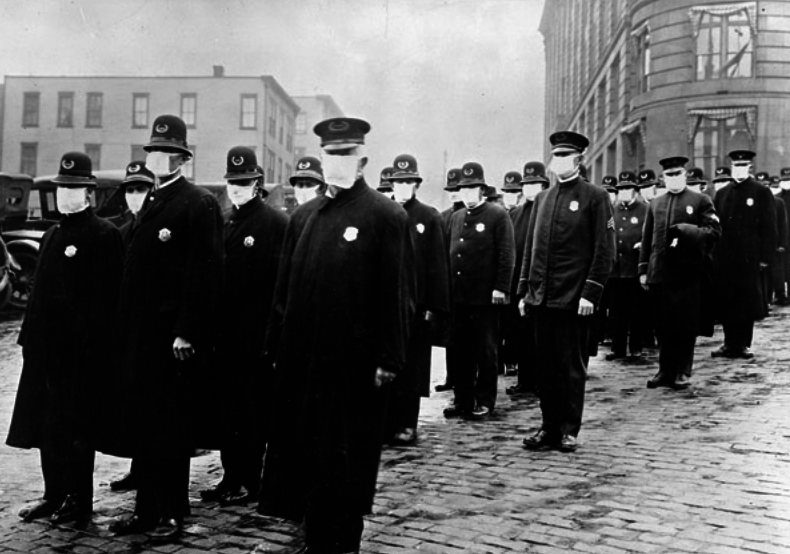
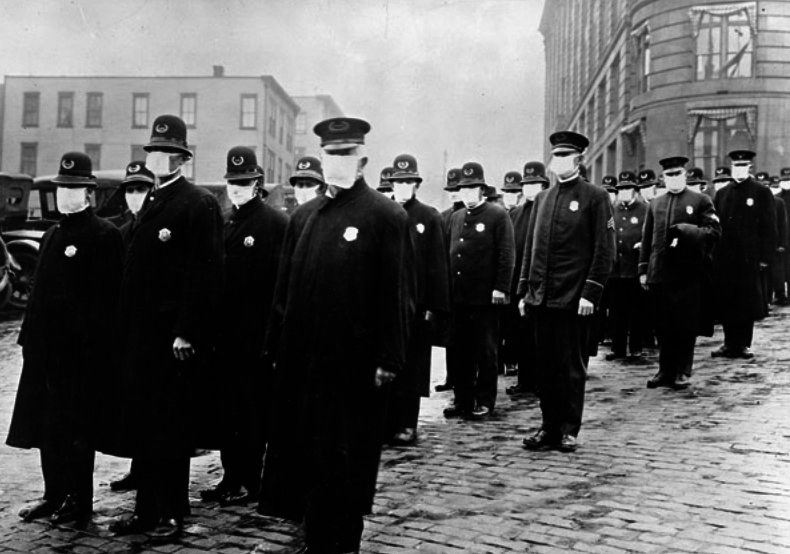
Policemen in Seattle wearing masks made by the Red Cross during the influenza epidemic, December 1918. (National Archives)
Remember the pandemic that was going to wipe out humanity? We're still here.

Every few years, a new virus shows up that, experts tell us, can wipe out half the world in six months...and then it doesn't happen.

I could give you several examples. In this piece, let's harken back to SARS, the vague flu lookalike that suddenly showed up in 2003 and was going to decimate the Earth.

When SARS hit, the World Health Organization (WHO) put the world on notice not to fly into Toronto. The city lost billions of tourism dollars.

The fabled "coronavirus," touted as the cause of SARS, was evil and covert and unique. So said ten WHO labs, which took over all official research on the "plague."

Comment: The WHO has certainly embellished a number of 'possible' pandemics over the modern era, and as Rappoport said, it's what "moves product off the shelves."

History, however, has had its numerous devastating plagues that also seem to have had a 'cosmic connection' - read from this excellent SOTT Focus article New Light on the Black Death: The Viral and Cosmic Connection
"Comets are vile stars. Every time they appear in the south, they wipe out the old and establish the new. Fish grow sick, crops fail, Emperors and common people die, and men go to war. The people hate life and don't even want to speak of it." -Li Ch'un Feng, Director, Chinese Imperial Astronomical Bureau, 648, A.D.
As for the 1918 Flu epidemic (represented in the lead photo above), the same cited link provides the following:
Joseph points out that medieval Europe and colonial America are areas where comets were observed to coincide with plagues and disease, adding that Comet Encke, the likely origin of the Tunguska impactor and the 1918 Flu epidemic, also coincide. He writes:
... in 2005, scientists from the Armed Forces Institute of Pathology in Washington, D.C., resurrected the 1918 virus from bodies that had been preserved in the permanently frozen soil of Alaska. They soon discovered that a completely new virus had combined with an old virus, exchanging and recombining genes, creating a hybrid that transformed mild strains of the flu virus into forms far more deadly and pathogenic. They also confirmed that the 1918 Spanish flu virus originated in the sky, first infecting birds and then spreading and proliferating in humans.



Health

Your brain isn't fooled by food portions served on a smaller plate

outdoor dining
Tricking the brain into eating less by serving food on a smaller plate doesn't necessarily work, according a new study by Ben-Gurion University of the Negev (BGU) researchers, who found that when people are food-deprived, they're more likely to identify a portion size accurately, no matter how it is served.

The new study, published in Appetite, debunks the popular diet trick based on the Delbouef illusion that predicts people will identify sizes differently when they are placed within a larger or smaller object. The classic experiment shows that people perceive a similar black circle is smaller when it embedded in a larger circle than when it is embedded in a smaller one.

"Plate size doesn't matter as much as we think it does," says Dr. Tzvi Ganel, head of the Laboratory for Visual Perception and Action in BGU's Department of Psychology. "Even if you're hungry and haven't eaten, or are trying to cut back on portions, a serving looks similar whether it fills a smaller plate or is surrounded by empty space on a larger one."