Health & WellnessS


Info

The unintended consequences of fake meat

fake meat
Fake meat - Real concerns
Consumers are currently being bombarded with commercials and ads for various forms of what I term "fake meat." Curiously, many who are manufacturing and selling these products, as well as their supporters, prefer to call them "clean proteins." The ads appear to be almost everywhere - on the TV, in magazines, radio, billboards, store signs, newspaper and any place imaginable. It's pretty much impossible not to see, hear, or read about fake meats. Not only are there direct ads, but there have been, and continue to be, numerous stories about "clean proteins" and their benefits for human health, animal welfare, the environment, and climate change.

Comment: A massive backlash is building against fake meat products like Beyond Meat and Impossible Foods


Shopping Bag

Mushrooms are the new grocery aisle celebrities

mushroom farm
Gale Ferranto's mushroom farm in Chester County, Pennsylvania produces 5 million pounds of mushrooms annually.
Move over, kale. There's a new celebrity in the produce aisle: mushrooms.

People are scooping up mushrooms so quickly that producers are scrambling to keep pace with burgeoning demand."We haven't run out as yet, but we're definitely trying hard to keep up," said Gale Ferranto, who helps run her family's third-generation business, Bella Mushroom Farms, in Chester County, Pennsylvania.

Chester County, about a two-hour drive southwest from New York City, is the epicenter of mushroom production in the United States.

"We call it the Mushroom Mecca," said Ferranto. The area accounts for more than 60% of all domestic mushroom production coming from more than 50 local family-owned farms.

Comment: Read more about the healing power of mushrooms:


Info

The manufacturing of bone diseases: The story of Osteoporosis and Osteopenia

bone density

The present-day definitions of Osteopenia and Osteoporosis were arbitrarily conceived by the World Health Organization (WHO) in the early 90's and then projected upon millions of women's bodies seemingly in order to convince them they had a drug-treatable, though symptomless, disease


Osteopenia (1992)[i] and Osteoporosis (1994)[ii] were formally identified as skeletal diseases by the World Health Organization (HTO) as bone mineral densities (BMD) 1 and 2.5 standard deviations, respectively, below the peak bone mass of an average young adult Caucasian female, as measured by an x-ray device known as Dual energy X-ray absorptiometry (DXA, or DEXA). This technical definition, now used widely around the world as the gold standard, is disturbingly inept, and as we shall see, likely conceals an agenda that has nothing to do with the promotion of health.

Comment: Natural ways to safeguard bone health


Ambulance

Birthweight is declining — are c-sections to blame?

baby incubator infant newborn
Birthweight for babies born in the United States has been declining for about three decades, and scientists at the University of Colorado Boulder set out to discover why.

To conduct the study, the researchers examined more than 23 million birth records, reported from 1990 to 2013, to the National Vital Statistics System. They looked at birthweight, as well as method of delivery and number of weeks into pregnancy at delivery. Senior study author, Ryan Masters, explained, "Our data indicate that there has been a dramatic shift in birth timing in this country. It is resulting in birthweight decline, and it is almost entirely due to changes in obstetric practices."

Using the data they had, the researchers attempted to predict what may have have changed if induction and cesarean rates had not increased between 1990 and 2013. Lead study author, Andrea Tilstra, explained, "We found that the decline in birthweight would not have happened if it were not for the rapid increase in these obstetric interventions. In fact, birthweights would have gone up."

Sheeple

Better sleep? Prebiotics could help

woman sleeping
Think dietary fiber is just for digestive health? Think again.

Specific fibers known as prebiotics can improve sleep and boost stress resilience by influencing gut bacteria and the potent biologically active molecules, or metabolites, they produce, new CU Boulder research shows.

The research could ultimately lead to new approaches to treating sleep problems, which affect 70 million Americans.

"The biggest takeaway here is that this type of fiber is not just there to bulk up the stool and pass through the digestive system," said Robert Thompson, a postdoctoral researcher in the Department of Integrative Physiology and lead author of the study, published March 2, in the journal Scientific Reports. "It is feeding the bugs that live in our gut and creating a symbiotic relationship with us that has powerful effects on our brain and behavior."

Comment: See also:


Whistle

Carey Gillam: Science shouldn't be for sale - we need reform to industry-funded studies to keep people safe

We must be able to trust the integrity of scientific research as we work to protect our families and our planet

farming
© Photograph: Jean-François Monier/AFP via Getty ImagesHundreds of studies done by US contract laboratories in the 1970s, 80s and 90s were found to be fraudulent, including some tests used by Monsanto.
Not again. News out of Europe last week revealed that more than 20 scientific studies submitted to regulators to prove the safety of the popular weedkilling chemical glyphosate came from a large German laboratory that has been accused of fraud and other wrongdoing.

The findings come amid global debate over whether or not glyphosate causes cancer and other health problems and if regulators and chemical companies proclaiming the chemical's safety actually have credible science on their side.

Comment: Read more from Carey Gillam:


Brain

Best of the Web: Low-carb diet could boost brain health, study finds

low carb steak
A diet low in carbohydrates could stave off, or even reverse, the effects of aging on the brain, Stony Brook-led research finds.

A study using neuroimaging led by Stony Brook University professor and lead author Lilianne R. Mujica-Parodi, PhD, and published in PNAS, reveals that neurobiological changes associated with aging can be seen at a much younger age than would be expected, in the late 40s. But the study also suggests that this process may be prevented or reversed based on dietary changes that involve minimizing the consumption of simple carbohydrates.

Even in younger adults, under age 50, dietary ketosis (whether achieved after one week of dietary change or 30 minutes after drinking ketones) increased overall brain activity and stabilized functional networks.

Comment: This is the type of research we need more of. Rather than just presuming there to be dangers in low carb diets or doing pseudostudies that call full carbohydrate diets 'low carb', these researchers are legitimately testing the diet in a controlled setting to find out the actual truth of the matter. Bravo.

See also:


Piggy Bank

Flashback Best of the Web: CDC admits number of 'swine flu' cases overestimated because they stopped testing for H1N1 virus and began guessing numbers


Comment: Today's 'coronavirus pandemic' is recent history repeating. The following report came out as hysteria surrounding the 2009 'Swine Flu Pandemic' began to taper off...


h1n1 swine flu vaccines
Have YOU had your shot today?!
If you've been diagnosed "probable" or "presumed" 2009 H1N1 or "swine flu" in recent months, you may be surprised to know this: odds are you didn't have H1N1 flu.

In fact, you probably didn't have flu at all. That's according to state-by-state test results obtained in a three-month-long CBS News investigation
.

The ramifications of this finding are important. According to the Centers for Disease Control and Prevention (CDC) and Britain's National Health Service, once you have H1N1 flu, you're immune from future outbreaks of the same virus. Those who think they've had H1N1 flu -- but haven't -- might mistakenly presume they're immune. As a result, they might skip taking a vaccine that could help them, and expose themselves to others with H1N1 flu under the mistaken belief they won't catch it. Parents might not keep sick children home from school, mistakenly believing they've already had H1N1 flu.

Comment: Of course they didn't; they never do. It's all one-way propaganda from the top down.

'Positive' for H1N1, 'probable' for H1N1, 'negative for H1N1'... the WHO and CDC didn't care what actual medical testing took place and how accurate those results were. They just wanted to boost as many vaccines as possible and - more generally - get everyone onboard with 'doing what the nice man in the white coat - sponsored by Big Pharma - tells you'.

It's all about the vaccines - and/or other medical mafia means of implementing ever finer orders of control.

Like we said earlier in this current 'pandemic', the manufactured 'War on Terror' has nothing on manufactured 'global pandemics' when it comes to 'spooking the herd' and 'creating new facts on the ground'.

Most just 'freeze' in terror, suspend their critical faculties, and hand over more of their sovereignty to the authorities.


Attention

Best of the Web: The coronavirus is NOT as deadly as they want us to think

ambulance
© Miguel Medina/Getty ImagesA man arrives in an ambulance at a pre-triage medical tent in front of the hospital in Cremona, Italy, on Tuesday.
There are many compelling reasons to conclude that SARS-CoV-2, the virus that causes COVID-19, is not nearly as deadly as is currently feared. But COVID-19 panic has set in nonetheless. You can't find hand sanitizer in stores, and N95 face masks are being sold online for exorbitant prices, never mind that neither is the best way to protect against the virus (yes, just wash your hands). The public is behaving as if this epidemic is the next Spanish flu, which is frankly understandable given that initial reports have staked COVID-19 mortality at about 2-3 percent, quite similar to the 1918 pandemic that killed tens of millions of people.

Allow me to be the bearer of good news. These frightening numbers are unlikely to hold. The true case fatality rate, known as CFR, of this virus is likely to be far lower than current reports suggest. Even some lower estimates, such as the 1 percent death rate recently mentioned by the directors of the National Institutes of Health and the Centers for Disease Control and Prevention, likely substantially overstate the case.

We shouldn't be surprised that the numbers are inflated. In past epidemics, initial CFRs were floridly exaggerated. For example, in the 2009 H1N1 pandemic some early estimates were 10 times greater than the eventual CFR, of 1.28 percent. Epidemiologists think and quibble in terms of numerators and denominators — which patients were included when fractional estimates were calculated, which weren't, were those decisions valid — and the results change a lot as a result. We are already seeing this. In the early days of the crisis in Wuhan, China, the CFR was more than 4 percent. As the virus spread to other parts of Hubei, the number fell to 2 percent. As it spread through China, the reported CFR dropped further, to 0.2 to 0.4 percent. As testing begins to include more asymptomatic and mild cases, more realistic numbers are starting to surface. New reports from the World Health Organization that estimate the global death rate of COVID-19 to be 3.4 percent, higher than previously believed, is not cause for further panic. This number is subject to the same usual forces that we would normally expect to inaccurately embellish death rate statistics early in an epidemic. If anything, it underscores just how early we are in this.


Comment: So the MSM is dead wrong: this IS in fact less of a problem than most seasonal flu epidemics.

Fake news pushers the whole lot of them.

See also:


Syringe

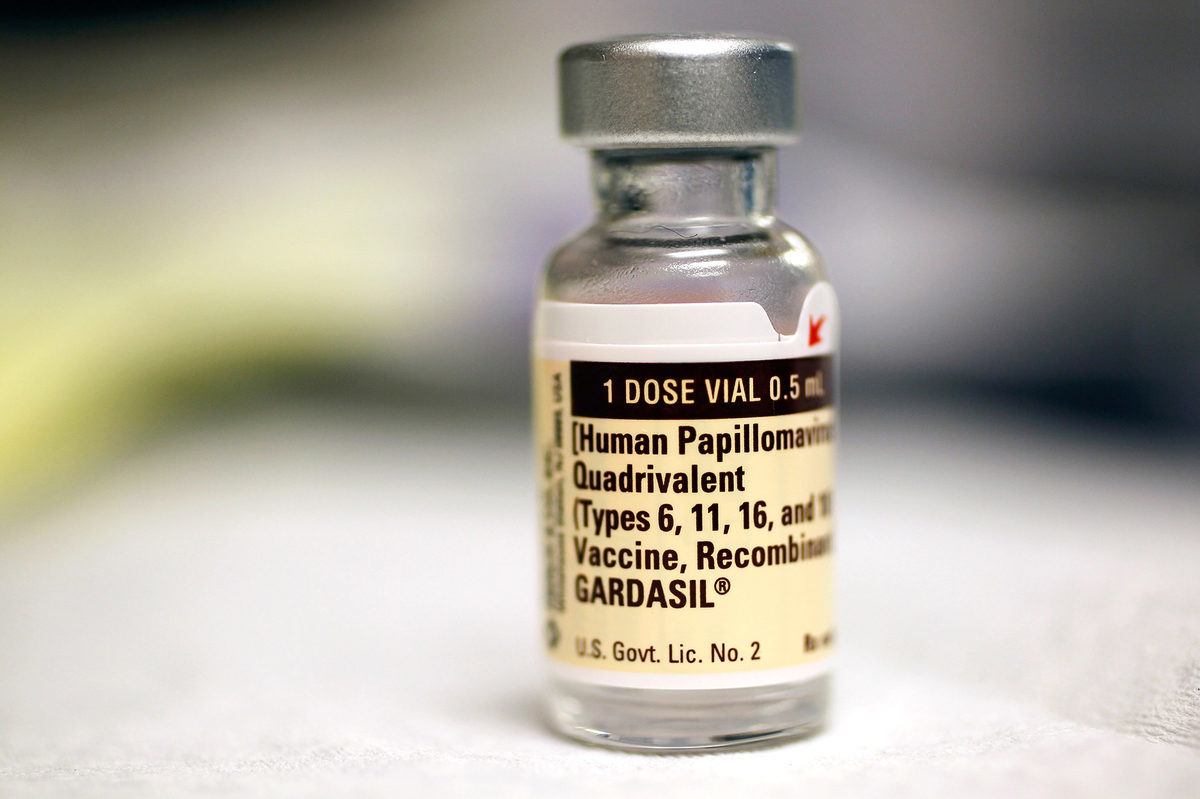
HPV vaccine linked to autoimmune events

gardasil HPV vaccine
The Gardasil vaccine was first approved for the prevention of the human papillomavirus (HPV) in June 2006. It was eventually added to the childhood immunization schedule and recommended to all girls between the ages of 11 and 12. But since then, there have been reports linking Gardasil to autoimmune illnesses.

In order to see if there was an association, scientists used an epidemiological assessment of the vaccine adverse event reporting system database (VAERS) looking for adverse events with Gardasil from 2006 to 2014.

They found a 4.6-fold increase risk of serious autoimmune adverse events outcomes of gastroenteritis, a 7.6- fold increase lupus, 5.6-fold increase in rheumatoid arthritis, 1.6-fold increase in central nervous system demyelinating conditions like multiple sclerosis, 15-fold increase in ovarian damage, and a 10-fold increase of irritable bowel syndrome in women and girls who were given the Gardasil vaccine.

Comment: See also: