Health & WellnessS


Magnify

Parasites Persuade Immune Cells to Invite Them in for Dinner, Says New Research

The parasites that cause leishmaniasis use a quirky trick to convince the immune system to effectively invite them into cells for dinner, according to a new study published in PLoS Pathogens. The researchers, from Imperial College London, say their findings improve understanding of the way Leishmania parasites establish an infection and could aid the search for a vaccine against this neglected tropical disease.

Leishmania parasites are transmitted by sand flies. After the parasites infect a sand fly, they make a sticky gel so that when the fly bites a human, it regurgitates this gel into the body. Today's research, which was funded by the Wellcome Trust, shows that the gel persuades immune cells known as macrophages to feed the parasites, rather than killing them.

Leishmaniasis is an infection caused by Leishmania parasites that affects around 12 million people per year, mainly in tropical and sub-tropical countries. Symptoms include disfiguring and painful skin ulcers and in severe cases the infection can also spread to the internal organs. Patients with the infection often suffer from social exclusion because of their disfigurement. There is currently no vaccine to protect against infection and although treatments are available, they are not always effective and access to drugs is limited in many areas.

Magnify

Gene Discovery Reveals Protein's Function In Hearing

Discovery of a deafness-causing gene defect in mice has helped identify a new protein that protects sensory cells in the ear, according to a study led by University of Iowa researchers. The findings, which also involved Kansas State University, appear in the Aug. 21 issue of the open-access journal PLoS Genetics.

In humans, hereditary deafness is one of the most common birth defects, yet most genes involved in hearing are unidentified. Mice are used as research models because mouse and human auditory genetics are very similar.

Using a deaf mouse model generated at The Jackson Laboratory, the team identified the deafness-causing defect in the claudin-9 gene. The mutated gene fails to produce normal claudin-9 protein, which, the UI team showed, is needed to maintain the proper distribution of potassium in the inner ear.

Health

Daily drinking may raise risk of several cancers

Men who drink beer or liquor on a regular basis may face a heightened risk of several different types of cancer, a new study suggests.

Researchers found that among nearly 3,600 Canadian men ages 35 to 70, those who averaged at least a drink per day had higher risks of a number of cancers than men who drank occasionally or not at all -- including cancers of the esophagus, stomach, colon, lungs, pancreas, liver and prostate.

Info

Smoking 'Can Improve Schizophrenic Minds'

Image
Smoking may cause cancer but the nicotine in cigarettes can improve the lives of schizophrenics by boosting attention and memory.

A chemical in the drug may help people with the mental illness to think more clearly and maintain their concentration, according to Ruth Barr, a psychiatrist who formerly worked at Queen's University Belfast, which has made the finding. She conducted a three-year study to find out why schizophrenia sufferers are three times more likely to smoke than the general population.

Health

Family Quarrels Can Promote Headaches In Children, Study Finds

Family quarrels and a lack of free time can promote headaches in children. This is what Jennifer Gassmann and her coauthors concluded in their study on risk factors, which appears in the current issue of the Deutsches Ärzteblatt International.

This investigation was a component of a large-scale study entitled "Children, Adolescents, and Headache" (Kinder, Jugendliche und Kopfschmerz - KiJuKo), in which data were collected in four annual "waves" from 2003 to 2006. Out of a multitude of variables tested in the larger study, the authors chose to look at the ones that concerned the children's family and leisure time. Up to 30% of all children around the world complain of headache symptoms arising at least once per week.

Heart - Black

Why Are Our Teenage Daughters the Unhappiest People in Britain?

Image
Girls get the best exam results and university places. But the numbers experiencing psychological distress is rocketing

Here's a little vignette (it's a true story): a 15-year-old girl attends London's top girls' school. Her less brainiac little sister goes to another league-topping school nearby, only marginally less exalted. Their mother is collecting Girl A from School A, and remarks out loud on how very thin everyone is, indeed much thinner than the girls at the rival establishment. Girl A, with a toss of her hair, says: "Yeah, we even do anorexia better than them."

Extreme? Actually, no. Being faux-cynical, pouty and contrary has long been part of growing up, but there's a distinction between making it your life's work to annoy your parents and teachers and having serious mental health issues. It turns out that this line is being crossed by Britain's teenage girls, especially "high-achieving" girls from comfortable backgrounds, in vast and alarming numbers.

Heart

Cancer Survivor Provides Free Health Care for Uninsured

Image
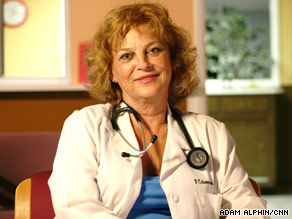
Faith Coleman's ordeal as an uninsured cancer patient drove her to help others without health insurance.
Bunnell, Florida -- Faith Coleman had no health insurance when she learned she had cancer, but she describes her battle with the illness as "one of the absolute greatest blessings" of her life.

"Having kidney cancer was one of the best things that ever happened to me ... because I can truly empathize with patients," said Coleman, 54.

That compassion inspired Coleman to open a free clinic in her Florida community to help other uninsured people in need of medical care.

In July 2003, Coleman, a nurse practitioner, learned she had a malignant tumor growing on her right kidney. But as a contract worker for several doctors, she did not receive health insurance. Coleman's treatment totaled about $35,000, and she was forced to take out a mortgage on her house to help pay for it.

"I [fell] through the crack ... and I [had] a great job and a good education," said Coleman, a mother of six.

Attention

WHO: No Tamiflu for healthy people with swine flu

London - The World Health Organization says healthy people who catch swine flu don't need antiviral drugs like Tamiflu.

In new advice issued to health officials on Friday, the U.N. agency said doctors don't need to give Tamiflu to healthy people who have mild to moderate cases of swine flu.

WHO said the drug should definitely be used to treat people in risk groups who get the virus. That includes children less than five years old, pregnant women, people over age 65 and those with other health problems like heart disease, HIV or diabetes.

Arrow Down

Surgeon Tied to Bone Product Inquiry Resigns

A former Army surgeon accused of falsifying a study on a bone growth product used on severely injured Iraq war veterans has resigned his teaching position at Washington University in St. Louis, a spokeswoman said Tuesday night.

The surgeon, Dr. Timothy R. Kuklo, 48, was placed on leave earlier this year while the university investigated charges against him. Medtronic, a maker of the bone growth product Infuse, also suspended his consulting contract. The company paid him nearly $800,000 the last few years.

"Dr. Kuklo has agreed to voluntarily resign from the university, effective September 30, 2009," Joni Westerhouse, a spokeswoman for the medical school, said in an e-mail message Tuesday. "Dr. Kuklo will have no clinical, research, or educational duties for the University between now and that date."

Syringe

More Propaganda: Study Weighs Risks of Vaccine for Cervical Cancer

The new vaccine designed to protect girls and young women from cervical cancer has a safety record that appears to be in line with that of other vaccines, a government report has found. Some serious complications occurred, including at least 20 deaths and two cases of Lou Gehrig's disease, but they were not necessarily caused by the vaccine, the study said.

The most common serious complications after vaccination with Gardasil were fainting episodes and an increased risk for potentially fatal blood clots, possibly related to oral contraceptive use and obesity, the study found.