Health & WellnessS


Magnify

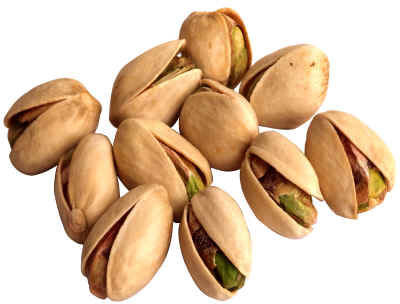
Pistachios Cut Cancer Risk

Image
© Getty ImagesPistachios
Making pistachios a regular part of your diet could reduce your risk of cancer, according to a study conducted by researchers from the University of Texas and Texas Women' University, and presented at the American Association for Cancer Research's Frontiers in Cancer Prevention Research Conference in Houston.

Pistachios are known to be high in a form of vitamin E known as gamma-tocopherol, which has been linked to a lower risk of some cancers.

"It is known that vitamin E provides a degree of protection against certain forms of cancer. Higher intakes of gamma-tocopherol ... may reduce the risk of lung cancer," researcher Ladia M. Hernandez said.

Researchers conducted the study on 36 participants who were either told to keep eating their normal diets or to eat their normal diets plus two ounces (about 117 kernels) of pistachios per day. After four weeks, participants who were eating pistachios daily had significantly higher levels of gamma-tocopherol in their blood than those who were not eating the nuts.

Alarm Clock

Metal hip replacements could cause tumours, doctors warn

Metal hip replacements could cause an increased risk of tumours and tissue damage to patients, doctors have warned.

The 40,000 people with metal hips are to have their implants reviewed by the Medicines and Health care Products Regulatory Agency (MHRA) over fears that debris from the metal is causing non-cancerous tumours, severe swelling and sinew damage.

An unknown number will have their metal hips taken out and replaced following the review.

Cow

Cows on Drugs

Image
© Alain Pilon
Now that Congress has pushed through its complicated legislation to reform the health insurance system, it could take one more simple step to protect the health of all Americans. This one wouldn't raise any taxes or make any further changes to our health insurance system, so it could be quickly passed by Congress with an outpouring of bipartisan support. Or could it?

More than 30 years ago, when I was commissioner of the United States Food and Drug Administration, we proposed eliminating the use of penicillin and two other antibiotics to promote growth in animals raised for food. When agribusiness interests persuaded Congress not to approve that regulation, we saw firsthand how strong politics can trump wise policy and good science.

Even back then, this nontherapeutic use of antibiotics was being linked to the evolution of antibiotic resistance in bacteria that infect humans. To the leading microbiologists on the F.D.A.'s advisory committee, it was clearly a very bad idea to fatten animals with the same antibiotics used to treat people. But the American Meat Institute and its lobbyists in Washington blocked the F.D.A. proposal.

Cheeseburger

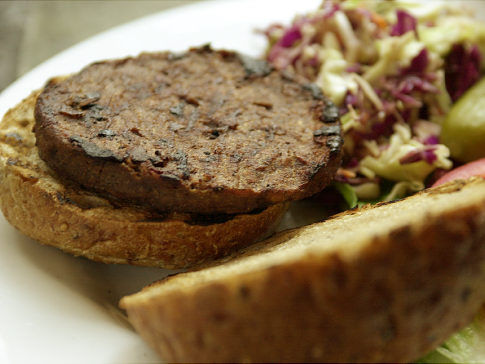
Which Veggie Burgers Were Made With a Neurotoxin?

Image
© Yasukawa for NewsMany brands of frozen soy veggie burgers that are not 100 percent organic may have been produced using a harmful substance, according to a report.
This is about the time of year when I start keeping packages of veggie burgers in the freezer, just in case of an impromptu barbecue. In the past, I haven't had much fake meat brand loyalty: I've found that once I smother my hunk of textured vegetable protein in barbeque sauce, all soy patties are pretty much created equal. But after reading a recent investigation by the Cornucopia Institute, I'm going to be a lot more picky: The food and agriculture nonprofit found that most non-organic veggie burgers currently on the market are made with the chemical hexane, an EPA-registered air pollutant and neurotoxin.

In order to meet the demands of health-conscious consumers, manufacturers of soy-based fake meat like to make their products have as little fat as possible. The cheapest way to do this is by submerging soybeans in a bath of hexane to separate the oil from the protein. Says Cornucopia Institute senior researcher Charlotte Vallaeys,
"If a non-organic product contains a soy protein isolate, soy protein concentrate, or texturized vegetable protein, you can be pretty sure it was made using soy beans that were made with hexane."

Magnify

E. coli Illnesses on Decline, but Other Foodborne Infections Increasing

Efforts to reduce illnesses caused by one of the most dangerous foodborne bacteria, E. coli O157:H7, appear to be paying off, the Centers for Disease Control and Prevention reported Thursday, but sickness caused by other pathogens is rising.

Preliminary data released by the CDC showed a 2009 drop in the incidence of infections from E. coli O157:H7, which can be lethal and is most commonly associated with ground beef but has also been detected in leafy greens and raw cookie dough. E. coli infections were the lowest since 2004, the agency said.

But there was little or no recent progress for other pathogens, according to the data. Infections from salmonella, the most common cause of foodborne illness in the United States, decreased slightly in 2009but remain above the goals set by the government. The report also detailed increases last year in illnesses from campylobacter, listeria, vibrio and cryptosporidium.

Syringe

Time for the Truth about Gardasil

Image
In an important OpEd piece from the Washington Examiner, Barbara Hollingsworth sets the record straight about Gardasil:
"Cervical cancer accounts for less than 1 percent of all cancer deaths - so it was somewhat surprising when the U.S. Food and Drug Administration fast-tracked approval of Gardasil, a Merck vaccine targeting the human papilloma virus that causes the disease.

As of the end of January 2010, 49 unexplained deaths following Gardasil injections have been reported to the Centers for Disease Control and Prevention's Vaccine Adverse Event Reporting System. By contrast, 52 deaths are attributed to unintended acceleration in Toyotas, which triggered a $2 billion recall."
There has been no recall for Gardasil, however. In fact, as Hollingsworth points out, it is required for sixth-grade girls in D.C., Maryland, Virginia, and many other states.

Unfortunately, "Merck denies any of the deaths are related to its vaccine, and the parents involved can't prove they were," Hollingsworth writes.

India Suspends Gardasil!

Unlike in the United States, The Indian Council of Medical Research (ICMR) has told two Indian states, Andhra Pradesh and Gujarat, to halt its Gardasil vaccine study, which was slated to test the vaccine in about 32,000 girls between the ages of 10 and 14.

DNA India reports:
"The program is part of a two-year study to look into the utility of a vaccine in public health programs and acceptability of Gardasil.

The program was marred by controversy after four deaths and complications among 120 girls were reported after vaccination. The girls complained of stomach disorders, epilepsy, headaches and early menarche."
Sources:

Washington Examiner March 30, 2010

DNA India April 8, 2010

Magnify

Taking a Mid-Day Nap Boosts Brain Power

Image
© Getty Images
Researchers from the University of California, Berkeley, found that people who take naps during the day are helping to improve their overall brain function. Among the 39 healthy adults who were evaluated in the study, those who slept for an hour and a half during the day performed better on a post-nap cognitive exam than did those who remained awake.

All participants were initially assigned a "hard learning" morning task for which all performed roughly the same. Half the group then took a nap while the others stayed awake. Following the nap, all were given a repeat exam and, this time, the group that napped performed better than the group that stayed awake.

Scientists have long been trying to figure out whether or not mid-day naps are beneficial. This study seems to suggest that naps help a person to process short-term memories into long-term ones, clearing the temporary storage portion of the brain so that new information can take its place.

Magnify

Empower Yourself with the Various Practices of Yoga

Image
© Getty Images
Some people may not think of yoga as a true "exercise" because it is often viewed as more of a relaxation and stretching technique. That is, until they feel the incredible empowerment, flexibility and spiritual peace they experience after a few challenging sessions.

Yoga is an extremely adaptable practice that offers both men and women the chance at increasing flexibility, muscle strength, mental sharpness, and even self confidence. There are several different types of yoga to choose from that fit into just about every user's experience levels and fitness goals.

For beginners who want to learn the basics about yoga and lay a foundation for the base poses in more advanced practices, Hatha is a good choice. Hatha is considered the foundation of all other yoga practices since you learn the ground level poses which the more advanced dynamic poses are built upon. Breathing is emphasized, and slow, easy movements help prime the body and ease the joints, muscles and more importantly the mind into the practice.

Magnify

Confirmed Again: Healthy Diet and Lifestyle Cuts Risk of Heart Failure

Image
© the12steps.co.uk
A new study conducted by researchers from Harvard Medical School and published in the Journal of the American Medical Association provides new evidence that maintaining a healthy lifestyle significantly decreases a person's lifetime risk of high blood pressure and heart failure.

First, researchers collected diet and lifestyle data from 20,900 male physicians over an average of 22.4 years between 1982 and 2008. They then calculated each man's risk of heart failure at age 40.

The average risk of heart failure was about one in seven, but this risk was significantly lower among men who exercised regularly, had high intakes of breakfast cereals and/or fruits and vegetables, consumed alcohol in moderation, did not smoke, and/or maintained a healthy body weight. While men who did not meet any of these criteria had a lifetime heart failure risk of 21.2 percent, men who met four or more had less than half the risk, or 10.1 percent.

In a second analysis, the researchers followed 83,882 female nurses between the years of 1991 and 2005, comparing their risk of high blood pressure with various diet and lifestyle factors.

Magnify

Vitamin D Deficiency Linked to More Aggressive Lymphoma

Image
© mycanceradvisor.com
Lymphoma patients with vitamin D deficiency are twice as likely to die from their cancer than patients with sufficient blood levels of the vitamin, according to a study conducted by researchers from the Mayo Clinic and presented at a meeting of the American Society of Hematology.

Researchers took blood samples from 374 patients between 2002 and 2008 who had been recently diagnosed with a cancer of the white blood cells known as diffuse large B-cell lymphoma. The average participant age was 62.

Approximately 40 percent of all lymphomas are of the diffuse large-B cell type. The disease mainly affects people over the age of 50.

The researchers found that roughly 50 percent of all participants suffered from vitamin D deficiency at the beginning of the study, defined as having blood levels below 25 nanograms per liter. Over an average of three years of follow-up, patients with vitamin D deficiency were 50 percent more likely to have their cancer worsen and twice as likely to die as patients with vitamin levels above 25 nanograms per liter.