Earth Changes
Residents of Jinping in southern China's Yunnan Province woke up to find their cars destroyed, windows smashed and streets covered by massive lumps of ice.
Huge hailstones hammered the county, which borders Vietnam, for about 20 minutes early in the morning, leaving the local traffic in chaos. No casualties have been reported.
Pictures circulating on Chinese social media show the locals holding sizable hailstones in their hands or collecting them in washing bowls.
Roofs, vehicles and crops in the fields were seen sustaining serious damage.
Some hailstones were as big as eggs and others were similar to the size of chestnuts, according to Yunnan Radio and Television Station, citing local weather authorities.
Cyclone Trevor is barrelling towards the Northern Territory as it intensifies into a destructive system and causes monster waves predicted to wreak havoc on communities in its path.
At the same time, Cyclone Veronica is strengthening as it steams in from the west to "severely impact" the Pilbara region.
The two storms converging on Australia's north and west coasts have sent social media into a frenzy. Meteorologists have dubbed them "double trouble" and the graphics are frightening.
Trevor is brewing in the Gulf of Carpentaria and is expected to develop into a Category 4 system as it approaches the coast.
Bureau of Meteorology forecaster Todd Smith said the cyclone could strengthen to a Category 5 with winds of more than 300km/h.
Linette Grzelak posted a picture on Facebook of the sunfish, which was spotted by a couple of fishers on the beach at the weekend.
"My partner was out with his work crew and he thought it was a piece of shipwreck at first," she told Guardian Australia.
This ocean sunfish (Mola mola) is a rare find for that location, said Ralph Foster, the fish collection manager at the South Australian Museum.
Excessive snow has delayed planting and harvests.
The Club of Rome endorses Youth4Climate -- can't make this stuff up. Christian breaks it down.
Sources

An aerial shot of Beira made available by the International Federation of Red Cross and Red Crescent Societies on Monday.
President describes scale of disaster as huge, as Red Cross says most of Beira damaged or destroyed
More than 1,000 people are feared dead in a devastating cyclone that hit Mozambique on Friday, the country's president has said.
Filipe Nyusi told Mozambican radio he had seen "many bodies" floating in the overflowing Pungwe and Busi rivers. "It appears that we can register more than 1,000 deaths," he said, adding that more than 100,000 people were at risk because of severe flooding.
At least 215 people have been confirmed dead and hundreds are missing across Mozambique, Malawi and Zimbabwe from Tropical Cyclone Idai, according to government agencies and the Red Cross, which said 1.5 million people had been affected.
A more precise death toll and the true scale of the damage is not likely to be known soon, as many areas are cut off.
"I think this is the biggest natural disaster Mozambique has ever faced. Everything is destroyed," Celso Correia, the environment minister, said. "Our priority now is to save human lives."
Comment:
Update: BBC on 21 March reports:
Some 15,000 people still need to be rescued from the devastation caused by Cyclone Idai, Mozambique officials say.
The cyclone victims there are stranded by catastrophic flooding and are clinging to roofs or stuck in trees, charities say.
In the port city of Beira, aid workers say there are only two to three days of clean water left.
Some 300 people are confirmed dead in Mozambique and Zimbabwe, but the toll is expected to rise.
The powerful cyclone swept in to Beira last Thursday, with winds of more than 177km/h (106 mph). It left a trail of devastation as it moved inland.
What is the latest?
Oxfam has told the BBC that an area of about 3,000 sq km (1,864 sq miles) is now under water.
Medical agencies are warning that the shortage of food and clean drinking water is increasing the threat of disease.
"The first thing you see when you arrive is destruction and a lot of water," said Get Verdonck, an emergency co-ordinator with the medical charity Médecins Sans Frontières (MSF).
"People are using well water with no chlorination, and that water is unlikely to be clean... pneumonia and other respiratory diseases are going to be a problem," he told Reuters from Beira.
Aid groups said Mozambique had borne the brunt of flooding from rivers that flow downstream from neighbouring countries.
A total of 217 people are confirmed dead in the country, but many areas have still not been reached.
Caroline Haga, an official with the International Federation of Red Cross and Red Crescent Societies, said the worst-hit areas were close to the Buzi river west of Beira.
She said rescue teams were dropping high-energy biscuits, water purification tablets and other supplies to people surrounded by water and mud.
"We have thousands of people... in roofs and trees waiting for rescue," Ms Haga told AFP news agency.
"We are running out of time. People have been waiting for rescue for more than three days now. We can't pick up all the people so our priority is children, pregnant women, injured people."
Celso Correia, Mozambique's minister of land and environment, confirmed this, telling Reuters the number of people still needing to be rescued was thought to be about 15,000.
He added that 3,000 people had already been rescued so far.
Deborah Nguyen, of the World Food Programme (WFP), said the priorities were reaching people trapped in the flooded areas and then organising temporary shelter for those rescued.
"Relief operations are progressing, but there is still a lot of work," she told AFP.
Mozambique President Felipe Nyusi has said more than 100,000 people are at risk.
'I didn't have any way of leaving'
Wilker de Assis de Sousa Dias, a survivor in Beira, speaks to BBC Focus on Africa
The winds started on Wednesday, but only around 60km/h. On Thursday, at around 14:00 it started getting at worse, and at around 19:00, the show really started, if I can say that. The cyclone was already starting to cause damage, picking up everything in its path. It was just destroying everything.
In the parts of the city which are near the sea, there is almost nothing left. My house has two floors, and there's basically nothing there now. The roof has given way, and water is coming in from every corner. I was in my house during the storm. I actually didn't have any way of leaving, even if I'd wanted to. All of the roads near the sea, where my house is, were flooded. The wind was so strong it was picking up stones and hurling them around. I saw stones flying, zinc sheets flying, even pieces of cars. The debris smashed all of the windows in my house.
I was able to walk around some of the affected areas shortly after the storm. I would say that 75% of the city is totally destroyed. We're still waiting for help. We need food, certainly, and we urgently need construction materials.
What has happened elsewhere?
In Zimbabwe, at least 98 people have died and 217 people are missing in the east and south, the government said.
In Malawi, the UN says more than 80,000 people have been displaced by the cyclone.
Zimbabweans going above and beyond
Amid the devastation, people in Zimbabwe are doing everything they can to help survivors.
Videos and pictures have emerged of people queuing - not to collect fuel or bread, but to donate food, clothes and other goods to the relief effort.
The BBC's Shingai Nyoka says the country is in the middle of an economic crisis but this has not stopped an unprecedented community aid effort.
Reporters from BBC Africa have visited a Presbyterian church in the capital Harare, where volunteers have been sorting through donations. One woman turned up having walked for about two hours to bring her donation.
Volunteer Natalie Detering told BBC News the donor said she could not afford her bus fare, but decided to walk from home because Jesus had told her to.
Among her donations was a pot, a blanket, some of her clothes and a towel.
The generosity shown by ordinary Zimbabweans has prompted President Emmerson Mnangagwa to tweet his appreciation.
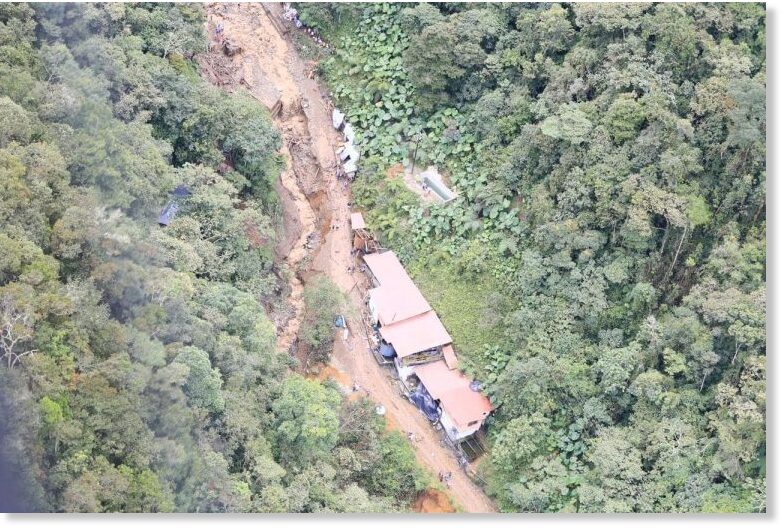
The local Disaster Mitigation Agency (BPBD) said that the all administrative areas of the region - Yogyakarta City and Kulon Progo, Bantul, Gunung Kidul and Sleman regencies - have been affected. Over 170 homes have been damaged, along with roads and electricity lines.
The fatalities occurred after 2 landslides struck in areas of Bantul Regency. One person is reportedly still missing.
Benguela Province
Angola News Agency ANGOP reports that at least 16 people died as a result of heavy rains and flooding in Benguela Province that began around 16 March, 2019.
Vice President of Angola, Bornito de Sous, visited Catumbela, one of the worst hit areas where at least 12 fatalities were reported and houses were damaged or destroyed.
Heavy rains also affected parts of Benguela city, where 3 people died, and Lobito, where one fatality was reported. Around 30 homes were completely destroyed and 56 damaged by flooding across the province.

Toxins produced by blue-green algae have been found in dolphins that turned up dead in Florida waters after a 2018 red tide that coincided with a blue green algae bloom.
The study, published Wednesday in the peer-reviewed journal PLOS One, is the first to show detectable levels of the toxin, commonly called BMAA, in dolphin brains that also displayed degenerative damage similar to Alzheimer's, Lou Gehrig's disease and Parkinson's in humans. While more work needs to be done to determine whether the toxins cause the disease, the study concludes that dolphins and their complex brains could provide a key sentinel for the potential threat from toxic algae blooms to humans.
"Not to be too political, but it goes to show the health of marine animals and water quality," said David Davis, lead author and a University of Miami Miller School of Medicine neuropathologist. "Everything's directly related."
The findings add to a growing body of research that focuses on the health threat from harmful algae blooms, which climate scientists warn could worsen as the planet warms. South Florida is particularly vulnerable, with miles of coast, a lake that is a third of the size of Rhode Island, rivers and estuaries, and an agricultural industry and swelling population that continue to feed blooms with pollution from fertilizer and sewage.
No information about casualties or damage is available at the moment.
No tsunami warning has been issued so far.
Preliminary Earthquake Report:
The earthquake struck at around 10.56 am about 50 kilometres north of Bordeaux. It could be felt all the way from Bordeaux to the city of Poitiers in western France, according to France's National Seismic Monitoring Network (RéNass).
The epicentre of the earthquake was about 5 km from Montendre in the Charente-Maritime department in southwestern France.


Comment: "This is the strongest hail in nearly 30 years, it is very rare," said Cheng Lin, deputy head of the meteorological bureau of Jinping.
Some other intense hail storms from around the world recently include:
- India's capital Delhi enjoys unusual hail storm
- Rome turns to ICE: Italian capital comes to a standstill after it was battered by torrential rain and giant hailstones
- Hail storm kills 400 kangaroos and 150 goats in New South Wales, Australia
- Freak 'hailnado' blankets southern Queensland with tennis-ball-sized hail
- Violent hail storm and ice accumulation hits Liguria, Italy
- Walnut-sized hail and flash floods hit Turkey's northern provinces
- Severe hailstorm cripples traffic, paralyzes public transport in Mexico - 2 feet deep hail cover
- 'Felt like gunshots hitting the windows': Residents of Greensburg, Indiana look back at weekend damage caused by baseball-size hail
- Massive hail injures multiple people, kills zoo animals and damages 400 vehicles in Colorado Springs
- Foot of hail on Highway 22 near Longview, Alberta makes it look like December instead of July
Such devastating hail across the planet is being under reported in the media.New research shows that Earth's upper atmosphere is cooling as the sun is entering one of the deepest Solar Minima of the Space Age. Martin Mlynczak of NASA's Langley Research Center says, It is likely that atmospheric dust loading from increased comet and volcanic activity is also contributing to these 'intense' or 'freak' hailstorms, the cooling effect of which causes ice crystals to form.