Earth ChangesS


Arrow Down

Father and son dead after landslide hits bushwalkers in Blue Mountains, Australia

Emergency services were still working to rescue people late on Monday afternoon
© DEAN SEWELLEmergency services were still working to rescue people late on Monday afternoon
Tragedy has struck a family of five British tourists after they were hit by a landslide at a popular walking track in the Blue Mountains on Monday afternoon.

Emergency services were called about 1.40pm after reports that the landslide had fallen onto a group of bushwalkers on the Wentworth Pass track at Wentworth Falls.

The father, 49, and his nine-year-old son were killed.

The mother, 50, and a second son, 14, were critically injured and are in hospital, while the couple's 15-year-old daughter walked out to safety unharmed before being treated for shock.

Police said the family were in Australia on holidays from Britain.

NSW Police Detective acting Superintendent John Nelson described the incident as "a tragic scene".


Comment: Evacuations after more floods in New South Wales, Australia - up to 15 inches of rain in 24 hours


Snowflake

Winter weather to continue in Switzerland this week after 50cms of spring snowfall

A person walks their bike through the snow in the Swiss canton of Zurich.
© Robert RuggieroA person walks their bike through the snow in the Swiss canton of Zurich.
Swiss residents going through the latter stages of March, with its sunny skies and 'Sahara dust' would have been forgiven for thinking the time was right to put the winter jacket away.

However, winter-like weather is back in Switzerland, having swept across the country as March turned into April.

Around 50cm of snow fell on parts of Switzerland over the past few days, bringing with it unseasonably cold temperatures to wipe out the springlike weather of late March.

Swiss meteorological service MeteoNews reported that the snowfall brought welcome relief, particularly in central and lower Valais, in parts of Ticino and in most of Graubünden, cutting the risks of forest fires.


Seismograph

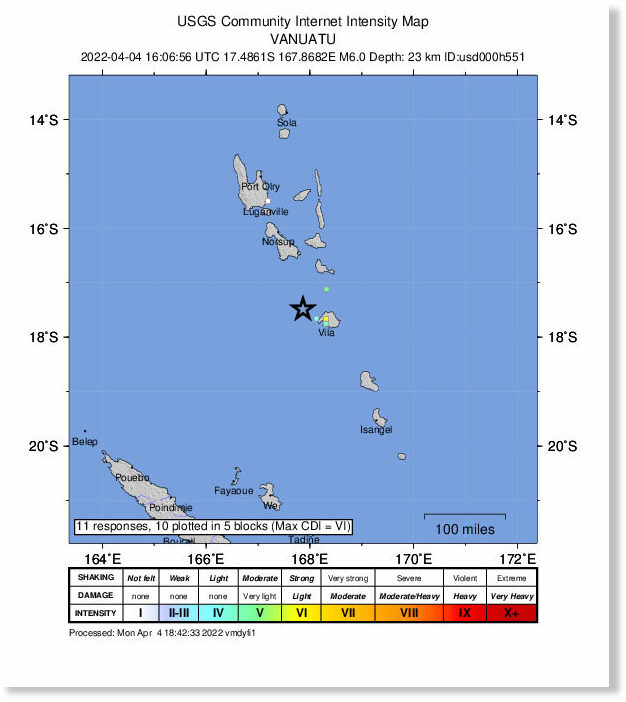
6.0-magnitude earthquake off Vanuatu: USGS

maps
An earthquake with a magnitude of 6.0 jolted 55 km off Port-Vila, Vanuatu at 16:06:57 GMT on Monday, the U.S. Geological Survey said.

The epicenter, with a depth of 33.13 km, was initially determined to be at 17.475 degrees south latitude and 167.8723 degrees east longitude.

Bizarro Earth

China continues to laugh at western 'green energy' foolishness

China Laughs
© Watts Up With That?
With an energy cost crisis now striking Europe and to a lesser extent the U.S., some cracks have begun to appear in the "net zero" utopian dreams being pursued almost universally by Western politicians. Nevertheless, at this writing, the rapid elimination of use of fossil fuels, supposedly to fight "climate change," remains official government policy throughout Europe, at the federal level in the U.S., in most blue American states, and as well in Canada, Australia and New Zealand. Here in the U.S., although President Biden has ordered some temporary measures like release of some oil from the nation's strategic reserves, the full federal bureaucracy remains under orders from the top to force reduction in production and use of fossil fuels in every way it can devise. Meanwhile, states like New York and California have rapidly approaching legal deadlines for shuttering all fossil fuel power plants, prohibiting all automobiles other than electric ones, banning natural gas for heating and cooking, and otherwise quickly upending the last century of energy progress that has made our lives affordable and enjoyable.

We are supposed to believe that the official fossil fuel suppression policies will stop "climate change" and "save the planet" through the mechanism of rapid aggregate reductions of emissions of CO2 and other "greenhouse gases." The rescue of the planet's climate will make worthwhile our sacrifices in the form of higher energy prices, increased taxes to support subsidies to renewable energy, and restrictions on lifestyle.

But in fact, that narrative is all so much hogwash. In the West, twenty plus years and trillions of dollars of subsidies for "green energy" schemes have achieved only some marginal reductions in the share of final energy consumption derived from fossil fuels. Meanwhile, in the rest of the world, fossil fuel usage continues to soar. Leading the way is China, which has used the last two years of Covid distraction to have its emissions leapfrog to new records. In the overall picture, the Western obsession with decreasing emissions, despite enormous costs, does not have any impact that is even noticeable.

Two recently-issued reports paint the picture of a real world of ever-increasing fossil fuel use and CO2 emissions (although there was a minor Covid-induced downward blip in 2020). In March, the UN's International Energy Agency (IEA) issued its annual Global Energy Review: CO2 Emissions in 2021. Also, the Global Warming Policy Foundation has released its Briefing Paper 58 titled "China's Energy Dream," written by Patricia Adams. (Full disclosure: I am the President of the American Friends of the GWPF.). Both reports underscore the complete absurdity of the ongoing green energy foolishness of the West.

Snowflake Cold

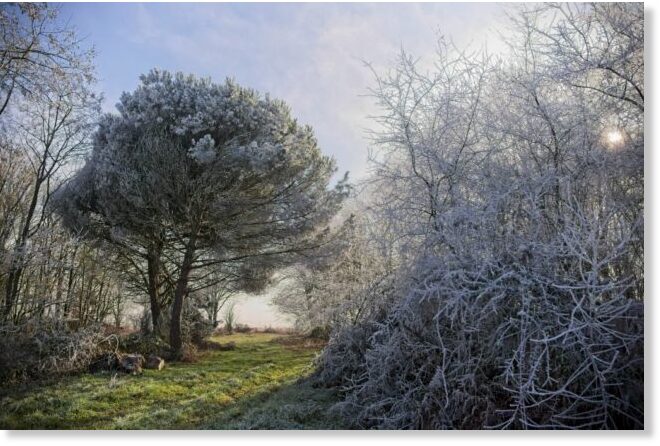
France experiences coldest April night since 1947 of -9C

frost
© GUILLAUME SOUVANT / AFP
The French weather forecaster Météo France recorded temperatures of -9C on Sunday night, the coldest April night on record since 1947.

Overnight frosts were seen across almost all of the France, with the exception of the Paris area and the northern and Mediterranean coasts, with the coldest temperatures recorded in the Champagne area.

While Champagne went down to -9C parts of the south west also recorded temperatures of -5C, leaving wine producers very worried about frost damage to their vines.


Comment: "We're going back to winter": Snow falls across France as temperatures plunge


Arrow Down

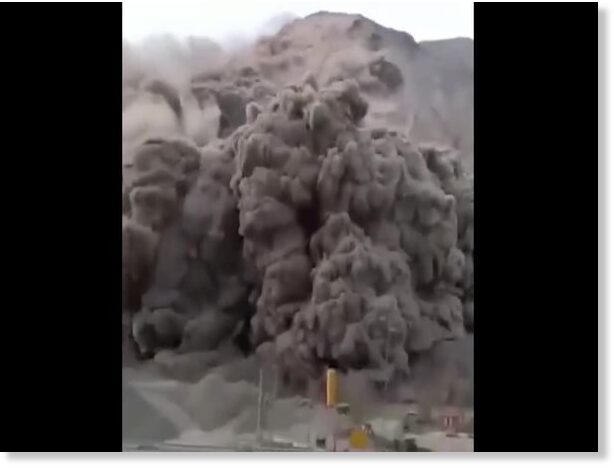
Huge landslide in Haraz, Iran

lands
A large landslide hit Haraz, Iran on April 3rd 2022.

The cause of the landslide is unknown, however it's believed it may have been caused by an earthquake in the region.

The landslide occured near a number of mines, however the mines were reported as empty at the time of the landslide.

Traffic was stopped, with access to the area restricted as debris was cleared.

Authorities are assessing the situation, with warnings remaining in place for further incidents.


Windsock

Unusually large waves flood beach parks along New South Wales coast

waves new south wales australia tsunami
Dog walkers were wiped out by the strong wave at Avoca Beach.
The New South Wales coastline has copped a lashing this weekend with monstrous waves swallowing beaches and wiping out footpaths.

Wild footage taken at Avoca Beach, north of Sydney, on Saturday demonstrated their power as the huge tide thrashed the sand, wiping out two dog walkers.

Two people can be seen walking on the beach before being knocked down and swept up in the swell.


Comment: This comes just 4 days after a deluge of rain in northern New South Wales:

Evacuations after more floods in New South Wales, Australia - up to 15 inches of rain in 24 hours


Snowflake

Spring snow in Croatia

Sparrows are seen on snow-covered branches in Karlovac, Croatia, April 2, 2022.
© Marko LukunicSparrows are seen on snow-covered branches in Karlovac, Croatia, April 2, 2022.
It's spring time. However, unexpected snow hit Croatia on Saturday.


Snowflake Cold

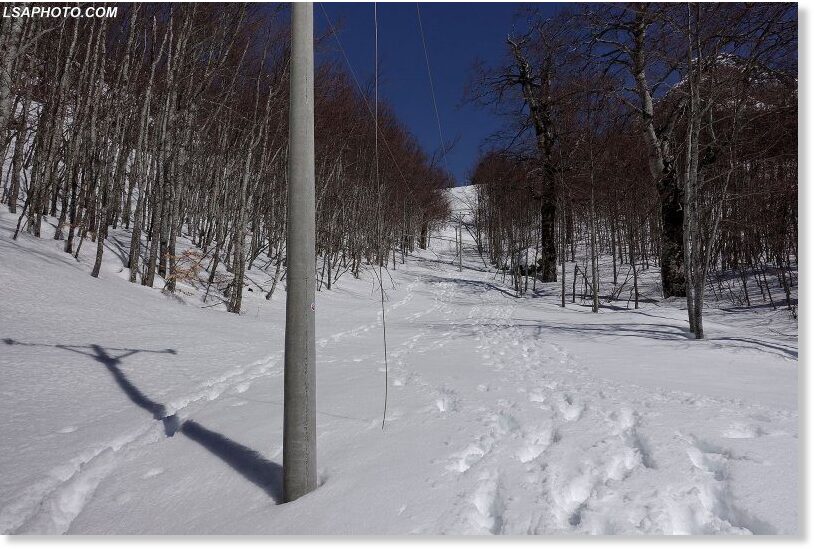
Albania sees 20cms of April snow and -3C temperatures

snow
In Korça Region during the night there was rain and snow.

Ora News journalist Iris Rrezhda, suggests that at altitudes +900 there was snowfall extending to all road axes accompanied by temperatures of -3 degrees.

The thickness of the snow varies from 5 cm to 20 cm.

During the night, the Winter Maintenance Contractors worked during the night, where they cleaned and salted the roads.


(Translated by Google)

Cloud Precipitation

Best of the Web: Heavy rain causes floods and landslides in Rio de Janeiro, Brazil - 31 inches of rainfall in 48 hours - 16 killed (UPDATES)

flood
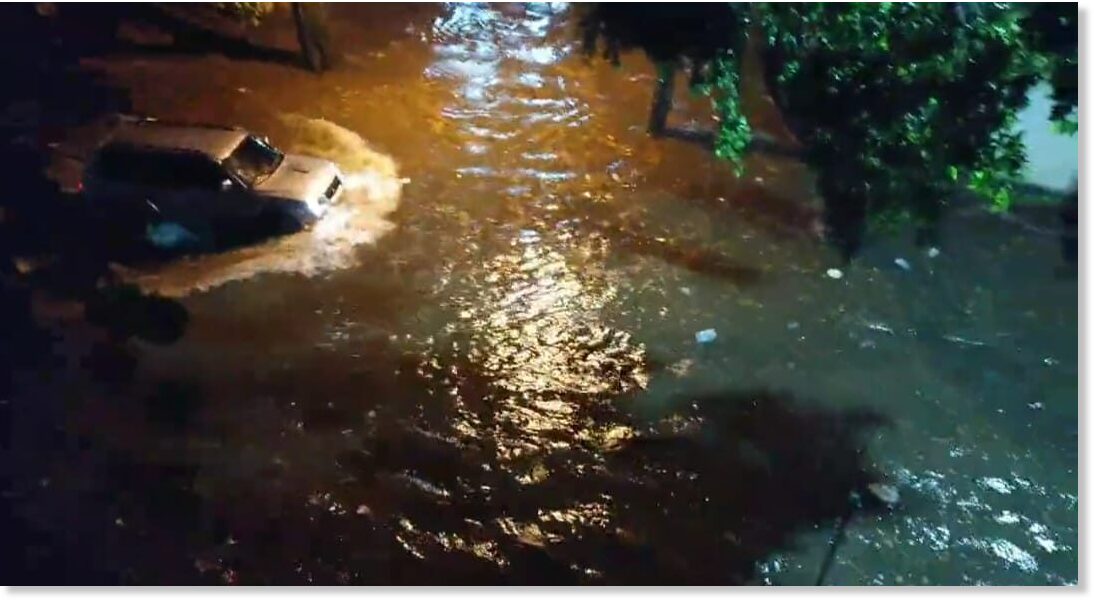
Looking at the impact of heavy rain on Rio de Janeiro in Brazil on March 31st and April 1st 2022.

Heavy overnight rain caused flash floods that filled streets as drain systems were overwhelmed.

A level 4 alert was raised as homes were flooded, destroying possessions. Power and gas supplies were turned off with warning sirens sounded.

Roads were closed with traffic stopped as roads became impassable. As flood waters subsided, streets were filled with debris and garbage.

In rural areas in Rio de Janeiro state, floods and landslides were seen, including in the town of Parati, where roads were closed after a landslide.


Comment: Update 2 April

AFP reports:
Brazil: Floods and landslides kill eight, 13 missing

Two days of heavy rain trigger flash floods and landslides across Brazil's Rio de Janeiro state.

Torrential rains have triggered flash floods and landslides across Brazil's Rio de Janeiro state, killing at least eight people including six children and leaving 13 missing, authorities said on Saturday.

Two days of heavy rain have battered a broad swath of the southeastern state's Atlantic coast, the latest in a series of deadly storms in Brazil that experts have said are being aggravated by climate change.

The latest floods and landslides come six weeks after flash floods and landslides killed 233 people in the scenic city of Petropolis, the Brazilian empire's 19th-century summer capital, also in Rio state.

This time, the areas hit hardest included the tourist town of Paraty, a seaside colonial city known for its picturesque cobblestone streets and colourful houses.

Officials on Saturday there said a landslide in the Ponta Negra neighbourhood had killed a mother and five of her children, ages two, five, eight, 10 and 15.

A sixth child was rescued alive and taken to the hospital, they said.

In all, seven houses were swept away in landslides in the city, and another four people injured. Seventy-one families were forced from their homes, officials said.

Two more victims were killed in the cities of Mesquita and Angra dos Reis, where another 13 people remain missing, said Congressman Marcelo Freixo, who represents the state of 17.5 million people.

In Angra, the victim was a four-year-old girl buried in a landslide, while in Mesquita, 40km (25 miles) northwest of Rio de Janeiro city, a 38-year-old man was electrocuted trying to help another person escape the flooding, media reports said.

The storms turned streets into rivers in several cities on Friday night, sweeping up cars and triggering landslides - a frequent tragedy in the rainy season, especially in poor hillside communities.

Officials in Angra said the city had received 655 millimetres (26 inches) of rain in 48 hours, "levels never before registered in the municipality".

The federal government said it had sent military aircraft to help the local rescue effort, and dispatched national disaster response secretary Alexandre Lucas to the state.
Update 3 April

Floodlist reports:
At least 16 people have lost their lives after record rainfall of over 800 mm in 48 hours triggered flash floods and landslides in Baixada Fluminense and Costa Verde regions of Rio de Janeiro state, Brazil.

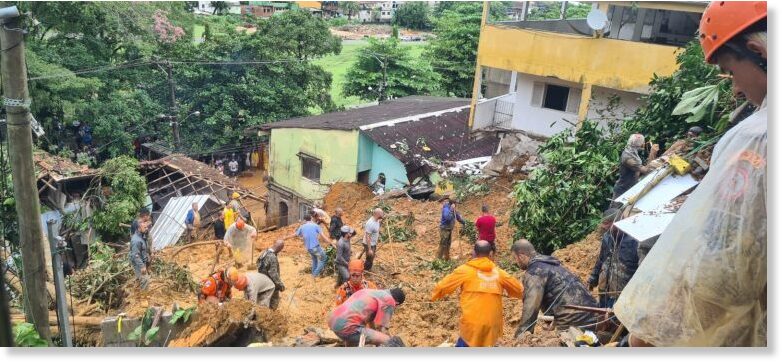
Landslide in Paraty, Rio de Janeiro, Brazil, April 2022.
© Corpo de Bombeiros Militar do Estado do Rio de JaneiroLandslide in Paraty, Rio de Janeiro, Brazil, April 2022.
The tourist town of Paraty in the south western corner of the state was one of the worst affected areas. Local officials reported that a landslide in the Ponta Negra neighbourhood destroyed 7 houses, burying at least 8 residents from the same family. As of 02 April, 7 people had died in the incident with one person rescued alive.

Paraty's Municipal Department of Social Assistance said it had helped 219 affected families in 22 neighbourhoods. Around 71 families had been displaced and move to temporary shelters, including in municipal schools. The municipality declared a State of Public Calamity on 02 April 2022.

Parts of neighbouring municipality of municipality of Angra dos Reis saw a record 809 mm of rain in 48 hours to 02 April 2022. Floods and landslides have caused severe damage and fatalities and the municipality also declared a State of Public Calamity on 02 April 2022.

As of 03 April, Brazil's National Civil Defence reported 8 fatalities and 3 people missing in Angra dos Reis. Fire fighters have rescued 5 people. A total of 181 people have moved from their homes to temporary accommodation.

Local media also reported a weather-related fatality in Mesquita, 40km northwest of Rio de Janeiro city, where a man was electrocuted in flood waters whilst trying to help another person. Municipal authorities said the cause of death was still being investigated. Roads have been closed and homes damaged by floods landslides. Authorities have assisted dozens of affected families. Mesquita recorded 266 mm of rain in about six hours on 02 April, officials said.

Over 230 people lost their lives in two spates of floods and landslides in Petrópolis in the Fluminense Mountain Region of the state State in February and March this year.