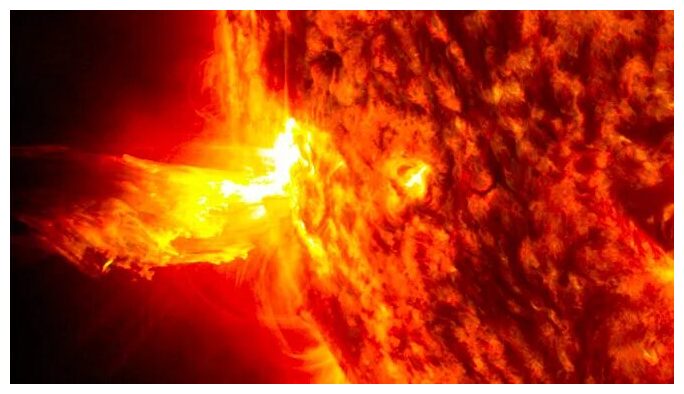
© NASA GoddardFILE PHOTO: A past solar flare seen erupting from the sun on June 20, 2013
The M5-class, medium-strength solar flare was recorded by NASA's Solar Dynamics Observatory as it erupted from the sunspot AR3141 at 7:11 p.m. ET on Sunday (Nov. 6). The flare created a rush of radiation that ionized Earth's atmosphere, according to spaceweather.com.
Sunspots are dark regions on the sun's surface where powerful magnetic fields, created by the flow of electrical charges, knot into kinks before suddenly snapping. The resulting release of energy launches bursts of radiation called solar flares and explosive jets of solar material called coronal mass ejections (CMEs). A CME did accompany this flare, but it was not aimed at Earth.
The solar flare erupted unexpectedly and took scientists by surprise. "Our apologies there was no alert for this event. The flare was impulsive," the solar activity tracking website SpaceWeatherLive wrote on Twitter.
The National Oceanic and Atmospheric Administration (NOAA) classifies solar flares in five categories — A, B, C M and X — based on the intensity of the X-rays they release, with each level having 10 times the intensity of the last. TK