Earth ChangesS


Arrow Down

Pilot whales to be shot after mass stranding

Stranded Whales
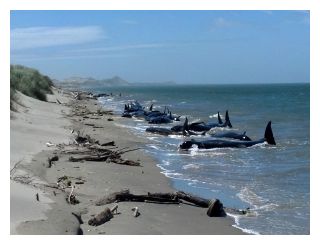
© FairfaxA pod of 28 whales stranded at Farewell Spit, Golden Bay.

A pod of 28 pilot whales stranded on Farewell Spit in Golden Bay are to be shot by DOC staff.

The Department of Conservation told ONE News that it was first alerted about a beaching at 9am, and when volunteers arrived to rescue a second whale, they discovered 28 stranded on the beach.

Twelve whales died in the first hour and DOC staff said the unusually high death rate and the fact that the next high tide is not until tomorrow lunch time forced them to make the decision, along with local iwi and Project Jonah volunteers, to euthanise the rest of the stranded whales.

Staff will use a high-calibre rifle to euthanise the whales and this process will start in the next hour.

"It's really sad and not a situation we take lightly but anything else is inhumane and would prolong their suffering," DOC biodiversity manager Hans Stoffregen said.

"They don't look that flash so putting them all through another two days of this is inhumane."

Bizarro Earth

2 rare tornadoes strike Japan

Two massive tornadoes swept through the western region of Japan on Wednesday. No injuries or damages were reported. Tornadoes are relatively rare in Japan and the agency has issued further warnings of strong winds, lightning and tornadoes.


Bizarro Earth

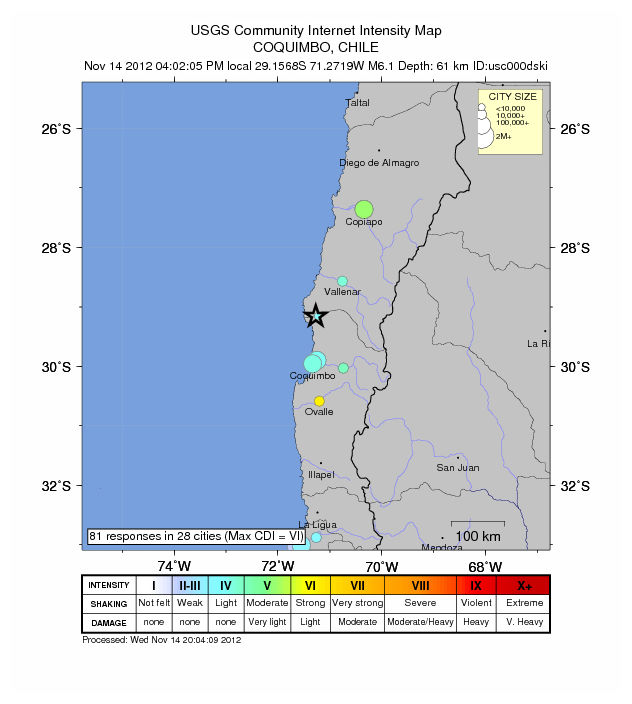
USGS: Earthquake Magnitude 6.1 - SW of Vallenar, Chile

Chile Quake_141112
© USGS
Event Time
2012-11-14 19:02:05 UTC
2012-11-14 16:02:05 UTC-03:00 at epicenter

Location
29.157°S 71.272°W depth=61.8km (38.4mi)

Nearby Cities
82km (51mi) SW of Vallenar, Chile
83km (52mi) N of La Serena, Chile
88km (55mi) N of Coquimbo, Chile
111km (69mi) NNW of Vicuna, Chile
480km (298mi) N of Santiago, Chile

Technical Details

Bizarro Earth

No tsunami threat from strong quake in Gulf of Alaska

A strong earthquake in the Gulf of Alaska this morning did not generate a tsunami, officials said.

The quake, which struck at 10:42 a.m., had a magnitude of 6.4 and was centered 349 miles southeast of Anchorage at a depth of 34 miles, according to the U.S. Geological Survey.

The Pacific Tsunami Warning Center in Ewa Beach said there was no tsunami threat. The West Coast and Alaska Tsunami Warning Center also said there was no threat to that region.

There were no reports of damage despite tremors being felt across a large part of southern Alaska. A series of aftershocks also were recorded.

Natasha Ruppert, a seismologist with the Alaska Earthquake Information Center, said this was the largest earthquake in the region since 1987 and 1988, when quakes of magnitude 7.8 and 7.7, respectively, struck.

Bizarro Earth

USGS: Earthquake Magnitude 6.0 - Off the coast of Aisen, Chile

Chile Quake_131112
© USGS
Event Time
2012-11-13 04:31:27 UTC
2012-11-12 23:31:27 UTC-05:00 at epicenter

Location
45.744°S 77.142°W depth=9.7km (6.0mi)

Nearby Cities
338km (210mi) W of Puerto Chacabuco, Chile
348km (216mi) W of Puerto Aisen, Chile
395km (245mi) W of Coihaique, Chile
404km (251mi) SW of Puerto Quellon, Chile
1472km (915mi) SSW of Santiago, Chile

Technical Details

Satellite

CO2 is powerful stuff, now causes satellites to be threatened in orbit!

Image
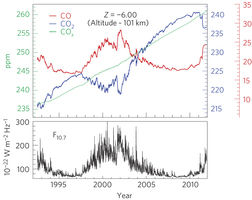
Shown are VMRs of CO (red), CO2 (blue) and COx = CO+CO2 (green). The data are plotted according to the colour-coordinated y axes. The bottom panel shows the 10.7 cm solar radio flux (F10.7), a proxy for solar ultraviolet irradiance.
From the "CO2 is there anything it can't do department" comes this ridiculous piece of research making the rounds in the MSM that worries about something that has not been observed to happen...oh, wait.

From Nature Geoscience, note the text I made red, because the paper is based on a premise that has not been observed yet. They only measured up to 35 km, but at the graph at right from the paper, interpolated to 101 km. My guess is that next we'll have proxies for satellites with some high altitude aircraft measurements. /sarc Note the correlation with 10.7 cm radio flux. One wonders how this would look different if the sun was not so quiet right now.

Snowflake Cold

Brutus breaks snowfall record in Helena, Montana

Image
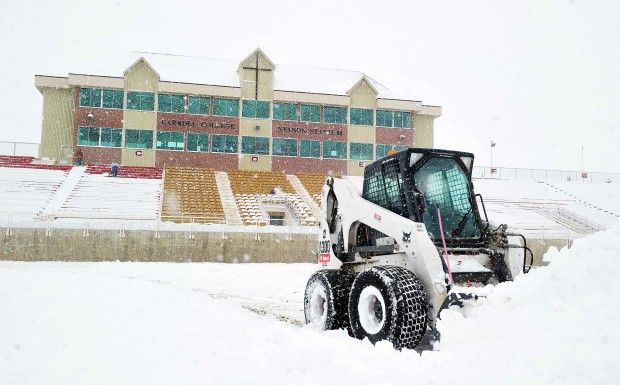
Maintenance crews work to remove snow from Nelson Stadium Friday for Carroll College's final game of the season Saturday against Dickerson State. In the last 48 hours the Helena area has received about 12 inches of snow, which made for intense work to clear the stands and field.
Helena crushed a snowfall record Thursday, and was on the way to doing the same Friday as winter storm Brutus brutalized the town.

Helena saw 8.8 inches of snow Thursday. The previous snowfall record for Nov. 8 was 2.3 inches, set in 1903.

Zach Uttech, a meteorologist with the National Weather Service in Great Falls, said the south-west flowing air mass from Canada has created an ideal scenario for widespread snow over the region, blanketing Montana with an abundance of snow.

Total snow accumulation could hit nearly 14 inches in downtown Helena, which would put Thursday and Friday among the top for highest snowfall in a two-day period for the month of November, Uttech said. As of noon on Friday, the two-day total was 12.6 inches.

Coffee

Coffee beans in danger of extinction

Image
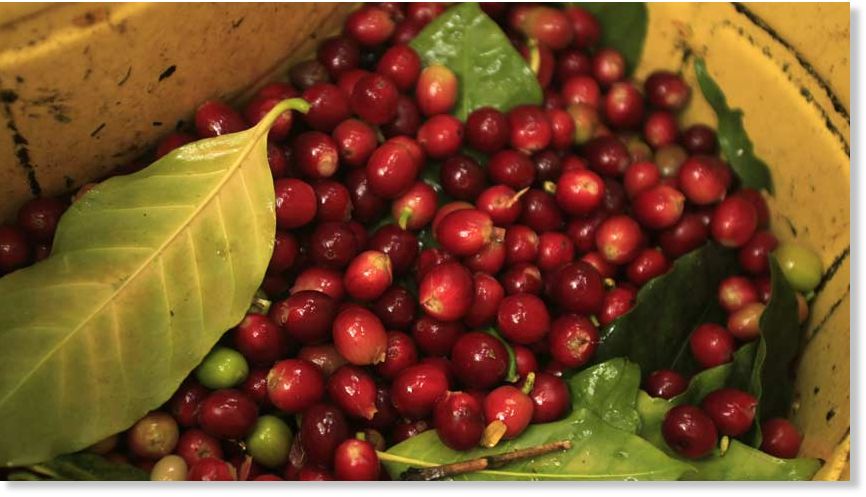
© Pilar Olivares/ReutersArabica beans go into 70 per cent of the world's coffee but the plants are highly vulnerable to climate change, pests and disease.
Climate change could kill off prized Arabica plants by 2080.

A cup of morning coffee could be much harder to find, and much more expensive, before the century is out thanks to climate change and the possible extinction of wild Arabica beans.

That's the warning behind a new study by U.K. and Ethiopian researchers who say the beans that go into 70 per cent of the world's coffee could be wiped out by 2080.

Researchers at the Royal Botanic Gardens in Kew and the Environment and Coffee Forest Forum in Addis Ababa, Ethiopia looked at how climate change might make some land unsuitable for Arabica plants, which are highly vulnerable to temperature change and other dangers including pests and disease.

They came up with a best-case scenario that predicts a 38 per cent reduction in land capable of yielding Arabica by 2080. The worst-case scenario puts the loss at between 90 per cent and 100 per cent.

Bizarro Earth

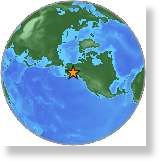
USGS: Earthquake Magnitude 6.4 - 248km S of Cape Yakataga, Alaska

Image
© USGS
Event Time
2012-11-12 20:42:15 UTC
2012-11-12 10:42:15 UTC-10:00 at epicenter

Location
57.544°N 142.889°W depth=55.2km (34.3mi)

Nearby Cities
248km (154mi) S of Cape Yakataga, Alaska
502km (312mi) W of Juneau, Alaska
544km (338mi) SE of Anchorage, Alaska
549km (341mi) WSW of Whitehorse, Canada
554km (344mi) SE of Knik-Fairview, Alaska

Fish

Hundreds of dead fish wash up in St Peters Billabong, Australia

dead fish
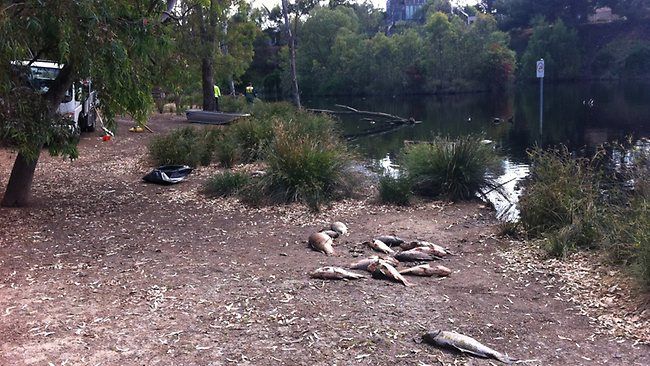
© adelaidenow Dead fish washed up at St Peters Billabong.
HUNDREDS of dead fish have been found washed up in St Peters Billabong.

Norwood, Payneham & St Peters Council workers were at the billabong, in St Peters Park, earlier this afternoon removing the dead fish.

A Norwood, Payneham & St Peters Council spokeswoman said a lack of oxygen in the water caused by decomposing leaves killed the fish.

She said the leaves swept into the billabong were predominantly from Second Creek.

The council was not concerned about the health of other wildlife in and around the billabong.

In 2005, hundreds of carp in the billabong were killed by dirty stormwater.

A faulty rubbish trap was believed to have contributed to those deaths.