Earth ChangesS


Question

Seal discovered in landlocked British lake


St. Ives, England, -- Experts said a seal discovered 50 miles from the British coast likely made its way through flood waters to a landlocked lake.

Graham Elliott, area manager for the Royal Society for the Protection of Birds, which also works to safeguard other forms of wildlife, said the seal was spotted at the Fen Drayton Lakes reserve, near St. Ives, England, about 50 miles from the coast, The Scotsman reported Wednesday.

"It would be the first time this has happened, to my knowledge, that one has made its way into the lake. The floods normally come from ground water rather than the river, and so it must have worked its way up in a ditch or something like that," Elliott said. "It would be extremely unusual and it would become an attraction to visitors"

Sun

Latest paper demonstrates that climate responds to short and long-term changes in solar activity

Image
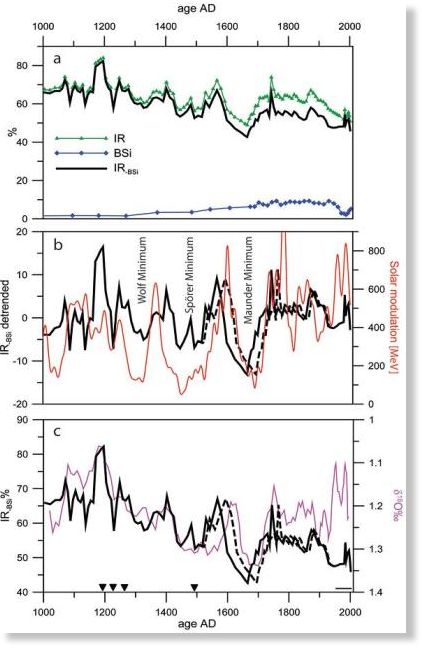
IRBSi is the proxy for precipitation/climate change and shows good agreement with solar activity. Figure 12. The comparison between the graphs of the IR-BSi and that of the solar cycles shows good agreement between the percentage of mineral materials of allochthonous and solar cycles reconstructed on the basis of changes in concentrations of 14 C in macrofossils. A good agreement is also evident between the concentrations of 18 O of foraminifera in the Norwegian Sea and the index IR-BSi.
(Via the Hockey Schtick) A new peer reviewed paper published in The Holocene finds a significant link between solar activity and climate over the past 1000 years. According to the authors:
"Our results suggest that the climate responds to both the 11 yr solar cycle and to long-term changes in solar activity and in particular solar minima."
The authors also find "a link between the 11 yr solar cycle and summer precipitation variability since around 1960″ and that:
"Solar minima are in this period associated with minima in summer precipitation, whereas the amount of summer precipitation increases during periods with higher solar activity."
Ice Cube

'Forget global warming, Alaska is headed for an ice age'

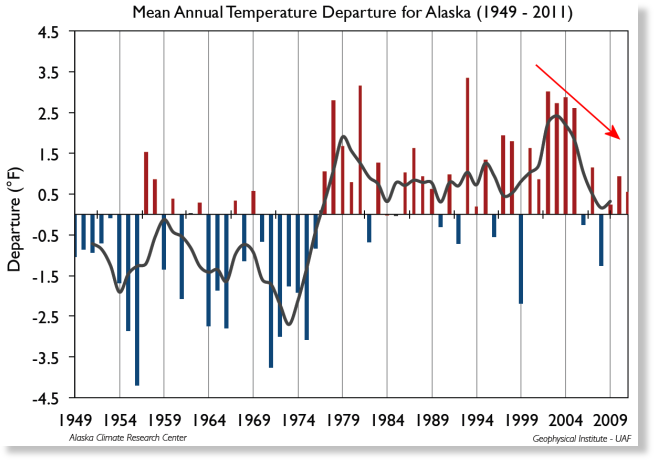
Alaska is going rogue on climate change. Defiant as ever, the state that gave rise to Sarah Palin is bucking the mainstream yet again: While global temperatures surge hotter and the ice-cap crumbles, the nation's icebox is getting even icier. That may not be news to Alaskans coping with another round of 50-below during the coldest winter in two decades, or to the mariners locked out of the Bering Sea this spring by record ice growth.

Then again, it might. The 49th state has long been labeled one of the fastest-warming spots on the planet. But that's so 20th Century. In the first decade since 2000, the 49th state cooled 2.4 degrees Fahrenheit. But now comes cooling. Researchers blame the Decadal Oscillation, an ocean phenomenon that brought chillier surface water temperatures toward Alaska. Some contend the Pacific Decadal Oscillation is harming the state's king salmon runs, too.
Image
Full story here

Igloo

Delhi: Coldest day in 44 years

Delhi witnessed its coldest day on Wednesday in the past 44 years, with the maximum temperature falling sharply to 9.7 degree Celsius. Residents woke up to a foggy morning, with the minimum temperature dipping to 4.8 degree Celsius.

Poor visibility affected schedules of nearly 30 flights and led to diversion of an international flight to Mumbai. In Uttar Pradesh, the death toll continued to mount, with 15 more people succumbing to the chill in various parts of the state.

Officials said four people died in Muzaffarnagar which remained the coldest place with 0.6 degree Celsius, followed by three in Mathura, two each in Agra, Bulandshahr, Etah and one each in Barabanki and Mirzapur.


With this, the death toll in the state this winter has reached to 107.

Night temperatures remained below normal in most parts of the state including Moradabad, Agra, Meerut, Gorakhpur, Lucknow, Bareilly and Kanpur divisions.

Igloo

Frozen Alaska bucking global warming trend

Alaskan Weather
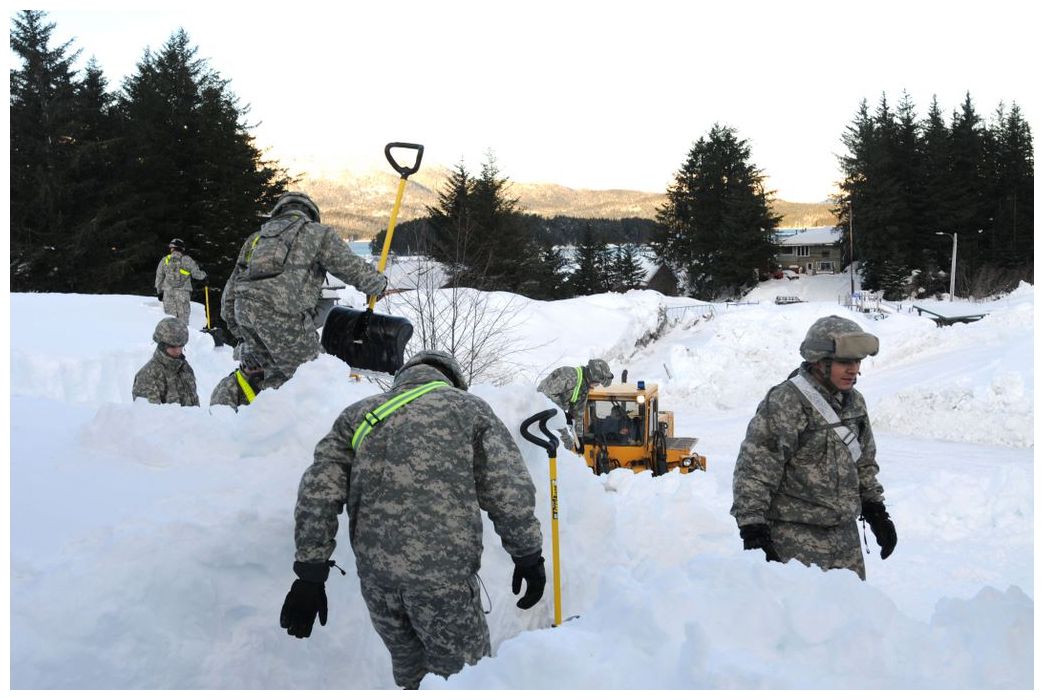
© Spc. Balinda O'Neal, Alaska National Guard Public AffairsAlaska National Guardsmen clear a building roof in Cordova, near Anchorage, on Jan. 9, 2012.
As the rest of the world contends with unusually warm temperatures and scorching drought, Alaska has been bucking the trend since 2000 by reporting some of the coldest winters on record.

Like most of the planet, the state has been heating up steadily over the past century and is frequently cited as one of the fastest-warming areas on the planet, according to the Alaska Dispatch, an online newspaper. The Alaska Climate Research Center at the University of Alaska Fairbanks notes the state was warming at roughly twice the pace as the rest of the planet, particularly from the 1970s into the 1990s, reports the Dispatch.

But since 2000, nearly all the National Weather Service monitoring stations sprinkled across the vast state have reported colder-than-average temperatures. The station at King Salmon on the Alaska Peninsula, for example, experienced an average 4.5 degree Fahrenheit (2.9 degrees Celsius) drop in temperature over the course of the first decade of this century.

Snowflake

So much for 'global warming': Snow coming to southwestern Texas

Image
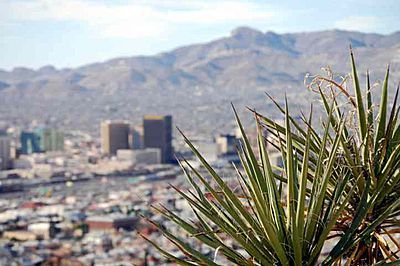
The City of El Paso, Texas, where the snow line has reached in recent years, despite the global warmists' predictions that snow would soon be a thing of the past for places far to the north.
An upper-air disturbance slated to move into the southwestern United States has the potential of bringing wintry weather to portions of extreme southern New Mexico and the Big Bend Country of Texas beginning on Thursday.

While the best chance for snow will be across the Trans-Pecos, a general coating to perhaps an inch of snow will likely fall before it is all said and done.

The upper-air disturbance will begin to enter the Southwest on Wednesday night and slowly ride along the United States and Mexico boarder. This disturbance will likely stick around through Friday before lifting northeastward into the southern Plains.

As the system tracks into the Southwest, it will draw Pacific moisture from the south and Gulf of Mexico moisture from the east.

Arrow Down

Update: Second sinkhole opens on same street in Harrisburg, Pennsylvania, forcing almost 30 homes to evacuate

Image
© Brian Johnson
A second sinkhole has opened along North 4th Street in Harrisburg, leading to possible evacuations for some residents.

City officials said the second hole opened about 11 p.m. Monday night, resulting in the loss of water, gas and sewer service to the neighborhood.

"Due to the prolonged loss of these utilities, the city's Department of Public Works is recommending the immediate evacuation of affected residents at addresses 2102 to 2163 N.4th Street," a city news release states.

Twenty-nine homes are affected. The evacuation is not an order, just a recommendation by the city.

Cloud Lightning

Extreme weather events and Earth changes in December 2012

Strong earthquakes, multiple fireballs, record flooding, record snowfall, record cold temperatures, record tornado outbreaks, enormous sinkholes, super-typhoons, 'two suns' in the sky, volcanic eruptions, mass murder of innocents... all in just one month. What on (or off) Earth is going on?

Source


Arrow Down

Trash truck gets stuck in Harrisburg, Pennsylvania sinkhole

Image
© Matthew Kemeny/The Patriot-NewsA Harrisburg trash truck get stuck in a sinkhole in uptown this morning.
Harrisburg -- North Fourth Street is closed between Woodbine and Maclay streets in uptown after a sinkhole opened up this morning, catching the back wheels of a city trash truck.

Officials shut off water to that section of the street as they prepared to tow the truck from the gaping hole around 11 a.m.

Officials did not have an idea when the road will reopen.

Windsock

Extreme weather and weird phenomena of the second half of December 2012