Earth ChangesS


Snowflake Cold

January could get progressively colder for most of U.S.

Snow
© UnknownMeteorologists predict that the second half of January will bring significantly colder patterns.
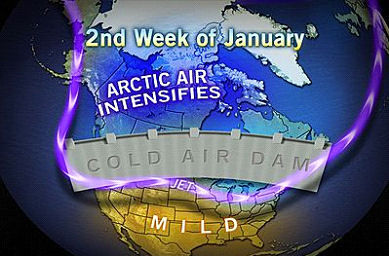
AccuWeather reports that beginning near or just past the middle of the month, signs are pointing toward waves of frigid air moving southward across North America from the North Pole.

Much of the nation has been experiencing higher-than-average temperatures and lower heating bills so far during the cold weather season, with the exception of some bouts the past couple of weeks.

However, there are signs of a potential change on the way beginning during the second half of January.

A phenomenon known as sudden stratospheric warming has occurred in the arctic region during the past few days. The stratosphere is located between 6 miles and 30 miles above the ground.

Meteorologists predict that the second half of January will bring significantly colder patterns. Often when this occurs, it forces cold air to build in the lowest layer of the atmosphere then to drive southward.
SSC map
© AccuWeather

Snowflake

Snow blankets parts of Middle East, Jerusalem

Image
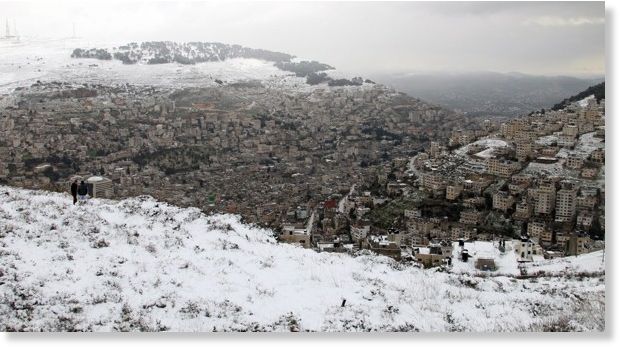
© ALAA BADARNEH - EPAA general view of the snow covered West Bank city of Nablus, taken from a hillside overlooking the city during snowy weather, on 10 January 2013.
Four to six inches of snow fell in Jerusalem Wednesday night into Thursday morning, snarling traffic and closing schools and government offices. The snow in Jerusalem resulted from a large storm system that produced days of inclement weather in the Middle East. Initially, the storm brought mainly wind and heavy rains that caused flooding and damage in some areas.

But as cold air wrapped into low pressure tracking through the region, temperatures plummeted and snow reports spiked. Up to three feet of snow fell on Mount Hermon in northern Israel the Inquisitr reported. Snow was also observed in areas of the West Bank, Turkey, Jordan, Lebanon, Syria and Egypt.

The cold, stormy weather in Syria brought further suffering in war-ravaged cities and for refugees. "The United Nations says millions of people inside Syria and 600,000 refugees outside the country need assistance, including food, blankets and warm clothes," Voice of America wrote.

Ice Cube

'Lowest temperaure in Bangladesh's history' brings at least 80 deaths

Image
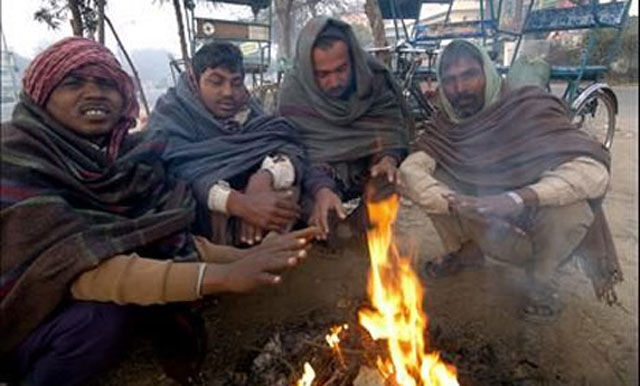
A cold snap which saw temperatures drop to 40-year lows in Bangladesh has killed around 80 people, officials said.

According to AFP, Shah Alam, the deputy head of the weather office, said the lowest temperature was recorded at 3 degrees Celsius in the northern town of Syedpur.

He said the last time the temperature dropped below that level was in February 1968 when Bangladesh was still part of Pakistan.

"The temperature is the lowest in Bangladesh's history," he said.

The Red Crescent said hospitals were packed with patients suffering respiratory illness.

The society's general-secretary Abu Bakar said impoverished rural areas had been worst hit as many people could not afford warm clothing or heating.

Snowflake Cold

Unprecedented cold spell breaks 50-year records in Pakistan

Image
© thenewstribe.com
The winter, normally a season of feast and joy in the region, otherwise known for its enervating summers, has brought with it a strange phenomenon in recent weeks. Record chill has sent people scampering to keep themselves warm, and made commuting a dicey task, especially at night.

The strange thing about this phenomenon this season has been that it gripped the Pothohar region and the plains of Khyber Pakhtunkhwa as well, contrary to the trend of the past few decades when nearly blinding fog mostly affected the plain areas of the Punjab.

This time around, the 50-year cold records in the Punjab plains were broken, while also plunging the wide swathes of Pothohar and Khyber Pakhtunkhwa in an unprecedented cold spell, which spread over a fortnight or even three weeks, with weather pundits saying that maximum temperatures fell by as much as 10 degree Celsius.

After shivering even in the daytime during the two days in the 'aftermath' of fog-induced cold, Tuesday night brought with it some cheers for the winter-weary people, as a cloudy sky prevented fog to accumulate, also bringing visibility level back to normal for the traffic and keeping the temperatures from dipping to sub-zero level, as was seen in the previous two weeks.

Sun

Hundreds of U.S. counties labeled disaster areas due to drought

Image
© CNNThe drought has had a negative impact on corn in Le Roy, Illinois. The hottest year on record is expected to drive up food prices by 2013 due to lower crop harvests.
The U.S. Agriculture Department cited drought and heat on Wednesday in designating 597 counties in 14 states as primary natural disaster areas.

"As drought persists, USDA will continue to partner with producers to see them through longer-term recovery, while taking the swift actions needed to help farmers and ranchers prepare their land and operations for the upcoming planting season," Agriculture Secretary Tom Vilsack said in a statement.

The designations make qualified farmers in the areas eligible for low-interest loans, the agency said.

Affected counties have suffered severe drought for eight consecutive weeks, which qualified them for the automatic designation.

Richard Oswald, a 62-year-old farmer in Missouri's Atchison County, said he has been hit hard by the drought but was not sure whether he would take advantage of the drought designation for his county by getting a low-interest loan.

Snowflake Cold

Heavy snow, torrential rain, gale-force winds batter Greece

Image
© ekathimerini
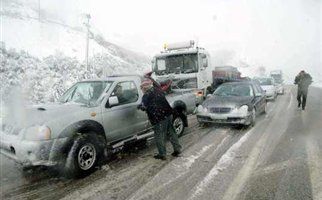
Bad weather conditions of heavy snowfall, strong torrential rains, sub-zero temperatures and gale-force winds continued to batter parts of the mainland and the Aegean Sea islands in Greece on Wednesday for a third day this week, disrupting land and sea transport.

Several mountainous areas in particular in northern and central provinces, some suburbs of the Greek capital, as well as the southern island of Crete, have been most affected with blocked motorways even for vehicles with snow chains and closure of schools.

As winds of up to 8 on the Beaufort scale sweep the Aegean Sea, a ferry boat crashed into the dock of a port at the eastern island of Lesvos with no injuries or major damage caused, local authorities said.

The Greek National Meteorological Service (EMY) reported the lowest temperature over the past few days, as the thermometer plunged to -11 Celsius in the northern city of Nevrokopi. Experts at EMY forecast that the cold snap will subside on Thursday.

Cloud Grey

Red dust sunset in Australia - Freakish dust storm settles over Western Australia

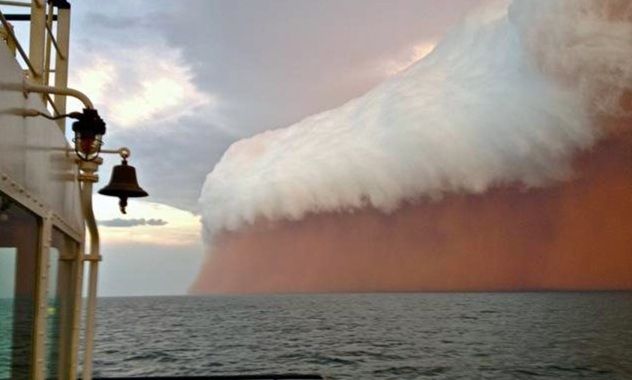
Mother Nature put on a spectacular display off the coast of Onslow yesterday, where a menacing-looking storm was captured on camera by a tug boat worker. Jurien Bay man Brett Martin and his colleagues were working west of False Island when the thunderstorm, which had gathered dust and sand as it developed, passed over Onslow and out to the Indian Ocean. Mr Martin said the storm built up in a matter of minutes.
Image
© Brett Martin/perthweatherlive.com
"We were steaming along in the boat just before sunset and the storm was casually building in the distance, then it got faster and faster and it went from glass to about 40 knots in two minutes," he said. "It was like a big dust storm under a thunderhead, there was a lot of lightning but not a lot of rain." Bureau of Meteorology duty forecaster Austen Watkins said the stunning view was created as wind and rain caused the storm to dump the sand and dust it had ingested while passing Onslow.

Additional images

Ice Cube

Phoenix, Arizona to break 25-year record low - 15 degrees below normal

Crank up the heat: It's going to be plenty cold in the Valley this weekend. Weather analysts are forecasting four days of freezing temperatures, starting Saturday night, running through Tuesday. The last time the Valley had four straight sub-freezing mornings was 25 years ago. Rain also is expected to arrive between 9 p.m. and midnight Thursday.

Chris Kuhlman with the National Weather Service said it will be a struggle to reach 50 degrees Friday.

"It will be very cold. Some areas will see the mid-20s for lows," Kuhlman said. "Other areas will be right at the freezing mark and below. This is a very large system coming off the north Pacific and very cold.

"Right now it's going across California and then we have a reinforcing shot of cold air coming down from western Canada on Sunday and that will keep our area temperatures about 15 degrees below normal."

Phoenix

Australian heatwave nears 50C inland as severe fire threat declared

Image
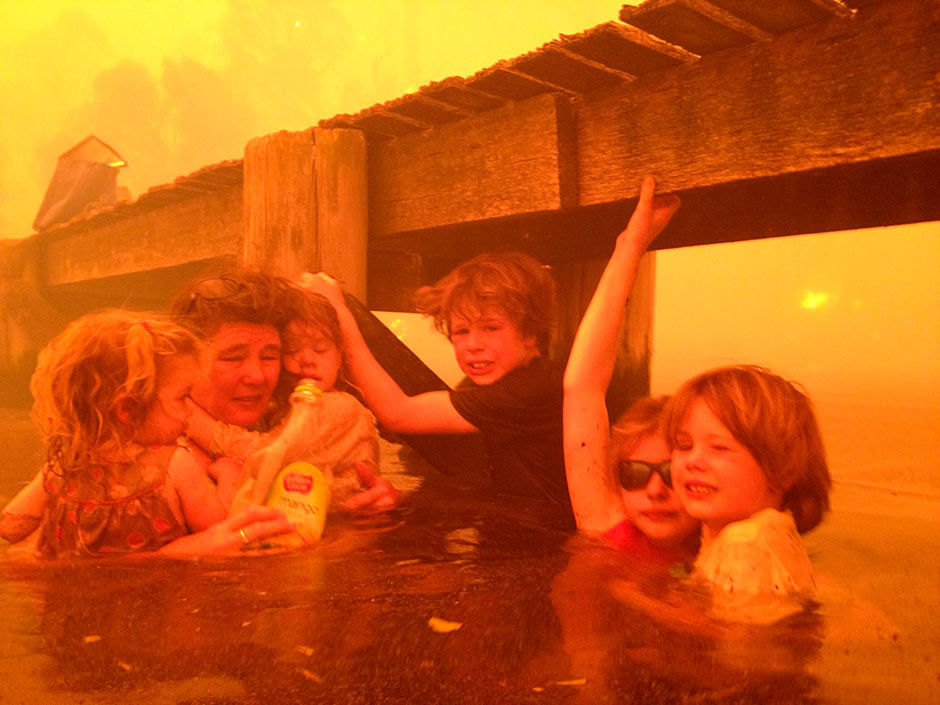
© Tim Holmes/AP Five young children and their grandmother huddled together under a jetty in the Tasmanian town of Dunalley were photographed by their grandfather Tim Holmes. The family was forced to stay in the water for several hours as homes around them were razed to the ground. Tammy Holmes, second from left, and her grandchildren, two-year-old Charlotte Walker, left, four-year-old Esther Walker, third from left, nine-year-old Liam Walker, eleven-year-old Matilda, second from right, and six-year-old Caleb Walker, right, take refuge under a jetty as a wildfire rages near-by.
Danger rating is two levels down from 'catastrophic' warning after two days of relative cool, but temperatures rising again

Australia is bracing for more potentially dangerous fires, with temperatures on Friday predicted to soar close to 50C in the centre of the continent and up to 46C in parts of New South Wales.

The return of the scorching heat follows two days of relative cool, during which fire crews tackled more than 100 blazes still burning in New South Wales and Victoria, and built containment lines for more outbreaks.

"We are entering a very challenging fire weather period over the next three days," said Brydie O'Connor, of the New South Wales rural fire service. "We'll have 40 degree-plus days in many parts, with a number of fires from Tuesday still burning. Add that to some very strong north-westerly winds and we've got a very bad situation."

Comment: If the suggestion here is that Britain's lower so-called 'carbon footprint' than Australia's in some way implies that Britain is doing its part to save the planet, then, like everyone else taken in by the green movement, the author is completely deluded as to what is really behind 'climate change'.

Getting back to the real issue at hand, we wonder if fireballs reaching the lower atmosphere were at least partly responsible for sparking these wildfires?

Reign of Fire: Meteorites, Wildfires, Planetary Chaos and the Sixth Extinction


Sun

Extreme heat decimates Australian bat colony

flying fox
© UnknownWildlife Rescue South Coast Inc’s Gerardine Hawkins with one of the rescued grey-headed flying foxes from the local colony that was decimated in Tuesday’s extreme heat.
Tuesday's heat episode has decimated one of the Shoalhaven's flying fox colonies.

As temperatures soared above 40 degrees the grey-headed flying fox, which is listed as vulnerable, fell victim to the heat with at least 1000 members of the 11,500 strong colony being found dead.

Volunteers from Wildlife Rescue South Coast along with National Parks staff spent numerous hours in the colony on Tuesday trying to save the dying animals.