Earth ChangesS


Sun

NASA's alarming map of the worst Australian heat wave on record

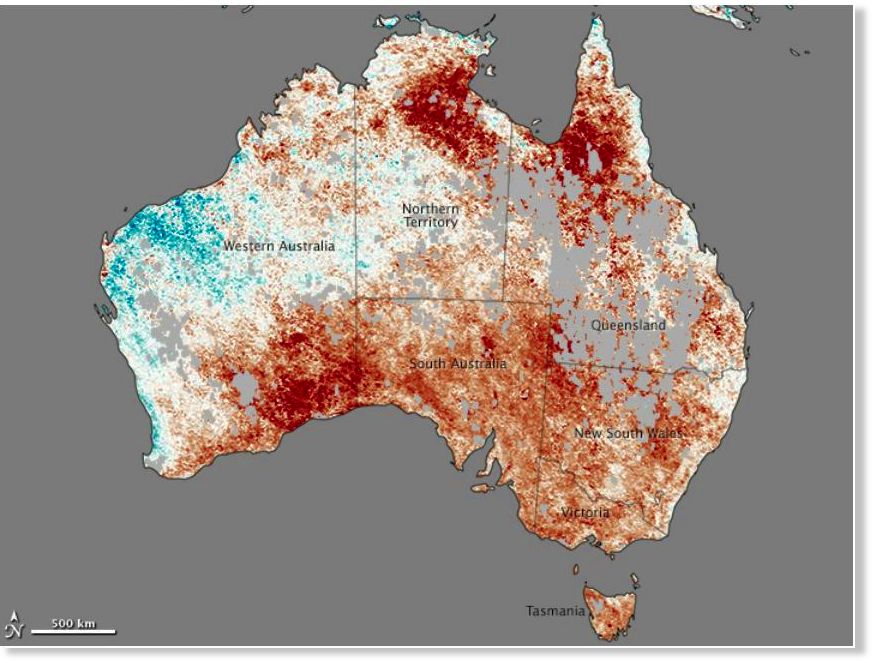
Although temperatures around the country have receded this week, many Australians no doubt are still having fever dreams of their country's recent skull-boiling weather. The past four months have been the hottest ever recorded on the continent, with a new countrywide high temperature on January 7 busting the mercury bulb at 104.6 Fahrenheit. (It wasn't much better that night, with A/C units struggling to compensate for 90.3-degree heat.)

But how far and wide did this steamy bulk of hotness spread? The folks over at NASA have revealed the answer in the form of a heat map, and it looks like this was truly a monster-sized "persistent and widespread heatwave event," as the Australian Bureau of Meteorology has dubbed it. Here it is, the surface-temperature anomalies for January 1 through 8 as observed by satellite:

Image

Ice Cube

Ice Storm expected for Chicago, Detroit, St. Louis

ice storm map
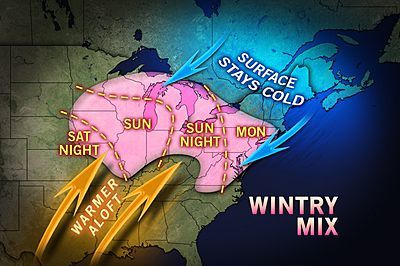
© AccuweatherOn the southern and western fringe of the ice/wintry mix area, the ice is likely to be brief, but even a thin coating can lead to a few hours of dangerous travel. Farther north and east, an extended period of freezing rain and sleet is possible. If mostly freezing rain occurs, widespread icy roads are likely and the risk of power outages will increase.
Prior to the return of warmer weather, an ice storm will affect areas from northern and eastern Missouri to Michigan, southern Ontario and the mid-Atlantic spanning this weekend into the start of next week.

A storm bringing rain to Southern California to end this week will roll into a zone of departing Arctic air and cold ground over the Midwest.

As AccuWeather.com Staff Writer Grace Muller alluded to on Thursday, a broad area of freezing rain and sleet is in store, lasting from a couple of hours in some locations to an entire day in others.

Major cities that have the potential for a period of freezing this weekend include Omaha, Neb.; St. Louis, Mo.; Des Moines, Iowa; Madison, Wis.; Chicago, Ill.; Indianapolis, Ind.; Detroit, Mich.; Pittsburgh, Pa.; and London, Ontario.

Snowflake

UK: Flood fears as snow turns to rain and temperatures rise

M6
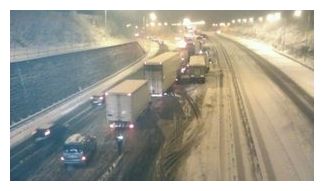
© n/a'Carnage' on the M6 overnight
There are fears flooding is on the way, with forecasters predicting the recent snow will make way for heavy rain and milder temperatures.

Overnight, heavy snow across parts of the UK has caused major travel disruption with motorists on the M6 were forced to abandon their cars in the early hours of Saturday morning.

Snow grounded planes at Leeds Bradford Airport.

There has been flooding in Wales, and there are 20 flood warnings in place.

Temperatures are expected to reach an average 4C on Saturday.

As well as 13 flood warnings for south-west England and Wales, the Environment Agency has more than 83 flood alerts in place.

Bizarro Earth

Large sinkhole swallows tree near DeLand, Florida

Sinkhole DeLand
© 6 NewsHole is 32 feet wide, 30 feet deep, police say
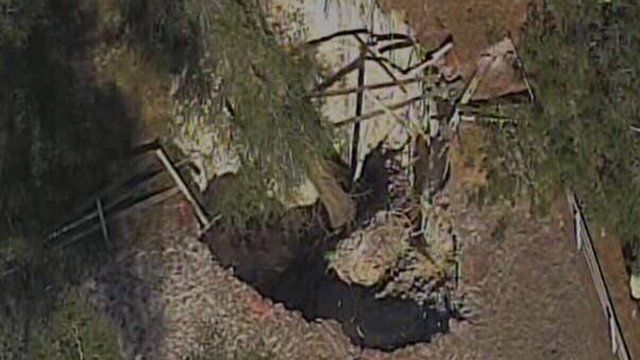
Officials are investigating a "good-sized" sinkhole in DeLand that has swallowed a large tree and a portion of a fence.

The Volusia County Sheriff's Office said the sinkhole opened near Mill Road and State Road 17. Officials estimated the hole to be 32 feet and 30 feet deep.

Local 6 News helicopter Sky 6 flew over the hole, which is located in a rural area of DeLand. A home is located about 50 yards from the sinkhole.

Stop

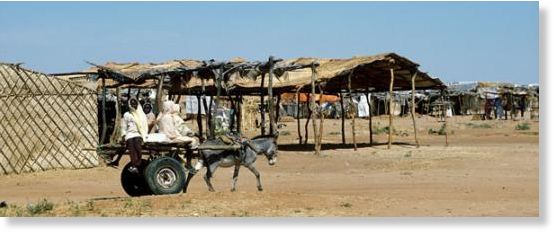
15 donkeys die of 'mysterious disease' in Sudanese refugee camp

Image
© Unknown
Sudanese refugees living at the Djabal camp in eastern Chad revealed that 15 donkeys have died in the past month due to a "mysterious disease" while many others are infected with it.

A camp's activist told Radio Dabanga on Friday that an organization that had been providing veterinary care at the site for the last years halted its work and closed the clinic.

Moon

4.8 Earthquake hits near Bologna, Italy

Bologna earthquake
© BBC News
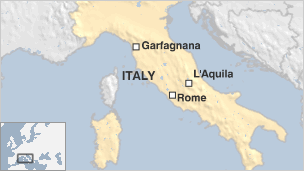
An earthquake has shaken parts of northern Italy, forcing some residents onto the streets.

The magnitude-4.8 quake struck at a depth of 15.5km (9.6 miles) 35km north of the city of Lucca, officials said.

The tremor was felt as far away as Milan and Florence, Italian media say. There were no immediate reports of injuries or damage.

Igloo

Snow and ice blanket Germany

Snowing in Germany
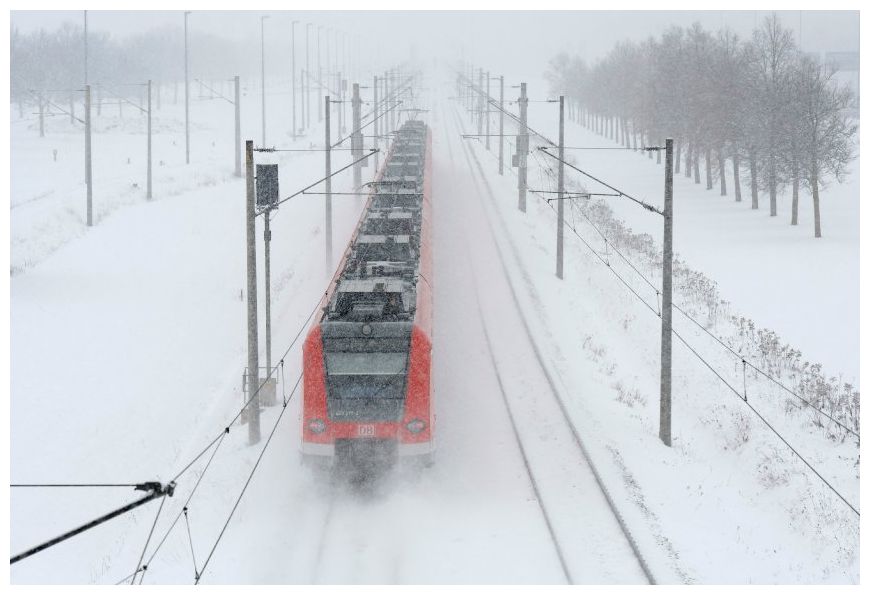
© Spiegel Online InternationalA commuter train battles snow to reach Munich's airport.
Winter weather threw travel across Germany into turmoil early this week. Snow blanketed much of the country, causing hundreds of cancelled flights and road closures. Conditions began to improve on Tuesday, but not before skiers at ice skaters could have a little fun.

Jack Frost continued to bite at Germany's nose on Tuesday, with snow still falling across many parts of Germany on Tuesday, following heavy snowfall on Sunday and Monday, the German Weather Service (DWD) reported.

The service said that 3.5 billion tons of snow fell in the country on Sunday alone. With winter weather continuing, that figure could rise to 6 billion tons by Wednesday.

Winter weather conditions led to frustrating travel conditions across the country. At Frankfurt's airport, Germany's largest, about 543 or 1,190 planned flights were cancelled Monday, according to German news agency DPA. In Munich another 200 flights were grounded. Delays affected air traffic at every German airport as crews de-iced planes and snow-removal equipment was used to clear gates.

Cloud Precipitation

Extreme weather threatens Queensland, storm tides and 400mm of rain expected

flooding Gracemere and Rockhampton
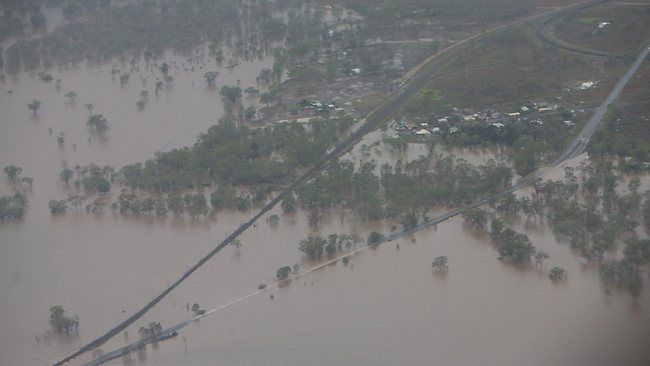
© Peter Wallis Source: The Courier-MailAerials of flooding between Gracemere and Rockhampton, central Queensland.
The central Queensland city of Gladstone faces a one-in-100-year flood, and up to 1600 homes near Brisbane could be inundated as extreme weather hits.

Storm tides, extremely heavy rain and emergency dam releases have combined to present the state with its worst weather event since 2011.

Emergency flood alerts have been issued for several Queensland towns overnight with residents being told to get to higher ground.

Info

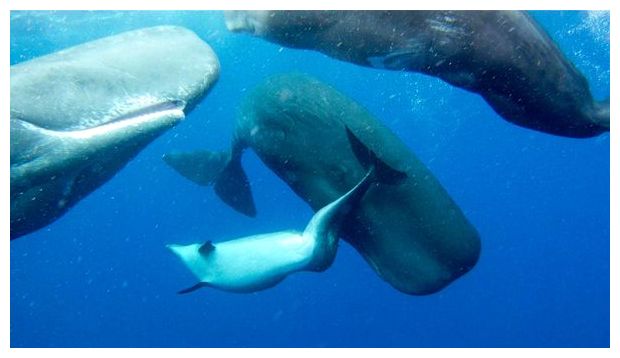
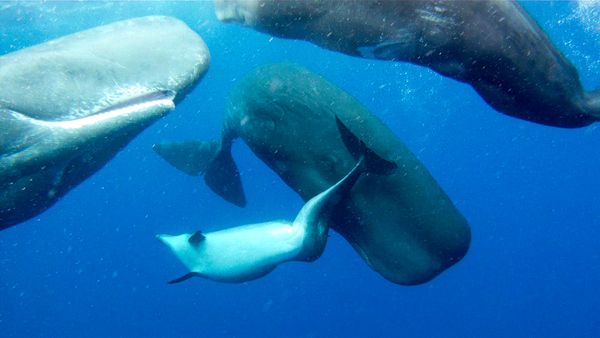
Deformed dolphin accepted into new whale family

Deformed Dolphin
© Photograph courtesy Alexander Wilson and Aquatic MammalsA bottlenose dolphin, with an S-shaped spinal deformity, is seen here rubbing against a sperm whale.
In 2011, behavioral ecologists Alexander Wilson and Jens Krause of the Leibniz-Institute of Freshwater Ecology and Inland Fisheries in Germany were surprised to discover that a group of sperm whales (Physeter macrocephalus) - animals not usually known for forging bonds with other species - had taken in an adult bottlenose dolphin (Tursiops truncatus).

The researchers observed the group in the ocean surrounding the Azores (map) - about 1,000 miles (1,600 kilometers) off the coast of Lisbon, Portugal - for eight days as the dolphin traveled, foraged, and played with both the adult whales and their calves. When the dolphin rubbed its body against the whales, they would sometimes return the gesture.

Among terrestrial animals, cross-species interactions are not uncommon. These mostly temporary alliances are forged for foraging benefits and protection against predators, said Wilson.

They could also be satisfying a desire for the company of other animals, added marine biologist John Francis, vice president for research, conservation, and exploration at the National Geographic Society (the Society owns National Geographic News).

Photographs of dogs nursing tiger cubs, stories of a signing gorilla adopting a pet cat, and videos of a leopard caring for a baby baboon have long circulated the Web and caught national attention.

Blue Planet

Tangaroan, new type of volcanic eruption

New type of volcanic eruption
© National Oceanography Center & National Institute of Water and Atmospheric ResearchMacauley volcano
An international team of researchers from the UK and New Zealand has discovered a previously undocumented type of eruption in underwater volcanoes.

Volcanic eruptions are commonly categorized as either explosive or effusive.

Inside volcanoes, gases are dissolved in the molten magma as a function of the very high pressures and chemistry of the magma. In the same way that gases dissolved in carbonated drinks bubble up when you take the lid off, when magma is erupted as lava, the pressure is relieved and the gases exsolve to form small gas bubbles or so-called 'vesicles.'

In explosive eruptions these vesicles expand so quickly they fragment the magma, violently ejecting lava, which cools and degasses to form solidified pumice that can be sufficiently light to float on water.

In air pumice is obviously associated with violent, explosive eruptions. Consequently underwater volcanoes flanked by highly vesicular pumice have, to date, also been interpreted as having erupted explosively.