The entire roof of a two-storey building was lifted into the sky with a single gust of wind in Siberia's, Zabaykalsky Kray. Stormy winds have been raging over the past week, causing massive devastation and deadly fires.The flying roof episode was caught on the dashcam of a passing car in the city of Chita, in the south east of Siberia. The gust was measured at 24 meters per second (54 miles per hour).
Luckily, the building was uninhabited as it is used to house a taxicab fleet. No injuries or damage were reported, according to the press service of the local emergency ministry department.The roofless building is now one of more than 1,300 houses destroyed in the region by fire or the elements. The devastating blazes, which have already claimed the lives of over 800 people, have now spread to neighboring Mongolia.
An area of just over 100,000 hectares has been affected, despite around 3,000 fire fighters doing their best to try and tackle the blazes. They have used planes and helicopters to attempt to put out the fires and have managed to save five settlements.
Comment: These sudden gusts of wind and cruel cold snaps seem to have become the norm nowadays.
A fiery sunset greeted people in Washington Sunday.
The deep reddish color caught Seattle native Tim Durkan's eye. He photographed a handful of aerial shots of the sunset warming the city's skyline and shared them on CNN iReport.
The stunning sunsets were the result of raging wildfires in parts of Siberia.
"The dramatic sunsets began showing up over the weekend and had Seattle locals wondering where the amber-colored haze was originating from," Durken said.
The fires were started in southeastern Siberia, by farmers burning grass in their fields. But on April 14, it is believed that the flames quickly grew out of control because of strong winds and spread throughout the region, according to CNN affiliate KOMO-TV.
As a result, the fires have destroyed dozens of villages in the region. Rescue crews were able to put out the flames. However, the lingering smoke from the widespread fires were pick by atmospheric winds.
The winds carried the smoke from Siberia across the Pacific Ocean and brought it to the Pacific Northwest. Parts of Oregon, Washington and British Columbia are seeing the results of the smoke, wind and solar light combination.
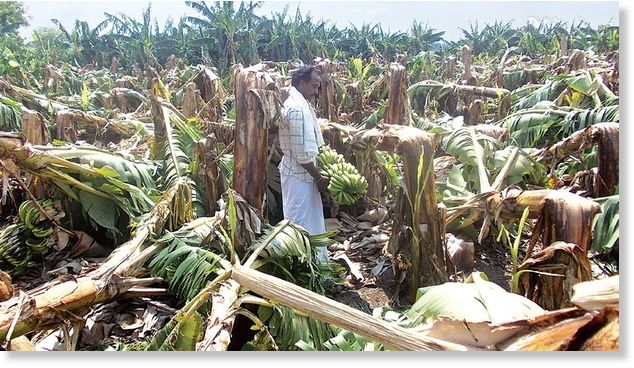
A young farmer from Chelgal village in Jagtial mandal, Akula Ganga Reddy, could not contain his tears when asked about his banana plantation. He was upbeat until last week, working in his plantation by day and by night, watering the trees and cutting down the weeds.
His world, however, turned upside down in an hour on Monday night — the hailstorm, described by many as unprecedented, destroyed his two-acre plantation. Had it not been for the unexpected calamity, Reddy's efforts would have borne fruit in a matter of days. But, by Tuesday morning, 80 per cent of his plantation was lost.
"I pinned all my hopes on the banana plantation. I planted the trees in two acres by investing Rs 4 lakh which I borrowed from money lenders. All my hopes are dashed," Ganga Reddy said, tears rolling down his cheeks. His only hope now lies in government aid. He is praying for a visit from any government official to assess his loss and announce some form of compensation.
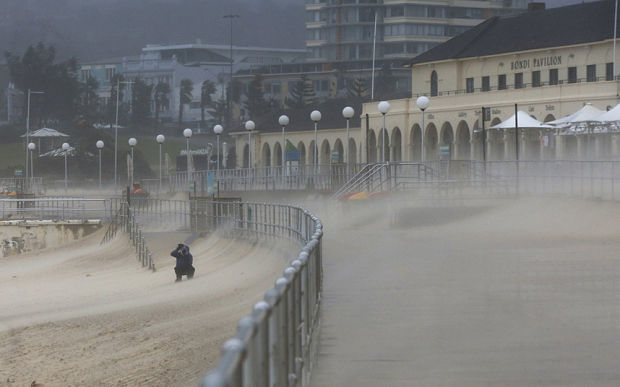
Three people died as the Australian state of New South Wales was lashed by a "once-in-a-decade" storm on Tuesday with homes washed away, thousands hit by power cuts and sand drifts sweeping inland off Sydney's Bondi beach.
Sea swells also hampered shipping as the region around Australia's biggest city suffered its second day of gale-force winds of up to 135 kilometres per hour (83mph) and torrential rain.
The Bureau of Meteorology said 119 millimetres (five inches) of rain had fallen in Sydney in 24 hours - the city's wettest period since 2002.
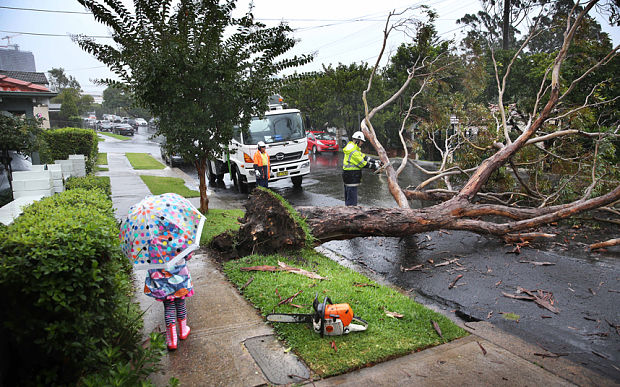
The destructive winds blanketed parks, pavements and roads with sand from beaches including Bondi, while trees were uprooted, crashing onto cars, and power lines blown down.
Dozens of flights were delayed and at least one cruise ship found itself stuck at sea outside Sydney Harbour.
New South Wales state Premier Mike Baird said 4,500 calls had been made to emergency services.
"There is no doubt this is a very severe storm event, indeed it is a once in 10-year event," he said.
"We have lost some homes. There is a number of roofs taken off. We have also lost life. It is a huge storm event that is wreaking havoc across NSW at the moment."
New South Wales police said three people died in the country town of Dungog, 215 kilometres (133 miles) north of Sydney, which was soaked by 300 millimetres (12 inches) of rain in 24 hours.
"During the morning a woman and two men were located deceased within the Dungog township. The circumstances surrounding their deaths are still to be determined," they said in a statement.
Video footage posted online showed a wooden house being swept away by flash floods, although it was not clear if this was linked to the deaths.
Anurag Bende Puna Mirror Mon, 20 Apr 2015 18:33 UTC
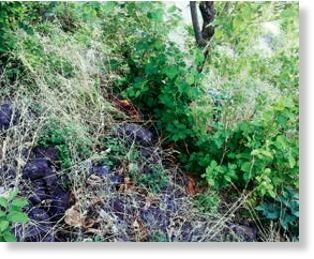
The spot where the boy was found
Two days after a boy lost his life in Khamundi village, the forest dept is still looking for big cat, confused over reason of attack
Over 48 hours after a six-year-old boy lost his life following a leopard attack at Khamundi village in Junnar, forest officials are still clueless about the big cat.
Now, to speed up the hunt before the animal decides to hit human settlement again, the forest department is planning to set up a quick response team (QRT) consisting of local villagers in order to increase vigil in the area. "Forest department staff, along with local villagers, will be keeping vigil and carry search operations to find the hiding animal. So far, there is no clarity behind the purpose of the attack and till the animal is captured, the additional staff will remain in that area," said chief conservator of forests Sunil Limaye.
As the leopard did not eat any flesh of the boy, forest officials are ruling out the possibility of the leopard being a man-eater. Now, they are taking the help of conservation experts to understand the motive behind the attacks on children.
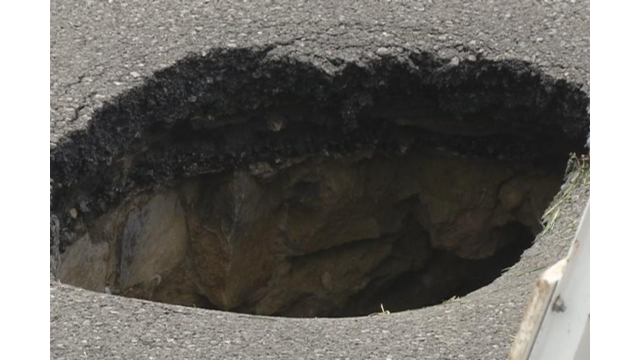
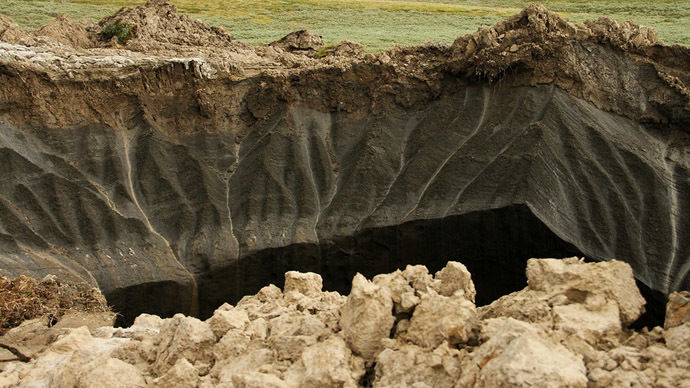
A fresh giant crater has appeared in Siberia's Novokuznetsk region. Measuring 20 meters in diameter and up to 30 meters in depth, the hole is unnerving the local population, who fear the next one might swallow their homes.
The mysterious sinkhole was first spotted by Rinat Sharifullin, a local man whose house is a mere 100 meters away from where it emerged. He blames the sagging of earth into abandoned mine tunnels snaking beneath the ground in the area.
"We have to get out of here", Rinat's wife Natalia told local media. "There are mines under our garden, closed down in the 1990s."
A pit bull attacked and killed a Dallas toddler Sunday afternoon, after the dog was left along with the child for a few minutes, according to the parents.
Police responded to the 6800 block of Beechnut Street, shortly before 5 pm on Sunday, to reports of an animal attack.
Police say the father told them he had stepped outside to turn off the sprinkler system and returned to find the dog attacking the child in his bouncing seat. The child's mother was also bitten twice by the dog while trying to free the child from the dog.
Police say the father grabbed the dog by the neck, took it outside and shot it twice.
One man died and another was hospitalised Monday after a fire caused by a powerful quake off Taiwan that set buildings shaking in the capital Taipei and sparked a short-lived tsunami warning in far southwestern Japan.
Japanese forecasters had warned the 6.6 magnitude earthquake could cause a tsunami as high as 1m affecting several islands in the Okinawa chain. But they lifted the alert around an hour later, with no abnormal waves recorded.
No damage was reported in Japan, but a four-storey apartment building in New Taipei City caught fire after an electrical box outside the block exploded in the quake.
A 65-year-old man who lived in the building "showed no signs of life" at the scene, the fire service said.
Another 18-year-old resident remains in hospital with smoke inhalation but is not in a serious condition, the fire service said.
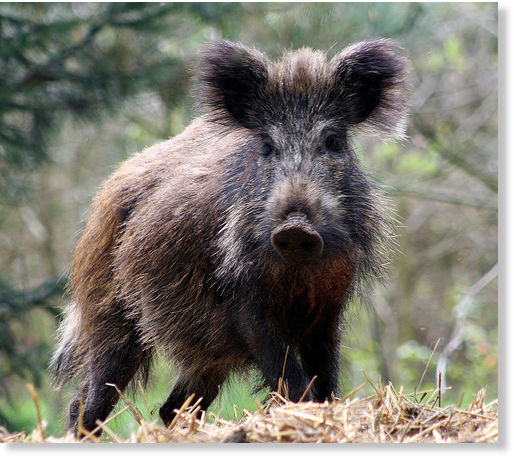
A wild boar killed a hunter in Tapah, Perak, on Sunday.
Tapah district police chief Supt Som Sak Din Keliaw said yesterday the 36-year-old victim, identified as Ali Pak Kateh, was hunting alone in the jungle when he was attacked by the animal, which bit him in the thigh.
Som Sak said the victim died from excessive blood loss and his body was later discovered by other hunters.
He said based on initial investigations, the bite wounds on the victim were from a wild boar.
What is truth anyway? The truth is the essence of something, its natural state, something as it really is. It is really a quest for love, because to truly love something we must know it for what it really is. Perhaps we can sense in an unconscious way that there is a deeper truth to everything and everyone, and we are led to search for the truth about it, so that we can truly love it for what it really is.
- Joe Quinn
”
Recent Comments
Let’s see where he goes from here + I’m sure it won’t be a quiet little cottage by the seaside. The trajectory of their careers is measured by the...













Comment: These sudden gusts of wind and cruel cold snaps seem to have become the norm nowadays.
See also: