
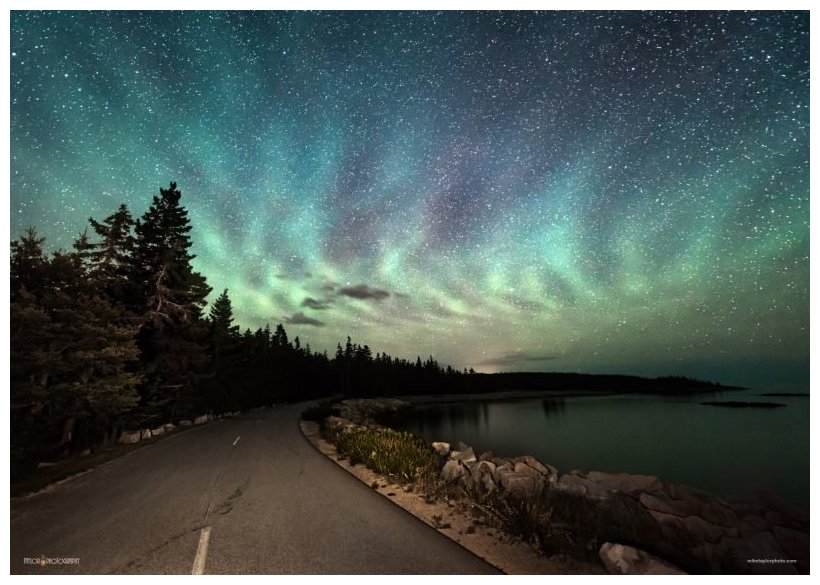
© Mike Taylor PhotographyAirglow in Acadia National Park.
Airglow is not an aurora. It's a chemical reaction involving oxygen in the upper atmosphere driven in part by solar ultraviolet radiation and cosmic rays. Visibility waxes and wanes with conditions such as pressure and temperature in the rarified air more than 90 km above Earth's surface. Gravity waves traveling up from the planet below impress the verdant glow with a dramatic rippling structure.
Dark nights with a new or thin crescent Moon are the best times to catch a glimpse of airglow. Often, the glow is dim and pale to the naked eye, revealing its green color only to the lens of cameras set for Milky Way-length exposures. On rare occasions, such as Sept 2nd in the Acadia National Park, the human eye is more than enough. Browse the airglow photo gallery for more sightings.













Comment: The earthquake ties for Oklahoma's strongest earthquake on record, the first coming in November 2011. No major damage was immediately reported. An increase in magnitude 3.0 or greater earthquakes in Oklahoma has been linked to underground disposal of wastewater from oil and natural gas production. State regulators have asked producers to reduce wastewater disposal volumes in earthquake-prone regions of the state.
Some parts of Oklahoma now match northern California for the nation's most shake prone, and one Oklahoma region has a 1 in 8 chance of a damaging quake in 2016, with other parts closer to 1 in 20. An estimated 10 million people felt the earthquake across Oklahoma, Arkansas, Kansas, Missouri, Texas, Nebraska, Iowa, Illinois, Tennessee, and Alabama.