Earth ChangesS


Tornado1

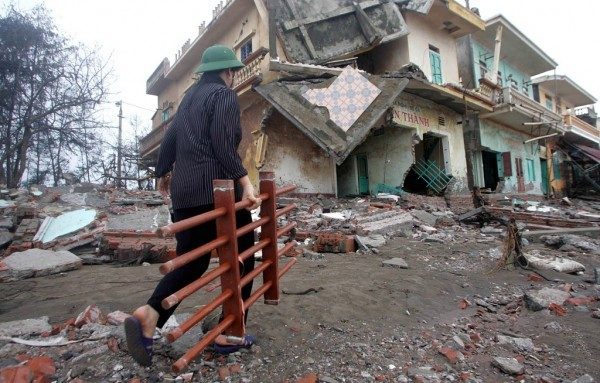
19 dead after strongest typhoon in 16 years strikes southern Vietnam

Typhoon Damrey
© STR / AFPA women recovers a wooden window as she walks past heavily damaged houses at the coastal commune of Hai Thinh.
Damrey, the strongest typhoon to make landfall in southern Vietnam in 16 years, has left at least 19 people dead with hundreds of homes destroyed.

Damrey made landfall in southern Vietnam, near Nha Trang, with the equivalent strength of a Category 2 hurricane in the eastern Pacific or Atlantic oceans.

Not since Lingling in November 2001 has a typhoon that strong struck Vietnam south of Qui Nhon.

Damrey has left at least 19 people dead across central and southern Vietnam, according to Reuters.

Homes were damaged and destroyed. More than 370 homes had collapsed with the roofs of 1,000 others torn off. Hundreds of electricity poles were knocked down as trees were uprooted.

While the most destructive winds targeted Nha Trang and surrounding communities, the threat for flooding and mudslides expanded over a much larger area as heavy rain spread northward across central Vietnam and into the neighboring mountains of Laos.

Rainfall topped 130 mm (5.10 inches) in Nha Trang, while nearly 255 mm (10 inches) of rain inundated Qui Nhon in the 24 hours ending Saturday evening, local time.


Seismograph

Shallow 6.8-magnitude earthquake strikes off Tonga

Tonga earthquake
© US Geological SurveyA map of the earthquake which struck off the coast of Tonga.
A 6.8-magnitude earthquake struck off the coast of Tonga Saturday in the tectonically active Pacific region, but there was no tsunami threat, seismologists said.

The tremor hit at a depth of 10 kilometres (six miles) some 90 kilometres off the Tonga island of Niuatoputapu, and 230 kilometres southwest of the Samoan capital Apia, the US Geological Survey reported.

The Pacific Tsunami Warning Center said there was no current tsunami threat.

The quake lasted for almost one minute, and caused residents to leave their homes for open spaces across Samoa, according to reports cited by the Samoa Observer news website.

Tonga and Samoa are part of the "Ring of Fire", a zone of tectonic activity around the Pacific that is subject to frequent earthquakes and volcanic eruptions.

Comment: See also: Pay attention to the Pacific Ring of Fire as major geo events trigger concern


Snowflake Cold

Future volcanic eruptions could cause more climate cooling

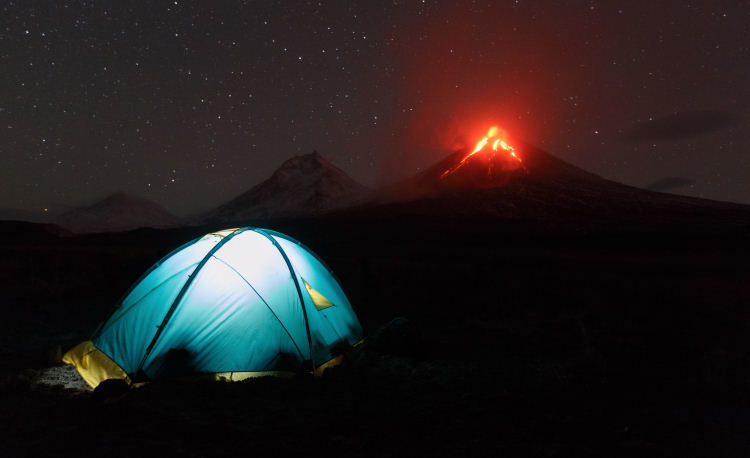
volcano eruption tent camping
Major volcanic eruptions in the future have the potential to affect global temperatures and precipitation more dramatically than in the past because of climate change, according to a new study led by the National Center for Atmospheric Research (NCAR).


The study authors focused on the cataclysmic eruption of Indonesia's Mount Tambora in April 1815, which is thought to have triggered the so-called "year without a summer" in 1816. They found that if a similar eruption occurred in the year 2085, temperatures would plunge more deeply, although not enough to offset the future warming associated with climate change. The increased cooling after a future eruption would also disrupt the water cycle more severely, decreasing the amount of precipitation that falls globally.

The reason for the difference in climate response between 1815 and 2085 is tied to the oceans, which are expected to become more stratified as the planet warms, and therefore less able to moderate the climate impacts caused by volcanic eruptions.

Blue Planet

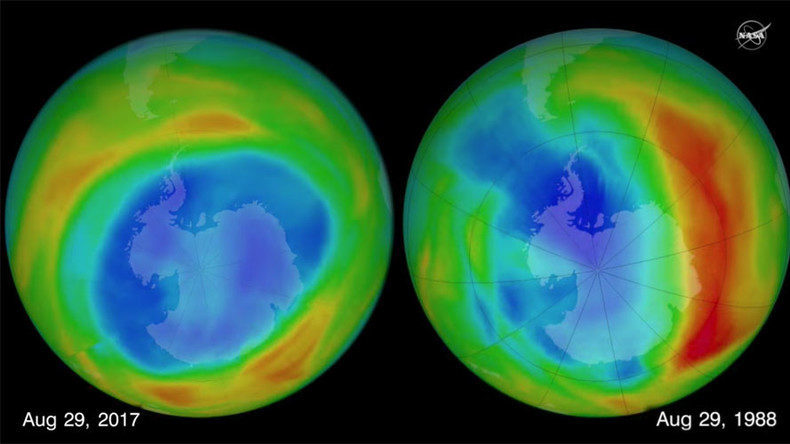
Ozone hole shrinks to smallest size since 1988

Ozone
© NASA
The ozone layer shrank to its smallest size since 1988 in 2017, NASA has confirmed. They currently attribute the shrinkage to an increase in air temperatures across the globe.

NASA's Aura satellite and the joint NASA-NOAA Suomi National Polar-orbiting Partnership satellite measure ozone in Earth's atmosphere from space.

"In the past, we've always seen ozone at some stratospheric altitudes go to zero by the end of September," said Bryan Johnson, an atmospheric chemist with NOAA. "This year our balloon measurements showed the ozone loss rate stalled by the middle of September and ozone levels never reached zero."

Comment: Some scientists attribute the shrinkage to global warming. It would be more honest to say they don't have a clue as to why the ozone expands or shrinks!


Cow Skull

Several hundred dead sea turtles found floating off coast of El Salvador

dead turtles el salvador
© MARN El SalvadorA decomposing turtle floats in the Pacific Ocean off the coast of El Salvador
Hundreds of dead sea turtles have been found floating off El Salvador's Pacific coast, leaving officials scratching their heads as to what caused the massacre.

The environment ministry said on Twitter on Thursday that its officers "found between 300 and 400 dead sea turtles floating around seven nautical miles (eight miles, or 13 kilometers) offshore from Jiquilisco Bay."

Most of the animals were decomposing when they were found, the ministry said, without giving their species.

"We don't know what caused the sea turtles' death," the ministry said, adding that laboratory tests would be carried out.

The discovery recalled a similar find in 2013, between September and October, when hundreds of sea turtles were found dead off El Salvador's coast.

Authorities at the time attributed the cause to toxic algae eaten by the turtles.

Comment: See also:

Dead marine life on Gulf coast sets off concerns over dead zone; 47 dolphins and 51 sea turtles found so far in 2017

Signs and Portents overload: Not one but two double-headed sea turtles found on the Cayman Islands in a week


Ice Cube

Wind may be driving the melting of East Antarctica's largest glacier

totten ice shelf antarctica
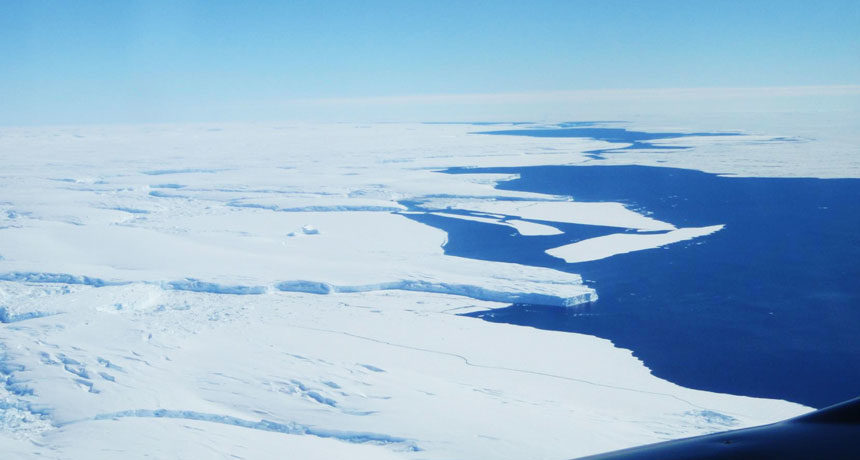
© Jamin Greenbaum/The University of Texas Institute for GeophysicsThe Totten ice shelf (shown here) holds back a massive glacier, which drains a France-sized portion of East Antarctica and could raise sea levels by at least 3.5 meters if it slides into the sea.
If all of Totten Glacier's ice slid into the ocean, global sea level would rise by at least 3.5 meters

The wind is helping to awaken one of Antarctica's sleeping giants. Warm ocean waters, driven inland by winds, are undercutting an ice shelf that holds back a vast glacier from sliding into the ocean, researchers report November 1 in Science Advances.

Totten Glacier is East Antarctica's largest glacier, with a drainage basin encompassing about 550,000 square kilometers, an area about the size of France. Its floating front edge, the Totten ice shelf, sticks out like a tongue over the water and acts as a buttress for the giant glacier, slowing its movement toward the ocean. If the entire land-based glacier destabilizes and slips into the sea, it could raise global sea level by at least 3.5 meters.

Satellite and on-the-ground studies have previously shown that Totten Glacier and its buttressing ice shelf are thinning. Last year, scientists determined that the ice shelf is being melted from below by warm water. The ice shelf floats within a pool of its own cold meltwater that sits atop a deeper, saltier and warmer layer; the two layers generally don't mix, like oil and water. The warmer layer periodically rises up, becoming shallow enough to access grooves in the seafloor that extend beneath the ice shelf. But what controls the inflow of that warm water was unknown.

Seismograph

Fears Tenerife's Mount Teide volcano in the Canary Islands is about to BLOW following 22 earthquakes in 4 days

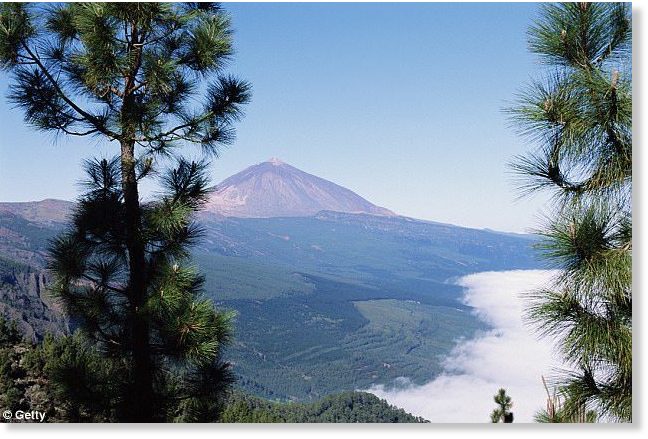
A seismic swarm of 22 earthquakes have rocked Tenerife in just four days sparking fears Mount Teide (pictured) could be about to erupt
A swarm of 22 earthquakes has rocked Tenerife in just four days sparking fears Mount Teide could be about to erupt.

The tremors struck the popular tourist village of Vilaflor on the slopes of the 12,000ft volcano last week.

They were relatively minor quakes, however. The most power was a tremor of magnitude 1.4 striking at 11.05am local time (11:05 GMT, 06:05 GMT) on Tuesday morning.

Mount Teide's 3,718-metre summit is the highest point in Spain and a major tourist attraction with around three million tourists visiting every year.

The seismic swarm, recorded at an average depth of six to eight kilometres below sea level, took place over four days from 28 October to 31 October.

The Volcanological Institute of the Canary Islands (Involcan) have been trying to calm people.

Comment: This report should also viewed in the wider context of the increased seismic activity noted elsewhere around this archipelago over the last 4 weeks, as illustrated by the following reports:-

Canary Island volcanologists monitoring eruption, tsunami risks from Cumbre Vieja after recent wave of tremors

La Palma volcano in the Canary Islands hit by hundreds of earthquakes in 15 hours

Scientists on alert as underwater volcano Tagoro in the Canary Islands bursts into life

40 earthquake tremors in 48 hours hit La Palma, Canary Islands


Attention

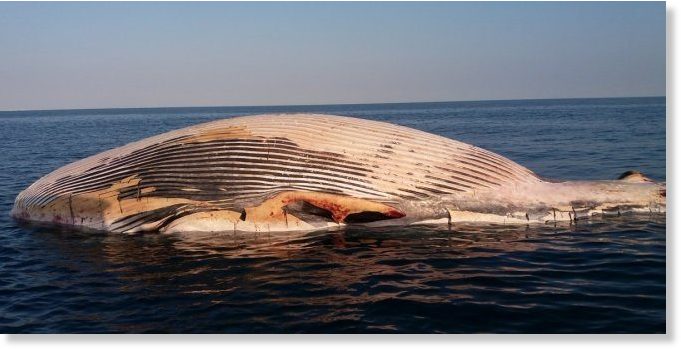
Dead whale found near Frontignan, France

DEAD WHALE
Boaters have discovered a dead whale, a dozen meters long to two pounds, which would drift at about a mile from the beaches of Frontignan, near Sete.
#Frontignan, A #whale to drift off of the Aresquiers - https://t.co/3U7fgArBvN

— Philippe Malric ⚓ (@PhilippeMalric) October 31, 2017

Comment: Taken with the above report, the last 2 months in France has seen a significant number of dead cetaceans washing up, see also these stories: Dead whale found near La Rochelle, France

A dozen dead dolphins wash up in 3 weeks in southern France


Tornado1

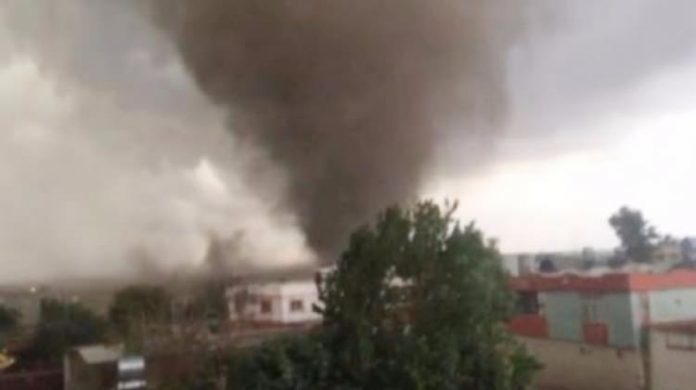
Large rare tornado strikes near Adana in southern Turkey

Tornado near Adana, Turkey
© haberum
A large rare tornado struck Adana's Karataş district in southern Turkey on October 29, 2017. There were no reports of injuries although at least 5 houses were damaged.

After forming as a waterspout in the Mediterranean Sea the tornado was on the ground for about 80 seconds around Kesik Mahallesine reports haberum.

A local resident Ahmet Avşar, who has lived in the area for 67 years, said it was the first time he had ever witnessed such a phenomenon.


Comment: Some other rare tornadoes have formed around the planet in recent times including countries such as Netherlands, Mexico, United States, Russia and China.


Attention

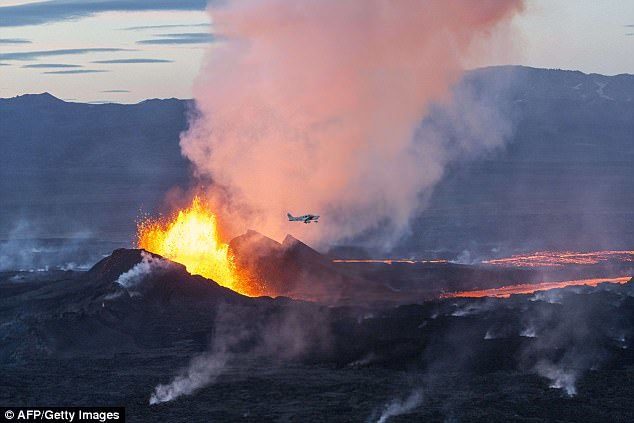
Iceland's biggest volcano being monitored after a series of earthquakes

bardabunga volcano
Páll Einarsson, a geophysicist at the University of Iceland, says this shows that pressure in the volcanoes magma chamber is increasing. Pictured is a plane flying over the Bardarbunga volcano in September 2014.
An eruption at Iceland's biggest volcano could be brewing, an expert has warned.

The 6,590ft Bardarbunga volcano, which is hidden under the ice cap of the Vatnajökull glacier, has been rocked by a series of quakes in recent days.

Páll Einarsson, a geophysicist at the University of Iceland, says this shows that pressure in the volcanoes magma chamber is increasing.

He warns that the tremors mean Bardarbunga is 'clearly preparing for its next eruption' in the next few years which could create an ash cloud that will cause travel chaos.

The warning follows the 2010's explosive eruption of Icelandic volcano Eyjafjallajökull, which threw thousands of tonnes of mineral ash into the air.