Science of the SpiritS


Heart

Karezza: Couples Say Orgasm-Free Sex Sparks Intimacy

Image
7 Tips For Achieving Orgasm

Getting Your Orgasm Back After 40

The 5 Best Positions For Achieving Orgasm

The headlines are clear: When it comes to sex, reaching orgasm should be any couple's ultimate goal. And yet some couples are rejecting that idea. The practice of karezza has become increasingly popular among pairs trying to reignite the "spark" in their relationships, ABC News reported. And karezza sex doesn't involve climax.

Karezza, which gets its name for the Italian word for "caress," is a "gentle, affectionate form of intercourse in which orgasm is not the goal, and ideally does not occur in either partner while making love," Marnie, a blogger for karezza website "Reuniting" wrote. Instead, emotional connection and affection are emphasized. ABC News spoke to 51-year-old Matt Cook who practices karezza with his wife of 25 years. He says that karezza has improved his sex life and his relationship with his wife. "It creates a deep feeling in a relationship that is very difficult to describe," he said. "[It's] much deeper than conventional sex."


Eye 2

Psychopathic Bosses and Institutional Bullying

Image
© UnknownUnions Tasmania chief Kevin Harkins
Complaints of workplace bullying have doubled in Tasmania this year and union leaders say the problem is being covered up by "hush money" payments.

Unions Tasmania chief Kevin Harkins told a Federal Government inquiry that laws were no match for a new breed of "workplace psychopaths".

"Bullying has changed in the workplace it used to be traditional 'initiations' but it's a lot more complex now it's bullying by workplace psychopaths and the measures used to deal with it are token measures," he said.

"Bullying and harassment are now the largest issue in the workplace in Australia and I don't think anyone yet has their head around it."

Mr Harkins said the problem was rife in government agencies and he had personal experience of bullying in the workplace which he suspected may have contributed to the suicide of a former colleague.

2 + 2 = 4

Journaling Benefits Trauma

Image
© Unknown
For me personally, June has proven to be a rather disappointing and fruitless month. Just when things began to look brighter, I was involuntarily assigned to be the middle vehicle in a double fender-bender two days ago, and my car now needs almost $1,000-worth of repairs. And as a perfect metaphor for the crappiness of the past month, for whatever reason I was not paid my stipend yesterday for the month of June.

I don't often like to talk about my sour feelings with other people because a.) I'm bad at it, and b.) I have another outlet.

Everyday for the past 12 years (save for a few angsty months in 8th grade), I've been writing in a journal. A good, old-fashioned, hardbound, acid-free journal. Most entries are about the frivolous happenings of the day at school, but as I've gotten older, they've increasingly helped me outline my thoughts and feelings while keeping my head on straight.

Feeling so low, I journaled the night before my car accident, listing ten qualities I liked about myself. Remembering what I wrote as I spent the next day at the body shop and on the phone with the police and insurance companies is, I believe, what kept me from simply bursting into tears and throwing up my hands in defeat.

Comment: For more information, see this Sott article:

Writing to Heal


2 + 2 = 4

Validation is Important for Adult Trauma Healing

Many people face a traumatic event in adult life. Be it a serious car accident, combat, rape, a natural disaster or the loss of a child, people are often confronted with a horrific event that threatens death or serious injury to themselves or someone else, or involves the traumatic loss of a friend or loved one.

While such trauma is in itself physically and emotionally assaultive, trauma theorist Robert Stolorow proposes that beyond the actual event, it is the emotions suffered after the event that become the unbearable emotional pain of trauma.
  • Difficult to articulate and unrecognized by many, the emotional aftermath of adult trauma often goes unvalidated and unhealed.
  • Drawing upon his own traumatic loss of a young wife, Stolorow reports that in the unreal time that stretches slowly after a trauma, there is an "excruciating sense" of being outside normal life, alone with feelings that no one else can understand.
Stolorow's contribution to the field is his articulation of these feelings in a way that becomes an invaluable resource for validation.

Butterfly

EDTP Found Useful in Helping with Childhood Depression-Anxiety

Image
© Unknown
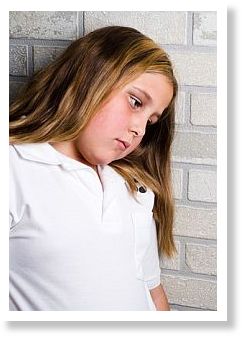
Although emotional problems are common in childhood, current therapeutic interventions are generally not designed to treat co-existing psychological conditions.

This presents a problem as approximately 8 to 22 percent of children suffer from anxiety, often combined with other conditions such as depression.

To address this need, University of Miami psychologist Jill Ehrenreich-May and her collaborator Emily Bilek analyzed the efficacy and feasibility of new type of intervention.

The approach, called the Emotion Detectives Treatment Protocol (EDTP) adapts two treatment techniques used for adults and adolescents.

Megaphone

Flashback When Plants Communicate: A Discussion With Peas

Image
© Leif Parsons
Imagine a being capable of processing, remembering and sharing information - a being with potentialities proper to it and inhabiting a world of its own. Given this brief description, most of us will think of a human person, some will associate it with an animal, and virtually no one's imagination will conjure up a plant.

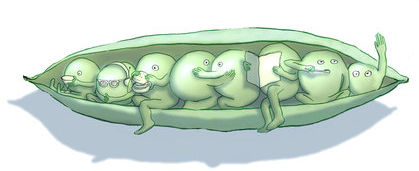
Since Nov. 2, however, one possible answer to the riddle is Pisum sativum, a species colloquially known as the common pea. On that day, a team of scientists from the Blaustein Institute for Desert Research at Ben-Gurion University in Israel published the results of its peer-reviewed research, revealing that a pea plant subjected to drought conditions communicated its stress to other such plants, with which it shared its soil. In other words, through the roots, it relayed to its neighbors the biochemical message about the onset of drought, prompting them to react as though they, too, were in a similar predicament.

Curiously, having received the signal, plants not directly affected by this particular environmental stress factor were better able to withstand adverse conditions when they actually occurred. This means that the recipients of biochemical communication could draw on their "memories" - information stored at the cellular level - to activate appropriate defenses and adaptive responses when the need arose.

Roses

Plant Consciousness and the Ethics of Plant Life

Although plants may not have the capacity to experience pain, they relate to the world around them in a unique way.

Image
© Reuters'Most people consider plants to be bordering on machines, wholly determined by external factors'
When, almost two months ago, I penned an op-ed titled If Peas Can Talk, Should We Eat Them? for "The Stone" philosophy section of the New York Times, I did not expect that it would stir as much controversy as it did in the following weeks.

My argument was attacked by everyone from Christian fundamentalists to vegans and from neuroscientists to humanist rationalists. Since then I have responded to some of the criticisms in another Times piece, Is Plant Liberation on the Menu? and participated in a debate on plant ethics with the animal rights advocate, Professor Gary Francione. Despite the occasionally heated polemics, I take the interest in this topic to be an encouraging sign that the current attitudes toward plants may be starting to shift. The sheer fact that they can become the subjects of intense discussion and debate implies that plants do not have to be forever confined to the inconspicuous background of our everyday lives.

Alarm Clock

Conscious or Unconscious Consciousness?

Image
© Unknown
Are you conscious now?"

A simple enough question, but one that had scientists in a muddle last week at the Association for the Scientific Study of Consciousness conference in Brighton, UK.

Susan Blackmore of the University of Plymouth, UK, challenged visitors to the conference with this problem during her talk on meditation and consciousness.

We were given a gentle introduction, and ten minutes later I found myself in the middle of a silent room full of meditating psychologists and philosophers, trying (and not really succeeding) to calm my mind before struggling with Blackmore's tricky questions.

I found it easy to say "Yes, I am conscious now, because I'm thinking about it", but did that mean I wasn't conscious before? I couldn't have become "more" conscious so I'm left wondering what was happening, and what continues to happen, when I'm not thinking about this question. Ultimately, says Blackmore, what we really want to know is "What is consciousness like, when I'm not asking what it's like?"

Eye 1

Eye movement direction not correlated with lying

New research refutes a commonly held belief that certain eye movements are associated with lying. The idea that looking to the right indicates lying, while looking left suggests truth telling, is shown to be false in a report published July 11 in the open access journal PLoS ONE. The researchers, led by Caroline Watt of the University of Edinburgh, completed three different studies to show that there was no correlation between the direction of eye movement and whether the subject was telling the truth or lying.

"A large percentage of the public believes that certain eye movements are a sign of lying, and this idea is even taught in organisational training courses." Watt notes. "Our research provides no support for the idea and so suggests that it is time to abandon this approach to detecting deceit"

Bulb

The more gray matter you have, the more altruistic you are

Image
© Unknown
This press release is available in German.

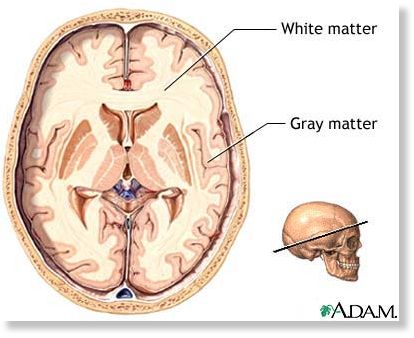
The volume of a small brain region influences one's predisposition for altruistic behavior. Researchers from the University of Zurich show that people who behave more altruistically than others have more gray matter at the junction between the parietal and temporal lobe, thus showing for the first time that there is a connection between brain anatomy, brain activity and altruistic behavior.

Why are some people very selfish and others very altruistic? Previous studies indicated that social categories like gender, income or education can hardly explain differences in altruistic behavior. Recent neuroscience studies have demonstrated that differences in brain structure might be linked to differences in personality traits and abilities. Now, for the first time, a team of researchers from the University of Zurich headed by Ernst Fehr, Director of the Department of Economics, show that there is a connection between brain anatomy and altruistic behavior.