Science of the SpiritS


Flashlight

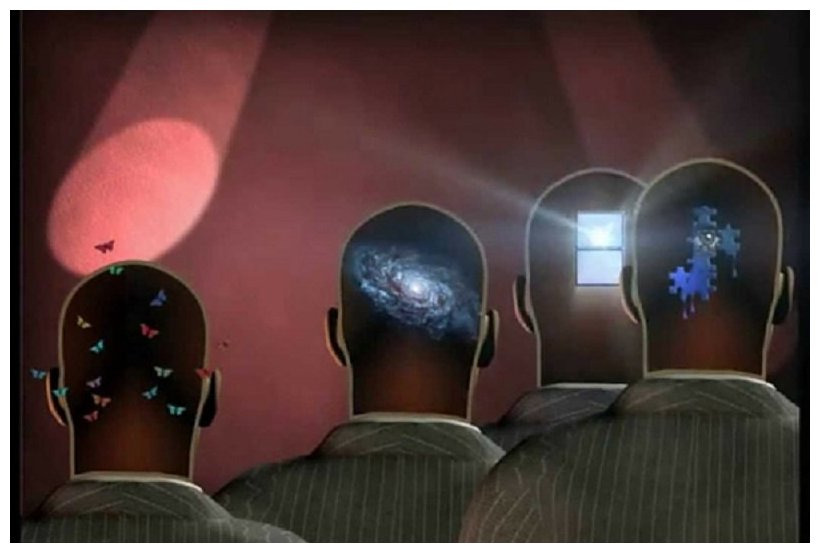
When we lose perspective we lose our operational wisdom

perspective
"What can you do with a person who says that he is absolutely uncertain about everything, and that he is absolutely certain about that?" — Idries Shah
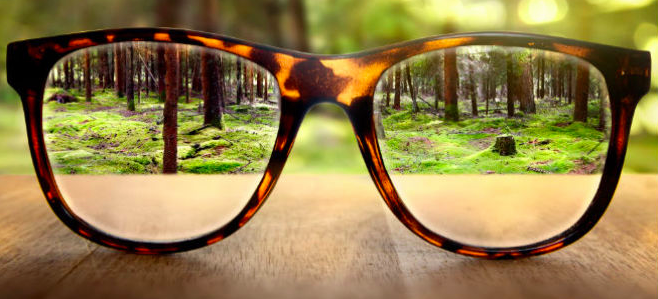
Our perspective is how we perceive people, situations, ideas, etc. It's informed by our personal experience, which makes it as unique as anything could be. Perspective shapes our life by affecting our choices. But the minute our minds become steeped in worry, perspective goes out of the window. We forget about our triumphs. We stop being optimistic as fear takes the wheel.

Fear gives rise to negative feelings: insecure, critical, defensive, abandoned, desperate, lonely, resentful, overwhelmed, aggressive, and so on. These cloud our minds and consume our thoughts.

When we lose perspective, our operational wisdom is gone. We might as well be little children. Everything we know about coping, adapting, and resilience are lost. Small things appear to be much larger and more dire. Stress mounts.

Everything we've accomplished in life, the lessons we've learned, the hard times we've overcome and the ways in which we've grown are discounted when perspective is lost. We see it happen around us every day, but we rarely label it properly.

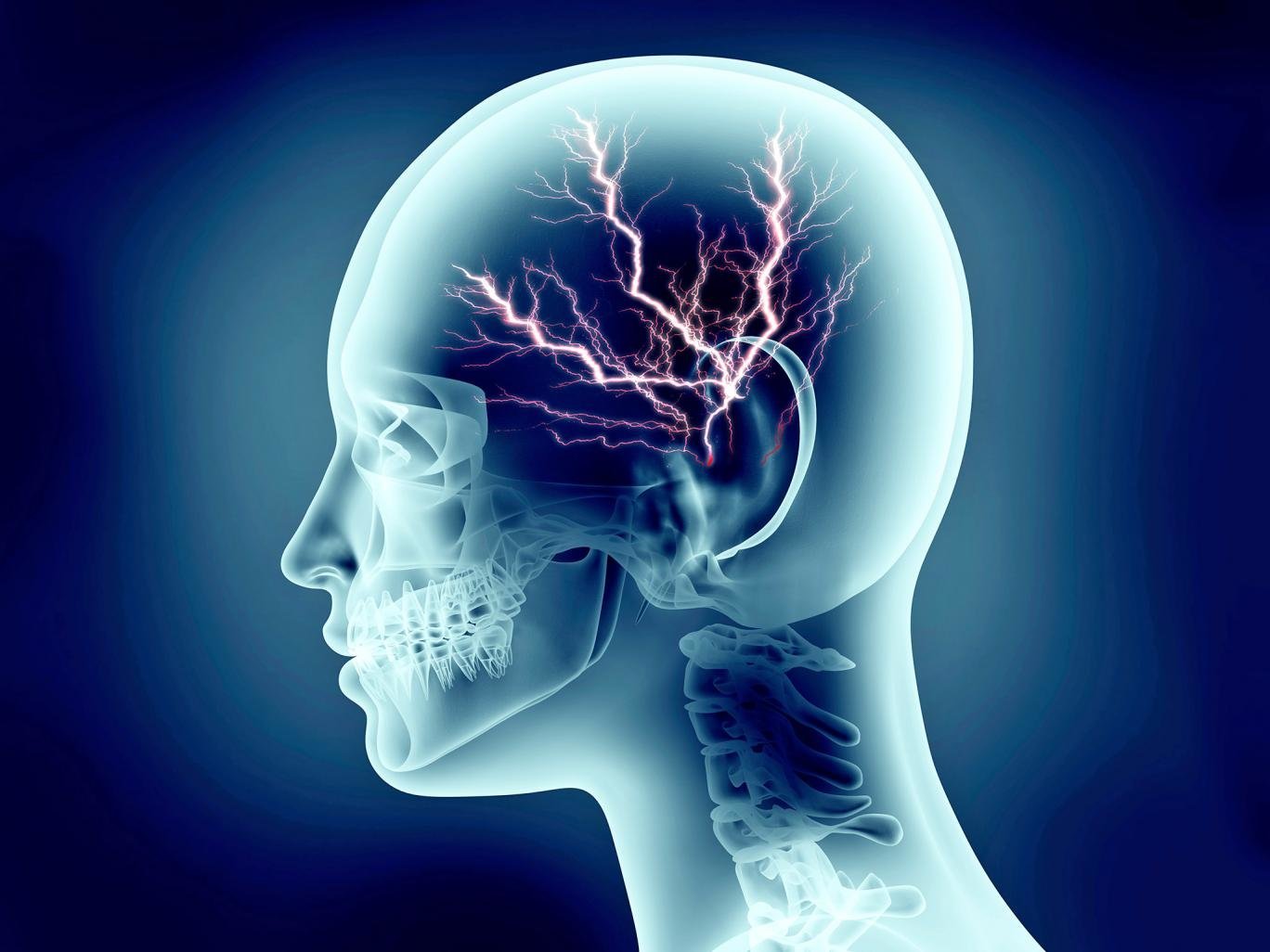
Comment: When we find ourselves overreacting, it's time to take a break and re-engage with our deeper selves. Practicing mindfulness, meditating and exercises such as yoga and Tai Chi can help us to regain our perspective.


Magnify

The stereotypes we hold can distort how our brain 'sees' a person's face

stereotypes
© iStockThe fact that stereotypes seem to be learned, rather than innate, gives reason for hope
The stereotypes we hold can influence our brain's visual system, prompting us to see others' faces in ways that conform to these stereotypes, according to new research.

"Our findings provide evidence that the stereotypes we hold can systematically alter the brain's visual representation of a face, distorting what we see to be more in line with our biased expectations," said Jonathan Freeman, senior author and an assistant professor in the Department of Psychology at New York University.

"For example, many individuals have ingrained stereotypes that associate men as being more aggressive, women as being more appeasing, or black individuals as being more hostile — though they may not endorse these stereotypes personally," he said.

"Our results suggest that these sorts of stereotypical associations can shape the basic visual processing of other people, predictably warping how the brain 'sees' a person's face."

The neuroscientist notes that previous research has shown that stereotypes seep into the ways we think about and interact with other people, shaping many aspects of our behavior, despite our better intentions.

But the new findings show that stereotypes may also have a more insidious impact, shaping even our initial visual processing of a person in a way that conforms to our existing biases, according to the researchers.

Comment:


Info

Are brainwaves unique to each person?

Your responses to certain stimuli — foods, celebrities, words — might seem trivial, but they say a lot about you. In fact (with the proper clearance), these responses could gain you access into restricted areas of the Pentagon.

A team of researchers at Binghamton University, led by Assistant Professor of Psychology Sarah Laszlo and Assistant Professor of Electrical and Computer Engineering Zhanpeng Jin, recorded the brain activity of 50 people wearing an electroencephalogram headset while they looked at a series of 500 images designed specifically to elicit unique responses from person to person — e.g., a slice of pizza, a boat, Anne Hathaway, the word "conundrum." They found that participants' brains reacted differently to each image, enough that a computer system was able to identify each volunteer's "brainprint" with 100 percent accuracy.
Brain Responses
© LabrootsNew research says our thoughts can identify us.
"When you take hundreds of these images, where every person is going to feel differently about each individual one, then you can be really accurate in identifying which person it was who looked at them just by their brain activity," said Laszlo.

In their original study, titled "Brainprint," published in 2015 in Neurocomputing, the research team was able to identify one person out of a group of 32 by that person's responses, with only 97 percent accuracy, and that study only incorporated words, not images.

Rainbow

The need for adaptive fluidity: Be like water

Flow
© prezi.com
As the proliferation of staged events and the accompanying fear campaigns and predictable clampdowns ensue, it's always good to take stock of any situation unfolding and assess how best to handle what's transpiring. With the playing field changing at such a rapid rate, locally as well as globally, it's wise to see how to perhaps adjust our sights as well as personal attitudes and outlook, all the while staying completely clear of any reaction with even the faintest smell of fear.

Any wise strategist knows you don't fight today's battles by yesterday's instructions. Surely in big ideas there will be overarching plans that too will need to be adjusted accordingly, but the day-by-day, minute-by-minute decisions require thinking on your feet and being prepared, vigilant and most of all agile and adaptive are the ever present challenge. Not just now, but in the potentially confusing days to come.

Alarm Clock

Treating the 1-in-6 American males who have been sexually assaulted

The following story features interviews and material that address sexual violence and its effect on victims.

Hurt man

It's highly likely that you know a man who has endured sexual violence. But you probably don't know it yet, and might never know.

One in 6 American men will encounter sexual abuse at some point in their lives. According to MaleSurvivor, a nonprofit that helps male survivors of sexual assault heal, after a man is raped, he doesn't tell anyone for, on average, 20 years. When he finally does, his courage is often met with derision, confusion, dismissal and even disbelief.

Comment: Sweden opens Europe's first clinic to treat male rape victims


Question

The lunatic in my mind: Who's really in your head?

Mind games
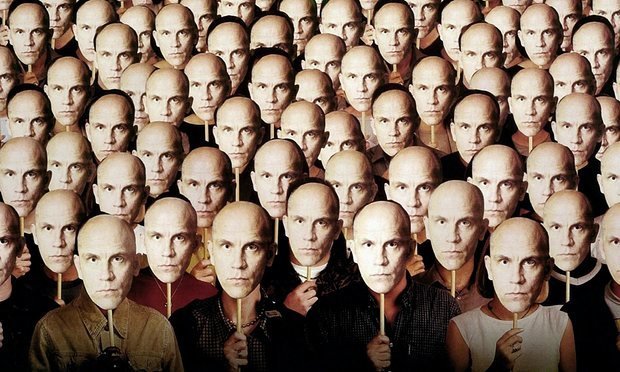
© Sportsphoto/Allstar Mind games: the film Being John Malkovich took us inside the actor’s head.
Don't let negative thoughts control your self-image. It's your actions that really define you, says Susan David

Roger Waters of Pink Floyd called it "the lunatic in my head". He was describing the endless stream of internal thoughts and sensations - the inner voice - that we try to weave into a coherent story called "my life". The trouble is, this chattering narrator often gets things wrong, mixing biased reporting with snap judgments and old insecurities with unwarranted dread.

For instance, your first thought may be blandly factual. "I just had dinner with my in-laws" or "I have a project due on Monday." But within seconds that innocent thought has morphed into "My in-laws hate me" or "My job is going down the tubes" or "What waistline?! I look like a walrus!"

Comment: Read more about strategies that help with unwanted negative thoughts


Question

Uncertainty can be stressful, but it can also aid performance

stress and uncertainty
© Roberto David/IStockPhotoLife is full of stressful situations. But the ones we can predict stress us out less, and may even help us learn, a new study suggests.
The most stressful situation is the uncertain one we can do nothing about

Interviewing for a new job is filled with uncertainty, and that uncertainty fuels stress. There's the uncertainty associated with preparing for the interview — what questions will they ask me? What should I put in my portfolio? And then there's the ambiguity when you're left to stew. Did I get the job? Or did someone else?

Scientists have recently shown that these two types of uncertainty — the kind we can prepare for, and the kind we're just stuck with — are not created equal. The uncertainty we can't do anything about is more stressful than the one we can. The results help show exactly what in our lives freaks us out — and why. But the findings also show a positive side to the stress we feel when not knowing what's ahead — the closer our stress levels reflect the real ambiguity in the world, the better we perform in it.

"There is a bias in the public perception" against stress, says Claus Lamm, a cognitive neuroscientist at the University of Vienna in Austria. But stress "prepares us to deal with environmental challenges," he notes, preparing us to fight or flee, and it keeps us paying attention to our surroundings.

Comment: While having a certain amount of stress may prove beneficial, having clarity of thought and feeling focused is much better. One of the best ways to deal with uncertainty or stresses of many kinds, is with Éiriú Eolas: The stress control, healing and rejuvenation program par excellence. Try the free on-line program and see if it doesn't make a difference.


Blue Planet

Blue space: Having a view of the ocean reduces stress

ocean view
Maybe owning some ocean-front property is not such a bad idea. Actually, property with a view of the ocean will suffice as new research suggests an ocean view relieves stress.

The Michigan State study is the first to find a link between health and the visibility of water, which the researchers call blue space.

"Increased views of blue space is significantly associated with lower levels of psychological distress," said Amber L. Pearson, assistant professor of health geography. "However, we did not find that with green space."

Using various topography data, the researchers studied the visibility of blue and green spaces from residential locations in Wellington, New Zealand, an urban capital city surrounded by the Tasman Sea on the north and the Pacific Ocean on the south.

Comment: Why being near the ocean can make you calmer and more creative


Cardboard Box

Moving forward emotionally helps us to physically let go of the past

hoarding, decluttering
In the newly-released indie film "Hello, My Name Is Doris," sweet and eccentric Doris (played by Sally Field) is an older woman who lives in her deceased mother's immensely cluttered house. Needless to say, Doris grapples with hoarding issues, tightly clinging to all kinds of items from her past. Her home's disarray is a barrier of sorts, physically creating entrapment to what was and not what could be.

Doris blossoms through a new relationship with a younger man (played by Max Greenfield). Though the outcome of their relationship may not be the one she unequivocally pines for, their time together symbolizes hope for what is very well possible in her next life chapter. She's merely grateful for the friendship they share — for its impact.

It's not long after this realization that Doris finally summons the courage to embark on another venture: thoroughly cleaning out her house and letting go of everything that's no longer needed.

I found this particular storyline to be rather pertinent. Can emotional progress — the conscious act of emotionally moving forward — eradicate compulsive hoarding habits?

Comment: Conversely, taking charge of our home environment by de-cluttering, has the ability to generate fresh energy, create mental and physical space, and release negative emotions thereby making us feel much lighter both psychologically and spiritually.


People

This is what a technology-free childhood looks like

kid feet dog feet
Niki Boon began photography while working as a physiotherapist in Scotland. Her interest waned as life got in the way and her traveling took her far away from her beloved darkroom. It was not until she returned home and settled down to start a family that her passion for pictures reignited.

Boon developed a photo series called "Childhood in the Raw", in which she documented her four children as they went about their technology-free life from the family's acres of property in rural New Zealand. The children do not have a TV or modern electronic devices, nor are they schooled.

She decided soon after enrolling her children in a school that disallowed computers and TV in early education that this philosophy would govern the entirety of their lives; rather than forcing traditional education, the children are encouraged to read and research as they discover new information.