Science of the SpiritS


People 2

Study finds too much empathy can impair our ability to see things from other people's persectives

EMPATHY
The ability to understand and share in another person's feelings is not only a good trait to have, but it's a key factor of successful social interactions; the other is an ability to understand a person's intentions. Empathy has also been linked to many health benefits, such as reduced stress and anxiety. And yet, new research published in the journal Social Cognitive and Affective Neuroscience suggests there's such a thing as being too empathetic — and it hurts more than helps your relationships.

Prior studies have linked these two social skills, empathy and understanding, together, suggesting they connect and relate to one another to some extent; however, the exact link is still unclear. So researchers from the Max Planck Institute of Human Cognitive and Brain Sciences in Leipzig, Germany, set out to examine whether or not people who empathize easily with others are also capable of grasping their thoughts and intentions. They conducted two experiments using electroencephalography — a method that records electrical activity of the brain — involving about 200 people. This data would also tell researchers if certain parts of the brain are more active as participants complete the study.

Fire

Burnout: How to recover your emotional and physical vitality

burnout, stress
A few weeks ago it was all over the headlines that what we typically call "burnout" just might be depression. Beyond the vagueness such wording introduced (another way to push anti-depressants?), the actual research further affirms burnout as a genuine psychological and physical experience. This second study confirms that those who suffer from job "burnout" also experience the onset of key depression symptoms, something of little surprise to anyone who's ever been through it. Yet, as an earlier study suggests, burnout is its own animal. Symptoms are largely linked to "atypical" depression, which behaves differently and can more readily suggest situational origins. It's something I've been saying for years—certain elements of the modern (unmitigated) experience promotes neurosis more than we'd like to admit. Burnout is one common example.

Most people have experienced brief phases of it. Others have unfortunately found themselves in the long-term grip of it. Burnout is that bottomed out sensation of emotional and often bodily exhaustion. We feel wholly knocked down by the unrelenting demands or psychological disorientation of our circumstances. Eventually, we feel we just can't get up again. The result can be a hollowed-out, hopeless, automaton feeling. Some people cry at random. Others shut down. We might still be moving through our duties at home or work, but it's often with a numbness that hovers above a perpetual anxiety or emptiness.

Still, it's important to understand that we're not talking about "just" a psychological phenomenon here. Burnout, while it's the long-term result of outer circumstances rather than inherent genetic workings, is still very much a physical malady. Primary symptoms include the aforementioned physical and mental exhaustion but also, commonly speaking, insomnia or sleep disturbances, slow mental processing, impaired memory, irritability, reduced concentration, impatience, cynicism, unexplained pain or headaches, and appetite changes. This is no figment of the imagination.

We mostly hear about burnout in terms of work, as in job burnout. That's the case with the aforementioned studies (which followed teachers), but I've seen burnout in people who either don't have standard jobs (e.g. parents who stay home with children) or who do have regular work but whose burnout is clearly rooted in other long-standing factors such as intensive parenting or other caregiving demands, acute health/fitness obsession, chronic marital conflict or family dysfunction. The primary issues in these cases are basically the same as those noted in job burnout: lack of life balance, dysfunctional dynamics, unclear or unreasonable expectations, inadequate social support, and perceived lack of control.

People 2

Free will and perception: Our minds may be rewriting history

choice
Have our decisions been made far before we make them? Walking down a specific street, choosing a career path or even reaching for a cup of coffee make not be as conscious a decision as we think, new research by Yale University psychologists suggest.

The belief in free will is thought to engender levels of cooperation that allows for the emergence of social order. Our fate and destiny is shaped by not only the course our life takes but a combination of conditions which many believe are pre-determined and then molded by our free will.

Many philosophers believed that all behaviors are predetermined and have a causal lineage. Some of the factors believed to influence determinism include genetics, environment, and past and present experiences.

Comment: See also: Free will and the point of no return


Monkey Wrench

Cognitive biases: Why we can't trust our unreliable brains

man hilltop, brain fog
Bertrand Russell famously said, "The whole problem with the world is that fools and fanatics are so certain of themselves and wiser people so full of doubts."

Over the years, I've hammered on the importance of becoming comfortable with uncertainty and ambiguity, in questioning all of your most cherished beliefs and dreams, on practicing skepticism, and doubting everything, most importantly yourself. Throughout these posts, I've hinted at the fact that our brains are fundamentally unreliable, that we really have no clue what we're talking about, even when we think we do, and so on.

But I've never given concrete examples or explanations. Well, here they are. Eight reasons you can't trust yourself, as demonstrated by psychology.

1. You Are Biased and Selfish Without Realizing It

There's a thing in psychology called the Actor-Observer Bias and it basically says that we're all assholes.

For example, if you're at an intersection and somebody else runs a red light, you will probably think they're a selfish, inconsiderate scumbag putting the rest of the drivers in danger just to shave a couple seconds off their drive.

On the other hand, if you are the one who runs the red light, you'll come to all sorts of conclusions about how it's an innocent mistake, how the tree was blocking your view, and how running a red light never really hurt anybody.

Same action, but when someone else does it they're a horrible person; when you do it, it's an honest mistake.

We all do this. And we especially do it in situations of conflict. When people talk about someone who pissed them off for one reason or another, they invariably describe the other person's actions as senseless, reprehensible, and motivated by a malicious intent to inflict suffering.1

However, when people talk about times when they inflicted harm on someone else, as you might suspect, they can come up with all sorts of reasons about how their actions were reasonable and justified. The way they see it, they had no choice to do what they did. They see the harm experienced by the other person as minor and they think that being blamed for causing it is unjust and unreasonable.

Both views can't be right. In fact, both views are wrong. Follow-up studies by psychologists found that both perpetrators and the victims distort the facts of a situation to fit their respective narratives.

Steven Pinker refers to this as the "Moralization Gap."2 It means that whenever a conflict is present, we overestimate our own good intentions and underestimate the intentions of others. This then creates a downward spiral where we believe others deserve more severe punishment and we deserve less severe punishment.

This is all unconscious, of course. People, while doing this, think they're being completely reasonable and objective. But they're not.

Comment: Further reading:


Magic Wand

A new study has confirmed the benefits of mindfulness-based therapy for recurring depression

mindfulness meditation
According to a new analysis, mindfulness-based cognitive therapy may be more helpful than other treatments for people with recurring depression. MBCT combines traditional Cognitive Behavioral Therapy (CBT) methods with psychological strategies such as mindfulness and mindfulness meditation. Mindfulness is the practice of becoming aware of, and accepting of incoming thoughts without attaching or reacting to them. The practice is common among most meditation practices. MBCT was designed to help those suffering from chronic depression to learn to respond constructively to their emotions.

Comment: Meditation is a tool that can regulate and reduce stress levels in addition to increasing calm and relaxation in the body, mind and spirit. Meditation also brings the practitioner into the present moment, allowing the opportunity for a greater sense of being. To learn more about the benefits of meditation visit the Éiriú Eolas Stress Control, Healing and Rejuvenation Program.

Read more about Better living through mindfulness:


Roses

Top 5 ways to bring feng shui into your spring cleaning: A natural time for renewal

 Feng shui
Taking care of the space we occupy the most, our homes, is vital to our well-being, and spring is the absolute best season to tackle this cleansing, as it marks a natural time for renewal, manifestation, celebration, and love. Feng shui is perfect for this because it harmonizes your energy with that of your home, aligning your environment with who you are and where you want to go.

It also completely reframes the traditional idea of 'spring cleaning'; when you have the mindset that this is more about creating wealth, bringing balance, and opening yourself up to romantic opportunities, the feeling that this is a huge hurdle to overcome simply disappears.

Books

Reading with children encourages development on many levels

reading children
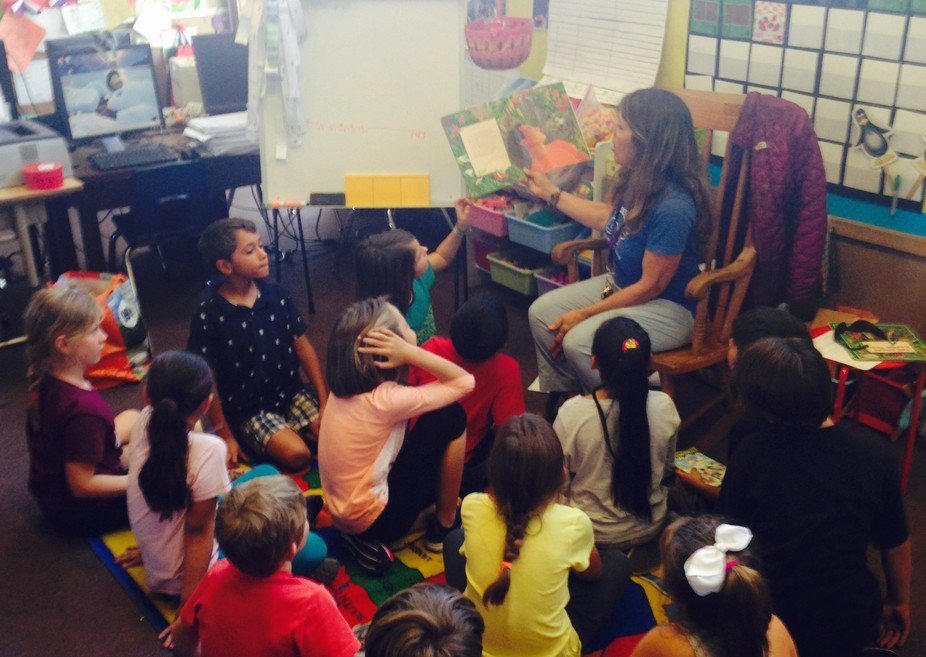
© Kathleen Tomscha, CC BYCalifornia elementary school teacher doing shared reading
If you are a parent or a teacher, you most probably read stories to young children. Together, you laugh and point at the pictures. You engage them with a few simple questions. And they respond.

So what happens to children when they participate in shared reading? Does it make a difference to their learning? If so, what aspects of their learning are affected?

Shared reading for language development

British researcher Don Holdaway was the first to point out the benefits of shared reading. He noted that children found these moments to be some of their happiest. He also found that children developed positive and strong associations with spoken language and the physical book itself, during these moments.

Since then a number of studies have been conducted showing the value of shared reading in children's language development, especially in vocabulary and concept development.

Early childhood researcher Vivian Paley, for example, during her work in the University of Chicago Laboratory Schools, found that kindergarten children learned when a story was dramatized in shared reading. Not only did children develop oral language, they imaginatively learned the conventions of a story, such as character, plot and themes. In shared storytelling, children also learned how to use language in multiple ways.

Other research found that shared reading was related to the development of expressive vocabulary. That is, children developed listening skills and built an understanding of grammar as well as vocabulary in the context of the story.

Magic Wand

Promoting mental wellness in children through mindfulness

kids mindfulness
Unlike 30 years ago, children today are often busy with school, after school programs, tutoring, extended days at daycare, followed by organized weekly activities and planned play dates. They seem to have less and less time for free play, relaxation and spending quality time with family. These factors may have a direct impact on physical, emotional and social learning.

I am a mother of two young children and an occupational therapist who works in both an adult mental health setting and a pediatric occupational therapy clinic. The importance of mental wellness is key to promoting, learning, thinking and social engagement.

There are a variety of tools that can be used to help promote mental wellness in children. Mindfulness is a tool that may help children improve self-regulation, impulse control, attention span, and improve social relationships.

Life Preserver

Concrete processing: A strategy of thinking that could protect people from the effects of traumatic experiences

trauma, medical emergency
People who may be exposed to trauma can train themselves to think in a way that could protect them from PTSD symptoms, according to a study from King's College London and Oxford University.

Clinical psychologists Rachel White and Jennifer Wild wanted to test whether a way of thinking about situations called concrete processing could reduce the number of intrusive memories experienced after a traumatic event. These intrusive memories are one of the core symptoms of PTSD.

Dr Rachel White explained: 'Concrete processing is focusing on how a situation is unfolding, what is being experienced and what the next steps are. It differs from abstract processing, which is concerned with analysing why something is happening, its implications, and asking 'what if' questions with no obvious answer.

'Previous research has shown that emergency workers who adopted the abstract processing approach showed poorer coping. Another study compared abstract and concrete processing of negative events and found that the abstract thinkers experienced a longer period of low mood.'

Dr Jennifer Wild said: 'If we consider groups more at risk of PTSD, like military personnel, emergency workers or journalists in conflict zones, they are all groups known to be likely to experience traumatic events.

'This means they have the opportunity to train themselves in strategies that might protect them from the ill effects. For that reason, we wanted to test whether training people to adopt a concrete processing approach could be one such strategy.'

Question

Emotions & feelings - what's the difference?

emotions
Emotions are a rich aspect of being human. We should honor our unique capacity to experience the complexity of humanity's emotional spectrum, instead of bashing those which we sometimes might consider 'bad'.

There are no strictly 'good' or 'bad' emotions. Fear for example, is a necessity for survival. Anger is necessary for engaging the pursuit of justice. Sadness helps us to understand the various loves and ideals we have in life.

Yet we do live in a duality of positive and negative spin. Both parts make a whole. So there are emotions that we process as more positive, like 'happiness', or more negative, like 'grief', yet both play a necessary role in helping us to learn and grow within the earthly context we find ourselves.