Science of the SpiritS


Sheeple

More creative people tend to have poorer sleep

sleeping child
People who are more creative go to sleep later, get up later and have worse sleep overall, research finds.

Both visually and verbally creative people reported worse sleep.

Their sleep was more disturbed during the night and they had more problems functioning during the day as a result.

Neta Ram-Vlasov, the study's first author, said:
"Visually creative people reported disturbed sleep leading to difficulties in daytime functioning.

In the case of verbally creative people, we found that they sleep more hours and go to sleep and get up later.

In other words, the two types of creativity were associated with different sleep patterns.

This strengthens the hypothesis that the processing and expression of visual creativity involves different psychobiological mechanisms to those found in verbal creativity."

Comment: Hidden epidemic: We are as dream-deprived as we are sleep-deprived


Butterfly

People find altruistic behaviour attractive, especially women

altruismo
The behaviour is particularly attractive to women, although men also rate it highly.

Being altruistic - helping others without thought of reward - is particularly attractive to women, research finds.

But both men and women find those who are altruistic more attractive.

The results come from three studies including over 1,000 people.

Comment: If people are attracted to altruism, natural selection would dictate that generations to come would be more generally altruistic than the present ones. That would be good news, for a change. But it is probably not as simple as that. Free will is real, and that means that the future is always open.


Hearts

Eight Habits of Considerate People

girl helping boy
Philosopher Arthur Schopenhauer once said, "Politeness is to human nature what warmth is to wax." It's true. Being kind and considerate softens people and makes them malleable to your way of thinking.

But I see another meaning there, too. I think he's also saying that being considerate of others is an integral part of what it means to be human. Charles Darwin would have agreed. He argued that our instinct to be considerate is even stronger than our instinct to be self-serving.

As obvious as that may seem, it's only recently that neuroscience has been able to explain why. Research conducted by Dacher Keltner at Berkeley showed that our brains react exactly the same when we see other people in pain as when we experience pain ourselves. Watching someone else experience pain also activates the structure deep inside the brain that's responsible for nurturing behavior, called the periaqueductal gray.

Being considerate of others is certainly a good career move, but it's also good for your health. When you show consideration for others, the brain's reward center is triggered, which elevates the feel-good chemicals dopamine, oxytocin, and endogenous opioids. This gives you a great feeling, which is similar to what's known as "runner's high," and all that oxytocin is good for your heart.
"Being considerate of others will take you further in life than any college or professional degree." - Marian Wright Edelman

Family

Unschooling: learning and living in the now

baker girl

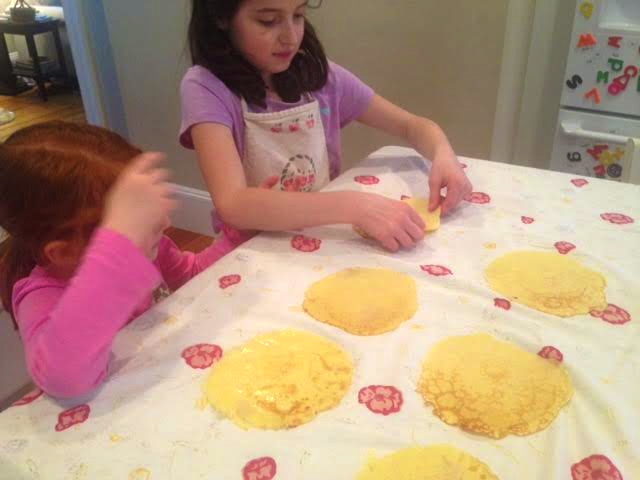
My daughter is a baker. When people ask her what she wants to be when she grows up, she responds breezily: "A baker, but I already am one."
You see, with unschooling there is no postponement of living and doing. There is no preparation for some amorphous future, no working toward something unknown.

There is simply life.

The question of what a child wants to be when she grows up is a curious one well-rooted in our schooled society. Disconnected from everyday living and placed with same-age peers for the majority of her days and weeks, a schooled child learns quickly that "real life" starts after. It starts after all of the tedium, all of the memorizing and regurgitating, all of the command and control. It starts after she is told what to learn, what to think, whom to listen to. It starts after her natural creativity and instinctive drive to discover her world are systematically destroyed within a coercive system designed to do just that. She must wait to be.

With unschooling there is no after. There is only now. My daughter is a baker because she bakes. She is also many other things. To ask what a child wants to be when she grows up is to dismiss what she already is, what she already knows, what she already does.

Baking brings my daughter daily joy and fulfillment while also helping to nourish her family and friends. She writes a baking blog, sharing her recipe adaptations and advice. She reads cookbooks, watches cooking shows (The Great British Baking Show is a favorite), talks to other bakers--both adults and kids--to get ideas and tips. She learned this all on her own, following her own interests, and quickly outgrowing the library children's room cookbook section to the adult aisles.

Comment: See also: "Class Dismissed": New film promotes homeschooling


Butterfly

Restoring the body's natural balance: How toning your vagus nerve can relieve pain and inflammation

shoulder pain
Eight Ways to Boost Your Vagal Tone Naturally

A few simple practices that everyone can do, could be the secret to relieving pain and inflammation. In her article "Hacking the Nervous System", Gaia Vince, science journalist and editor of New Scientist, describes how a woman suffering from debilitating rheumatoid arthritis was successfully treated with a device that stimulated the vagus nerve. No pills, no morphine, no side-effects; just stimulating a nerve. Not only that, Gaia goes on to explain that by stimulating the vagus nerve we can find relief from inflammation, depression, anxiety, high blood pressure and other ailments, and we don't necessarily require a device to do so.

The vagus nerve is the longest nerve in the body. It starts at the base of the brain and runs through the whole torso, through the neck via the vocal cords, then passes around the digestive system, liver, spleen, pancreas, heart and lungs. It is an integral nerve in the parasympathetic nervous system, which is responsible for our rest and digest capacities, a calming and soothing force in our bodies. As opposed to the sympathetic nervous system which is responsible for our 'fight or flight' responses.

The tone of the vagus nerve is important to our health and is key to how well our bodies adapt to stress and recover equilibrium after a stressful event. High vagal tone improves the functioning of many of the body's systems. It reduces the risk of strokes and heart attacks and regulates blood sugar levels. It's also associated with feeling calmer and more contented. Low vagal tone, however, is linked to cardiovascular diseases, strokes, diabetes, depression, chronic fatigue and other auto-immune disorders, and much higher rates of all inflammatory conditions including endometriosis, Crohn's, lupus etc.

Comment: Éiriú Eolas is a scientifically proven breathing and meditation program that is designed to stimulate the vagus nerve, reducing stress while also helping to heal emotional wounds. Visit the Éiriú Eolas site to learn more about the scientific background of this program and then try it out, free of charge.

More nervy facts about the vagus nerve:


Hourglass

Coming to terms with the prospect of dying

Palliative-care
Palliative-care
Palliative-care doctors explain the "existential slap" that many people face at the end.

Nessa Coyle calls it "the existential slap" - that moment when a dying person first comprehends, on a gut level, that death is close. For many, the realization comes suddenly: "The usual habit of allowing thoughts of death to remain in the background is now impossible," Coyle, a nurse and palliative-care pioneer, has written. "Death can no longer be denied."

I don't know exactly when my mother, who eventually died of metastatic breast cancer, encountered her existential crisis. But I have a guess: My parents waited a day after her initial diagnosis before calling my brother, my sister, and me. They reached me first. My father is not a terribly calm man, but he said, very calmly, something to this effect: "Your mother has been diagnosed with breast cancer."

There was a pause, and then a noise I can best describe as not quite a sob or a yell, but feral. It was so uncharacteristic that I didn't know then, and I still don't know, whether the sound came from my father or my mother.

I think that was the moment of her-and their-existential slap.

Comment: Some other thoughts on this rather somber subject:


Eye 2

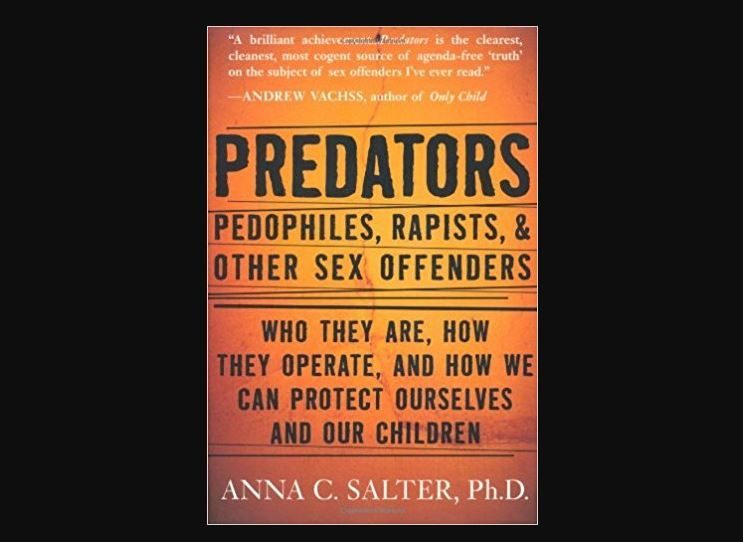
'Truth, Lies and Sex Offenders': Anna Salter's documentary on sexual predators

Predators book
© Basic Books

Comment: A warning to our readers: the content of the videos are graphic. Given the recent reports of sexual assault and pedophilia in Hollywood, it's obvious that sexual predation is an ongoing problem. These interviews give a glimpse into the depraved mindset of these almost-human like creatures. See the links below for more.


It has been requested, so here it is. These people were mentioned in Anna Salter's book: Predators: Pedophiles, Rapists, And Other Sex Offenders.


Please watch both parts to get a complete picture, although be forewarned, part 2 is far more disturbing.

Comment: You can purchase a DVD of the documentary from Dr. Salter's website here and read or listen to our interview with her here.

The best defense we have against sexual predators is knowledge of their thinking; how and where they operate. Get and read "Predators: Pedophiles, Rapists, And Other Sex Offenders" by Dr. Salter to protect and educate yourself and your family.

For more on pedophilia in 'high places', see:


Brain

Report shows willingness to take risks now considered a personality trait

bungee jumping
People differ in their willingness to take risks. An individual's propensity for risk taking can also vary across domains. However, there is new evidence showing that there is also a general factor of individual risk preference, which remains stable over time - akin to the general Intelligence Quotient (IQ). Researchers from Switzerland and Germany report these findings based on over 1500 participants in the journals Science Advances and Nature Human Behaviour.

Should I invest my money or leave it in my savings account? Have surgery or not? We make decisions like these knowing that they have consequences and involve risks. But what is the nature of the risk preference driving risk-related decisions? Does our risk preference depend on the context or is it largely consistent across situations? Both is true, according to findings from a large-scale study from researches of the Max Planck Institute for Human Development in Berlin and the University of Basel, with funding from the Swiss National Science Foundation.

To assess the risk preferences of 1'507 adults aged between 20 and 36 years, they used three distinct approaches: Self-reports on hypothetical risk scenarios, experimental behavioral tests involving financial incentives as well as information on actual risky activities in everyday life. In total, participants completed 39 tests over the course of a day. To examine how stable the risk preference is over time, the researchers had 109 participants repeat the tests after six months. Previous studies on risk preference mostly used just one or only a few selected measurement instruments.

Arrow Down

Vegetarians are more likely to experience depression and the longer they follow the diet the worse their mood

depressed vegetarian, depression
The longer people followed a vegetarian diet, the higher their depression scores, the researchers found.
Vegetarians are twice as likely to experience depression as those eating a regular balanced diet, a new study finds.

The longer people followed a vegetarian diet, the higher their depression scores, the researchers found.

It is possible that the link is down to poor nutrition.

Vegetarians typically have low levels of vitamin B12 in their diet.

Indeed, around 50% of vegans have a vitamin B12 deficiency, while 7% of vegetarians have the deficiency.

Vitamin B12 is found in red meat and has been linked to mood problems.

Comment: Many well-intentioned people have been misled into following vegetarian diets believing them to be more nutritionally healthy and more ethical - unfortunately nothing could be further from the truth. Humans are integrated into the cycle of life and, as such, should eat a diet that nature intended for us; that diet undoubtedly includes meat and animal fat. For more information:


Black Cat 2

SJWs are embracing witchcraft in their war against Trump

Trump witches
'You have got to be kidding me.'
On a Wednesday evening last week, I sat in on a class called "Witchcraft 101: Curses, Hexes and Jinxes," at Catland, a fashionable occult boutique in Bushwick, Brooklyn. More than a dozen people, most of them young women, sat in folding chairs in the store's black-walled event space. The instructor was one of Catland's co-owners, Dakota Bracciale, a charismatic, foul-mouthed 28-year-old former M.A.C. makeup artist dressed in flowing black, with a beard and long, lavender nails.

"If you're not ready to admit that the universe is chaos, I'm not sure how far you're going to go," Bracciale said to the class, describing witchcraft as a way to exercise power in a world without transcendent moral rules, a supernatural technology for taking care of yourself when no one else will. Witchcraft, Bracciale said, lets you be the "arbiter of your own justice."

I suspect that this assumption of chaos - the sense that institutions have failed and no one is in charge - helps explain the well-documented resurgence of occultism among millennials. Attempts at spell-casting are obviously not unique to today's young people; the Washington writer and hostess Sally Quinn just published a book in which she boasts about hexing the renowned magazine editor Clay Felker, my former journalism professor, before his death from cancer. Still, magic and witchcraft have a renewed cachet, one that seems related to our current climate of political and cultural breakdown.


Comment: Totally. Just ask Hillary, the Podestas, and the Washington crowd about 'spirit-cooking' and pizza parlors. Occultism is all the rage in Washington these days.


Comment: Actually, just under the surface of a large minority of American culture - situated primarily at the top and along coastal cities - something furious is brewing, a resurgent Crowleyan spirit that "what thou wilt shall be the whole of the law."

These hapless dupes have little or no idea how their 'magick' amplifies chaos in this realm.