Science of the SpiritS


Brain

'Avatar therapy' having success helping schizophrenics confront hallucinations

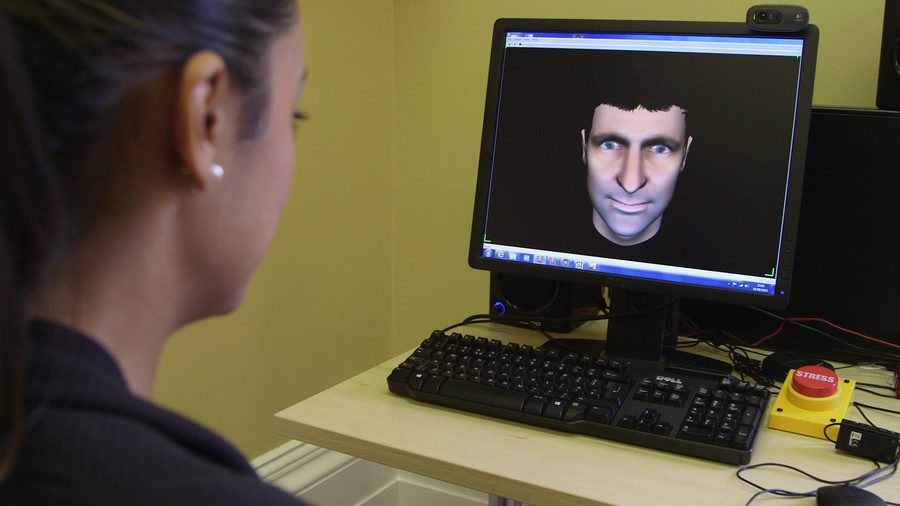
Avatar therapy
© King's College LondonAvatar therapy for the treatment of schizophrenia.
Coming face-to-face with an avatar on screen may help schizophrenics cope with their hallucinations, a study found. Patients confronting avatars turned out to be less distressed and heard voices less frequently.

According to the research by King's College London (KCL), the new treatment for schizophrenic hallucinations could be twice as effective as counseling. The study, published in the Lancelot Psychiatry Journal, tested 150 patients. Of these, 75 who had been hearing voices for more than a year were given six sessions of avatar therapy, while another 75 got straightforward counseling.

Alarm Clock

The power of community: Unless we connect with something greater than ourselves we are one step from disaster

traditional village in
© WikiVillage in Ogi Shirakawa-gō, Gifu, Japan
"It takes a village to raise a child" African Proverb

How do you identify yourself? What do you connect with that is greater than you? Is it your country, religion, state, town, college, or some other group or organization? By being part of a something bigger than ourselves helps our mental health. But the connection should go far beyond mental the bonds should be real and tangible.

I am a great admirer of the indigenous peoples of the United States. They had a society without poverty and homelessness while at the same time having very little crime and warfare. This was accomplished without the existence of prisons or psychiatric hospitals. What was the key to their success? I believe that their harmony in living was primarily from their deep spirituality and their strong cultural bonds.

The Native Americans in a sense thought of themselves as one large family. As a person who severely suffered from mental illness I was at a time in great need. I could not work to support myself. Fortunately my parents provided me with the food and shelter that I needed. I received medical care in the form of hospitalization, medicine, seeing a psychiatrist and attending a mental health center. Unfortunately these things weren't free but rather they came at a financial cost.

Brain

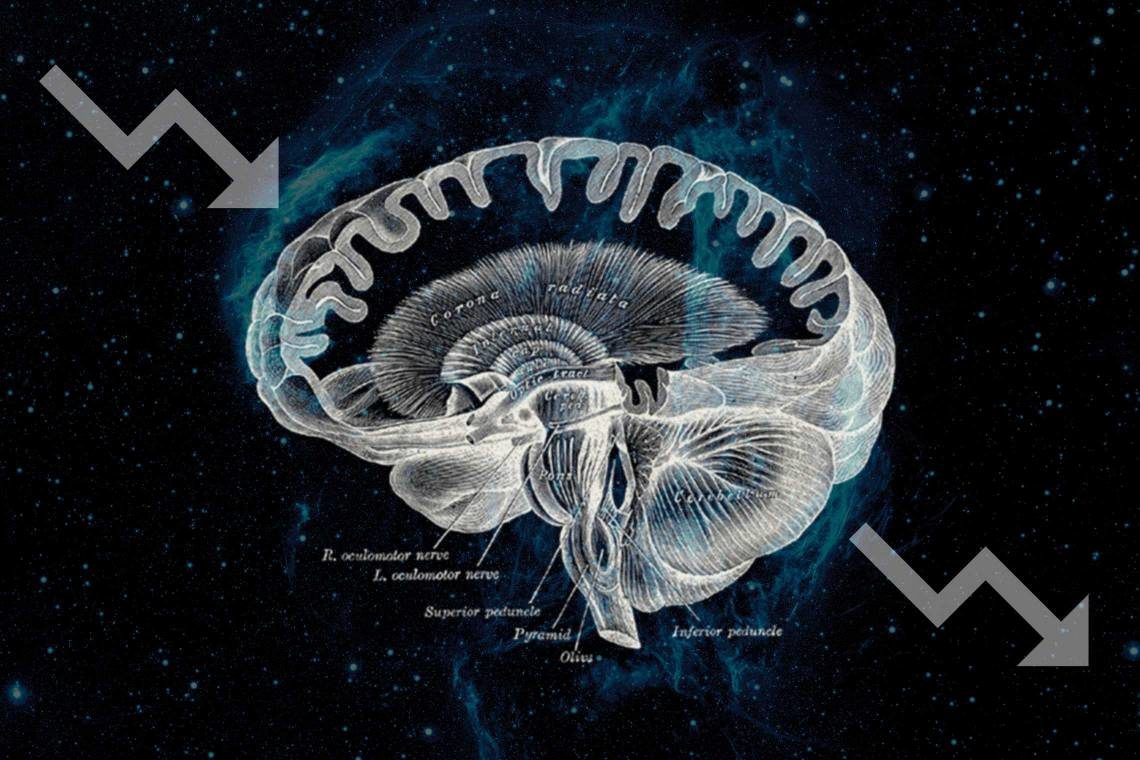
Activity in brain's thinking and problem-solving center linked to avoiding anxiety

brain
© Jonathan Lee, Duke University.Boosting activity in the brain’s thinking and problem-solving centers may protect at-risk individuals from developing anxiety.
Boosting activity in brain areas related to thinking and problem-solving may also buffer against worsening anxiety, suggests a new study by Duke University researchers.

Using non-invasive brain imaging, the researchers found that people at-risk for anxiety were less likely to develop the disorder if they had higher activity in a region of the brain responsible for complex mental operations. The results may be a step towards tailoring psychological therapies to the specific brain functioning of individual patients.

"These findings help reinforce a strategy whereby individuals may be able to improve their emotional functioning -- their mood, their anxiety, their experience of depression -- not only by directly addressing those phenomena, but also by indirectly improving their general cognitive functioning," said Ahmad Hariri, a professor of psychology and neuroscience at Duke. The results are published Nov. 17 in the journal Cerebral Cortex.

Previous findings from Hariri's group show that people whose brains exhibit a high response to threat and a low response to reward are more at risk of developing symptoms of anxiety and depression over time.

Comment: See also: How various brain areas interact in decisions, and how not to be a slave to our destructive emotions


Hearts

Children suffer without dad: "The father plays an important role"

"The father, as the natural chief and protector of the family, plays an important role."

father and child
Study after study shows the tremendously negative impact of not having a father present during childhood. While the damage is especially evident with boys, girls also suffer the consequences -- hence the unfortunate phrase, "She has daddy issues."

Despite the significant evidence that biological fathers are critical to healthy childhood development, our culture doesn't seem to value fathers. Some would argue that the popular culture actually denigrates fathers, pointing for example to how fathers are often portrayed in TV shows and ads as idiots and buffoons.

Comment:
Children who have an active father figure have fewer psychological and behavioral problems


Family

Children with psychopathic tendencies show less desire to fit in with the laughter of other children

sad boy
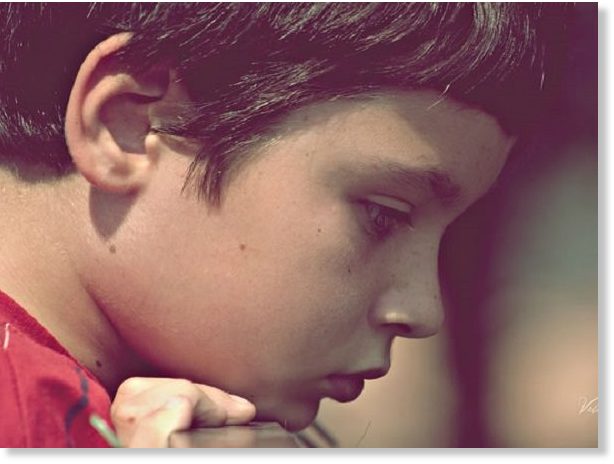
Some children are at a higher risk of developing psychopathy.

Boys with psychopathic tendencies report less desire to fit in with the laughter of other children, research finds. Unlike most children, and adults, boys at risk of psychopathy do not find laughter contagious. Brain scans also showed they had a lower response to the laughter of others.

Professor Essi Viding, study author, said:
"It is not appropriate to label children psychopaths. Psychopathy is an adult personality disorder.

However, we do know from longitudinal research that there are certain children who are at a higher risk for developing psychopathy, and we screened for those features that indicate that risk."
Being callous and unemotional is linked to developing psychopathy in later life.

People

Smartphones: The obvious culprit in the deteriorating mental health of teens

cracked person
© pimchawee
Around 2012, something started going wrong in the lives of teens.

In just the five years between 2010 and 2015, the number of U.S. teens who felt useless and joyless - classic symptoms of depression - surged 33 percent in large national surveys. Teen suicide attempts increased 23 percent. Even more troubling, the number of 13 to 18-year-olds who committed suicide jumped 31 percent.

In a new paper published in Clinical Psychological Science, my colleagues and I found that the increases in depression, suicide attempts and suicide appeared among teens from every background - more privileged and less privileged, across all races and ethnicities and in every region of the country. All told, our analysis found that the generation of teens I call "iGen" - those born after 1995 - is much more likely to experience mental health issues than their millennial predecessors.

What happened so that so many more teens, in such a short period of time, would feel depressed, attempt suicide and commit suicide? After scouring several large surveys of teens for clues, I found that all of the possibilities traced back to a major change in teens' lives: the sudden ascendance of the smartphone.

Comment: See also:


Popcorn

Virtual reality machine lets you blow your mind without taking psychedelic drugs

Mushrooms
© Global Look Press
VR tech had to branch out into the world of psychedelics sooner or later. A hallucination machine developed by a British university makes it possible to trip out without taking illegal drugs.

Instead of experimenting with LSD and magic mushrooms, researchers at Sussex University's Sackler Centre for Consciousness Science have chosen a safer option that puts out more reliable data - a virtual reality headset designed to hallucinate in the same way that the human brain does.

Using the headset, researchers can turn the real world around us into a psychedelic hallucination without the high. The technology is based on Deep Dream, a computer program created by Google engineer Alexander Mordvintsev that enhances images using 'algorithmic pareidolia' - when the mind responds to a stimulus like a sound or an image by perceiving a familiar pattern where none actually exists. Academics hope that the virtual reality program will help them understand how the brain reacts when the rules of nature, time and space no longer apply.

Eye 1

Skeptics possess high cognitive ability and strong motivation to be rational

skepticism
Stephan Lewandowsky tried to make climate skeptics look stupid (by not even bothering to sample them, but impugning their beliefs as irrational from out of population samples), this study turns the tables on his execrable work and suggests that climate skeptics are both analytical and rational.

From the University of Illinois at Chicago:

The moon landing and global warming are hoaxes. The U.S. government had advance knowledge of the 9/11 attacks. A UFO crashed in Roswell, New Mexico.

Is skepticism toward these kinds of unfounded beliefs just a matter of cognitive ability? Not according to new research by a University of Illinois at Chicago social psychologist.

In an article published online and in the February 2018 issue of the journal Personality and Individual Differences, Tomas Ståhl reports on two studies that examined why some people are inclined to believe in various conspiracies and paranormal phenomena.
"We show that reasonable skepticism about various conspiracy theories and paranormal phenomena does not only require a relatively high cognitive ability, but also strong motivation to be rational," says Ståhl, UIC visiting assistant professor of psychology and lead author of the study.

"When the motivation to form your beliefs based on logic and evidence is not there, people with high cognitive ability are just as likely to believe in conspiracies and paranormal phenomena as people with lower cognitive ability."
Previous work in this area has indicated that people with higher cognitive ability - or a more analytic thinking style - are less inclined to believe in conspiracies and the paranormal.

Magic Wand

Why expressive writing about emotions can help you feel better

Woman writing
© Getty Images
Creativity can work wonders for mental health: Experts tout artistic practices like writing as beneficial for decreasing depressive symptoms, increasing positive emotions, and reducing stress responses. "Creativity is increasingly being validated as a potent mind-body approach as well as a cost-effective intervention to address a variety of challenges throughout the lifespan," therapist and visual artist Cathy Malchiodi wrote in Psychology Today. But the benefits of creativity aren't just mental. New studies show us that certain kinds of creativity, especially writing, can have equally positive outcomes for physical health.

Journaling has its own perks, but if you want to reap the full gamut of writing's benefits - which can include improvements in physical wellness - you may have to dig a little deeper and engage in expressive writing, which writer and scholar John F. Evans describes as emotional writing that comes from our core. "Expressive writing is personal and emotional writing without regard to form or other writing conventions like spelling, punctuation, and verb agreement," he wrote in Psychology Today. "Expressive writing pays more attention to feelings than the events, memories, objects, or people in the contents of a narrative [and is] not so much what happened as it is about how you feel about what happened or is happening."

Comment: See also: Writing to Heal


Bulb

Learning from other people's regrets

emotional pain, sadness
Regrets. We all have them - things said or done; things left unsaid or undone. Paths that weren't followed; opportunities missed due to fear or insecurity. The list is long, but one of the biggest regrets in life reported by a large number of people is not being there for someone at the end of life.1 In other words, being too busy with "life" to tend to those near death.


Interestingly, while a regret can be phrased either as an action or as an inaction ("I wish I had not quit high school," versus "I wish I had stayed in high school"), regrets framed as actions tend to be more emotionally intense than regrets about inactions, but inactions tend to be longer lasting.2

Emma Freud, a columnist for The Guardian, recently explored themes of regret on social media, covering everything from relationships, work-life balance and personal passions, to addiction, illness and death. If you're so inclined, you can take a look at some of the thousands of responses she received.3 Chances are, you'll recognize yourself in some of them.