Science of the SpiritS


Brain

Harness the power of your frontal lobes to maximize your brain's potential

brain, prefrontal cortex, brain regions
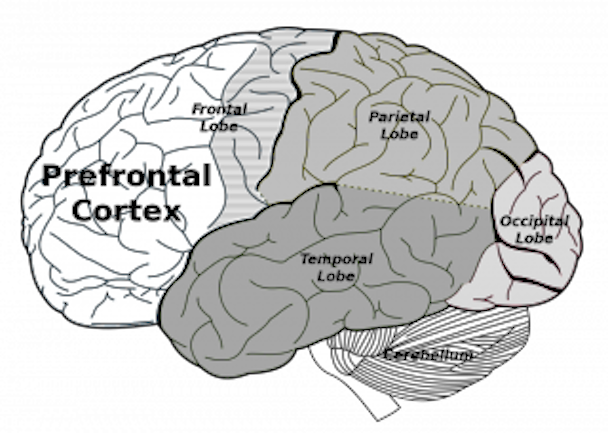
Your brain is wired to conduct your most important work each day through the most intricate neural connections and across your brain's four major lobes: frontal, temporal, parietal and occipital. But how you conquer the complexities you do relies on going full frontal.

To achieve all that you do - to think, to plan, to reason, to manage your emotions, to make decisions, and to problem solve - is a major feat of your frontal lobe. High-level thinking skills that you so often take for granted -- such as determining what home to buy, what job to pursue, what medical advice to take and what investment to make -- stem from the brainpower of your frontal lobe.

As the central command center of your brain, your frontal lobe links information back and forth across other brain regions and has the vastest neural network and the most reciprocal interconnections with other brain structures.


Comment: More tips on improving and retaining cognitive function:


Wolf

Studies reveal that humans care more about suffering dogs than suffering adults

Dogs emotions
© Gary John Norman/Getty
Humans love dogs more than their fellow man.

Two major studies showed that mankind has more empathy for pooches in dire circumstances than suffering people, according to a report in the Times of London.

A UK medical research charity staged two phony donation campaigns - one with a dog and the other featuring a man. Of course, the pooch drew more contributions.

"Would you give pounds 5 to save Harrison from a slow, painful death?" the separate ads said, featuring a canine and human "Harrison."

Then a Northeastern University study showed that only a baby human could compete with man's best friend.

TV

How to free your mind from media brainwashing

tv eats brain
Starting with Gutenberg's printing press, then Thomas Edison's motion picture camera and the introduction of celluloid and the silver screen, and later the cathode ray tube - a select few media institutions, and the men behind them, have enjoyed monolithic monopoly over the information we see and hear.

Their machine is awesome and seemingly unstoppable, and reaches anywhere, anytime and into the minds of all it targets.

How does one navigate, let alone make sense, of this 21st century matrix?

If this transformation were truly an organic process, then most critical minds would be able to rationally deal with our total immersion in media. But the evolution of technology and how we interact with it is not so easy to articulate. As platforms and choice continue to proliferate, the situation is becoming more attuned to Chaos Theory than Darwinian Theory. The media and its modern marketing arms tell us it's all progress. By now, their role is well defined - as the initial express vehicle on which all new ideas and advancements are delivered into the mainstream. In most cases, one could say the public are now fully preconditioned to accept new media on arrival.

Sun

Inspired by Jordan Peterson: Insisting on truth in a time of chaos 

Jordan Peterson
Jordan Peterson

Edit: Based largely on Jordan Peterson's work, I have started a new men's movement called Rebel Wisdom - with events, meetings and content - in London, UK. More details here: www.rebelwisdom.co.uk
"This man could single-handedly save Western Civilization, if people would listen."
A typically bombastic quote from a Youtube commenter on one of Jordan Peterson's online lectures. But in the last weeks of listening to him, I've come to think that he might have a point.

Jordan Peterson is a clinical psychologist and professor at the University of Toronto. I would say that what gives his words such impact is the way he combines the deep insights into the individual human psyche he has gained from clinical practice - working with people in states of psychological crisis and personal transformation - with a deep engagement with the ideas and thinkers who have most clearly grappled with the deepest existential questions of the human condition.

And more than that, his is a voice deeply engaged with the problems of the present moment, and he himself believes that the stakes are high: "I do believe we are in a period of chaos - and in a period of chaos the time horizon shrinks - because the outcome is uncertain ... sometimes the outcome is catastrophe."

Comment: Understanding Peterson's message may take time and effort (as most anything worthwhile does) but it's a sad testament to what he's describing that a part of society not only refuses to try and understand his nuanced explanations - but that people have decided he is a threat to their existence:


People

Website collects stories of near-death experiences

near death light
© GettyA website dedicated to sharing survivors' near-death experience stories has revealed some incredible claims about the afterlife.
As a species, we've been fixated on working out what happens when we die ever since we evolved a big enough brain to understand what death is.

Of course, the trouble is that the only people who know for sure are all dead... so they aren't much help when it comes to filling in the gaps.

But what about the people who die and then come back to life - as part of a near-death experience?

One website, the Near Death Experience Research Foundation, has made it its mission to collect the stories of people who came close to the brink - but lived to tell the tale.

On the site, alleged survivors have shared a host of incredible stories about what the afterlife is really like, with some amazing claims about life after death.

Some of the firsthand accounts are chilling, like the story of the person who claimed they experienced a vision of hell during a suicide attempt.

Comment: World's largest Near Death Experiences (NDEs) study published


Snakes in Suits

Study finds psychopaths more likely to major in business and economics at college

Psychopaths are likely to be selfish, callous, remorseless and anti-social.
teen psychopath
Psychopaths are more likely to major in business and economics, a study finds. This supports the view of business people as tending towards the callous and self-interested.

At the other end of the scale, people intending to study psychology were the least likely to have psychopathic traits. The results come from a survey of over 400 Danish students. They took a personality test along with providing information about their future academic choices.

All the information was collected before they started their course, so it was unlikely the business and economic courses turned them into psychopaths.

Sheeple

Study shows lucid dreaming induction techniques work, especially for those who fall asleep within 5 minutes

butterfly dream
Lucid dreaming is a learnable skill, according to new research published in the journal Dreaming. Lead author Dr. Denholm Aspy of the University of Adelaide and colleagues have found that a specific combination of techniques will increase people's chances of having lucid dreams, in which the dreamer is aware they're dreaming while it's still happening and can control the experience.

The study involved 169 Australian participants divided into three groups and investigated the effectiveness of three different lucid dream induction techniques:
  1. reality testing - which involves checking your environment several times a day to see whether or not you're dreaming;
  2. wake back to bed (WBTB) - waking up after five hours, staying awake for a short period, then going back to sleep in order to enter a REM sleep period, in which dreams are more likely to occur;
  3. mnemonic induction of lucid dreams (MILD) - which involves waking up after five hours of sleep and then developing the intention to remember that you are dreaming before returning to sleep, by repeating the phrase: 'The next time I'm dreaming, I will remember that I'm dreaming;' you also imagine yourself in a lucid dream.
Among the group of 47 people who combined all three techniques, participants achieved a 17% success rate in having lucid dreams over the period of just one week - significantly higher compared to a baseline week where they didn't practice any techniques.

Arrow Down

Study shows correlation between depression and shorter life span

depression depresion
© Imagen ilustrativa/ pexels.com
People who suffer from depression may not live as long as individuals who don't experience this mental health disorder, a Canadian study suggests.

Researchers examined six decades of mental health and mortality data on 3,410 adults during three time periods: 1952 to 1967, 1968 to 1990 and 1991 to 2011. Depression was associated with an increased risk of premature death in every decade of the study for men, and starting in the 1990s for women.

The connection between depression and a shorter lifespan appeared strongest in the years following a depressive episode, leading the researchers to conclude that at least part of the risk might be reversed by effectively treating the mental illness.

"For some individuals depression can be very serious condition," said lead study author Stephen Gilman of the Eunice Kennedy Shriver National Institute of Child Health and Human Development.

"Given our finding that individuals whose depression was present at multiple time points in our study were at highest risk, it is very important to seek treatment for depression and to be vigilant about recurrences," Gilman said by email.

Comment: See also:


Butterfly

11 habits of very happy people

smiling woman
© Getty Images
We're always chasing something-be it a promotion, a new car, or a significant other. This leads to the belief that, "When (blank) happens, I'll finally be happy."

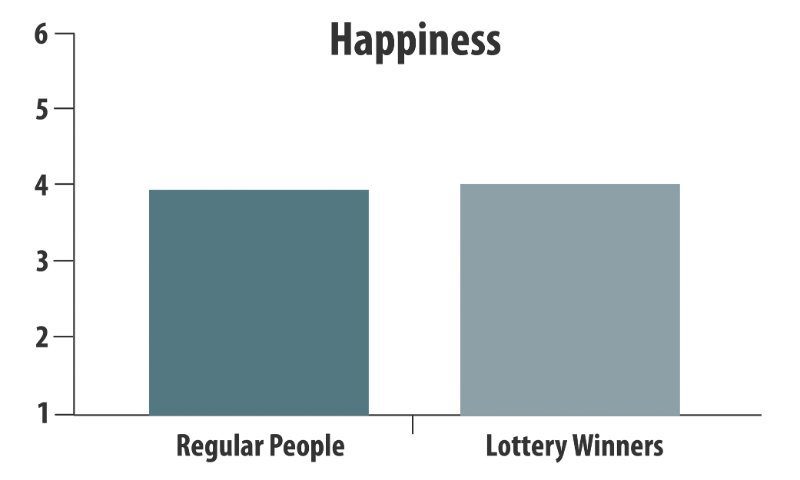
While these major events do make us happy at first, research shows this happiness doesn't last. A study from Northwestern University measured the happiness levels of regular people against those who had won large lottery prizes the year prior. The researchers were surprised to discover that the happiness ratings of both groups were practically identical.
happiness normal people lottery winners
The mistaken notion that major life events dictate your happiness and sadness is so prevalent that psychologists have a name for it: impact bias. The reality is, event-based happiness is fleeting.

Happiness is synthetic-you either create it, or you don't. Happiness that lasts is earned through your habits. Supremely happy people have honed habits that maintain their happiness day in, day out. Try out their habits, and see what they do for you:

Brain

More efficient brains: Study suggests a tendency to daydream may indicate a higher level of intelligence and creativity

 mind wandering, daydreaming
Unable to stay focused? Frequently going away with the fairies? It may be because you have so much brain capacity that it needs to find ways to keep itself occupied, according to new research.

A team of psychologists has found a positive correlation between a person's tendency to daydream and their levels of intelligence and creativity.

"People tend to think of mind wandering as something that is bad. You try to pay attention and you can't," said one of the team, Eric Schumacher from Georgia Institute of Technology.

"Our data are consistent with the idea that this isn't always true. Some people have more efficient brains."

Comment: