Science of the SpiritS


Hearts

Interpersonal synchrony: Holding your partner's hand can ease their pain

touch
© Laura Bass/EyeEm/Getty
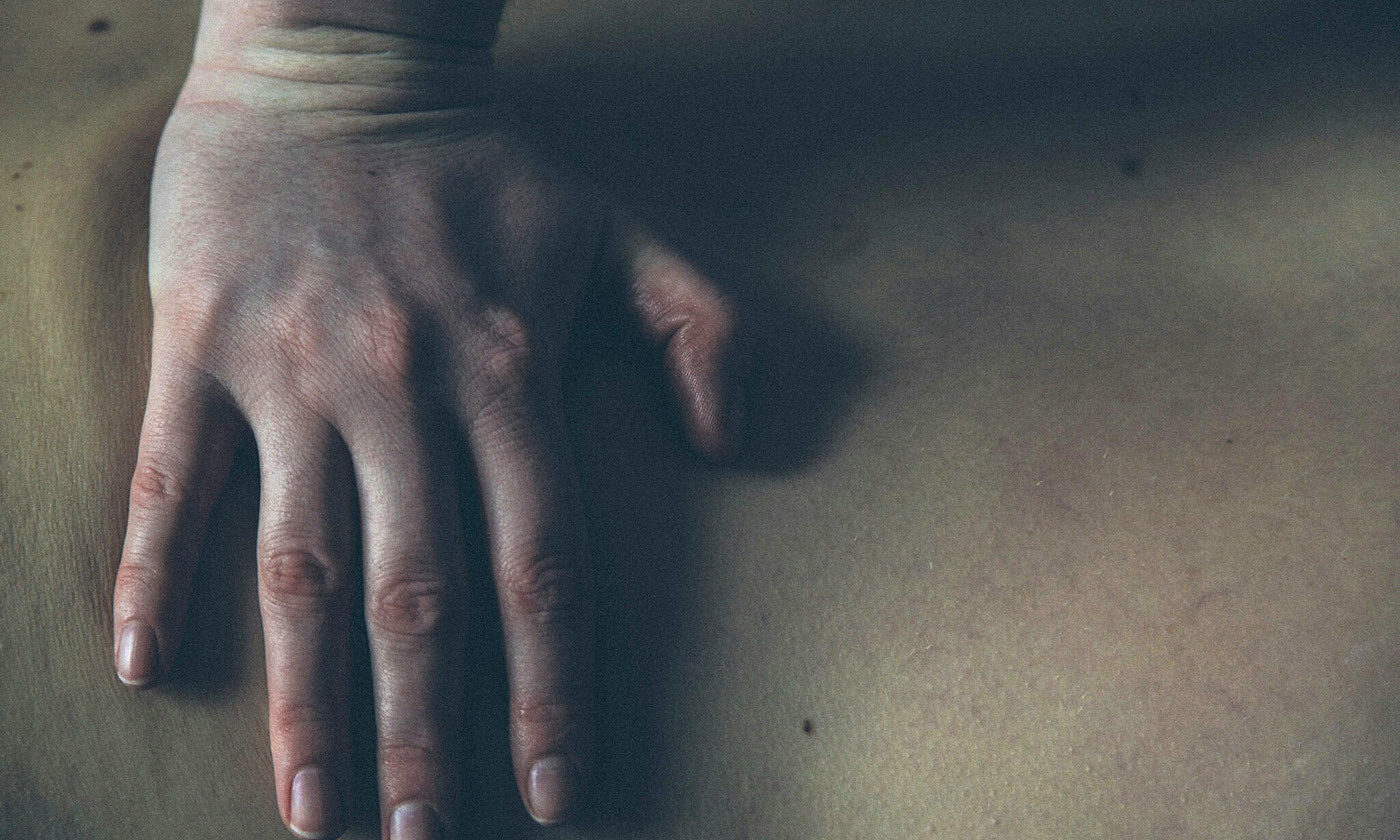
Around 100 million adults in the United States are affected by chronic pain - pain that lasts for months or years on end. It is one of the country's most underestimated health problems. The annual cost of managing pain is greater than that of heart disease, cancer and diabetes, and the cost to the economy through decreased productivity reaches hundreds of billions of dollars. Chronic pain's unremitting presence can lead to a variety of mental-health issues, depression above all, which often intensifies pain. And our most common weapon against pain - prescription painkillers - generates its own pain, as the ongoing opioid crisis attests. But must we rely on pharmacology to stave off pain? Perhaps there is a more natural nostrum - partial and insufficient, but helpful nonetheless - closer to hand.

Most pain research concentrates on a single, isolated person in pain. This allows researchers to simplify their analyses of pain, which is useful to a point, though it does yield a somewhat distorted view. The problem is that, outside of the laboratory, people are often not isolated: they take part in a social world. Without involving social interactions into the study of pain, we risk ignoring the part that social communication might play.

Comment: Read more about Hugs that heal: The importance of touch:


Shopping Bag

Wearing more clothing makes you look more intelligent

clothing
Wearing more clothing makes you look more competent, a study finds.

Something as simple as taking off a sweater is enough to make you look less competent, the researchers found.

The finding applies to both men and women, said Dr Kurt Gray, the study's first author:
"An important thing about our study is that, unlike much previous research, ours applies to both sexes.

It also calls into question the nature of objectification because people without clothes are not seen as mindless objects, but they are instead attributed a different kind of mind."

Book 2

Jordan Peterson: "Stop saying things that make you weak" (VIDEO)

jordan peterson 2
Jordan Peterson
Dr. Jordan Peterson is one of the great intellectual truth speakers of our time.

A true internet superstar speaking out against the poisons of marxism, social engineering and identity politics, Peterson received a ton of coverage after he dismantled Channel 4's Cathy Newman with logic and kindness.

Professor Peterson stunned and stumped Channel 4's Cathy Newman by making an uncomfortable observation about the Left's insistence to modify and censor speech for the sake of one's feelings.

Tucker Carlson and Dr. Jordan Peterson, one-on-one. Well worth watching...

Comment: See also:


Eye 1

Psychopaths do their best under abusive bosses

button up business
© Andre Hunter / Unsplash
A common saying is that people leave managers, not jobs. If you work for a narcissist or a psychopath, you might reach your limit faster than you thought.

But sometimes it can be a good thing to work for someone who doesn't have any empathy, because they can have strong leadership skills. They are cool-headed and charismatic, and can make ruthless business decisions. You just have to hope they won't cause you stress for their own amusement.


Comment: Psychopaths don't have 'good leadership skills.' A small percentage of psychopaths have incredible abilities to accumulate power, but that is not the same as demonstrating good leadership.


Many CEOs have psychopathic traits, but to get to that point they have to work under people too. According to a new study, published in the Journal of Business Ethics, psychopaths thrive under a certain kind of leadership, and it's the kind that most of us despise.

Heart

Pets grieve too: How to help your surviving pet deal with a loss

dog mourning, pet grief
Recently, researchers in New Zealand and Australia concluded what most observant pet parents already know, which is that many dogs and cats grieve the loss of an animal companion.1

The study was in the form of a survey of 279 owners following the death of a pet. The survey participants had a total of 311 surviving pets, including 159 dogs and 152 cats. The two most common types of changes the owners noticed in their surviving pets involved behaviors around affection and territory:

Better Earth

Japanese words for 'space' may change your view of the world

Japanese spaces
© from the grapevine.com
When you are the first person to arrive in a meeting room, do you think of it as being empty or full?

If you were raised in the West, a meeting room is made for people to meet. Therefore, if there are no people in that room, then of course it must be empty. As philosopher Henk Oosterling remarks, in the West, "a room is empty until someone enters."

However, in the East, space is understood a bit differently. In Japan, spaces have meanings prior to any activity that happens within them. For example, as a space in Japanese culture is understood by how it shapes relationships, the same meeting room in Tokyo would appear full of symbols and instructions about how interactions can and should occur. In this way, a room is always filled with invisible structures, regardless of its occupants.

Instead of framing space as a relationship between objects and walls, the Japanese concept of space is about the relationships among people. By shifting this view, we can discover an interesting way of thinking about the spaces we make and use in everyday life-and the relationships that they create.

Eye 1

6 traits that show you are dealing with a narcissist

narcissist
How to tell the difference between a narcissist and someone who just has high self-esteem.

1. Brittle self-esteem

One thing everyone notices about the narcissist is that they appear very full of themselves and self-centered. But, some people are full of themselves because they simply have high self-esteem, and possibly for good reason.

The narcissist, though, feels they are superior to others, but at the same time not very satisfied with themselves. Their self-esteem is brittle, ready to crack and reveal the uncertainties underneath. At their core, they can feel a certain lack, which is why they are...

Comment: See also:


Butterfly

Dog alerts owner to gas leak at home

Dog Alerts Owner To Propane Gas Leak Inside Long Island Home
© Ruby
A Long Island woman's dog saved her from a potentially dangerous situation.

Ronene Ando says her pit bull Ruby doesn't bark very often but she wouldn't stop Thursday night, carrying on for more than an hour.

Ando eventually followed Ruby to the basement of her Lakeview home, where she recently installed a propane heater. She smelled gas and shut it off right away.

Comment: Our animal friends continue to amaze us, proving that there's a lot we still don't know about them:


Cell Phone

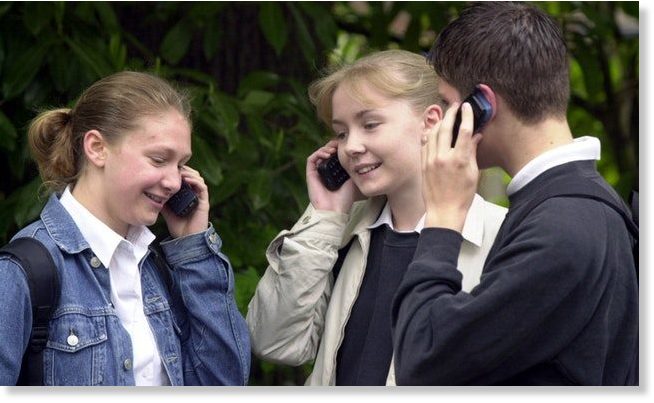
Study finds excessive screen time on cellphones linked to lower level of happiness in teens

students phone
© Tim Ockenden/PA
Smartphone and social media overload may be contributing to teenage angst, new research suggests.

Teens who spend large amounts of time glued to phone and computer screens are markedly less happy than those who prefer "real world" activities, a study has found.

Psychologists in the US analysed data from the Monitoring the Future longitudinal study, a major survey looking at the lives of more than a million young people.

They found that playing computer games, using social media, texting and video chatting were all associated with less happiness.

Brain

MIT researchers theorize confusing range of autism symptoms related to inability to predict what will happen next

struggling mind
© Jose-Luis Olivares/MIT
New theory may explain the complex set of symptoms seen in autism.

People with autism often display a complex and confusing range of symptoms, including hypersensitivity to sound, problems interacting with others and repetitive behaviours.

Scientist have long wondered what all these - and other, seemingly unrelated symptoms - have in common.

Now MIT researchers are testing a brand new theory: that autistic children have difficulties predicting what is going to happen next, and it's this problem that is at the root of autism (Sinha et al., 2014).