Science of the SpiritS


People

When mom feels depressed, baby's cells will feel it too

Crying baby
An estimated 1 in 9 women experience symptoms of postpartum depression. These symptoms - including mood swings, fatigue and reduced interest in activities - can make it difficult for mothers to bond with their newborns.

Early relationships between mothers and their infants can influence health across the lifespan, for better or worse. For example, adults who report more household dysfunction and abuse during their childhood are more likely to suffer disease as adults. Those with healthy and supportive relationships during early life are better at handling stress and regulating their emotions.

However, scientists do not completely understand how these environments get "under the skin" to shape health. Our latest paper, published in November, shows a possible link between increasing depression symptoms in mothers and cellular damage in their infants.

Comment: Further reading:


Family

Family dinners boost childrens' communication skills

family dinner
Eating out has been shown to be generally associated with poor food choices, bad health and fewer family meals. A new Canadian study shows that children who routinely eat their meals together with their family are more likely to experience long-term physical and mental health benefits.

Previous research by two Emory University psychology professors showed that families who regularly share meals together have children who know more about their family history and tend to have higher self-esteem, interact better with their peers and show higher resilience in the face of adversity. In addition, families who openly discuss emotions associated with negative events, such as the death of a relative or a pet, have children with higher self-esteem and sense of control.

Universite de Montreal doctoral student Marie-Josee Harbec and her supervisor, pyschoeducation professor Linda Pagani, made her finding on family eating after following a cohort of Quebec children born between 1997 and 1998.

The study is published in the Journal of Developmental & Behavioral Pediatrics.

Comment: See also:


Display

Generation Degeneration: Never being offline is a double-edged sword

kids with cell phones
© uwe umstätter / Global Look Press
Social networking sites have embedded themselves into our daily existence, brought our private lives closer together, and changed the way in which we communicate and interact. But are they a force for good or ill?

My grandparents announced major life events and kept in touch with family and friends through letters and face to face contact. My parents had access to landline telephones which they used to contact friends, arrange parties and share the latest gossip at a speed with which the previous generation was unfamiliar. Such modes of communication appear archaic and unfashionable when compared with Facebook, Twitter, Instagram and the many other social media platforms that nowadays enable an individual to willingly, or otherwise, share every detail of their lives with friends and strangers. As a teenager I had at my fingertips the tools to instantly communicate with friends, family and even strangers anywhere in the world via chatrooms, Skype and Yahoo messenger.

Comment: A double-edged sword indeed. While it seems social media can be a tool for good, it seems like most people aren't using it for that and rather use it to feed narcissism, dissociate and distract. See also:


Light Saber

Living the way of the Samurai warrior in everyday life: The seven principles of Bushido

Samurai
© Universal History Archive
The ancient and traditional Japanese class of warriors, known as the Samurai, have been widely immortalized in popular culture as the ultimate icon of military prowess, stealth, swordsmanship, loyalty, and honor. Known to be an elite group of military nobility, the Japanese Samurai were perhaps most revered for their codes of honor and principles, known as Bushido; which governed the Samurai's way of life and might also be loosely related to the European concept of chivalry.

The era of the noble Samurai came and went but the principles they lived by are universal and timeless. In a world where the romantic idea of chivalry or abiding by codes of ethics has eroded to make way for inauthentic lifestyles driven by self-gratification and a faulty moral compass, the Bushido way of life can offer more than a simple insight and serve as a reminder of how we can direct our lives for the better.

Gold Seal

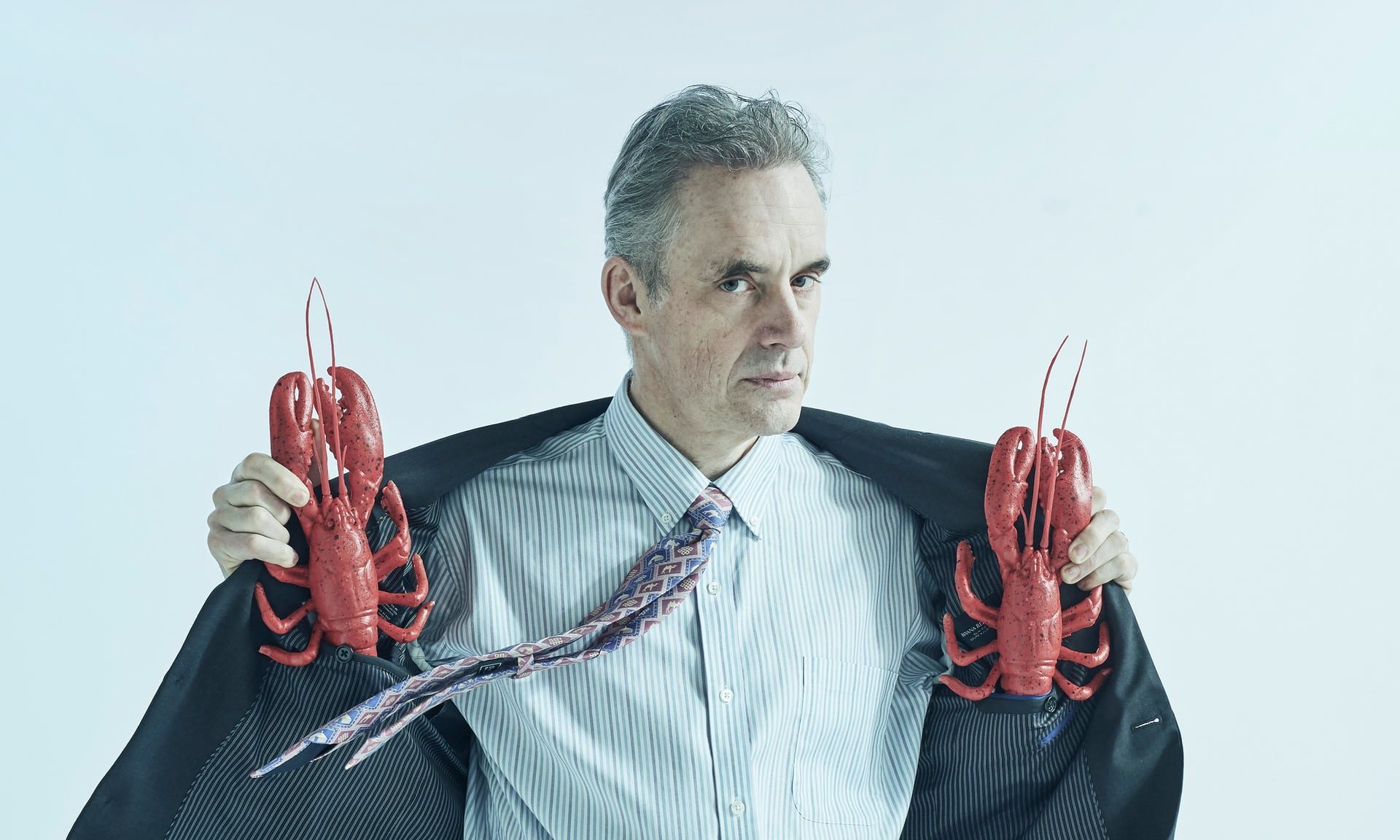
Jordan Peterson: 'The pursuit of happiness is a pointless goal. You need an AIM'

jordan peterson lobsters
© Phil Fisk for the Observer"You’re not as nice as you think. And you’re not as useless as you think": Jordan Peterson.
It is uncomfortable to be told to get in touch with your inner psychopath, that life is a catastrophe and that the aim of living is not to be happy. This is hardly the staple of most self-help books. And yet, superficially at least, a self-help book containing these messages is what the Canadian psychologist Jordan B Peterson has written.

His book 12 Rules for Life: An Antidote to Chaos is an ambitious, some would say hubristic, attempt to explain how an individual should live their life, ethically rather than in the service of self. It is informed by the Bible, Nietzsche, Freud, Jung and Dostoevsky - again, uncommon sources for the genre.

I doubt it has the commercial appeal of The Secret (wish for something and it will come true) and it certainly strays markedly from the territory of How to Win Friends and Influence People. But then Peterson is in a different intellectual league from the authors of most such books. Camille Paglia estimates him to be "the most important Canadian thinker since Marshall McLuhan".

Comment: 12 Rules For Life: An Antidote to Chaos is due for release on Amazon on 23 January 2018.


Bulb

Christie Blatchford interviews 'warrior for common sense' Jordan Peterson

jordan peterson 1
Jordan Peterson burst from academic quasi-obscurity in 2016 with a video criticizing political correctness on campus and rejecting gender-neutral pronouns. It went viral, setting him up for constant protests, calls for censure, even firing, while establishing him as a darling of the anti-PC crowd. In his new book, 12 Rules for Life: An Antidote to Chaos, Peterson draws on everything from neuroscience to the Old Testament to his well-known controversial views. He talks with Christie Blatchford, who has been known to court controversy herself, and who once referred to Peterson as "a warrior for common sense and plain speech." Their conversation has been edited and adapted.

Christie Blatchford (CB): About this book: It's hard work, as a proper self-help book should be, and it is a self-help book isn't it?

Jordan Peterson (JP): It's help for the self and everyone else at the same time.

CB: For a lot of people like me, who only knew you through the controversy at the University of Toronto and the genderless pronoun issue, it comes as a bit of a surprise that you're a psychologist, and there's a lot of psychology in here. Do you define yourself chiefly as a psychologist?

Comment: One of the things that makes him so popular is his ability to impart his message in clear and practical way. See also:


Horse

Equine therapy: Horses are helping veterans with PTSD

Horses
"Both the horses and the vets kind of exhibit or even suffer from the same fear circuit-based behavior."

In his old age, Chuck decided to take up a side job - walking in circles.

To be fair, he doesn't only work in circles. The retiree also lets people pet him, groom him, pick up his feet and talk sweet to him. Sometimes he even accepts sugar cube treats. That's because Chuck is a horse-one who's part of the Man O'War program's equine therapy study.

Branded as the first university-led formal study of its kind, the Columbia University research seeks to measure the efficacy of the seldom-studied use of equine therapy for veterans suffering post-traumatic stress disorder.

Comment: Horses can read our body language, even when they don't know us


Star

SOTT Focus: Jordan Peterson Goes International: Takes London by Storm

Jordan Peterson
Why are young Brits flocking to hear a psychology professor talk about morality?

Last Sunday night a capacity crowd of mainly young people packed into the Emmanuel Centre in London. Those who couldn't find a seat stood at the back of the hall. When the speaker entered, the entire hall rose to its feet. It was his second lecture that day, the fourth across three days of sold-out London events. For an hour and a half the audience listened to a rambling, quirky, but fascinating tour of evolutionary biology, myth, religion, psychology, dictators and Dostoyevsky. Occasionally a line would get its own burst of applause. One of the loudest came after the speaker's appeal for the sanctity of marriage and child-rearing.

Yet this was not a Christian revivalist meeting. At least not explicitly or intendedly so. It was a lecture by a 55-year-old, grey-haired, dark-browed Canadian academic who until 18 months ago was little known outside his professional field of psychology. Today, for at least one generation, Professor Jordan Peterson of the University of Toronto has become a mixture of philosopher, life-coach, educator and guru. He has the kind of passionate, youthful, pedagogical draw that the organized churches can only dream of. Anybody interested in our current culture wars, not to mention the ongoing place of religion, should head to YouTube, where his classes have been viewed by millions.

Comment: If you are still new to Peterson's ideas and wisdom, see the short documentary, Jordan Peterson: Truth in the Time of Chaos:


Also this recent television interview to get a sense of how he responds to someone who attempts to critique him:


And here's one of the talks he gave in London, about his new book 12 Rules for Life: An Antidote to Chaos:


Books

Read to lead and learn: How to digest books 'above your level' and increase intelligence

reading
The best advice I've ever got about reading came from a secretive movie producer and talent manager who'd sold more than 100 million albums and done more than $1B in box office returns. He said to me one day, "Ryan, it's not enough that you read a lot. To do great things, you have to read to lead."

What he meant was that in an age where almost nobody reads, you can be forgiven for thinking that the simple act of picking up a book is revolutionary. It may be, but it's not enough. Reading to lead means pushing yourself-reading books "above your level."

In short, you know the books where the words blur together and you can't understand what's happening? Those are the books a leader needs to read. Reading to lead or learn requires that you treat your brain like the muscle that it is-lifting the subjects with the most tension and weight.

For me, that means pushing ahead into subjects you're not familiar with and wresting with them until you can-shying away from the "easy read." It means reading Feynman over Friedman, biographies over business books, and the classics over the contemporary.

Comment: More tips on getting the most from your reading and its benefits:


People 2

Study finds young men prefer women of normal weight between 110 and 150 pounds over skinnier peers

waistline
Both better health and higher attractiveness were linked to this weight

Young men prefer young women of normal weight, research finds.

Flying in the face of the size zero trend, normal weight young women are seen as more healthy-looking and attractive than skinnier peers.

'Normal' weight for a young woman who is the average height in the US of 1.64 metres is between 50 kg and 68 kg. This range is higher for women who are taller and lower for those who are shorter.