Science of the SpiritS


Bulb

Common thinking errors: How to recognize logical fallacies so that they can be prevented

thinking errors
We would all benefit from thinking more about how we think.

Everybody makes thinking errors. But two things have happened recently that prompt me to write on this subject. One is politics, because in the U.S. it seems like almost everything has become politicized. Politicians, of whatever stripe, seemingly can't speak more than 30 seconds without making a thinking error. Sometimes it is deliberate, sometimes they are just clueless.

The other prompt comes from the new approach to science-education standards, as promoted by "A Framework for K-12 Science Education" and the "Next Generation Science Standards" (NRC 2012, Achieve, Inc. 2013). Practicing scientists know that the really important part of "doing" science is creative and critical thinking, and it is refreshing to see that science-education policy makers are trying to make such thinking a more prominent feature of K-12 science education. The new standards require students to perform such thinking tasks as "define problems, plan investigations, analyze and interpret data, construct explanations, engage in argument from evidence, and communicate information." These can be demanding challenges for students, who are not trained in formal logic and who have probably had little explicit instruction in how to think. Teachers may not be ready for this new approach to teaching science, because teacher-education programs do not include formal logic courses.


Comment: So often how we feel and behave is based on what we first think. How much better might we be doing as individuals and as whole societies if we were trained - at least to some degree - to think about the way we think! Since many of us, as a rule, have had little to no formal (or informal) instruction in this area, it certainly is worth considering how this study could serve as a potential for growth. What do you think?


Roses

Rethinking gratitude for the new year

gratitude note
© Eugene Kim, CC BYWhat is the framework of gratitude?
It's a new year, which means that it's also time to imagine new beginnings and better futures. It's time, in short, for New Year's resolutions.

Gratitude, in particular, has become a popular resolution. For many of us, living gratefully seems to promise more happiness in our lives.

But what if we've got gratitude all wrong?

I began writing my book "The Art of Gratitude" because I too believed that gratitude might offer an antidote to the anger, fear and resentment that characterize contemporary life. But as I read one self-help book about gratitude after another, it had the opposite effect on me. The more I read, the less grateful I felt.

I came to ask, does the problem lie in how gratitude tends to be defined?

The debt of gratitude

Gratitude is often defined as a feeling of obligation and indebtedness toward those who give us a gift or help us out in some way. Consider how often many of us use the phrase, "I owe you a debt of gratitude," or "One good turn deserves another."

Comment: Gratitude goes beyond indebtedness or paying someone back for an act of kindness. Gratitude is a state of mind that comes with numerous benefits to emotional and physical health. A study found that a focus on what you want - and therefore don't currently have - makes it more difficult to appreciate what you already have. They found that people who were more materialistic also felt less gratitude which, in turn, was associated with lower levels of life satisfaction.


Eye 2

Truly understanding the reasons why procrastination happens takes looking at multiple variables

Procrastination
"I love deadlines," English author Douglas Adams once wrote. "I love the whooshing noise they make as they go by."

We've all had the experience of wanting to get a project done but putting it off for later. Sometimes we wait because we just don't care enough about the project, but other times we care a lot - and still end up doing something else. I, for one, end up cleaning my house when I have a lot of papers to grade, even though I know I need to grade them.

So why do we procrastinate? Are we built to operate this way at some times? Or is there something wrong with the way we're approaching work?

These questions are central to my research on goal pursuit, which could offer some clues from neuroscience about why we procrastinate - and how to overcome this tendency.

Snakes in Suits

Study finds psychopaths use these words twice as often as others

psychopath words
Psychopaths use these words twice as often as non-psychopaths.

Psychopaths use words related to food, sex and money twice as often as non-psychopaths, a study finds.

Psychopaths are also less likely to use words related to family, religion and social needs.

The trends in word use reflect how psychopaths display excessive selfishness, detachment and emotional flatness.

The results come from an analysis of stories told by 14 psychopathic murderers in Canadian prisons.

Comment: See also:


Family

When and how to show courage in the face of feeling vulnerable

vulnerability
Being willing to let yourself be vulnerable takes great courage. Here's why.

"Nothing ventured, nothing gained"

The moment a situation makes you feel vulnerable, your knee-jerk reaction is to do everything possible to escape it. After all, the impulse to ward off - sometimes, at all costs - whatever threatens your sense of safety is only natural. It's an inherent aspect of our survival instincts. The question, though, is what might be the ultimate consequences of not confronting what you may only construe as hazardous. For if avoidance is your go-to response whenever anything starts making you feel uncomfortable, it's unlikely you'll ever come close to reaching your potential in life.

So, is your personal evasion of vulnerability so advanced as to "earn" you a Ph.D. in it? And if so, how might you transcend this possibly lifelong habit? What, inside you, would you need to cultivate to successfully overcome your powerful tendency to react to others and the world self-protectively?

Comment: See also:


People 2

What's driving young peoples' obsession with perfection?

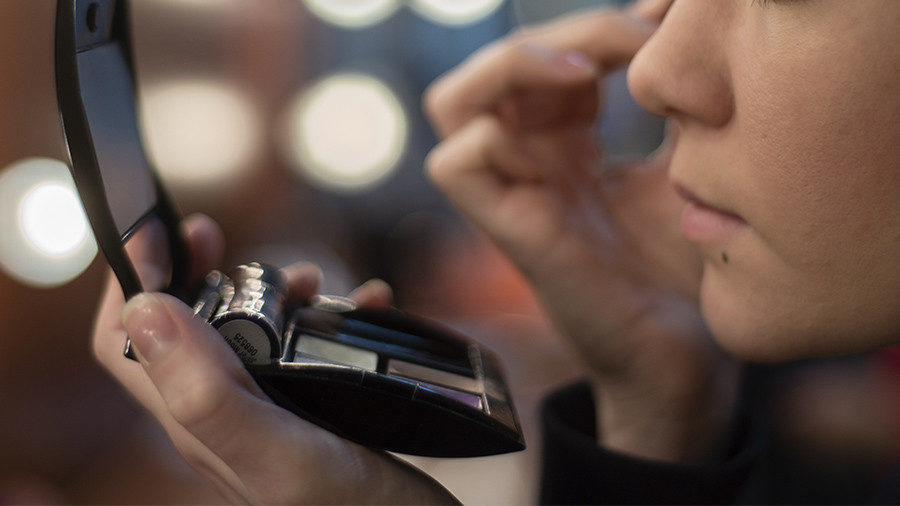
applying makeup
© Oleksandr Rupeta / Global Look Press
Perfection has officially become unappealing. Kids these days are more obsessed with perfection than many previous generations were, and this obsession is associated with increased depression and anxiety, according to a new study published in Psychological Bulletin.

The authors of the study reviewed prior research on perfectionism, which they broadly define "as a combination of excessively high personal standards and overly critical self-evaluations." They also conducted their own study among 41,641 American, Canadian, and British college students between 1989 and 2016. They found that perfectionism increased over time. And it's worst in the United States.

There are multiple dimensions to this cultural phenomenon, as the study refers to it, including self-oriented perfectionism, which is the pressure one puts on oneself to be perfect; socially prescribed perfectionism, the pressure one feels from society to be perfect, and other-oriented perfectionism, the pressure one puts on others to be perfect.

The research presents three reasons for this shift: the rise of neoliberalism, increasingly anxious and controlling parents, and the increasing power of meritocracy.

"[N]eoliberalism and its doctrine of meritocracy have combined to shape a culture in which everybody is expected to perfect themselves and their lifestyles, by striving to meet unrealistic achievement standards," the study states. "For parents, this new culture confers an additional burden. On top of their own duty to succeed, they are also responsible for the successes and failures of their children."

Attention

Chronic morning headaches linked to depression and anxiety

depression
Most people think this common symptom is unrelated to depression.

Morning headaches are a common sign of depression and anxiety, research finds.

People naturally assume that morning headaches are related to poor sleep.

While they often are, poor sleep is not the only cause.

The survey of 18,980 people found that the most significant factors linked to chronic morning headaches were anxiety and depression problems.

Comment: Nausea is also found to be a symptom of anxiety and depression.


Folder

Getting the statistics right: The majority of kids cease to feel transgender as they get older

transgender Ella
© BBCElla, a 17-year-old transgender girl interviewed for the documentary Transgender Kids: Who Knows Best?
The National Post recently covered the CBC's cancellation of a BBC documentary about transgender children (Why CBC cancelled a BBC documentary that activists claimed was 'transphobic'). In that coverage, the Post shared claims made by some activists criticizing some scientific studies, but did not apparently fact-check those claims, so I thought I would outline the studies here. For reference, in a previous post, I listed the results of every study that ever followed up transgender kids to see how they felt in adulthood (Do trans-kids stay trans when they grow up?). There are 12 such studies in all, and they all came to the very same conclusion: The majority of kids cease to feel transgender when they get older.

The Post conveyed criticisms alleged about two of those: "One study of Dutch children, in particular, assumed that subjects had 'desisted' purely because they stopped showing up to a gender identity clinic." Although unnamed, the claim appears to be referring to Steensma et al. (2013), which followed up on 127 transgender kids. Of them: 47 said they were still transgender; 56 said they were no longer transgender (46 said so directly, 6 said so via their parents, and 4 more said so despite not participating in other aspects of the study); and 24 did not respond to the invitation to participate in the study or could not be located.

Because all the medical services for transition are free in the Netherlands and because there is only one clinic providing those services, the researchers were able to check that none of the 24 had actually transitioned despite having the opportunity to do so. Steensma therefore reported that (80/127 =) 63% of the cases desisted. The alleged criticism is that one should not assume that the 24 who did not respond or could not be found were desisters. Regardless of whether one agrees with that, the irrelevance of the claim is clearly seen simply by taking it to its own conclusion: When one excludes these 24, one simply finds a desistance rate of (56/103 =) 54% instead of 63%. That is, although numerically lower, it nonetheless supports the very same conclusion as before. The majority of kids cease to feel transgender when they get older.

Comment: Further reading:


Question

12 questions that can change your life forever

Water sprinkler soul fireworks
The instinct is to look for answers, but the truth is that it's questions that teach us most. It can also be that the rhetorical questions - the ones that don't even seem to have answers - that push and push the hardest. Who do you think you are? What does all this mean? Why? Why? Why?

The right question at the right time can change the course of a life, can still a turbulent mind, or heal an angry heart. While every situation can generate its own, there are twelve questions, I think, that deserve to be asked not just once but many times over the course of a lifetime, some even many times over the course of the day.

I have gathered them from some of the wisest philosophers, most incisive thinkers, greatest leaders and most awesome badasses that ever lived. I'm not saying I know the answer to any of them, but I can say there is value in letting them challenge you. If you let them. If you let them do their work on you - and let them change you.

Health

Depression in men: Stigma and the fear of discovery

depression
© closeupimages – Fotolia
People are generally compassionate and understanding about people with depression or those who are suicidal.

But, men who are depressed themselves often view their own problems very negatively, new research finds.

Men who are depressed can see themselves as a disappointment and a burden to others.

The results come from a survey of 901 men and women in Canada.

Professor John Oliffe, an expert on men's health who co-led the study, said:
"While it was reassuring to find that Canadians in general don't stigmatize male depression or suicide, it was concerning that the men with depression or suicidal thoughts felt a strong stigma around their condition, and many were afraid of being discovered."

Comment: More on depression in males:
Many men try to hide their condition, thinking it unmanly to act moody. And it works: National studies suggest that doctors miss the diagnosis in men a full 70% of the time. But male depression also stays hidden because men tend to express depression differently than women do.

Research shows that women usually internalize distress, while men externalize it. Depressed women are more likely to talk about their problem and reach out for help; depressed men often have less tolerance for internal pain and turn to some action or substance for relief. Male depression isn't as obvious as the defenses men use to run from it. I call this "covert depression." It has three major symptoms. First, men attempt to escape pain by overusing alcohol or drugs, working excessively or seeking extramarital affairs. They go into isolation, withdrawing from loved ones. And they may lash out, becoming irritable or violent.