Science of the SpiritS


Post-It Note

New Year's Resolutions: Changing your life is harder than a drunken promise

Quit New year resolution
© Unknown
New Year's resolutions are the election promises of everyday life. You say the words, make the commitment, swear on everything you hold dear that you'll fix those potholes, but when push comes to shove it's a decade on and the cars are still bouncing and rolling over a broken road.

Resolutions are the same. You swear that you'll never touch another chocolate, but two months later you're guiltily staring at an empty box of fondants wondering where your self control went.

Hearts

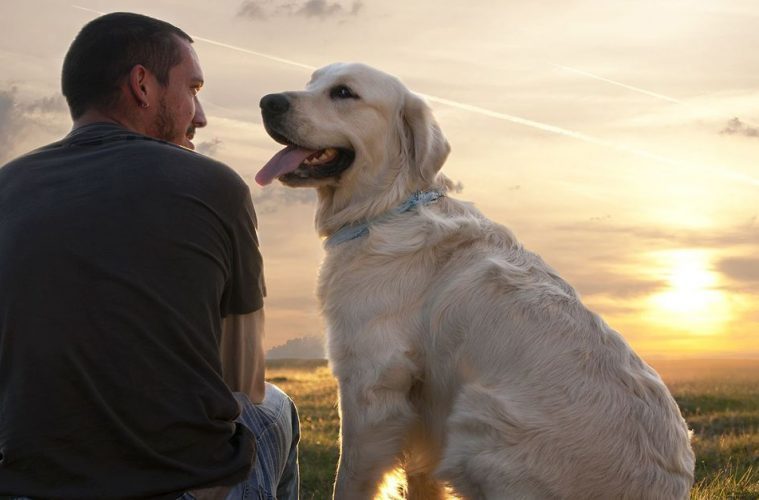
Inspiring example of how a loving bond between owner and dog brought new meaning to life

Bonds
Goes to show the strength of bonds and connection can change how we perceive and respond to life.
This was the sweetest thing I have seen in a long time, so I wanted to share this true connection with you all. I'm sure that all dog lovers out there can appreciate this and also anyone who has a compassionate bone in their body. This bond is real, and it goes to show just how much us humans thrive on connection and need it in our lives. It is also a wonderful example of how much our animal friends can assist us on this path if we are open to their assistance.

"He loves me unconditionally. I count my blessings every day."

This story is also a prime example of the notion that the opposite of addiction is connection. This man was addicted to drugs and quit so that he could help his dog get off the drugs. All of a sudden he had a purpose in life, and that purpose was to take care of this little friend who loved him unconditionally. In doing so, he was able to live his life, get clean, and recover from suicidal tendencies. My heart just melts to see this. There is no judgement with animals. Humans tend to make judgments and assumptions very quickly, especially about homeless people on the streets, but animals do not see these perceived "faults," and they love us anyways.

We can truly learn a lot from animals, as they have much to teach us about unconditional love and acceptance. We are so happy for this man and his little animal friend and hope they enjoy their time together.

Comment: What's also noteworthy and inspiring about the video is how his dog helped him to perceive the world differently, not through the eyes of an addict or someone who thought himself worthless, but through the eyes of someone who had a reason to live and someone to live for. He changed his thought patterns, and in turn, changed who he was.


Snakes in Suits

How to tell when you are talking to a psychopath

Psychopath
Approximately 1% of the human population fit the description of a psychopath: a personality type defined by a lack of care for others, a lack of empathy, violent and aggressive tendencies, shallow emotions, selfishness, dishonesty, overconfidence in themselves, and the ability to manipulate people. These types of people often exhibit behavioral traits known as the Dark Triad, a trio of narcissism, Machiavellianism, and psychopathy.

Some 25% of male inmates in the federal corrections system fit this description, but many psychopaths are often high-functioning people who often make their way into positions of power, such as CEO's, lawyers, media personalities, sales people, police officers and religious clergy.

Comment: To learn more about the biological roots of psychopathy, which includes violence as well as anti-social and dangerous behaviour, do read Professor Adrian Raine's Anatomy of Violence, and Stanton Samenow's Inside the Criminal Mind. For more on how to spot psychopaths you can read the following links:


Hearts

Best Friends For 60 Years Discover They Are Brothers

Walter Macfarlane and Alan Robinson brothers
© CBS NewsTwo men who have been best friends for six decades recently discovered they are brothers.
Two life-long friends from Hawaii found out that they have even more in common than they first thought.

Walter Macfarlane and Alan Robinson have been friends for more than 60 years.

Macfarlane never knew his father, and Robinson was adopted.

Both turned to DNA-matching websites to find out more.

Brain

Fear and intrusive thoughts - The signs that someone really has OCD

ocd cleaning
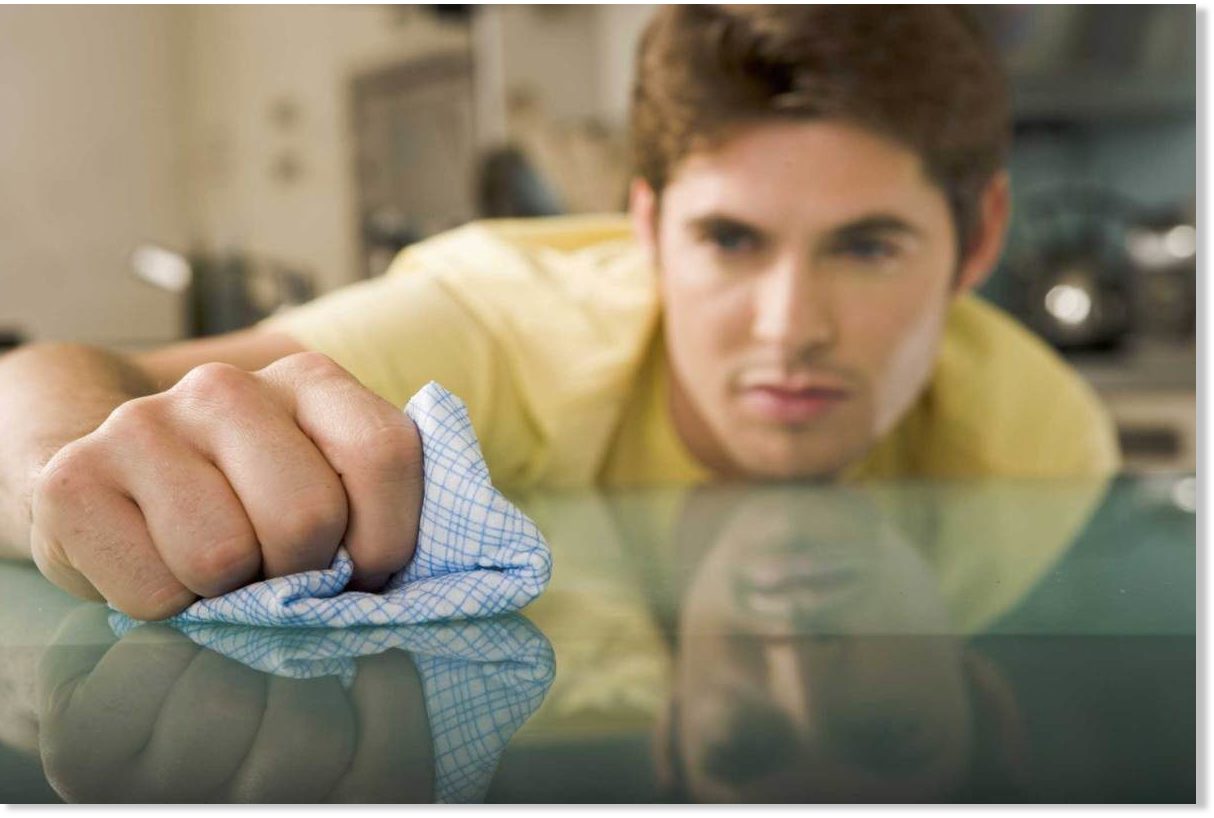
Obsessive-compulsive disorder (OCD) is often mixed up with having an obsessive personality. People with obsessive personalities may, for example, like to have their books arranged alphabetically, without having OCD.

The sign that someone really has OCD is that their behaviours are driven by fear or intrusive thoughts that they are trying to get rid of. OCD is most definitely not something sufferers derive any pleasure or satisfaction from.

Family

Overview of the 'drama triangle' and the three faces of victimhood

Lynne Forrest
Whether we know it, or not, most of us react to life as victims. Whenever we refuse to take responsibility for ourselves, we are unconsciously choosing to react as victim. This inevitably creates feelings of anger, fear, guilt or inadequacy and leaves us feeling betrayed, or taken advantage of by others.

Victim-hood can be defined by the three positions beautifully outlined in a diagram developed by a well respected psychiatrist, and teacher of Transactional Analysis, named Stephen Karpman. He calls it the "Drama Triangle," I refer to it as the victim triangle. Having discovered this resource some thirty years ago, it has become one of the more important tools in my personal and professional life. The more I teach and apply the victim triangle to relationship the deeper my appreciation grows for this simple, powerfully accurate instrument.

I've sometimes referred to the victim triangle as a "shame generator" because through it we unconsciously re-enact painful life themes that create shame. This has the effect of reinforcing old, painful beliefs that keep us stuck in a limited version of reality.

Comment: See also:


Bulb

Colliding with reality: What depth psychology tells us about victimhood

person looking through window
When Carl Jung was a 12-year-old schoolboy, he was shoved to the ground by another child, hitting his head on the pavement, and nearly losing consciousness. Instantly, he grasped the opportunities created by this attack.
At the moment I felt the blow, the thought flashed through my mind: "Now you won't have to go to school anymore." I was only half unconscious, but I remained lying there a few moments longer than was strictly necessary, chiefly in order to avenge myself on my assailant....

Music

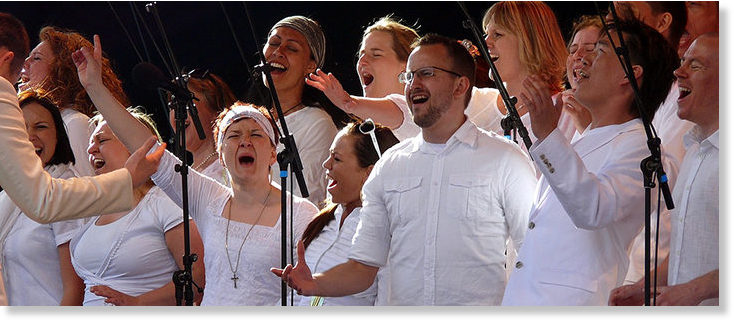
Singing your heart out with a group could very well make you happier

singing group
Singing in groups could make you happier, according to new research from the University of East Anglia (UEA).

Researchers examined the benefits of singing among people with mental health conditions including anxiety and depression.

They found that people who took part in a community singing group maintained or improved their mental health. And that the combination of singing and socializing was an essential part of recovery because it promoted an ongoing feeling of belonging and wellbeing.

Lead researcher Prof Tom Shakespeare from UEA's Norwich Medical School and his researcher Dr Alice Whieldon worked in collaboration with the Sing Your Heart Out (SYHO) project, based in Norfolk.

The grassroots initiative runs weekly singing workshops, aimed at people with mental health conditions as well as the general public. It originally began at Hellesdon psychiatric hospital in 2005, but afterwards moved into the community. Around 120 people now attend four free workshops each week across Norfolk -- two thirds of whom have had contact with mental health services.

Comment: In addition to stimulating your vagus nerve, singing has all kinds of positive benefits:


Caesar

New study suggests that the lower your social class, the 'wiser' and better you are at conflict resolution

wisdom
© Nicolas Hoizey/UnsplashGrowing up working class gives people social skills that help broaden their perspective during conflicts.
There's an apparent paradox in modern life: Society as a whole is getting smarter, yet we aren't any closer to figuring out how to all get along. "How is it possible that we have just as many, if not more, conflicts as before?" asks social psychologist Igor Grossmann at the University of Waterloo in Canada.

The answer is that raw intelligence doesn't reduce conflict, he asserts. Wisdom does. Such wisdom-in effect, the ability to take the perspectives of others into account and aim for compromise - comes much more naturally to those who grow up poor or working class, according to a new study by Grossman and colleagues.

"This work represents the cutting edge in wisdom research," says Eranda Jayawickreme, a social psychologist at Wake Forest University in Winston-Salem, North Carolina.

To conduct the study, Grossmann and his graduate student Justin Brienza embarked on a two-part experiment. First, they asked 2145 people throughout the United States to take an online survey. Participants were asked to remember a recent conflict they had with someone, such as an argument with a spouse or a fight with a friend. They then answered 20 questions applicable to that or any conflict, including: "Did you ever consider a third-party perspective?" "How much did you try to understand the other person's viewpoint?" and "Did you consider that you might be wrong?"


Comment: While we can't control the social class we were born into (and all the commensurate wisdom that may come with it) there are attitudes and cognitive practices that may very well help to grow this trait within us:

Ancient Stoic wisdom to help achieve greater happiness


Microscope 1

Born this way? Homing in on the complex biology behind homosexuality in men

born this way gay parade
We're homing in on the pathways that shape sexual orientation - in men, at least. The latest findings reveal genes and antibodies that seem to be part of the complex biology behind homosexuality.

Studies of sexuality have largely tended to focus on men, and for decades there has been evidence that sexual orientation is partly heritable in men. Genetic variations in regions of the X chromosome and chromosome 8 were linked to homosexuality in the mid-1990s, but no specific genes had been found. There was also no explanation for why men are more likely to be gay if they have older brothers, known as the "fraternal birth order effect".

Now, for the first time, two genes that may influence how sexual orientation develops have been identified, while another team's work may explain the fraternal birth order effect.

Alan Sanders at NorthShore University, Illinois, and his colleagues compared DNA from 1077 gay and 1231 straight men. Scanning the men's entire genomes, the team spotted two genes whose variants seem to be linked to sexual orientation (Nature Scientific Reports, doi.org/cg94).

Comment: So far, the biology of homosexuality doesn't support a strict genetics-to-orientation pathway. That suggests a biosocial pathway - biology that interacts with environmental influences, whether in utero or in early childhood - maybe all of the above. There are still a lot of questions unanswered. Why don't the above biological markers apply in all cases? Are there any essential biological markers, without which orientation will be heterosexual? Are there multiple pathways to orientation?