Science of the SpiritS


Red Pill

Semantogymnastics about Microconsent: The absurdity of demanding explicit sexual consent

sexual consent
Explicitly articulated 'microconsent' (my term, it signifies continuous monitoring and incremental or progressive affirmation of consent in an evolving situation) is widely promoted as a necessary condition of permissible conduct in sexual relations (Consent Is Everything and The University of Sydney). Here I argue that the relevant criterion for consent is too restrictive for normal interaction between private persons and may be better suited for commercial, medical and political relations.

With mandatory sexual consent classes at Oxford University and an information campaign about consent by a leading condom brand, one would like to think that the mainstream discussion about the normative significance of consent gains rational grounding and analytical depth, not just publicity, but this is sadly not the case.

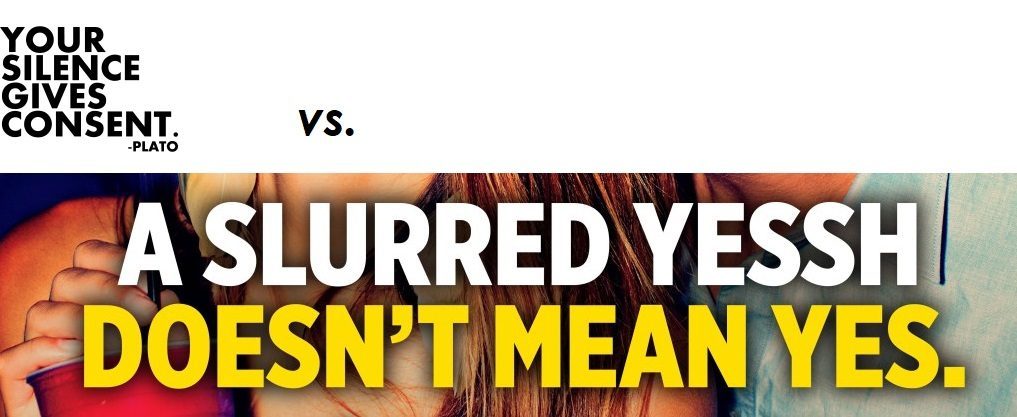
On the contrary, some supposedly progressive claims about consent give rise to confusion about the general sense of 'intention' and about the limits culpability. If 'A slurred Yeesh doesn't mean Yes', then perhaps my drunk-driving does not mean I am really driving... And so, assuming gender equality, if a drunk woman is not responsible for her actions, then a drunk man is also not responsible for his actions?

Comment: See also:

Sweden loses its collective mind: Proposed law will make any sex without "explicit" consent rape


Pyramid

Why Highly Intelligent People Suffer More Mental and Physical Disorders

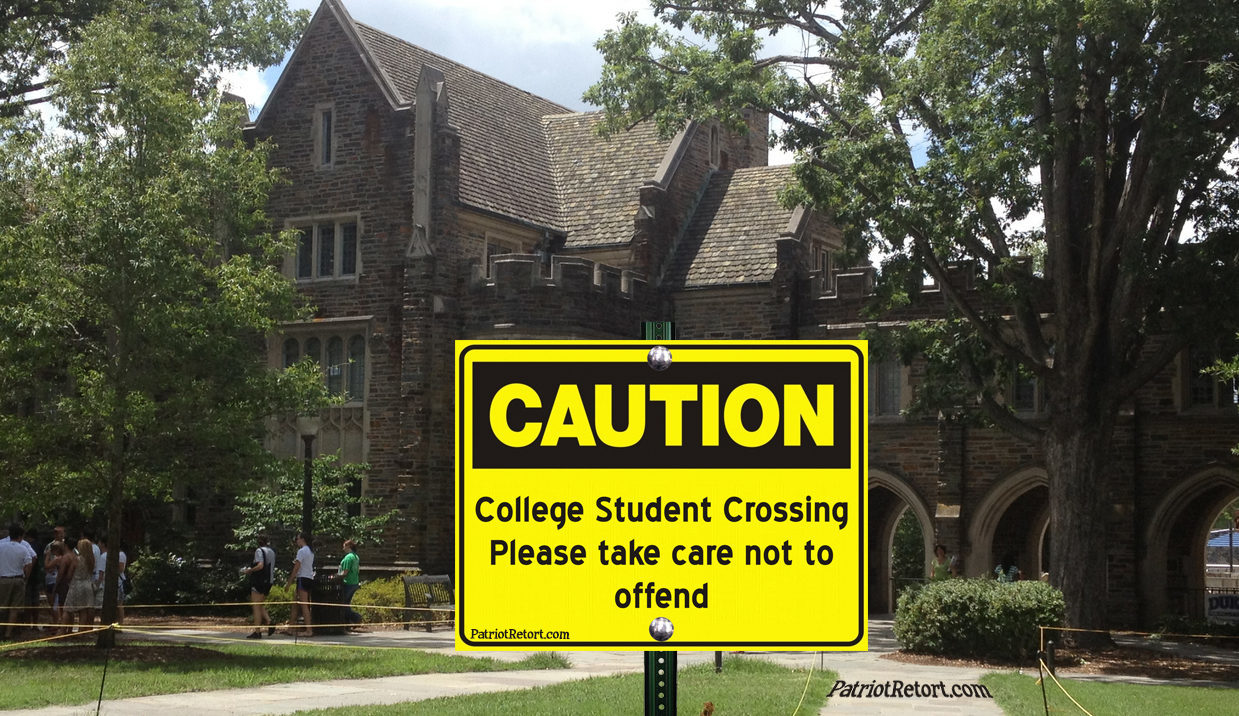
college campuses
Warning: Here be snowflakes
People with high IQ are considered to have an advantage in many domains. They are predicted to have higher educational attainment, better jobs, and a higher income level. Yet, it turns out that a high IQ is also associated with various mental and immunological diseases like depression, bipolar disorder, anxiety, ADHD as well as allergies, asthma, and immune disorders. Why is that? A new paper published in the journal Intelligence reviews the literature and explores the mechanisms that possibly underlie this connection.

The study authors compared data taken from 3,715 members of the American Mensa Society (people who have scored in the top 2% of intelligent tests) to data from national surveys in order to examine the prevalence of several disorders in those with higher intelligence compared to the average population.

The results showed that highly intelligent people are 20% more likely to be diagnosed with autism spectrum disorder (ASD), 80% more likely to be diagnosed with ADHD, 83% more likely to be diagnosed with anxiety, and 182% more likely to develop at least one mood disorder.

Comment: This might go some way to accounting for 'Generation Snowflake'. It's not just that they bought into ideology, big time; they were heavily predisposed to.

On the other hand, they're only one end of a spectrum of 'sensitive types' that includes intelligent people who bear their misfortunes and get on with life.


Shoe

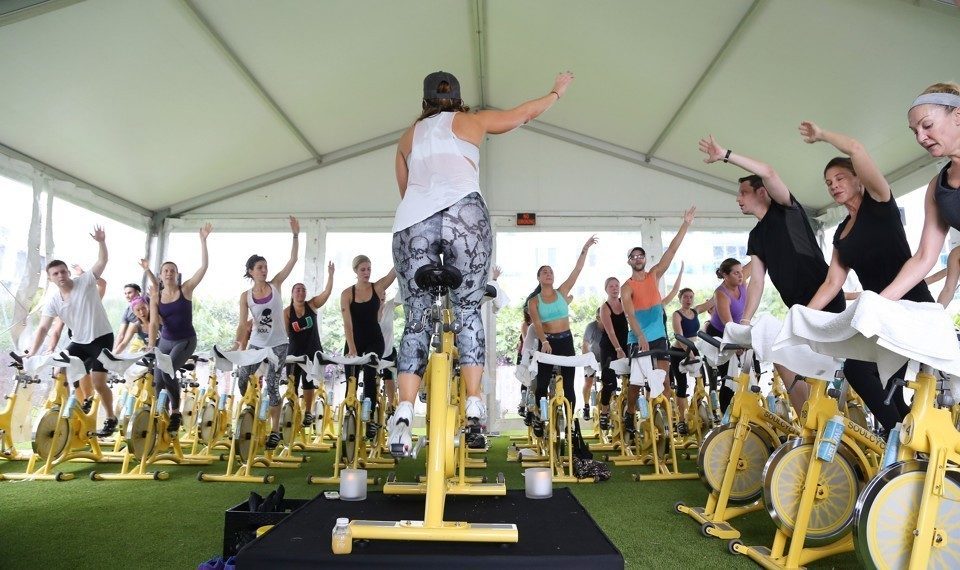
Are fitness classes the new consumerist church?

fitness
© Alexander Tamargo / Getty
Gyms provide ritual and community, serving as a sort of religion. They also promote values American culture already worships-capitalism and overwork.

You pay a regular tithe to support the community. In public, you wear symbols that identify you as one of the faithful. When you gather with other adherents, it's often in small, close rooms. Breathing gets heavy; bodies sweat. If anyone speaks, it is to moan, or occasionally to shout in triumph.

Comment: The massive fitness trend that's not actually healthy at all


Clipboard

The seven cognitive biases that can ruin how you make decisions

one way signs
Meaningful work. Productive days. Health and happiness. Everything that contributes to a life with value seems to come down to one thing: Making good decisions.

Yet, while we try our best, there are forces at work that undermine our ability to make choices that are rational, intelligent, and ultimately in our best interests.

In order to handle the insane amount of information we're constantly bombarded with, our brains have developed shortcuts, or 'cognitive biases' as they're commonly referred to. These biases help us filter information, make snap decisions, and concentrate on what matters most.

So, what's the problem then?

Well for one, we don't control our biases. They filter without consent, meaning they may ignore information that's relevant to the choices we're trying to make. And without a full view, how can we know we're making the best choice possible?

While more than 150 cognitive biases have been classified (you can see Wikipedia's extensive list here), these are the 7 that most commonly creep into the decision-making process. Let's take a look at what they are, when they happen, and how to counteract them.

Comment: The Truth Perspective: You are not so smart - understanding our cognitive biases


Alarm Clock

Do you have a time management problem or an attention management problem?

chasing time
A key habit I've noticed in successful people repeatedly, is that they are ruthless in managing what they pay attention to.

Sources of distraction today are plentiful and with everything becoming digitized, are only exponentially increasing. I'm sorry to be crass, but your mind is like an egg, ripe for fertilization and every ping, push notification, email, call, text...is yet one more opportunity for your mind to be literally penetrated.

We have a dozen social networks that are so woven into the fabric of our daily lives that using them is as habitual as brushing our teeth. There are millions of websites ranging from mild entertainment to intellectual porn (articles like this, that make us feel we're doing something when we're just consuming). Our perpetual exposure to digital stimuli has gone far beyond what evolution intended.

Walk through the airport, a mall, a grocery store or even a bar on a Saturday night and it's not uncommon to see people looking at their phones.

Comment: There's more than enough time, when you use the time you have constructively


Hourglass

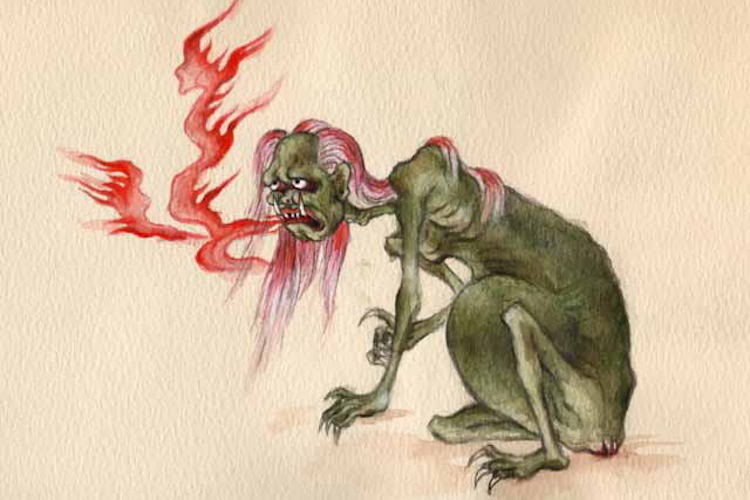
The culture of hungry ghosts

Hungry Ghosts
"No society can understand itself without looking at its shadow side." ― Gabor Maté, In the Realm of Hungry Ghosts: Close Encounters with Addiction
Something wicked bubbles just beneath the surface of the collective conscience. Our society is rife with corruption, predation, perversion, over-consumption, violence, addiction and so much more. Somehow enough is never enough, as if the driving force behind human existence is pure want.

This is not true, though, for we know that spiritually well beings are content beings, looking no further than the present moment's blessings for satisfaction. We don't have an inherent need for want. Want is a symptom, not the condition. It's something that enters when the spirit is untended to.

Palette

The great swindle of truth and beauty

JesusCoke
© Odd Nerdrum, artist"What would Jesus drink?" Kitsch art
A high culture is the self-consciousness of a society. It contains the works of art, literature, scholarship and philosophy that establish a shared frame of reference among educated people. High culture is a precarious achievement, and endures only if it is underpinned by a sense of tradition, and by a broad endorsement of the surrounding social norms. When those things evaporate, as inevitably happens, high culture is superseded by a culture of fakes.

Faking depends on a measure of complicity between the perpetrator and the victim, who together conspire to believe what they don't believe and to feel what they are incapable of feeling. There are fake beliefs, fake opinions, fake kinds of expertise. There is also fake emotion, which comes about when people debase the forms and the language in which true feeling can take root, so that they are no longer fully aware of the difference between the true and the false. Kitsch is one very important example of this. The kitsch work of art is not a response to the real world, but a fabrication designed to replace it. Yet both producer and consumer conspire to persuade each other that what they feel in and through the kitsch work of art is something deep, important and real.

Anyone can lie. One need only have the requisite intention - in other words, to say something with the intention to deceive. Faking, by contrast, is an achievement. To fake things you have to take people in, yourself included. In an important sense, therefore, faking is not something that can be intended, even though it comes about through intentional actions. The liar can pretend to be shocked when his lies are exposed, but his pretence is merely a continuation of his lying strategy. The fake really is shocked when he is exposed, since he had created around himself a community of trust, of which he himself was a member. Understanding this phenomenon is, it seems to me, integral to understanding how a high culture works, and how it can become corrupted.

Dominoes

America's painful self-delusion: Resolving our cognitive dissonance

Self-delusion
America is the only nation brought forth by a set of beliefs, and those beliefs, captured so eloquently in our founding documents, are some of the most powerful and inspiring ever conceived. We consider this to be the land of the free, where the individual is supreme and nothing prevents us from going as far as our talents can take us. That image of America - that "brand" - is incredibly strong.

However, there's a very large gap between that long-held image and the reality of America today. What was once a government built for the people is now a government run for the rich and powerful, one that throws the people under the bus whenever their interests differ from those of the corporate and political leaders who run the show.

And living in one world (the corrupt) while stubbornly believing you live in another (the ideal), despite mounds of evidence, causes a distinct kind of stress, often called cognitive dissonance.

Psychologists suggest that when people are in a state of cognitive dissonance, they'll search for a way to resolve it, either by rejecting one view or the other as either wrong or unimportant. If you're a smoker looking at the link between smoking and cancer, for example, you'll either quit smoking or decide that the research is biased, wrong, or doesn't apply (in other words, that you're smart enough to quit before the long-term damage is done).

Comment: Quote from Jordan Peterson:
"I do believe we are in a period of chaos - and in a period of chaos the time horizon shrinks - because the outcome is uncertain ... sometimes the outcome is catastrophe."
See also: Inspired by Jordan Peterson: Insisting on truth in a time of chaos


Cloud Grey

New research suggests five different types of depression and anxiety each with its own symptoms and effects on the brain

depression depression
© foto ilustrativa/ pixabay.com
Psychologists typically find that anxiety and depression share many overlapping symptoms.

Instead of being 'depressed' and/or 'anxious', new research suggests five different types of depression and anxiety.

The five are tension, anxious arousal, general anxiety, anhedonia - the inability to feel pleasure - and melancholia.

Each type has its own particular symptoms and effects on the brain.

Comment: Some useful tips for regulating your emotions:


Brain

Interview with Adrian Raine: How to spot a murderer's brain

Normal brain vs. murderer's brain
© Public DomainScans of a normal brain, left, beside that of murderer Antonio Bustamante, who was spared the death penalty after a jury was shown these pictures.
In 1987, Adrian Raine, who describes himself as a neurocriminologist, moved from Britain to the US. His emigration was prompted by two things. The first was a sense of banging his head against a wall. Raine, who grew up in Darlington and is now a professor at the University of Pennsylvania, was a researcher of the biological basis for criminal behaviour, which, with its echoes of Nazi eugenics, was perhaps the most taboo of all academic disciplines.

In Britain, the causes of crime were allowed to be exclusively social and environmental, the result of disturbed or impoverished nurture, rather than fated and genetic nature. To suggest otherwise, as Raine felt compelled to, having studied under Richard Dawkins and been persuaded of the "all-embracing influence of evolution on behaviour", was to doom yourself to an absence of funding. In America, there seemed more open-mindedness on the question and, as a result, more money to explore it. There was also another good reason why Raine headed initially to California: there were more murderers to study than there were at home.