Science of the SpiritS


Family

Family relationships and happy parents are key to the well-being of children

family
The largest household panel survey reveals how parents raise happy children.

Children grow up happier when their mother is happy in her relationship.

Fully 73% of people whose mothers were 'perfectly happy' in their relationship say they are 'completely happy' with their family situation.

This is just one of the factors in a family that predicts which children grow up to be happier.

The others are: avoiding regular arguments and eating at least three evening meals together a week.

Comment: See also:


2 + 2 = 4

The best teachers help students sacrifice fleeting happiness for future long term gains

Many educators who succeed at raising test scores also fail at keeping students fulfilled, new research suggests.

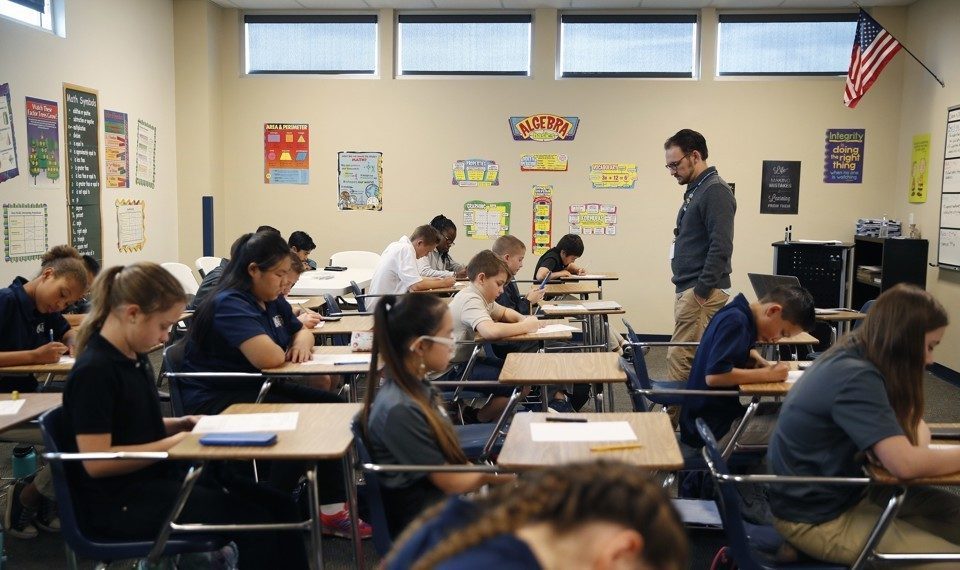
students in class
Is a good teacher one who makes students enjoy class the most or one who is strict and has high standards? And are those two types even at odds?

A new study that tries to quantify this phenomenon finds that on average, teachers who are good at raising test scores are worse at making kids happy in class.

"Teachers who are skilled at improving students' math achievement may do so in ways that make students less happy or less engaged in class," writes University of Maryland's David Blazar in the study, published in the peer-reviewed journal Education Finance and Policy.

Comment:


Info

"Curvature blindness" illusion discovered

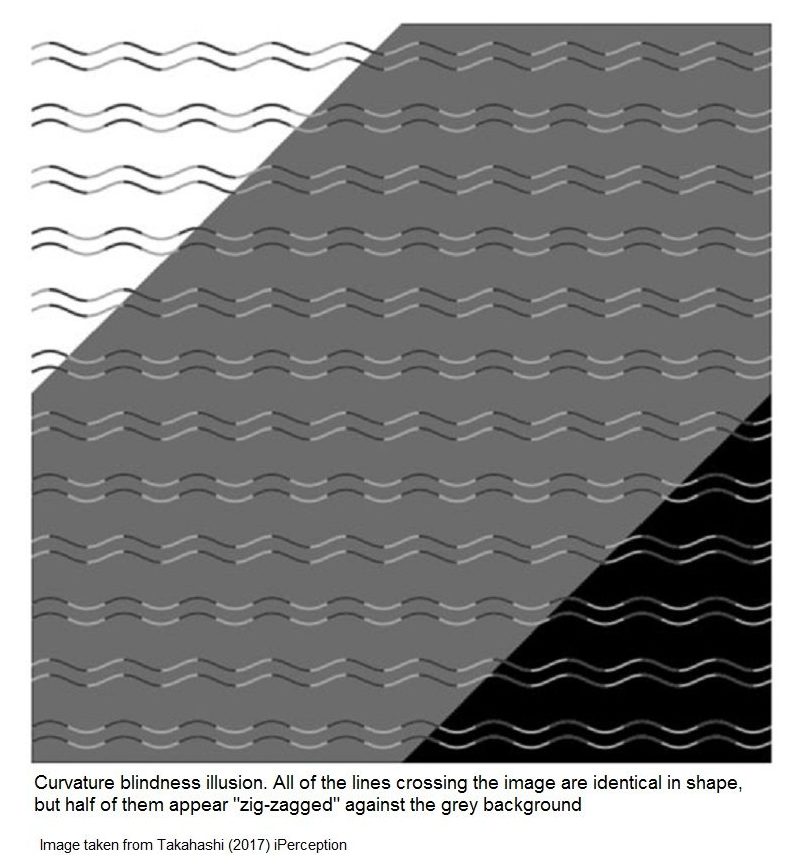
A new optical illusion has been discovered, and it's really quite striking. The strange effect is called the 'curvature blindness' illusion, and it's described in a new paper from psychologist Kohske Takahashi of Chukyo University, Japan.

Here's an example of the illusion:
Optical Illusion
© Takahashi/iPerception
A series of wavy horizontal lines are shown. All of the lines have exactly the same shape - a sine curve. However, half of the lines appear to have a much more triangular, "zig-zag" shape, when they are superimposed on a grey background. This "zig-zag" appearance is an illusion. (I checked - it really is.)

People

The best ways to effectively cope with conflict during holiday family gatherings

family holidays
It's the holiday season, time for family gatherings, happiness, and good cheer. It's also the time for your smiling brother to sit across from you at the dinner table and comment on on how your favorite politician is corrupt and anyone who supports him is delusional.

At least 29 religious holidays will be celebrated across the world between November 1 and January 15. These holidays are fertile ground for clashes between conservative views and secular, agnostic, or more liberal perspectives. Many people struggle with these situations at the best of times, but in today's polarized political and social environment, the holidays can be particularly difficult. This is amplified by the fact that holidays are full of expectations for closeness and reconnection.

As a psychologist, I have seen first-hand how these forces foster discomfort, if not outright avoidance of family get-togethers. Even at the best of times, people experience strong emotions around the holidays, struggle with relationships, and behave in ways that are not necessarily in their long-term social interests. It may be impossible to make the holidays completely conflict-free, but we can use the principles of personality theory to understand the roots of that conflict, and develop healthy ways to deal with it.

Comment: Good advice. How many times do individuals engage in useless arguments during family gatherings that only serve to further entrench and alienate others? Yes, the matters involved may be important - even very important - but unless one wants to sincerely understand the other's position, and unless one is able to discuss one's knowledge without reacting to the "other side," what is the likelihood of accomplishing anything but an argument and the conviction from the other that you're the crazy one? It's so much the better if one can channel their views with hard facts and perspective, in a different way, and through a different medium - while we still have it.


House

Researchers find that environment may play a strong role in psychosis

psychosis environment
A new study finds that rates of psychosis can be close to eight times higher in some regions compared to others. The findings suggest that environmental factors, in addition to genetics influence the development of psychosis.

Researchers at University College London, King's College London, and the University of Cambridge performed the review, the largest international comparison of incidence of psychotic disorders, and the first major investigation of its kind, in more than 25 years.

"It's well-established that psychotic disorders, such as schizophrenia, are highly heritable, but genetics don't tell the whole story. Our findings suggest that environmental factors can also play a big role," said the study's lead author, Dr. James Kirkbride (UCL Psychiatry). The study appears in JAMA Psychiatry.

"We need more in-depth research to understand why people in some areas may be at greater risk of developing a psychotic disorder, which could help us understand the roots of the condition and guide health care planning," he said.

Comment: Some other physical, societal and cultural influences on psychosis we've noticed: And Listen in to the SOTT Radio Show's examination of the subject:

Behind the Headlines: The 'Wetiko Virus' and Collective Psychosis: Interview With Paul Levy


Arrow Down

Nausea can be a symptom of anxiety and depression

depressed
It's an anxiety and depression symptom that doctors frequently don't recognise.

Feeling physically sick is a little-known sign of anxiety and depression, research finds.

Many people - patients and doctors included - assume the cause of nausea is a physical problem, not a mental issue.

However, people who go to the hospital with nausea are quite frequently found to be suffering from anxiety and/or depression.

This study found that 41% of people complaining of nausea actually had an anxiety disorder and 24% were clinically depressed.

Dr Tone Tangen Haug, the study's first author, says that identifying depression and anxiety faster is key:
"This may lead to avoidance of long-term use of potentially harmful medications for nausea, unnecessary medical investigation and probably a better quality of life for the patients."
The conclusions come from a survey of 62,000 people in Norway.

Comment: See also:


Handcuffs

The original mind hunters and the birth of criminal profiling

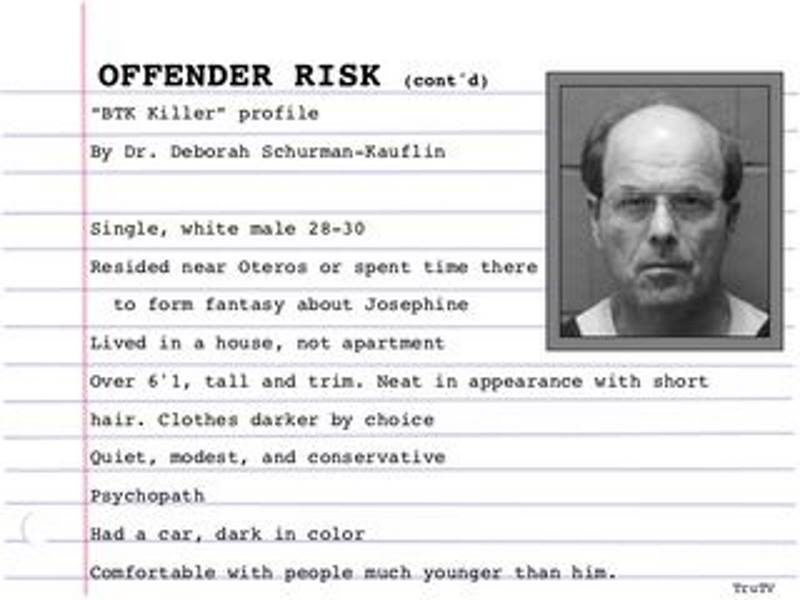
BTK killer profile
© SlideShare
Profiling killers dates back to Jack the Ripper.

The FBI formed its Behavioral Science Unit in 1974 to study serial predators. Since then, the art and craft of criminal profiling have become the subject of numerous books, TV shows and iconic films such as The Silence of the Lambs.

Continuing the trend, the Netflix series Mindhunter explores the early efforts of the FBI to understand and profile serial killers. Mindhunter is based in part on the writings of best-selling author Mark Olshaker and legendary FBI profiler John Douglas.

John Douglas is one of several pioneering FBI agents, along with the late Robert Ressler and Roy Hazelwood, who essentially invented computer-based, modern-day criminal profiling in the 1980s.

What exactly is profiling?

Profiling, or criminal investigative analysis, as it is called by the FBI, involves the investigation of a crime with the hope of identifying the responsible party, based on crime scene analysis, investigative psychology and behavioral science.

Info

Does treatment for sexual misconduct actually work? Evidence is dubious at best

Weinstein
© Steve Crisp/Reuters
The recent surge in accusations of sexual harassment and assault has prompted some admitted offenders to seek professional help for the emotional or personality distortions that underlie their behaviour.

"My journey now will be to learn about myself and conquer my demons," the producer Harvey Weinstein said in a statement in October.

The actor Kevin Spacey announced that he would be "taking the time necessary to seek evaluation and treatment".

Whatever mix of damage control and contrition they represent, pledges like these suggest that there are standard treatments for perpetrators of sexual offences. In fact, no such standard treatments exist, experts say. Even the notion of "sexual addiction" as a stand-alone diagnosis is in dispute. "There are no evidence-based programs I know of for the sort of men who have been in the news recently," says Dr Vaile Wright, director of research and special projects at the American Psychological Association.

That doesn't mean that these men cannot change their ways with professional help. The evidence that talk therapy and medication can curb sexual misconduct is modest at best, and virtually all of it comes from treating severe disorders, like paedophilia and exhibitionism, experts say - powerful urges that cannot be turned off.

Still, there is reason to think that these therapeutic approaches can be adapted to the treatment of the men accused of offences ranging from unwanted attention to rape.

Comment: This article raises several good points. First, there isn't any clinically proven treatment for the type of behaviors in the news today from people like Weinstein and Spacey. Second, whatever program is tried, the behaviors of actual repeat offenders are rooted in habitual thinking errors. At least in some cases, correcting those thinking errors can result in a change of behavior. But that means the offender actually needs to comprehend that his behavior hurts others and himself - to see the thinking errors himself, and to see them as errors. For more, see the books of Stanton Samenow:


Arrow Up

Happiness increases with age

Happy older woman
© Mila Supinskaya Glashchenko/Shutterstock.com
People get happier as they get older, research finds.

Surveys of Americans carried out between 1972 and 2004 show that older people are the nation's happiest.

Across the different generations, around 50% of people over the age of 80 said they were 'very happy'.

It may be because older, more mature people are likely to be more at ease with themselves and to have higher self-esteem.

Dr Yang Yang, the study's author, said:
"Understanding happiness is important to understanding quality of life.

The happiness measure is a guide to how well society is meeting people's needs."

Comment: See also:


Brain

The curious case of the corpus callosum: Does the brain have two minds?

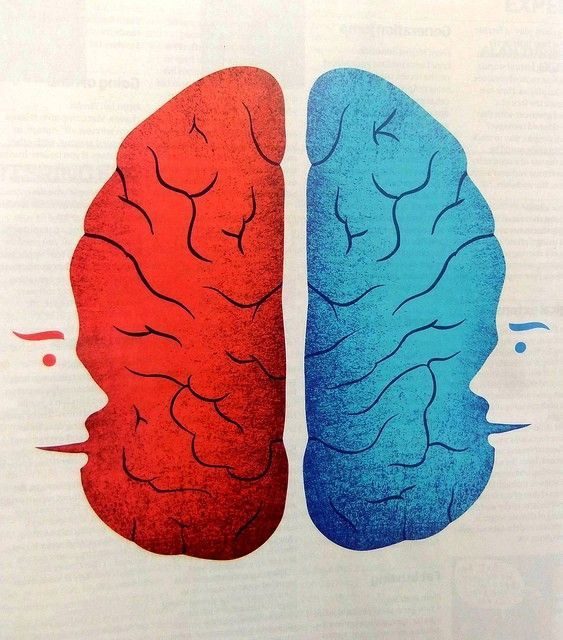
Two Minds in One Brain - The Curious Case of Corpus Callosotomy
Did you know that it was possible for the two hemispheres of our brains to be independently conscious - and even to have differing opinions? For one hemisphere to believe in God, and for the other to be an atheist? For one hemisphere to control your hand, whilst the other watches in surprise at this alien appendage moving of its own accord?

The Hemispheric Highway

To understand how this can be possible, we need to understand the structure of the brain. The corpus callosum is a wide, flat bundle of 200-300 million neural fibers connecting the left and right hemispheres of the brain. This hemispheric highway allows them to communicate with one another and coordinate actions and decision-making. This information exchange is important because the two hemispheres are highly specialised and need to be able to share their findings. For example the right hemisphere is responsible for nonverbal and spatial tasks, image and facial recognition and emotion, whereas the left hemisphere excels at language and logic. In a beautiful example of biological symmetry, the right hemisphere is also in control of the sensory functions on left side of our body (our left hand and left visual field), whilst the left hemisphere is in control of our right side.